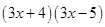
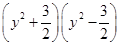
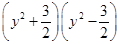
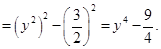
NCERT Solutions for Class 9 Maths chapter-2 Polynomials
Author at PW
December 16, 2025
image

Class 9 Maths Chapter 2 – Polynomials is an important chapter that builds the base of algebra for students. In NCERT Class 9 Maths Chapter 2, students are introduced to the concept of polynomials and their role in mathematics. A polynomial is an algebraic expression made up of variables, constants, and powers of variables. This chapter clearly explains the meaning of polynomials and classifies them into monomials, binomials, and trinomials based on the number of terms. In Chapter 2 Maths Class 9, students learn key ideas such as the degree of a polynomial, coefficients, and terms. The chapter also covers different operations on polynomials, including addition, subtraction, and multiplication. Another important topic discussed is the zeroes (roots) of a polynomial and how to find them. These concepts are essential for solving problems not only in Class 9 Maths Chapter 2 but also in higher classes.

Understanding Maths Class 9 Chapter 2 helps students develop logical thinking and problem-solving skills. Polynomials are widely used in higher algebra, coordinate geometry, and even real-life applications, making this chapter very important from an exam point of view.To support students, NCERT Solutions for Polynomials Class 9 are prepared by the academic team at Physics Wallah. These Class 9 Maths Chapter 2 Solutions provide clear, step-by-step answers for all exercises given in the NCERT textbook. Before solving questions from Maths Ch 2 Class 9, students should carefully read the theory and revise all formulas.

Physics Wallah also offers detailed notes, short formula sheets, and additional practice questions for Class 9 Chapter 2 Maths. These resources help students strengthen their concepts and confidently prepare for exams using Polynomials Class 9 NCERT Solutions.

NCERT Solutions for Class 9 Maths Exercise 2.1

Question 1. Which of the following expressions are polynomials in one variable and which are not? State reasons for your answer.

(i) NCERT Solutions for Class 9 Maths chapter 2-Polynomials/image001.png

(ii) NCERT Solutions for Class 9 Maths chapter 2-Polynomials/image002.png

(iii) NCERT Solutions for Class 9 Maths chapter 2-Polynomials/image003.png

(iv) NCERT Solutions for Class 9 Maths chapter 2-Polynomials/image004.png

(v) NCERT Solutions for Class 9 Maths chapter 2-Polynomials/image005.png


Solution:

(i) NCERT Solutions for Class 9 Maths chapter 2-Polynomials/image001.png

We can observe that in the polynomial NCERT Solutions for Class 9 Maths chapter 2-Polynomials/image001.png, we have x as the only variable and the powers of x in each term are a whole number.

Therefore, we conclude that NCERT Solutions for Class 9 Maths chapter 2-Polynomials/image001.pngis a polynomial in one variable.

(ii) NCERT Solutions for Class 9 Maths chapter 2-Polynomials/image002.png

We can observe that in the polynomial NCERT Solutions for Class 9 Maths chapter 2-Polynomials/image002.png, we have y as the only variable and the powers of y in each term are a whole number.

Therefore, we conclude that NCERT Solutions for Class 9 Maths chapter 2-Polynomials/image002.pngis a polynomial in one variable.

(iii)NCERT Solutions for Class 9 Maths chapter 2-Polynomials/image003.png

We can observe that in the polynomialNCERT Solutions for Class 9 Maths chapter 2-Polynomials/image003.png, we have t as the only variable and the powers of t in each term are not a whole number.

Therefore, we conclude thatNCERT Solutions for Class 9 Maths chapter 2-Polynomials/image003.pngis not a polynomial in one variable.

(iv)NCERT Solutions for Class 9 Maths chapter 2-Polynomials/image004.png

We can observe that in the polynomialNCERT Solutions for Class 9 Maths chapter 2-Polynomials/image004.png, we have y as the only variable and the powers of y in each term are not a whole number.

Therefore, we conclude thatNCERT Solutions for Class 9 Maths chapter 2-Polynomials/image004.pngis not a polynomial in one variable.

(v)NCERT Solutions for Class 9 Maths chapter 2-Polynomials/image005.png

We can observe that in the polynomialNCERT Solutions for Class 9 Maths chapter 2-Polynomials/image005.png, we have x, y and t as the variables and the powers of x, y and t in each term is a whole number.

Therefore, we conclude thatNCERT Solutions for Class 9 Maths chapter 2-Polynomials/image005.png is a polynomial but not a polynomial in one variable.

Question 2. Write the coefficients ofNCERT Solutions for Class 9 Maths chapter 2-Polynomials/image006.png in each of the following :

(i)NCERT Solutions for Class 9 Maths chapter 2-Polynomials/image007.png

(ii)NCERT Solutions for Class 9 Maths chapter 2-Polynomials/image008.png

(iii)NCERT Solutions for Class 9 Maths chapter 2-Polynomials/image009.png

(iv)NCERT Solutions for Class 9 Maths chapter 2-Polynomials/image010.png

Solution:

(i)NCERT Solutions for Class 9 Maths chapter 2-Polynomials/image007.png

The coefficient ofNCERT Solutions for Class 9 Maths chapter 2-Polynomials/image006.pngin the polynomialNCERT Solutions for Class 9 Maths chapter 2-Polynomials/image007.pngis 1.

(ii)NCERT Solutions for Class 9 Maths chapter 2-Polynomials/image008.png

The coefficient ofNCERT Solutions for Class 9 Maths chapter 2-Polynomials/image006.pngin the polynomialNCERT Solutions for Class 9 Maths chapter 2-Polynomials/image008.pngisNCERT Solutions for Class 9 Maths chapter 2-Polynomials/image011.png.

(iii)NCERT Solutions for Class 9 Maths chapter 2-Polynomials/image009.png

The coefficient ofNCERT Solutions for Class 9 Maths chapter 2-Polynomials/image006.pngin the polynomialNCERT Solutions for Class 9 Maths chapter 2-Polynomials/image009.pngisNCERT Solutions for Class 9 Maths chapter 2-Polynomials/image012.png.

(iv)NCERT Solutions for Class 9 Maths chapter 2-Polynomials/image010.png

The coefficient ofNCERT Solutions for Class 9 Maths chapter 2-Polynomials/image006.pngin the polynomial NCERT Solutions for Class 9 Maths chapter 2-Polynomials/image010.pngis 0.

Question 3. Give one example each of a binomial of degree 35, and of a monomial of degree 100.
Solution:
The binomial of degree 35 can beNCERT Solutions for Class 9 Maths chapter 2-Polynomials/image013.png.

The binomial of degree 100 can beNCERT Solutions for Class 9 Maths chapter 2-Polynomials/image014.png.

Check out: NCERT Solutions for Class 9 Maths chapter-1 Number Systems

Question 4. Write the degree of each of the following polynomials :
(i)NCERT Solutions for Class 9 Maths chapter 2-Polynomials/image015.png

(ii)NCERT Solutions for Class 9 Maths chapter 2-Polynomials/image016.png

(iii)NCERT Solutions for Class 9 Maths chapter 2-Polynomials/image017.png

(iv)NCERT Solutions for Class 9 Maths chapter 2-Polynomials/image018.png3

Solution:
(i)NCERT Solutions for Class 9 Maths chapter 2-Polynomials/image019.png

We know that the degree of a polynomial is the highest power of the variable in the polynomial.

We can observe that in the polynomialNCERT Solutions for Class 9 Maths chapter 2-Polynomials/image019.png, the highest power of the variable x is 3.
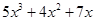
Therefore, we conclude that the degree of the polynomialNCERT Solutions for Class 9 Maths chapter 2-Polynomials/image019.pngis 3.
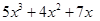
(ii)NCERT Solutions for Class 9 Maths chapter 2-Polynomials/image020.png

We know that the degree of a polynomial is the highest power of the variable in the polynomial.

We can observe that in the polynomialNCERT Solutions for Class 9 Maths chapter 2-Polynomials/image020.png, the highest power of the variable y is 2.

Therefore, we conclude that the degree of the polynomialNCERT Solutions for Class 9 Maths chapter 2-Polynomials/image020.pngis 2.

(iii)NCERT Solutions for Class 9 Maths chapter 2-Polynomials/image021.png

We know that the degree of a polynomial is the highest power of the variable in the polynomial.

We observe that in the polynomial, the highest power of the variable t is 1.

Therefore, we conclude that the degreeNCERT Solutions for Class 9 Maths chapter 2-Polynomials/image021.png of the polynomialNCERT Solutions for Class 9 Maths chapter 2-Polynomials/image021.pngis 1.

(iv)3

We know that the degree of a polynomial is the highest power of the variable in the polynomial.

We can observe that in the polynomial 3, the highest power of the assumed variable x is 0.

Therefore, we conclude that the degree of the polynomial 3 is 0.

Question 5. Classify the following as linear, quadratic and cubic polynomials.
(i) x2+ x
(ii) x – x3
(iii) y + y2+4
(iv) 1 + x
(v) 3t
(vi) r2
(vii) 7x3

Solution :
(i) The degree of x2 + x is 2. So, it is a quadratic polynomial.
(ii) The degree of x – x3 is 3. So, it is a cubic polynomial.
(iii) The degree of y + y2 + 4 is 2. So, it is a quadratic polynomial.
(iv) The degree of 1 + x is 1. So, it is a linear polynomial.
(v) The degree of 3t is 1. So, it is a linear polynomial.
(vi) The degree of r2 is 2. So, it is a quadratic polynomial.
(vii) The degree of 7x3 is 3. So, it is a cubic polynomial.

NCERT Solutions for Class 9 Maths Exercise 2.2

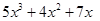
Question 1. Find the value of the polynomial 5x – 4x2 + 3 at
(i) x = 0
(ii) x = – 1
(iii) x = 2

Solution:
Let p(x) = 5x – 4x2 + 3
(i) p(0) = 5(0) – 4(0)2 + 3 = 0 – 0 + 3 = 3
Thus, the value of 5x – 4x2 + 3 at x = 0 is 3.
(ii) p(-1) = 5(-1) – 4(-1)2 + 3
= – 5x – 4x2 + 3 = -9 + 3 = -6
Thus, the value of 5x – 4x2 + 3 at x = -1 is -6.
(iii) p(2) = 5(2) – 4(2)2 + 3 = 10 – 4(4) + 3
= 10 – 16 + 3 = -3
Thus, the value of 5x – 4x2 + 3 at x = 2 is – 3.

Question 2. Find p (0), p (1) and p (2) for each of the following polynomials.
(i) p(y) = y2 – y +1
(ii) p (t) = 2 +1 + 2t2 -t3
(iii) P (x) = x3
(iv) p (x) = (x-1) (x+1)

Solution:
(i) Given that p(y) = y2 – y + 1.
∴ P(0) = (0)2 – 0 + 1 = 0 – 0 + 1 = 1
p(1) = (1)2 – 1 + 1 = 1 – 1 + 1 = 1
p(2) = (2)2 – 2 + 1 = 4 – 2 + 1 = 3
(ii) Given that p(t) = 2 + t + 2t2 – t3
∴p(0) = 2 + 0 + 2(0)2 – (0)3
= 2 + 0 + 0 – 0=2
P(1) = 2 + 1 + 2(1)2 – (1)3
= 2 + 1 + 2 – 1 = 4
p( 2) = 2 + 2 + 2(2)2 – (2)3
= 2 + 2 + 8 – 8 = 4
(iii) Given that p(x) = x3
∴ p(0) = (0)3 = 0, p(1) = (1)3 = 1
p(2) = (2)3 = 8
(iv) Given that p(x) = (x – 1)(x + 1)
∴ p(0) = (0 – 1)(0 + 1) = (-1)(1) = -1
p(1) = (1 – 1)(1 +1) = (0)(2) = 0
P(2) = (2 – 1)(2 + 1) = (1)(3) = 3

Check out: Class 9th Books

Question 3. Verify whether the following are zeroes of the polynomial, indicated against them.
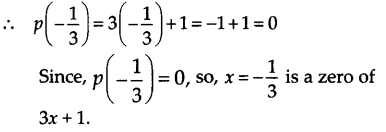
(i) p(x) = 3x + 1,x = –NCERT Solutions for Class 9 Maths chapter 2-Polynomials
(ii) p (x) = 5x – π, x = NCERT Solutions for Class 9 Maths chapter 2-Polynomials
(iii) p (x) = x2 – 1, x = x – 1
(iv) p (x) = (x + 1) (x – 2), x = – 1,2
(v) p (x) = x2, x = 0
(vi) p (x) = 1x + m, x = – NCERT Solutions for Class 9 Maths chapter 2-Polynomials
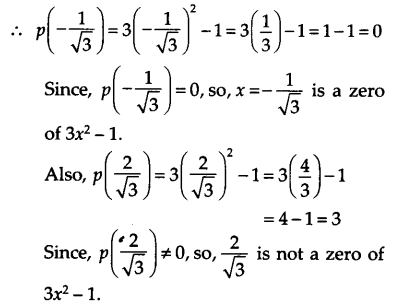
(vii) P (x) = 3x2 – 1, x = – \frac { 1 }{ \sqrt { 3 } },NCERT Solutions for Class 9 Maths chapter 2-Polynomials
(viii) p (x) = 2x + 1, x = NCERT Solutions for Class 9 Maths chapter 2-Polynomials

Solution:
(i) We have , p(x) = 3x + 1
NCERT Solutions for Class 9 Maths chapter 2-Polynomials/A3
(ii) We have, p(x) = 5x – π
NCERT Solutions for Class 9 Maths chapter 2-Polynomials
(iii) We have, p(x) = x2 – 1
∴ p(1) = (1)2 – 1 = 1 – 1=0
Since, p(1) = 0, so x = 1 is a zero of x2 -1.
Also, p(-1) = (-1)2 -1 = 1 – 1 = 0
Since p(-1) = 0, so, x = -1, is also a zero of x2 – 1.

(iv) We have, p(x) = (x + 1)(x – 2)
∴ p(-1) = (-1 +1) (-1 – 2) = (0)(- 3) = 0
Since, p(-1) = 0, so, x = -1 is a zero of (x + 1)(x – 2).
Also, p( 2) = (2 + 1)(2 – 2) = (3)(0) = 0
Since, p(2) = 0, so, x = 2 is also a zero of (x + 1)(x – 2).

(v) We have, p(x) = x2
∴ p(o) = (0)2 = 0
Since, p(0) = 0, so, x = 0 is a zero of x2.

(vi) We have, p(x) = lx + m
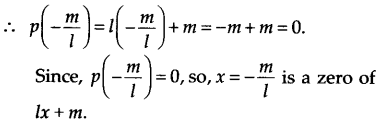
NCERT Solutions for Class 9 Maths chapter 2-Polynomials/A3a

(vii) We have, p(x) = 3x2 – 1
NCERT Solutions for Class 9 Maths chapter 2-Polynomials/A3b

(viii) We have, p(x) = 2x + 1
NCERT Solutions for Class 9 Maths chapter 2-Polynomials
Since, NCERT Solutions for Class 9 Maths chapter 2-Polynomials≠ 0, so, x = NCERT Solutions for Class 9 Maths chapter 2-Polynomialsis not a zero of 2x + 1.

Question 4. Find the zero of the polynomial in each of the following cases
(i) p(x)=x+5
(ii) p (x) = x – 5
(iii) p (x) = 2x + 5
(iv) p (x) = 3x – 2
(v) p (x) = 3x
(vi) p (x)= ax, a≠0
(vii) p (x) = cx + d, c ≠ 0 where c and d are real numbers.

Solution:
(i) We have, p(x) = x + 5. Since, p(x) = 0
⇒ x + 5 = 0
⇒ x = -5.
Thus, zero of x + 5 is -5.

(ii) We have, p(x) = x – 5.
Since, p(x) = 0 ⇒ x – 5 = 0 ⇒ x = -5
Thus, zero of x – 5 is 5.

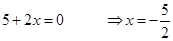
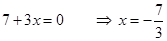
(iii) We have, p(x) = 2x + 5. Since, p(x) = 0
⇒ 2x + 5 =0
⇒ 2x = -5
⇒ x = NCERT Solutions for Class 9 Maths chapter 2-Polynomials
Thus, zero of 2x + 5 is NCERT Solutions for Class 9 Maths chapter 2-Polynomials.

(iv) We have, p(x) = 3x – 2. Since, p(x) = 0
⇒ 3x – 2 = 0
⇒ 3x = 2
⇒ x = NCERT Solutions for Class 9 Maths chapter 2-Polynomials
Thus, zero of 3x – 2 is NCERT Solutions for Class 9 Maths chapter 2-Polynomials

(v) We have, p(x) = 3x. Since, p(x) = 0
⇒ 3x = 0 ⇒ x = 0
Thus, zero of 3x is 0.

(vi) We have, p(x) = ax, a ≠ 0.
Since, p(x) = 0 => ax = 0 => x-0
Thus, zero of ax is 0.

(vii) We have, p(x) = cx + d. Since, p(x) = 0
⇒ cx + d = 0 ⇒ cx = -d ⇒ NCERT Solutions for Class 9 Maths chapter 2-Polynomials
Thus, zero of cx + d is NCERT Solutions for Class 9 Maths chapter 2-Polynomials

NCERT Solutions for Class 9 Maths Exercise 2.3

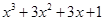
Question 1. Find the remainder whenNCERT Solutions for Class 9 Maths chapter 2-Polynomials/image001.pngis divided by
(i) NCERT Solutions for Class 9 Maths chapter 2-Polynomials/image002.png

(ii) NCERT Solutions for Class 9 Maths chapter 2-Polynomials/image003.png

(iii) x

(iv) NCERT Solutions for Class 9 Maths chapter 2-Polynomials/image005.png

(v) NCERT Solutions for Class 9 Maths chapter 2-Polynomials/image006.png

Solution:
(i) NCERT Solutions for Class 9 Maths chapter 2-Polynomials/image002.png

We need to find the zero of the polynomialNCERT Solutions for Class 9 Maths chapter 2-Polynomials/image002.png.

NCERT Solutions for Class 9 Maths chapter 2-Polynomials/image007.png

While applying the remainder theorem, we need to put the zero of the polynomialNCERT Solutions for Class 9 Maths chapter 2-Polynomials/image002.pngin the polynomialNCERT Solutions for Class 9 Maths chapter 2-Polynomials/image001.png, to get

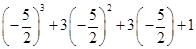
NCERT Solutions for Class 9 Maths chapter 2-Polynomials/image008.png

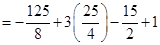
NCERT Solutions for Class 9 Maths chapter 2-Polynomials/image009.pngNCERT Solutions for Class 9 Maths chapter 2-Polynomials/image010.png

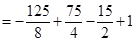
=-1+3-3+1

=0

Therefore, we conclude that on dividing the polynomialNCERT Solutions for Class 9 Maths chapter 2-Polynomials/image001.pngbyNCERT Solutions for Class 9 Maths chapter 2-Polynomials/image011.png, we will get the remainder as 0.
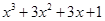
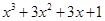
(ii)NCERT Solutions for Class 9 Maths chapter 2-Polynomials/image003.png

We need to find the zero of the polynomialNCERT Solutions for Class 9 Maths chapter 2-Polynomials/image003.png.

NCERT Solutions for Class 9 Maths chapter 2-Polynomials/image012.png

While applying the remainder theorem, we need to put the zero of the polynomialNCERT Solutions for Class 9 Maths chapter 2-Polynomials/image003.pngin the polynomialNCERT Solutions for Class 9 Maths chapter 2-Polynomials/image001.png, to get

NCERT Solutions for Class 9 Maths chapter 2-Polynomials/image013.png

NCERT Solutions for Class 9 Maths chapter 2-Polynomials/image014.pngNCERT Solutions for Class 9 Maths chapter 2-Polynomials/image015.png

NCERT Solutions for Class 9 Maths chapter 2-Polynomials/image016.png

NCERT Solutions for Class 9 Maths chapter 2-Polynomials/image017.png

NCERT Solutions for Class 9 Maths chapter 2-Polynomials/image018.png

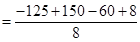
Therefore, we conclude that on dividing the polynomialNCERT Solutions for Class 9 Maths chapter 2-Polynomials/image001.pngbyNCERT Solutions for Class 9 Maths chapter 2-Polynomials/image003.png, we will get the remainder asNCERT Solutions for Class 9 Maths chapter 2-Polynomials/image019.png.
(iii)NCERT Solutions for Class 9 Maths chapter 2-Polynomials/image020.png

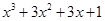
We need to find the zero of the polynomialNCERT Solutions for Class 9 Maths chapter 2-Polynomials/image020.png.

NCERT Solutions for Class 9 Maths chapter 2-Polynomials/image021.png

While applying the remainder theorem, we need to put the zero of the polynomialNCERT Solutions for Class 9 Maths chapter 2-Polynomials/image020.pngin the polynomialNCERT Solutions for Class 9 Maths chapter 2-Polynomials/image001.png, to get

NCERT Solutions for Class 9 Maths chapter 2-Polynomials/image013.png

NCERT Solutions for Class 9 Maths chapter 2-Polynomials/image022.png

=0+0+0+1

=1

Therefore, we conclude that on dividing the polynomialNCERT Solutions for Class 9 Maths chapter 2-Polynomials/image001.pngby x, we will get the remainder as 1.
(iv)NCERT Solutions for Class 9 Maths chapter 2-Polynomials/image005.png

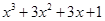
We need to find the zero of the polynomialNCERT Solutions for Class 9 Maths chapter 2-Polynomials/image005.png.

NCERT Solutions for Class 9 Maths chapter 2-Polynomials/image023.png

While applying the remainder theorem, we need to put the zero of the polynomialNCERT Solutions for Class 9 Maths chapter 2-Polynomials/image005.pngin the polynomialNCERT Solutions for Class 9 Maths chapter 2-Polynomials/image001.png, to get

NCERT Solutions for Class 9 Maths chapter 2-Polynomials/image024.png

NCERT Solutions for Class 9 Maths chapter 2-Polynomials/image025.pngNCERT Solutions for Class 9 Maths chapter 2-Polynomials/image026.png

NCERT Solutions for Class 9 Maths chapter 2-Polynomials/image027.png

Therefore, we conclude that on dividing the polynomialNCERT Solutions for Class 9 Maths chapter 2-Polynomials/image001.pngbyNCERT Solutions for Class 9 Maths chapter 2-Polynomials/image005.png, we will get the remainder asNCERT Solutions for Class 9 Maths chapter 2-Polynomials/image028.png.
(v)NCERT Solutions for Class 9 Maths chapter 2-Polynomials/image029.png

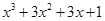
We need to find the zero of the polynomialNCERT Solutions for Class 9 Maths chapter 2-Polynomials/image006.png.

NCERT Solutions for Class 9 Maths chapter 2-Polynomials/image030.png

While applying the remainder theorem, we need to put the zero of the polynomialNCERT Solutions for Class 9 Maths chapter 2-Polynomials/image006.png in the polynomialNCERT Solutions for Class 9 Maths chapter 2-Polynomials/image001.png, to get

NCERT Solutions for Class 9 Maths chapter 2-Polynomials/image013.png

NCERT Solutions for Class 9 Maths chapter 2-Polynomials/image031.pngNCERT Solutions for Class 9 Maths chapter 2-Polynomials/image032.png

NCERT Solutions for Class 9 Maths chapter 2-Polynomials/image033.png

NCERT Solutions for Class 9 Maths chapter 2-Polynomials/image034.png

NCERT Solutions for Class 9 Maths chapter 2-Polynomials/image035.png

NCERT Solutions for Class 9 Maths chapter 2-Polynomials/image036.png

Therefore, we conclude that on dividing the polynomialNCERT Solutions for Class 9 Maths chapter 2-Polynomials/image001.pngbyNCERT Solutions for Class 9 Maths chapter 2-Polynomials/image029.png, we will get the remainder asNCERT Solutions for Class 9 Maths chapter 2-Polynomials/image037.png.
 

Question 2. Find the remainder whenNCERT Solutions for Class 9 Maths chapter 2-Polynomials/image038.pngis divided byNCERT Solutions for Class 9 Maths chapter 2-Polynomials/image039.png.

Solution:

We need to find the zero of the polynomialNCERT Solutions for Class 9 Maths chapter 2-Polynomials/image039.png.

NCERT Solutions for Class 9 Maths chapter 2-Polynomials/image040.png

While applying the remainder theorem, we need to put the zero of the polynomialNCERT Solutions for Class 9 Maths chapter 2-Polynomials/image039.pngin the polynomialNCERT Solutions for Class 9 Maths chapter 2-Polynomials/image038.png, to get

NCERT Solutions for Class 9 Maths chapter 2-Polynomials/image041.png

NCERT Solutions for Class 9 Maths chapter 2-Polynomials/image042.png

NCERT Solutions for Class 9 Maths chapter 2-Polynomials/image043.png

= 5a

Therefore, we conclude that on dividing the polynomialNCERT Solutions for Class 9 Maths chapter 2-Polynomials/image038.pngbyNCERT Solutions for Class 9 Maths chapter 2-Polynomials/image039.png, we will get the remainder asNCERT Solutions for Class 9 Maths chapter 2-Polynomials/image044.png.

Check out: School Books

Question 3. Check whether NCERT Solutions for Class 9 Maths chapter 2-Polynomials/image045.pngis a factor ofNCERT Solutions for Class 9 Maths chapter 2-Polynomials/image046.png.

Solution:
We know that if the polynomialNCERT Solutions for Class 9 Maths chapter 2-Polynomials/image045.pngis a factor ofNCERT Solutions for Class 9 Maths chapter 2-Polynomials/image046.png, then on dividing the polynomialNCERT Solutions for Class 9 Maths chapter 2-Polynomials/image046.pngbyNCERT Solutions for Class 9 Maths chapter 2-Polynomials/image045.png, we must get the remainder as 0.

We need to find the zero of the polynomialNCERT Solutions for Class 9 Maths chapter 2-Polynomials/image045.png.

NCERT Solutions for Class 9 Maths chapter 2-Polynomials/image047.png

While applying the remainder theorem, we need to put the zero of the polynomialNCERT Solutions for Class 9 Maths chapter 2-Polynomials/image045.pnginthe polynomialNCERT Solutions for Class 9 Maths chapter 2-Polynomials/image046.png, to get

NCERT Solutions for Class 9 Maths chapter 2-Polynomials/image048.png

NCERT Solutions for Class 9 Maths chapter 2-Polynomials/image049.pngNCERT Solutions for Class 9 Maths chapter 2-Polynomials/image050.png

NCERT Solutions for Class 9 Maths chapter 2-Polynomials/image051.png

NCERT Solutions for Class 9 Maths chapter 2-Polynomials/image052.png

We conclude that on dividing the polynomialNCERT Solutions for Class 9 Maths chapter 2-Polynomials/image046.pngbyNCERT Solutions for Class 9 Maths chapter 2-Polynomials/image045.png, we will get the remainder asNCERT Solutions for Class 9 Maths chapter 2-Polynomials/image053.png, which is not 0.

Therefore, we conclude thatNCERT Solutions for Class 9 Maths chapter 2-Polynomials/image045.pngis not a factor ofNCERT Solutions for Class 9 Maths chapter 2-Polynomials/image046.png.

NCERT Solutions for Class 9 Maths Exercise 2.4

Question 1. Determine which of the following polynomials has (x +1) a factor.
(i) x3+x2+x +1
(ii) x4 + x3 + x2 + x + 1
(iii) x4 + 3x3 + 3x2 + x + 1
(iv) x3 – x2 – (2 +√2 )x + √2

Solution :
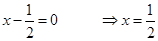
The zero of x + 1 is -1.
(i) Let p (x) = x3 + x2 + x + 1
∴ p (-1) = (-1)3 + (-1)2 + (-1) + 1 .
= -1 + 1 – 1 + 1
⇒ p (- 1) = 0
So, (x+ 1) is a factor of x3 + x2 + x + 1.

(ii) Let p (x) = x4 + x3 + x2 + x + 1
∴ P(-1) = (-1)4 + (-1)3 + (-1)2 + (-1)+1
= 1 – 1 + 1 – 1 + 1
⇒ P (-1) ≠ 1
So, (x + 1) is not a factor of x4 + x3 + x2 + x+ 1.

(iii) Let p (x) = x4 + 3x3 + 3x2 + x + 1 .
∴ p (-1)= (-1)4 + 3 (-1)3 + 3 (-1)2 + (- 1) + 1
= 1 – 3 + 3 – 1 + 1 = 1
⇒ p (-1) ≠ 0
So, (x + 1) is not a factor of x4 + 3x3 + 3x2 + x+ 1.

(iv) Let p (x) = x3 – x2 – (2 + √2) x + √2
∴ p (- 1) =(- 1)3- (-1)2 – (2 + √2)(-1) + √2
= -1 – 1 + 2 + √2 + √2
= 2√2
⇒ p (-1) ≠ 0
So, (x + 1) is not a factor of x3 – x2 – (2 + √2) x + √2.

Question 2. Use the Factor Theorem to determine whether g (x) is a factor of p (x) in each of the following cases
(i) p (x)= 2x3 + x2 – 2x – 1, g (x) = x + 1
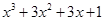
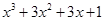
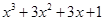
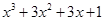
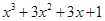
(ii) p(x)= x3 + 3x2 + 3x + 1, g (x) = x + 2
(iii) p (x) = x3 – 4x2 + x + 6, g (x) = x – 3

Solution :

(i) We have, p (x)= 2x3 + x2 – 2x – 1 and g (x) = x + 1
∴ p(-1) = 2(-1)3 + (-1)2 – 2(-1) – 1
= 2(-1) + 1 + 2 – 1
= -2 + 1 + 2 -1 = 0
⇒ p(-1) = 0, so g(x) is a factor of p(x).

(ii) We have, p(x) x3 + 3x2 + 3x + 1 and g(x) = x + 2
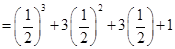
∴ p(-2) = (-2)3 + 3(-2)2+ 3(-2) + 1
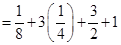
= -8 + 12 – 6 + 1
= -14 + 13
= -1
⇒ p(-2) ≠ 0, so g(x) is not a factor of p(x).

(iii) We have, = x3 – 4x2 + x + 6 and g (x) = x – 3
∴ p(3) = (3)3 – 4(3)2 + 3 + 6
= 27 – 4(9) + 3 + 6
= 27 – 36 + 3 + 6 = 0
⇒ p(3) = 0, so g(x) is a factor of p(x).

Question 3. Find the value of k, if x – 1 is a factor of p (x) in each of the following cases
(i) p (x) = x2 + x + k
(ii) p (x) = 2x2 + kx + √2
(iii) p (x) = kx2 – √2 x + 1
(iv) p (x) = kx2 – 3x + k

Solution :
For (x – 1) to be a factor of p(x), p(1) should be equal to 0.

(i) Here, p(x) = x2 + x + k
Since, p(1) = (1)2 +1 + k
⇒ p(1) = k + 2 = 0
⇒ k = -2.

(ii) Here, p (x) = 2x2 + kx + √2
Since, p(1) = 2(1)2 + k(1) + √2
= 2 + k + √2 =0
k = -2 – √2 = -(2 + √2)

(iii) Here, p (x) = kx2 – √2 x + 1
Since, p(1) = k(1)2 – (1) + 1
= k – √2 + 1 = 0
⇒ k = √2 -1

(iv) Here, p(x) = kx2 – 3x + k
p(1) = k(1)2 – 3(1) + k
= k – 3 + k
= 2k – 3 = 0
⇒ k = NCERT Solutions for Class 9 Maths chapter 2-Polynomials

Question 4. Factorise
(i) 12x2 – 7x +1
(ii) 2x2 + 7x + 3
(iii) 6x2 + 5x – 6
(iv) 3x2 – x – 4

Solution :
(i) We have,
12x2 – 7x + 1 = 12x2 – 4x- 3x + 1
= 4x (3x – 1 ) -1 (3x – 1)
= (3x -1) (4x -1)
Thus, 12x2 -7x + 3 = (2x – 1) (x + 3)

(ii) We have, 2x2 + 7x + 3 = 2x2 + x + 6x + 3
= x(2x + 1) + 3(2x + 1)
= (2x + 1)(x + 3)
Thus, 2×2 + 7x + 3 = (2x + 1)(x + 3)

(iii) We have, 6x2 + 5x – 6 = 6x2 + 9x – 4x – 6
= 3x(2x + 3) – 2(2x + 3)
= (2x + 3)(3x – 2)
Thus, 6x2 + 5x – 6 = (2x + 3)(3x – 2)

(iv) We have, 3x2 – x – 4 = 3x2 – 4x + 3x – 4
= x(3x – 4) + 1(3x – 4) = (3x – 4)(x + 1)
Thus, 3x2 – x – 4 = (3x – 4)(x + 1)

Question 5. Factorise
(i) x3 – 2x2 – x + 2
(ii) x3 – 3x2 – 9x – 5
(iii) x3 + 13x2 + 32x + 20
(iv) 2y3 + y2 – 2y – 1
Solution:

(i) We have, x3 – 2x2 – x + 2
Rearranging the terms, we have x3 – x – 2x2 + 2
= x(x2 – 1) – 2(x2 -1) = (x2 – 1)(x – 2)
= [(x)2 – (1)2](x – 2)
= (x – 1)(x + 1)(x – 2)
[∵ (a2 – b2) = (a + b)(a-b)]
Thus, x3 – 2x2 – x + 2 = (x – 1)(x + 1)(x – 2)

(ii) We have, x3 – 3x2 – 9x – 5
= x3 + x2 – 4x2 – 4x – 5x – 5 ,
= x2 (x + 1) – 4x(x + 1) – 5(x + 1)
= (x + 1)(x2 – 4x – 5)
= (x + 1)(x2 – 5x + x – 5)
= (x + 1)[x(x – 5) + 1(x – 5)]
= (x + 1)(x – 5)(x + 1)
Thus, x3 – 3x2 – 9x – 5 = (x + 1)(x – 5)(x +1)

(iii) We have, x3 + 13x2 + 32x + 20
= x3 + x2 + 12x2 + 12x + 20x + 20
= x2(x + 1) + 12x(x +1) + 20(x + 1)
= (x + 1)(x2 + 12x + 20)
= (x + 1)(x2 + 2x + 10x + 20)
= (x + 1)[x(x + 2) + 10(x + 2)]
= (x + 1)(x + 2)(x + 10)
Thus, x3 + 13x2 + 32x + 20
= (x + 1)(x + 2)(x + 10)

(iv) We have, 2y3 + y2 – 2y – 1
= 2y3 – 2y2 + 3y2 – 3y + y – 1
= 2y2(y – 1) + 3y(y – 1) + 1(y – 1)
= (y – 1)(2y2 + 3y + 1)
= (y – 1)(2y2 + 2y + y + 1)
= (y – 1)[2y(y + 1) + 1(y + 1)]
= (y – 1)(y + 1)(2y + 1)
Thus, 2y3 + y2 – 2y – 1
= (y – 1)(y + 1)(2y +1)

NCERT Solutions for Class 9 Maths Exercise 2.5

Question 1. Use suitable identities to find the following products :

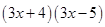
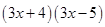
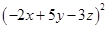
(i)NCERT Solutions for Class 9 Maths chapter 2-Polynomials/image001.png

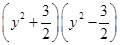
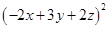
(ii) NCERT Solutions for Class 9 Maths chapter 2-Polynomials/image002.png

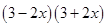
(iii) NCERT Solutions for Class 9 Maths chapter 2-Polynomials/image003.png

(iv) NCERT Solutions for Class 9 Maths chapter 2-Polynomials/image004.png

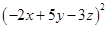
(v)NCERT Solutions for Class 9 Maths chapter 2-Polynomials/image005.png


Solution:

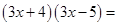
(i)NCERT Solutions for Class 9 Maths chapter 2-Polynomials/image001.png

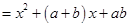
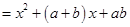
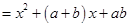
We know thatNCERT Solutions for Class 9 Maths chapter 2-Polynomials/image006.pngNCERT Solutions for Class 9 Maths chapter 2-Polynomials/image007.png.

We need to apply the above identity to find the productNCERT Solutions for Class 9 Maths chapter 2-Polynomials/image001.png

NCERT Solutions for Class 9 Maths chapter 2-Polynomials/image008.pngNCERT Solutions for Class 9 Maths chapter 2-Polynomials/image009.png

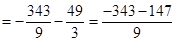
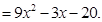
NCERT Solutions for Class 9 Maths chapter 2-Polynomials/image010.png

Therefore, we conclude that the productNCERT Solutions for Class 9 Maths chapter 2-Polynomials/image001.pngisNCERT Solutions for Class 9 Maths chapter 2-Polynomials/image011.png.

(ii) NCERT Solutions for Class 9 Maths chapter 2-Polynomials/image002.png

We know thatNCERT Solutions for Class 9 Maths chapter 2-Polynomials/image006.pngNCERT Solutions for Class 9 Maths chapter 2-Polynomials/image007.png.

We need to apply the above identity to find the productNCERT Solutions for Class 9 Maths chapter 2-Polynomials/image002.png

NCERT Solutions for Class 9 Maths chapter 2-Polynomials/image012.png=NCERT Solutions for Class 9 Maths chapter 2-Polynomials/image013.png

NCERT Solutions for Class 9 Maths chapter 2-Polynomials/image014.png

Therefore, we conclude that the productNCERT Solutions for Class 9 Maths chapter 2-Polynomials/image002.pngisNCERT Solutions for Class 9 Maths chapter 2-Polynomials/image015.png.

(iii) NCERT Solutions for Class 9 Maths chapter 2-Polynomials/image003.png

We know thatNCERT Solutions for Class 9 Maths chapter 2-Polynomials/image006.pngNCERT Solutions for Class 9 Maths chapter 2-Polynomials/image007.png.

We need to apply the above identity to find the productNCERT Solutions for Class 9 Maths chapter 2-Polynomials/image003.png

NCERT Solutions for Class 9 Maths chapter 2-Polynomials/image016.pngNCERT Solutions for Class 9 Maths chapter 2-Polynomials/image017.png

NCERT Solutions for Class 9 Maths chapter 2-Polynomials/image018.png

Therefore, we conclude that the productNCERT Solutions for Class 9 Maths chapter 2-Polynomials/image003.pngisNCERT Solutions for Class 9 Maths chapter 2-Polynomials/image019.png.

(iv) NCERT Solutions for Class 9 Maths chapter 2-Polynomials/image004.png

We know thatNCERT Solutions for Class 9 Maths chapter 2-Polynomials/image020.png.

We need to apply the above identity to find the product

NCERT Solutions for Class 9 Maths chapter 2-Polynomials/image022.png

NCERT Solutions for Class 9 Maths chapter 2-Polynomials/image023.png

Therefore, we conclude that the productNCERT Solutions for Class 9 Maths chapter 2-Polynomials/image021.pngisNCERT Solutions for Class 9 Maths chapter 2-Polynomials/image024.png.

(v) NCERT Solutions for Class 9 Maths chapter 2-Polynomials/image025.png

We know thatNCERT Solutions for Class 9 Maths chapter 2-Polynomials/image020.png.

We need to apply the above identity to find the productNCERT Solutions for Class 9 Maths chapter 2-Polynomials/image026.png

NCERT Solutions for Class 9 Maths chapter 2-Polynomials/image027.png

NCERT Solutions for Class 9 Maths chapter 2-Polynomials/image028.png

Therefore, we conclude that the productNCERT Solutions for Class 9 Maths chapter 2-Polynomials/image026.pngisNCERT Solutions for Class 9 Maths chapter 2-Polynomials/image029.png.

Question 2. Evaluate the following products without multiplying directly :

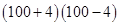
(i)NCERT Solutions for Class 9 Maths chapter 2-Polynomials/image030.png

(ii)NCERT Solutions for Class 9 Maths chapter 2-Polynomials/image031.png

(iii)NCERT Solutions for Class 9 Maths chapter 2-Polynomials/image032.png

Solution:
(i)NCERT Solutions for Class 9 Maths chapter 2-Polynomials/image030.png

NCERT Solutions for Class 9 Maths chapter 2-Polynomials/image033.png

We can observe that, we can apply the identity

NCERT Solutions for Class 9 Maths chapter 2-Polynomials/image034.png

NCERT Solutions for Class 9 Maths chapter 2-Polynomials/image035.pngNCERT Solutions for Class 9 Maths chapter 2-Polynomials/image036.png

=10000+1000+21

=11021

Therefore, we conclude that the value of the productNCERT Solutions for Class 9 Maths chapter 2-Polynomials/image037.pngisNCERT Solutions for Class 9 Maths chapter 2-Polynomials/image038.png.

(ii)NCERT Solutions for Class 9 Maths chapter 2-Polynomials/image039.png

NCERT Solutions for Class 9 Maths chapter 2-Polynomials/image040.png

We can observe that, we can apply the identity

NCERT Solutions for Class 9 Maths chapter 2-Polynomials/image034.png

NCERT Solutions for Class 9 Maths chapter 2-Polynomials/image041.pngNCERT Solutions for Class 9 Maths chapter 2-Polynomials/image042.png

=10000-900+20

=9120

Therefore, we conclude that the value of the productNCERT Solutions for Class 9 Maths chapter 2-Polynomials/image039.pngis NCERT Solutions for Class 9 Maths chapter 2-Polynomials/image043.png.

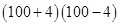
(iii) NCERT Solutions for Class 9 Maths chapter 2-Polynomials/image044.png

NCERT Solutions for Class 9 Maths chapter 2-Polynomials/image045.png

We can observe that, we can apply the identityNCERT Solutions for Class 9 Maths chapter 2-Polynomials/image020.pngwith respect to the expressionNCERT Solutions for Class 9 Maths chapter 2-Polynomials/image046.png, to get

NCERT Solutions for Class 9 Maths chapter 2-Polynomials/image047.pngNCERT Solutions for Class 9 Maths chapter 2-Polynomials/image048.png

=10000-16

=9984

Therefore, we conclude that the value of the productNCERT Solutions for Class 9 Maths chapter 2-Polynomials/image044.pngisNCERT Solutions for Class 9 Maths chapter 2-Polynomials/image049.png.

Question 3. Factorize the following using appropriate identities :

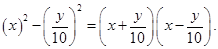
(i)NCERT Solutions for Class 9 Maths chapter 2-Polynomials/image050.png

(ii)NCERT Solutions for Class 9 Maths chapter 2-Polynomials/image051.png

(iii)NCERT Solutions for Class 9 Maths chapter 2-Polynomials/image052.png

Solution:
(i)NCERT Solutions for Class 9 Maths chapter 2-Polynomials/image050.png

NCERT Solutions for Class 9 Maths chapter 2-Polynomials/image053.png

We can observe that, we can apply the identityNCERT Solutions for Class 9 Maths chapter 2-Polynomials/image054.png

NCERT Solutions for Class 9 Maths chapter 2-Polynomials/image055.pngNCERT Solutions for Class 9 Maths chapter 2-Polynomials/image056.png

(ii)NCERT Solutions for Class 9 Maths chapter 2-Polynomials/image051.png

NCERT Solutions for Class 9 Maths chapter 2-Polynomials/image057.png

We can observe that, we can apply the identityNCERT Solutions for Class 9 Maths chapter 2-Polynomials/image054.png

NCERT Solutions for Class 9 Maths chapter 2-Polynomials/image055.pngNCERT Solutions for Class 9 Maths chapter 2-Polynomials/image056.png

(iii)NCERT Solutions for Class 9 Maths chapter 2-Polynomials/image052.png

We can observe that, we can apply the identityNCERT Solutions for Class 9 Maths chapter 2-Polynomials/image060.png

NCERT Solutions for Class 9 Maths chapter 2-Polynomials/image055.pngNCERT Solutions for Class 9 Maths chapter 2-Polynomials/image061.png

Check out: PW Experiment kits

Question 4. Expand each of the following, using suitable identities :

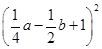
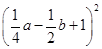
(i)NCERT Solutions for Class 9 Maths chapter 2-Polynomials/image062.png

(ii)NCERT Solutions for Class 9 Maths chapter 2-Polynomials/image063.png

(iii)NCERT Solutions for Class 9 Maths chapter 2-Polynomials/image064.png

(iv)NCERT Solutions for Class 9 Maths chapter 2-Polynomials/image065.png

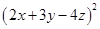
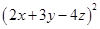
(v)NCERT Solutions for Class 9 Maths chapter 2-Polynomials/image066.png

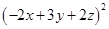
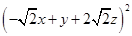
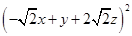
(vi)NCERT Solutions for Class 9 Maths chapter 2-Polynomials/image067.png

Solution:

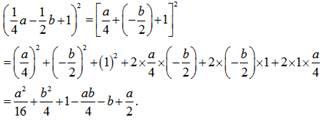
(i)NCERT Solutions for Class 9 Maths chapter 2-Polynomials/image062.png

We know thatNCERT Solutions for Class 9 Maths chapter 2-Polynomials/image068.png.

We need to apply the above identity to expand the expressionNCERT Solutions for Class 9 Maths chapter 2-Polynomials/image062.png.

NCERT Solutions for Class 9 Maths chapter 2-Polynomials/image069.png

(ii)NCERT Solutions for Class 9 Maths chapter 2-Polynomials/image063.png

We know thatNCERT Solutions for Class 9 Maths chapter 2-Polynomials/image068.png.

We need to apply the above identity to expand the expressionNCERT Solutions for Class 9 Maths chapter 2-Polynomials/image063.png.

NCERT Solutions for Class 9 Maths chapter 2-Polynomials/image070.png

(iii)NCERT Solutions for Class 9 Maths chapter 2-Polynomials/image064.png

We know thatNCERT Solutions for Class 9 Maths chapter 2-Polynomials/image068.png.

We need to apply the above identity to expand the expressionNCERT Solutions for Class 9 Maths chapter 2-Polynomials/image065.png.

NCERT Solutions for Class 9 Maths chapter 2-Polynomials/image072.png

(iv)NCERT Solutions for Class 9 Maths chapter 2-Polynomials/image065.png

We know thatNCERT Solutions for Class 9 Maths chapter 2-Polynomials/image068.png.

We need to apply the above identity to expand the expressionNCERT Solutions for Class 9 Maths chapter 2-Polynomials/image065.png.

NCERT Solutions for Class 9 Maths chapter 2-Polynomials/image072.png

(v)NCERT Solutions for Class 9 Maths chapter 2-Polynomials/image066.png

We know thatNCERT Solutions for Class 9 Maths chapter 2-Polynomials/image068.png.

We need to apply the above identity to expand the expressionNCERT Solutions for Class 9 Maths chapter 2-Polynomials/image066.png.
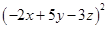
NCERT Solutions for Class 9 Maths chapter 2-Polynomials/image073.png

(vi)NCERT Solutions for Class 9 Maths chapter 2-Polynomials/image067.png

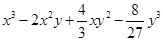
We know thatNCERT Solutions for Class 9 Maths chapter 2-Polynomials/image074.pngNCERT Solutions for Class 9 Maths chapter 2-Polynomials/image075.png.

NCERT Solutions for Class 9 Maths chapter 2-Polynomials/image076.jpg

Question 5. Factorize :

(i)NCERT Solutions for Class 9 Maths chapter 2-Polynomials/image077.png

(ii)NCERT Solutions for Class 9 Maths chapter 2-Polynomials/image078.png

Solution:
(i)NCERT Solutions for Class 9 Maths chapter 2-Polynomials/image077.png

The expression NCERT Solutions for Class 9 Maths chapter 2-Polynomials/image079.pngcan also be written as

NCERT Solutions for Class 9 Maths chapter 2-Polynomials/image080.png

We can observe that, we can apply the identityNCERT Solutions for Class 9 Maths chapter 2-Polynomials/image068.pngwith respect to the expressionNCERT Solutions for Class 9 Maths chapter 2-Polynomials/image081.png, to get

NCERT Solutions for Class 9 Maths chapter 2-Polynomials/image082.png

Therefore, we conclude that after factorizing the expressionNCERT Solutions for Class 9 Maths chapter 2-Polynomials/image077.png, we getNCERT Solutions for Class 9 Maths chapter 2-Polynomials/image082.png.

(ii)NCERT Solutions for Class 9 Maths chapter 2-Polynomials/image078.png

We need to factorize the expressionNCERT Solutions for Class 9 Maths chapter 2-Polynomials/image078.png.

The expression NCERT Solutions for Class 9 Maths chapter 2-Polynomials/image083.pngcan also be written as

NCERT Solutions for Class 9 Maths chapter 2-Polynomials/image084.png

We can observe that, we can apply the identityNCERT Solutions for Class 9 Maths chapter 2-Polynomials/image068.pngwith respect to the expressionNCERT Solutions for Class 9 Maths chapter 2-Polynomials/image085.png, to get

NCERT Solutions for Class 9 Maths chapter 2-Polynomials/image086.png

Therefore, we conclude that after factorizing the expressionNCERT Solutions for Class 9 Maths chapter 2-Polynomials/image078.png, we getNCERT Solutions for Class 9 Maths chapter 2-Polynomials/image086.png.

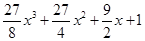
Question 6. Write the following cubes in expanded form :

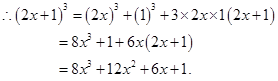
(i)NCERT Solutions for Class 9 Maths chapter 2-Polynomials/image087.png

(ii)NCERT Solutions for Class 9 Maths chapter 2-Polynomials/image088.png

(iii)NCERT Solutions for Class 9 Maths chapter 2-Polynomials/image089.png

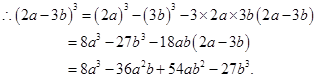
(iv)NCERT Solutions for Class 9 Maths chapter 2-Polynomials/image090.png

Solution :
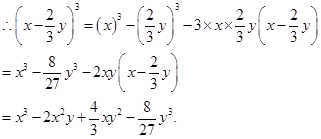
(i)NCERT Solutions for Class 9 Maths chapter 2-Polynomials/image087.png

We know thatNCERT Solutions for Class 9 Maths chapter 2-Polynomials/image091.png.

NCERT Solutions for Class 9 Maths chapter 2-Polynomials/image092.png

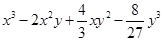
Therefore, the expansion of the expressionNCERT Solutions for Class 9 Maths chapter 2-Polynomials/image087.pngis NCERT Solutions for Class 9 Maths chapter 2-Polynomials/image093.png.

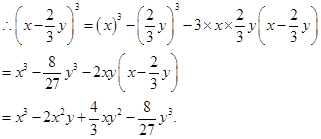
(ii)NCERT Solutions for Class 9 Maths chapter 2-Polynomials/image088.png

We know thatNCERT Solutions for Class 9 Maths chapter 2-Polynomials/image091.png.

NCERT Solutions for Class 9 Maths chapter 2-Polynomials/image095.png

Therefore, the expansion of the expressionNCERT Solutions for Class 9 Maths chapter 2-Polynomials/image089.pngisNCERT Solutions for Class 9 Maths chapter 2-Polynomials/image098.png .

(iii)NCERT Solutions for Class 9 Maths chapter 2-Polynomials/image089.png

We know thatNCERT Solutions for Class 9 Maths chapter 2-Polynomials/image091.png.

NCERT Solutions for Class 9 Maths chapter 2-Polynomials/image099.png

Therefore, the expansion of the expressionNCERT Solutions for Class 9 Maths chapter 2-Polynomials/image089.pngisNCERT Solutions for Class 9 Maths chapter 2-Polynomials/image100.png.

(iv)NCERT Solutions for Class 9 Maths chapter 2-Polynomials/image090.png

We know thatNCERT Solutions for Class 9 Maths chapter 2-Polynomials/image094.png.

NCERT Solutions for Class 9 Maths chapter 2-Polynomials/image099.png

Therefore, the expansion of the expressionNCERT Solutions for Class 9 Maths chapter 2-Polynomials/image090.pngisNCERT Solutions for Class 9 Maths chapter 2-Polynomials/image100.png.

Check out: PW Stationery

Question 7. Evaluate the following using suitable identities
(i) (99)3
(ii) (102)3
(iii) (998)3

Solution:
(i) We have, 99 = (100 -1)
∴ 993 = (100 – 1)3
= (100)3 – 13 – 3(100)(1)(100 -1)
[Using (a – b)3 = a3 – b3 – 3ab (a – b)]
= 1000000 – 1 – 300(100 – 1)
= 1000000 -1 – 30000 + 300
= 1000300 – 30001 = 970299

(ii) We have, 102 =100 + 2
∴ 1023 = (100 + 2)3
= (100)3 + (2)3 + 3(100)(2)(100 + 2)
[Using (a + b)3 = a3 + b3 + 3ab (a + b)]
= 1000000 + 8 + 600(100 + 2)
= 1000000 + 8 + 60000 + 1200 = 1061208

(iii) We have, 998 = 1000 – 2
∴ (998)3 = (1000-2)3
= (1000)3– (2)3 – 3(1000)(2)(1000 – 2)
[Using (a – b)3 = a3 – b3 – 3ab (a – b)]
= 1000000000 – 8 – 6000(1000 – 2)
= 1000000000 – 8 – 6000000 +12000
= 994011992

Question 8. Factorise each of the following
(i) 8a3 +b3 + 12a2b+6ab2
(ii) 8a3 -b3-12a2b+6ab2
(iii) 27-125a3 -135a+225a2
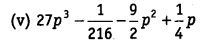
(iv) 64a3 -27b3 -144a2b + 108ab2
NCERT Solutions for Class 9 Maths chapter 2-Polynomials/ Q8
Solution:
(i) 8a3 +b3 +12a2b+6ab2
= (2a)3 + (b)3 + 6ab(2a + b)
= (2a)3 + (b)3 + 3(2a)(b)(2a + b)
= (2 a + b)3
[Using a3 + b3 + 3 ab(a + b) = (a + b)3]
= (2a + b)(2a + b)(2a + b)
(ii) 8a3 – b3 – 12a2b + 6ab2
= (2a)3 – (b)3 – 3(2a)(b)(2a – b)
= (2a – b)3
[Using a3 + b3 + 3 ab(a + b) = (a + b)3]
= (2a – b) (2a – b) (2a – b)

(iii) 27 – 125a3 – 135a + 225a2
= (3)3 – (5a)3 – 3(3)(5a)(3 – 5a)
= (3 – 5a)3
[Using a3 + b3 + 3 ab(a + b) = (a + b)3]
= (3 – 5a) (3 – 5a) (3 – 5a)

(iv) 64a3 -27b3 -144a2b + 108ab2
= (4a)3 – (3b)3 – 3(4a)(3b)(4a – 3b)
= (4a – 3b)3
[Using a3 – b3 – 3 ab(a – b) = (a – b)3]
= (4a – 3b)(4a – 3b)(4a – 3b)
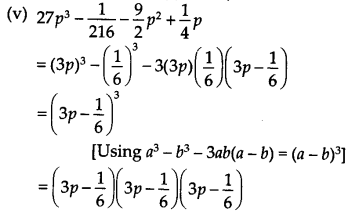
NCERT Solutions for Class 9 Maths chapter 2-Polynomials/ A8

Question 9. Verify
(i) x3 + y3 = (x + y)-(x2 – xy + y2)
(ii) x3 – y3 = (x – y) (x2 + xy + y2)

Solution:
(i) ∵ (x + y)3 = x3 + y3 + 3xy(x + y)
⇒ (x + y)3 – 3(x + y)(xy) = x3 + y3
⇒ (x + y)[(x + y)2-3xy] = x3 + y3
⇒ (x + y)(x2 + y2 – xy) = x3 + y3
Hence, verified.

(ii) ∵ (x – y)3 = x3 – y3 – 3xy(x – y)
⇒ (x – y)3 + 3xy(x – y) = x3 – y3
⇒ (x – y)[(x – y)2 + 3xy)] = x3 – y3
⇒ (x – y)(x2 + y2 + xy) = x3 – y3
Hence, verified.

Question 10. Factorise each of the following
(i) 27y3 + 125z3
(ii) 64m3 – 343n3
[Hint See question 9]

Solution:
(i) We know that
x3 + y3 = (x + y)(x2 – xy + y2)
We have, 27y3 + 125z3 = (3y)3 + (5z)3
= (3y + 5z)[(3y)2 – (3y)(5z) + (5z)2]
= (3y + 5z)(9y2 – 15yz + 25z2)

(ii) We know that
x3 – y3 = (x – y)(x2 + xy + y2)
We have, 64m3 – 343n3 = (4m)3 – (7n)3
= (4m – 7n)[(4m)2 + (4m)(7n) + (7n)2]
= (4m – 7n)(16m2 + 28mn + 49n2)

Question 11. Factorise 27x3 +y3 +z3 -9xyz.

Solution:
We have,
27x3 + y3 + z3 – 9xyz = (3x)3 + (y)3 + (z)3 – 3(3x)(y)(z)
Using the identity,
x3 + y3 + z3 – 3xyz = (x + y + z)(x2 + y2 + z2 – xy – yz – zx)
We have, (3x)3 + (y)3 + (z)3 – 3(3x)(y)(z)
= (3x + y + z)[(3x)3 + y3 + z3 – (3x × y) – (y × 2) – (z × 3x)]
= (3x + y + z)(9x2 + y2 + z2 – 3xy – yz – 3zx)

Question 12. Verify that
x3 +y3 +z3 – 3xyz = NCERT Solutions for Class 9 Maths chapter 2-Polynomials(x + y+z)[(x-y)2 + (y – z)2 +(z – x)2]

Solution:
R.H.S
= NCERT Solutions for Class 9 Maths chapter 2-Polynomials(x + y + z)[(x – y)2+(y – z)2+(z – x)2]
= NCERT Solutions for Class 9 Maths chapter 2-Polynomials(x + y + 2)[(x2 + y2 – 2xy) + (y2 + z2 – 2yz) + (z2 + x2 – 2zx)]
= NCERT Solutions for Class 9 Maths chapter 2-Polynomials(x + y + 2)(x2 + y2 + y2 + z2 + z2 + x2 – 2xy – 2yz – 2zx)
= NCERT Solutions for Class 9 Maths chapter 2-Polynomials(x + y + z)[2(x2 + y2 + z2 – xy – yz – zx)]
= 2 x NCERT Solutions for Class 9 Maths chapter 2-Polynomialsx (x + y + z)(x2 + y2 + z2 – xy – yz – zx)
= (x + y + z)(x2 + y2 + z2 – xy – yz – zx)
= x3 + y3 + z3 – 3xyz = L.H.S.
Hence, verified.

Question 13. If x + y + z = 0, show that x3 + y3 + z3 = 3 xyz.

Solution:
Since, x + y + z = 0
⇒ x + y = -z (x + y)3 = (-z)3
⇒ x3 + y3 + 3xy(x + y) = -z3
⇒ x3 + y3 + 3xy(-z) = -z3 [∵ x + y = -z]
⇒ x3 + y3 – 3xyz = -z3
⇒ x3 + y3 + z3 = 3xyz
Hence, if x + y + z = 0, then
x3 + y3 + z3 = 3xyz

Question 14. Without actually calculating the cubes, find the value of each of the following
(i) (- 12)3 + (7)3 + (5)3
(ii) (28)3 + (- 15)3 + (- 13)3

Solution:

(i) We have, (-12)3 + (7)3 + (5)3
Let x = -12, y = 7 and z = 5.
Then, x + y + z = -12 + 7 + 5 = 0
We know that if x + y + z = 0, then, x3 + y3 + z3 = 3xyz
∴ (-12)3 + (7)3 + (5)3 = 3[(-12)(7)(5)]
= 3[-420] = -1260

(ii) We have, (28)3 + (-15)3 + (-13)3
Let x = 28, y = -15 and z = -13.
Then, x + y + z = 28 – 15 – 13 = 0
We know that if x + y + z = 0, then x3 + y3 + z3 = 3xyz
∴ (28)3 + (-15)3 + (-13)3 = 3(28)(-15)(-13)
= 3(5460) = 16380

Question 15. Give possible expressions for the length and breadth of each of the following rectangles, in which their areas are given
(i) Area 25a2 – 35a + 12
(ii) Area 35y2 + 13y – 12

Solution:
Area of a rectangle = (Length) x (Breadth)
(i) 25a2 – 35a + 12 = 25a2 – 20a – 15a + 12 = 5a(5a – 4) – 3(5a – 4) = (5a – 4)(5a – 3)
Thus, the possible length and breadth are (5a – 3) and (5a – 4).

(ii) 35y2+ 13y -12 = 35y2 + 28y – 15y -12
= 7y(5y + 4) – 3(5y + 4) = (5 y + 4)(7y – 3)
Thus, the possible length and breadth are (7y – 3) and (5y + 4).

Check out: PW Merchandise

Question 16. What are the possible expressions for the dimensions of the cuboids whose volumes are given below?
(i) Volume 3x2 – 12x
(ii) Volume 12ky2 + 8ky – 20k

Solution:
Volume of a cuboid = (Length) x (Breadth) x (Height)
(i) We have, 3x2 – 12x = 3(x2 – 4x)
= 3 x (x – 4)
∴ The possible dimensions of the cuboid are 3, x and (x – 4).

(ii) We have, 12ky2 + 8ky – 20k
= 4[3ky2 + 2ky – 5k] = 4[k(3y2 + 2y – 5)]
= 4 x k x (3y2 + 2y – 5)
= 4k[3y2 – 3y + 5y – 5]
= 4k[3y(y – 1) + 5(y – 1)]
= 4k[(3y + 5) x (y – 1)]
= 4k x (3y + 5) x (y – 1)
Thus, the possible dimensions of the cuboid are 4k, (3y + 5) and (y -1).

Physics Wallah team developed an additional resource material for all aspirents who are preparing for entrance exam like NEET,JEE,RMO & Olympiads, if you are preparing for all these exam you need additional theory and questions apart from NCERT books so just click on the following chapter and get the additional theory , notes, question bank, online chapter wise test and many more !


Related Articles

NCERT Solutions for Class 9 Maths chapter-2 Polynomials