Chemistry Book for NEET Exam 2027: Complete Preparation Guide
Chemistry Book for NEET is disclosed in this post. The NEET Chemistry section consists of 50 questions, and candidates must attempt 45 questions. For effective preparation in this subject, NEET aspirants can find valuable guidance in this article regarding the books for NEET Chemistry.
Chemistry Book for NEET: Chemistry tends to be a challenging subject for many aspiring to clear the National Eligibility cum Entrance Test (NEET). However, it holds a significant weightage of 25% in the NEET exam, demanding careful attention. Effective preparation for this section involves a prudent choice of NEET books tailored to the Chemistry syllabus.
The choice of NEET study materials significantly influences success in this competitive exam. The expected NEET exam pattern for 2026 suggests the subject will be divided into sections: Section A with 35 questions and Section B with 15 questions, of which candidates must attempt 10. While the Biology section carries the highest weightage, the importance of the Chemistry section must be considered.
NEET's Chemistry section comprises 45 questions categorized into three subsections: Physical, Organic, and Inorganic Chemistry. Most questions stem from the Organic and Inorganic Chemistry sections, primarily theory-based.
Physical Chemistry questions typically involve numerical aspects and necessitate solid problem-solving skills. In this article, 'NEET books for Chemistry,' aspiring candidates will discover faculty-recommended books to prepare for the Chemistry section in NEET 2027 effectively.
Check Out - NEET Books
Chemistry Book for NEET Overview
Chemistry is often considered one of the most scoring subjects in NEET 2026 when students build a strong conceptual foundation and practice regularly. As one of the three core subjects in the NEET exam, Chemistry plays a crucial role in determining your overall rank. The syllabus covers Physical, Organic, and Inorganic Chemistry, requiring a balanced approach to theory, problem-solving, and revision.
For NEET 2026 aspirants, choosing the right Chemistry books can make preparation more effective and structured. A good Chemistry resource should provide clear concept explanations, chapter-wise practice questions, and previous years' NEET questions to help students understand the exam pattern. Consistent practice is especially important because Chemistry includes both conceptual and numerical-based questions that test application skills.
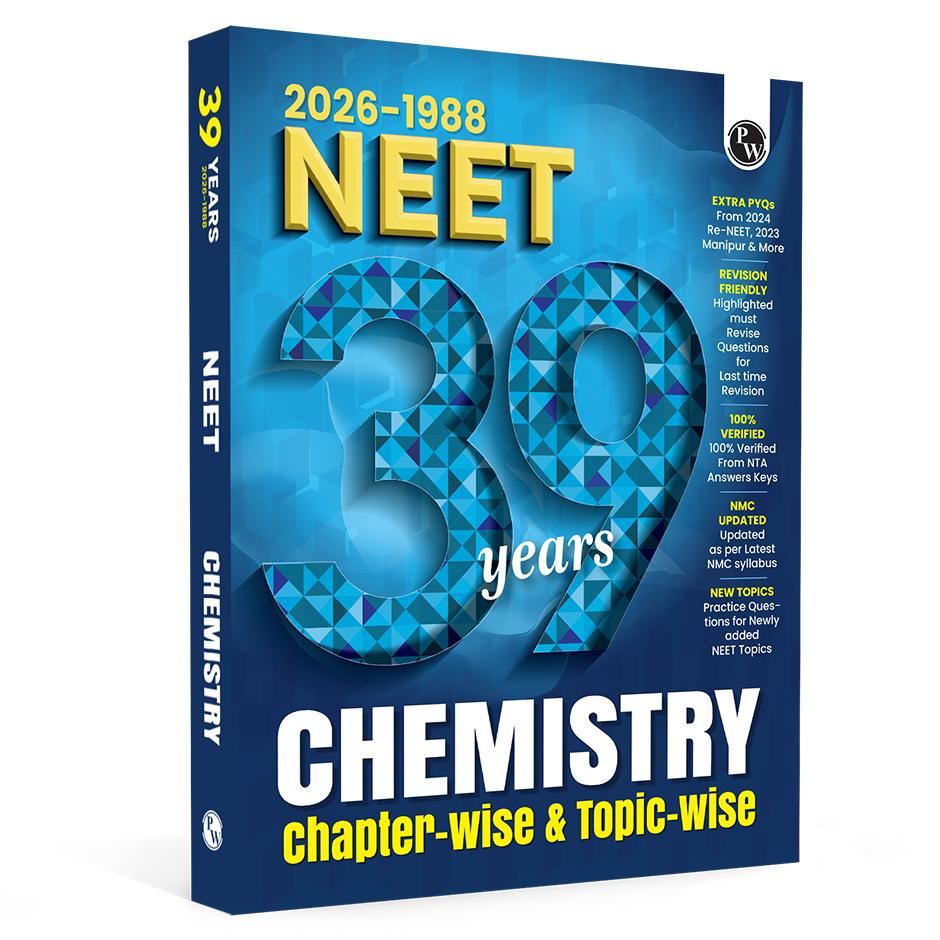
To strengthen preparation, students can use the 39 Years NEET PYQ Chemistry book, which offers extensive practice with previous years' questions and helps identify frequently tested concepts. Alongside PYQ practice, NEET MedEasy Handwritten Notes Chemistry serves as an excellent revision resource, providing concise notes, important reactions, formulas, and key concepts in an easy-to-revise format.
Success in NEET Chemistry depends on understanding concepts, revising regularly, and solving a variety of questions. By combining quality study material with systematic practice, aspirants can improve accuracy, boost confidence, and maximize their Chemistry score in NEET 2026.
Chemistry Book for NEET: Things to Consider
Choosing the right Chemistry book for NEET preparation is crucial for success in the exam. Here are some important considerations when selecting the Chemistry book for NEET:
- Relevance to NEET Syllabus: Ensure the book comprehensively covers the entire NEET Chemistry syllabus. It should include topics, theories, and concepts in the NEET curriculum.
- Clarity and Depth of Concepts: The book should explain complex chemical concepts clearly and understandably. It should delve into the depth of each topic, providing in-depth insights.
- Practice Questions and Exercises: The book should offer ample practice and exercises, including multiple-choice questions (MCQs), numerical problems, and theoretical questions. Practice is crucial to excel in NEET.
- Previous Year Question Integration: Incorporation of prior years' NEET Chemistry questions enables you to understand the exam pattern and the type of questions asked.
- Accuracy and Validity: Choose books authored by renowned Chemistry educators or publications known for their accuracy and validity in content. Reliable sources ensure correct and up-to-date information.
- User-Friendly Format: The book should be organized and reader-friendly with clear diagrams, illustrations, and well-structured content.
- Supplementary Online Resources: Some books offer additional online resources like practice tests, quizzes, or interactive platforms, enhancing your learning experience.
- Reviews and Recommendations: Consider reading reviews, seeking recommendations from teachers, peers, or NEET toppers, and gathering feedback to gauge the book's effectiveness.
- Compatibility with Learning Style: Choose a book that matches your learning style, whether you prefer a conceptual approach, problem-solving emphasis, or a balanced mix of both.
Importance Of Selecting the Chemistry Book for NEET
Selecting the appropriate Chemistry book for NEET preparation holds immense importance in your journey toward success in the NEET exam. Here's why making the right choice for your Chemistry book matters significantly:
- Comprehensive Learning: Opting for the Chemistry book ensures access to comprehensive, detailed study material covering all vital topics and concepts within the NEET syllabus. This ensures a thorough understanding of the subject.
- Accuracy and Relevance: Reputable Chemistry books for NEET provide accurate and up-to-date information, which is critical in a subject where discoveries and advancements are frequent. This ensures you are learning the most relevant content.
- Alignment with NEET Syllabus: Chemistry books are tailored to match the NEET syllabus precisely. They are structured to mirror the exam pattern, question types, and topic weightage, enabling focused and efficient preparation.
- Effective Practice Opportunities: Quality Chemistry books for NEET offer an array of practice questions that closely resemble the difficulty and format of NEET questions. This allows you to refine your problem-solving skills and prepare for the exam.
- Enhanced Conceptual Understanding: Books aid in building a robust conceptual foundation by providing clear explanations, diagrams, and practical examples. This facilitates better understanding and retention of intricate Chemistry concepts.
- Access to Supplementary Resources: Some Chemistry books for NEET include additional online resources, video lectures, or interactive platforms. These supplementary resources can enrich your learning experience and reinforce your grasp of the subject.
- Confidence Booster: Studying from the right Chemistry book instills confidence in your preparation. Knowing that you have covered the syllabus comprehensively using a trusted resource can alleviate exam anxiety and boost your confidence on exam day.
NEET-UG Chemistry Exam Pattern
The NEET-UG exam comprises a total of 200 questions. Chemistry and Physics sections have 50 questions each, while Biology consists of 100 questions (50 in Zoology and 50 in Botany).
Consequently, the NEET Chemistry syllabus constitutes 25% of the overall NEET-UG syllabus, demanding a diligent blend of practice and dedication. Let's take a quick look at the NEET-UG examination pattern before proceeding further:

Chemistry Book for NEET: Tips for NEET Preparation
NEET Chemistry constitutes a significant portion of the exam, with 50 questions and 160 marks. Effective preparation strategies are crucial. Here are some tips to ace NEET Chemistry:
- Prioritize Chemistry Preparation: Allocate ample time for Chemistry study, focusing on fundamental principles, atomic structure, chemical bonding, the periodic table, and stoichiometry. These concepts lay the groundwork for advanced topics.
- Choose Comprehensive Study Material: Opt for reliable study materials mentors or seniors recommend. Utilize online resources, video lectures, and study guides to supplement your learning and understanding.
- Create Effective Study Aids: Make concise notes and flashcards summarizing essential concepts, equations, and chemical reactions. These aids facilitate quick revision and recall, especially for Inorganic and Organic Chemistry.
- Master Organic Chemistry: Given its weightage, dedicate significant time to understanding Organic Chemistry, including naming reactions, concepts, and reaction mechanisms. Practice solving questions and identifying functional groups.
- Focus on Numerical Problems: 15 questions in NEET Chemistry are numerical-based. Emphasize the mole concept, chemical kinetics, thermodynamics, and equilibrium. Regular practice with numerical problems is key.
- Solve Previous Year's Papers: Familiarize yourself with the exam pattern and difficulty level by solving previous years' NEET Chemistry question papers. This practice will help identify important topics and enhance time management skills for the actual exam.
- Seek Clarifications and Guidance: If doubts arise during your NEET Chemistry preparation, consult mentors or join online platforms offering doubt clarification. Platforms like PW Saarthi can provide valuable assistance.
By incorporating these strategies, you can enhance your NEET Chemistry preparation and increase your chances of performing well in this crucial exam section.
NEET Exam Chemistry Topic Wise Weightage
In the NEET Chemistry section, candidates encounter three distinct segments: Physical Chemistry, Organic Chemistry, and Inorganic Chemistry. Each of these segments carries varying weightage and contributes differently to the total marks in the exam.
For effective preparation, candidates are encouraged to delve into the topic-wise weightage of NEET Chemistry. This understanding allows them to craft a well-structured study plan in anticipation of the upcoming examination. By referring to the NEET Chemistry chapter-wise weightage and utilizing specialized NEET Chemistry books, candidates can streamline their preparation for optimum performance.

Chemistry Book for NEET Exam: FAQ's
1) What should I consider when choosing the chemistry book for the NEET exam preparation?
Consider factors such as alignment with the NEET syllabus, clarity of concepts, ample practice questions, and authorship to ensure the chosen chemistry book meets the requirements for effective NEET preparation.
2) How can the right chemistry book enhance my NEET exam readiness?
A suitable chemistry book will provide a strong foundation, comprehensive coverage of exam topics, problem-solving techniques, and a structured approach to mastering the subject, boosting your confidence and exam performance.
3) Can you recommend a specific chemistry book for NEET exam preparation?
While preferences vary, popular choices include "Objective Chemistry" by R.K. Gupta, "Concise Inorganic Chemistry" by J.D. Lee, and "Physical Chemistry" by P. Bahadur. Choose one that aligns with your learning style and needs.
4) Is it necessary to use multiple chemistry books for NEET preparation?
It's unnecessary, but supplementary books for specific topics or practice can provide a more comprehensive understanding. However, focus on mastering one primary book that aligns well with the NEET syllabus for a strong foundation.
5) Are there any online resources or e-books that complement my chosen chemistry book for NEET preparation?
Absolutely. Numerous online platforms offer e-books, video lectures, practice questions, and interactive quizzes that can complement your chosen chemistry book.
![NEET Easy Handwritten Notes Inorganic Chemistry For NEET & JEE Main By Om Pandey | Chapterwise and Topicwise Questions | Backlog Killer Notes with Handpicked PYQs [paperback] Om Pandey](https://static.pw.live/5eb393ee95fab7468a79d189/PW_STORE/70b74278-3b96-4694-b430-e302f03921e9.png)