RRB JE Syllabus 2026 for CBT 1, 2 and Technical Abilities
Preparing for the Junior Engineer role in Indian Railways is a major accomplishment for any engineering aspirant. With the competition getting tougher every year, understanding the RRB JE syllabus is the first hurdle you need to clear. Many students struggle because they dive into books without knowing the exact weightage of topics or the difference between the two stages of the exam.
This guide breaks down the RRB JE syllabus 2026 into manageable sections, ensuring you focus on the right areas to secure your seat in the technical departments of the railways.
Check Out: PW RRB Books
RRB JE Syllabus 2026: Exam Pattern Overview
Before looking at the specific topics, you must understand the RRB JE exam pattern. The recruitment process is divided into two computer-based tests (CBT).
CBT 1 Exam Pattern
CBT 1 acts as a screening test. It consists of 100 questions that must be solved in 90 minutes.
-
Mathematics: 30 Questions
-
General Intelligence & Reasoning: 25 Questions
-
General Awareness: 15 Questions
-
General Science: 30 Questions
CBT 2 Exam Pattern
CBT 2 is the deciding factor for your merit. It has 150 questions with a duration of 120 minutes.
-
General Awareness: 15 Questions
-
Physics & Chemistry: 15 Questions
-
Basics of Computers and Applications: 10 Questions
-
Basics of Environment and Pollution Control: 10 Questions
-
Technical Abilities: 100 Questions
Note: There is a negative marking of 1/3rd for every wrong answer in both stages.
Check Out: RRB PYQs
RRB JE Syllabus for CBT 1
The RRB JE CBT 1 syllabus is designed to test your mental agility and basic scientific understanding. Since this stage is common for all engineering branches, you need to be versatile.
RRB JE Math Syllabus
Mathematics is often the highest-scoring section if your concepts are clear. The core topics in the RRB JE math syllabus include:
-
Number System: BODMAS, Decimals, Fractions, LCM, and HCF.
-
Arithmetic: Ratio and Proportion, Percentages, Mensuration, Time and Work, Time and Distance.
-
Financial Math: Simple and Compound Interest, Profit and Loss.
-
Algebra & Geometry: Elementary Algebra, Geometry, and Trigonometry.
-
Statistics: Elementary Statistics and Age Calculations.
RRB JE Science Syllabus
The RRB JE science syllabus for CBT 1 focuses on topics up to the 10th-standard CBSE level.
-
Physics: Units and measurements, force and motion, work, energy, power, light, and sound.
-
Chemistry: atomic structure, chemical reactions, acids, bases, and salts, and the periodic table.
-
Life Sciences: Biology basics, human body systems, and the plant and animal kingdoms.
RRB JE General Intelligence and Reasoning Syllabus
This section tests your logical thinking. It includes analogies, alphabetical and number series, coding and decoding, mathematical operations, relationships, syllogism, jumbling, Venn diagrams, data interpretation and sufficiency, conclusions and decision-making, similarities and differences, analytical reasoning, classification, directions, statement-arguments and assumptions.
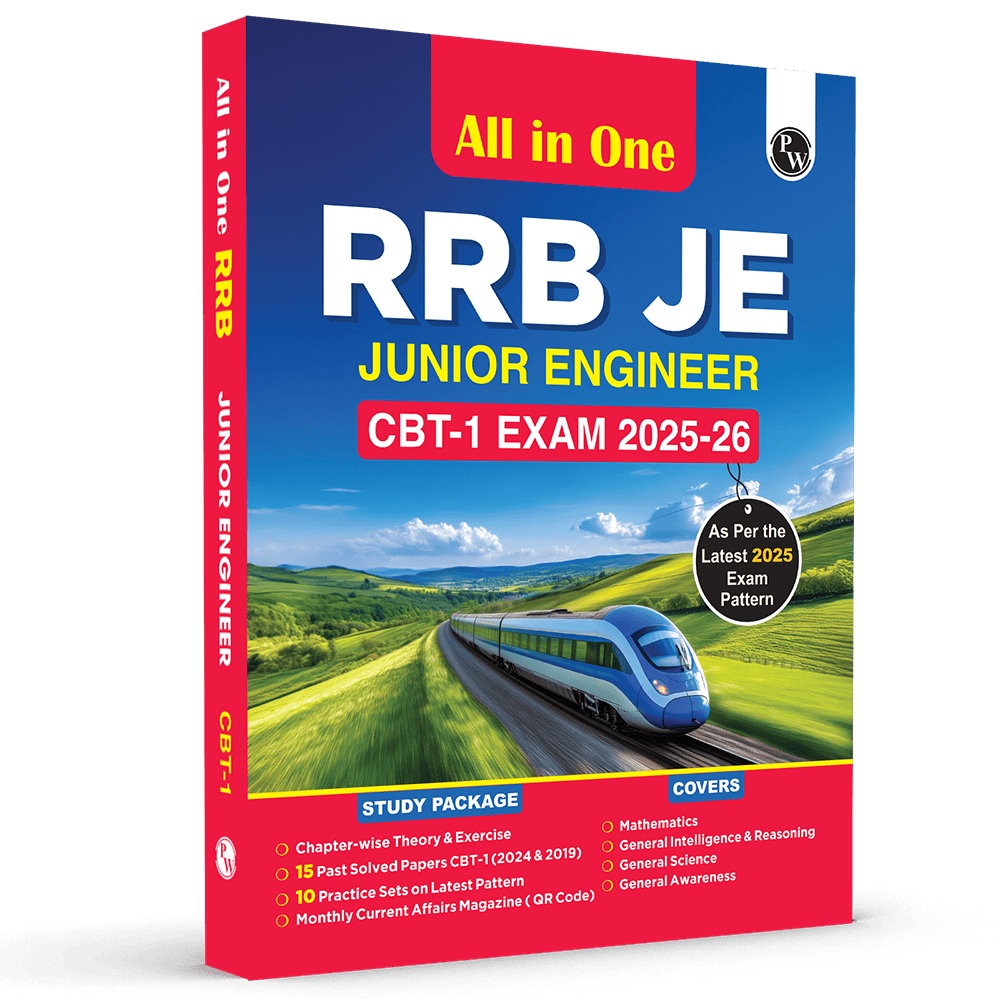
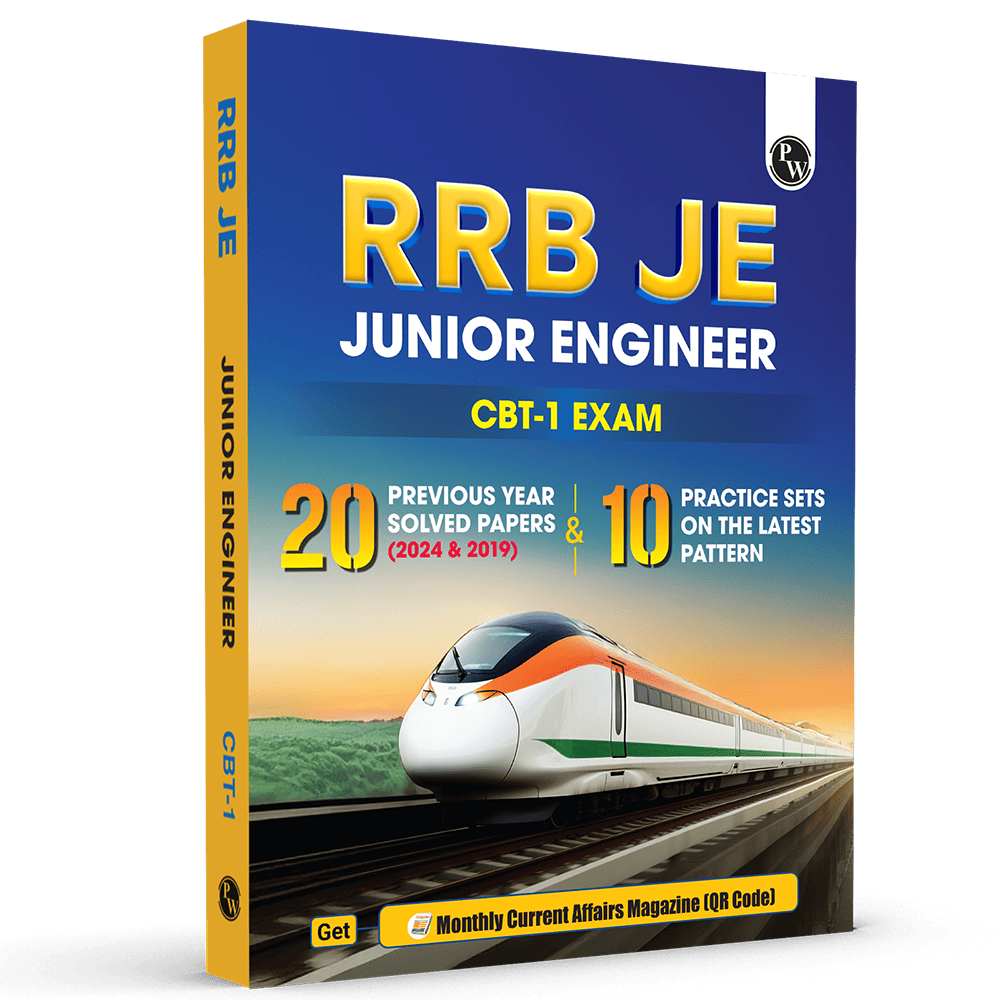
Check Out: All in One RRB JE CBT - 1 Previous Year Solved Papers
RRB JE Syllabus for CBT 2 and Technical Abilities
The RRB JE CBT 2 syllabus shifts the focus from general aptitude to core engineering principles. While the first four sections are common, the "Technical Abilities" part is unique to your diploma or degree.
RRB JE Syllabus for CBT 2 Common Subjects
-
General Awareness: Current affairs, Indian geography, culture and history of India, including the freedom struggle, Indian polity and constitution, Indian economy, environmental issues concerning India and the world, sports, and general scientific and technological developments.
-
Physics and Chemistry: Standard 10th-level concepts, but applied more towards technical scenarios.
-
Computer Applications: Architecture of Computers, Input and Output Devices, Storage Devices, Networking, Operating Systems like Windows and Unix, MS Office, Data Representation, Internet and Email, Websites and Web Browsers, and Computer Viruses.
-
Environment and Pollution Control: Basics of the environment, adverse effects of environmental pollution and control strategies, air, water and noise pollution, waste management, global warming, acid rain, and ozone depletion.
RRB JE Syllabus for Technical Abilities (100 Marks)
This subject is the heart of the RRB JE syllabus. You must choose your technical group based on your educational qualification:
-
Civil and Allied Engineering: Engineering Mechanics, Building Materials, Construction of Substructure and Superstructure, Surveying, Drawing, Estimating, Costing and Valuation, Concrete Technology, RCC Structures, Steel Structures, Hydrology and Structures, Highway Engineering, Environmental Engineering.
-
Electrical and Allied Engineering: Basic concepts, circuit law, AC fundamentals, measurement and measuring instruments, electrical machines, fractional kilowatt motors, single-phase induction motors, synchronous machines, generation, transmission and distribution, estimation and utilisation of electrical energy, and basic electronics.
-
Mechanical and Allied Engineering: Engineering Mechanics, Material Science, Strength of Materials, Machining, Welding, Grinding and Finishing Processes, Metrology, Fluid Mechanics & Hydraulic Machinery, Industrial Management, Thermal Engineering.
-
Electronics and Allied Engineering: Electronic Components and Materials, Electronic Devices and Circuits, Digital Electronics, Linear Integrated Circuits, Microprocessors and Microcontrollers, Electronic Measurements, Communication Engineering, Data Communication and Networks, and Computer Programming.
RRB JE Syllabus 2026 Preparation Strategy
To tackle the RRB JE syllabus effectively, you should adopt a dual-phase study plan.
-
Phase 1 (CBT 1 Focus): Start with the RRB JE maths syllabus and general science. These sections carry 60% of the weightage in the first stage. Use NCERT books for science and practice speed-math techniques for the arithmetic section.
-
Phase 2 (Technical Depth): Once you are confident with the basics, start dedicating 4 hours daily to your technical core subjects. The RRB JE CBT 2 syllabus requires a profound understanding of engineering concepts rather than just rote learning of formulas.
-
Mock Tests: To familiarise yourself with the RRB JE exam pattern, take at least two full-length mock tests each week. This helps in managing time, especially for the 100 questions that must be completed within the 90-minute constraint of CBT 1.
Read More: RRB JE Eligibility Criteria
RRB JE Syllabus FAQs
1. Is the RRB JE syllabus different for civil and mechanical students?
The CBT 1 syllabus is identical for all branches. However, in CBT 2, the "Technical Abilities" section of the RRB JE syllabus 2026 differs based on your specific engineering stream.
2. What are the most important topics in the RRB JE math syllabus?
Key topics are number systems, percentages, time and work and mensuration. The RRB JE exam has these topics. They are critical because they come up a lot and have many marks. The RRB JE exam includes topics such as number systems, percentages, time and work, and mensuration, which are important for scoring well.
3. Does the RRB JE CBT 2 syllabus include general science?
In CBT 2, general science as a section is not present. Instead, CBT2 has sections for physics and chemistry. This course is for students who're up to the 10th standard. CBT 2 also covers the basics of computers and the environment. The basics of computers and the environment are parts of CBT 2, along with physics and chemistry.
4. How can I prepare for the Technical Abilities section?
Look at your diploma or degree textbooks. Focus on the subjects outlined in the RRB JE CBT 2 syllabus for your branch. For example, you should study circuit law. You should study building materials as a student. The RRB JE CBT 2 syllabus has all the core subjects for your branch, so focus on those.
5. What is the weightage of the RRB JE science syllabus in CBT 1?
The RRB JE science syllabus is important and includes 30 questions out of 100, making up 30% of the total marks. It has the same weightage as Mathematics and covers basic topics from 10th-grade Physics, Chemistry, and Biology.