CBSE Class 10 Maths Standard vs Basic Question Bank
For students in the 2026 Board, deciding between Standard and Basic Mathematics is a very important choice. The syllabus is the same, but the level of difficulty is different. To get the best grades in either level, you need a separate CBSE Class 10 mathematics standard vs basic question bank to help you learn the different question patterns.
Check Out: CBSE Class 10th Books
Why You Need a Maths Question Bank in Class 10?
A lot of pupils think that math is a hard problem to solve. But at its core, it's a matter of reasoning and practice, not just memorization. For Class 10 pupils, the goal is not only to comprehend the theorems but also to use them to solve different kinds of problems while under pressure. A CBSE Class 10 maths standard vs basic question bank is your best friend at this point.
It's not enough to only do NCERT problems for the board test anymore. Students now have to get ready for case studies, assertion-reasoning, and questions of different levels of difficulty because of competency-based questions. A good 10th CBSE maths question bank helps you learn a concept and then do it flawlessly on paper. It gives you the organized practice you need to develop "muscle memory" for difficult calculations, so you won't freeze up when you come across a problem you've never seen before.
Check Out: CBSE Class 10 Question Banks
CBSE class 10 Maths Standard vs Basic Question bank
To help students relax and meet their career goals, the Central Board of Secondary Education (CBSE) added two levels of math. The curriculum is the same for both, but the way they are tested is very different.
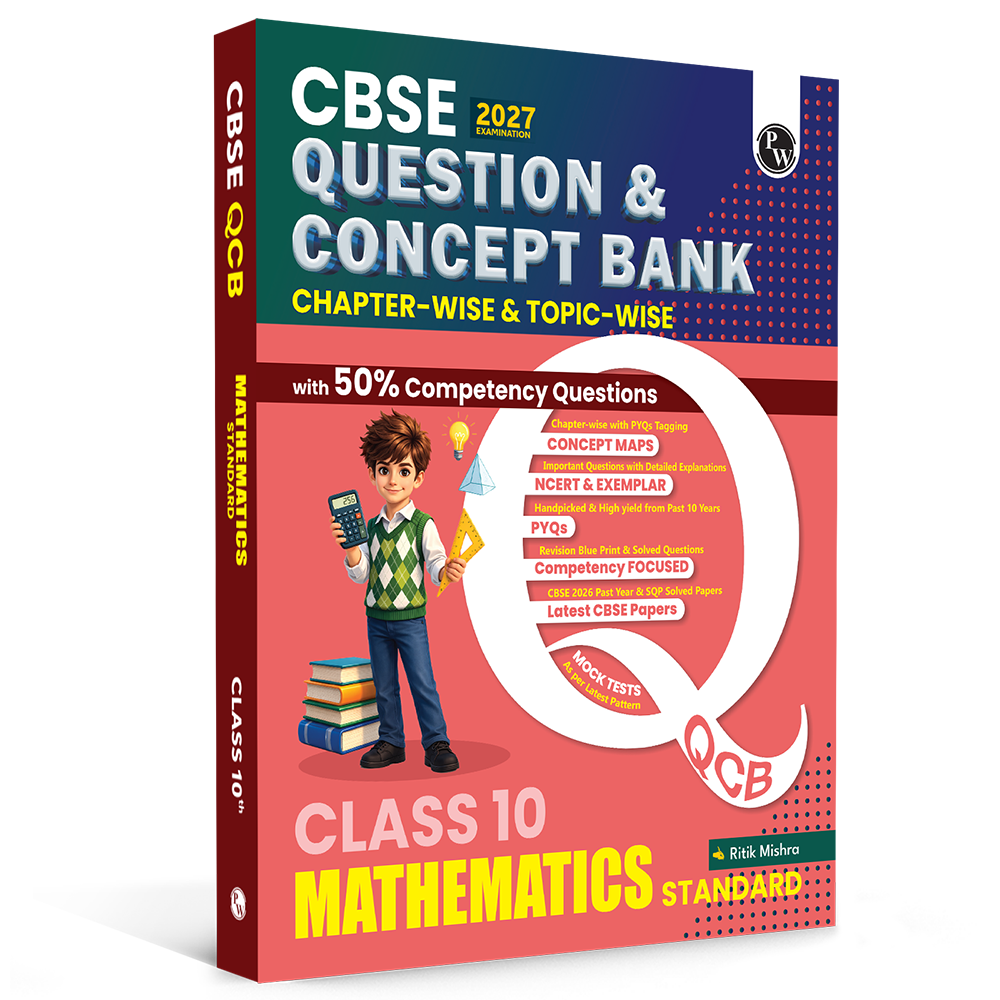
1. Mathematics Standard
This level is for students who want to study math in 11th and 12th grades or who want to work in engineering, pure sciences, or commerce with math.
-
Difficulty Level: Moderate to High.
-
Question Type: Focuses on higher-order thinking skills (HOTS), complex applications, and multi-step problem solving.
-
Future Scope: Mandatory if you want to take up PCM or Commerce with Mathematics.
Check Out: CBSE Class 10 Sample Papers
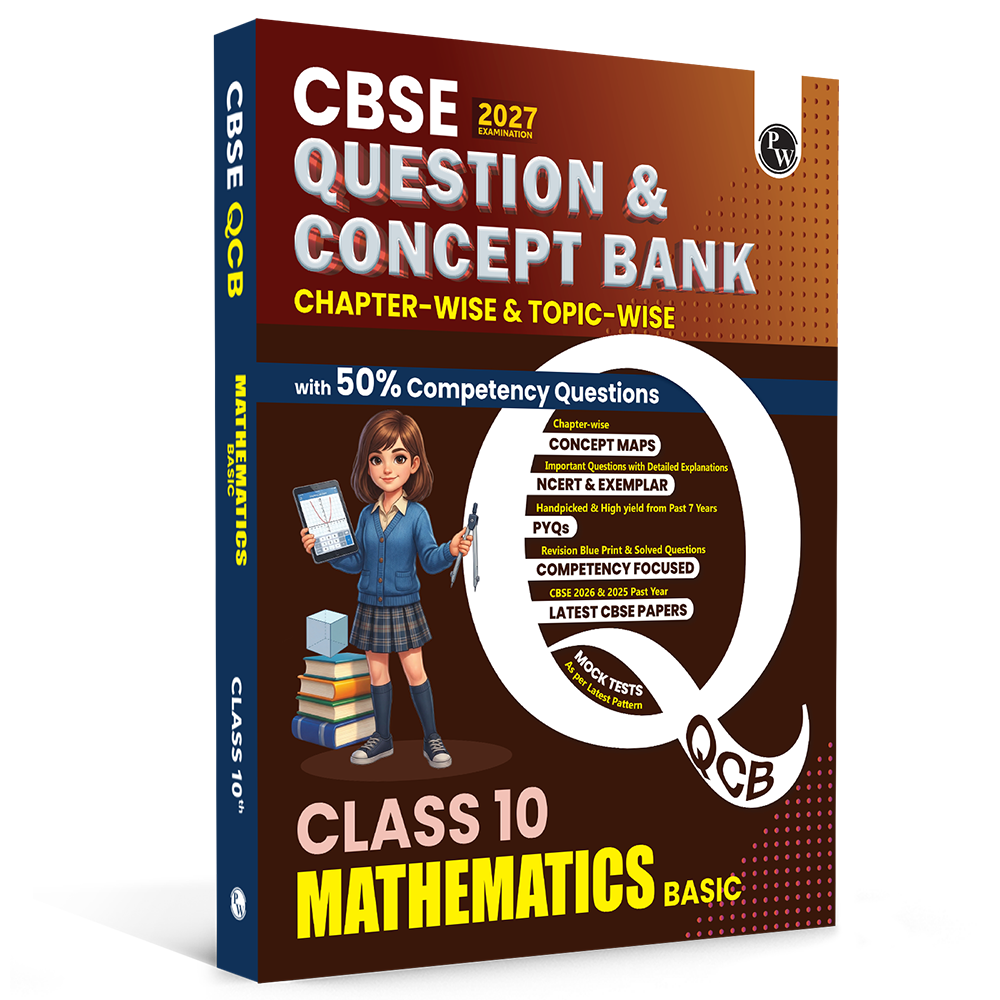
2. Mathematics Basic
This is a simpler version for students who have trouble with math or who want to study Humanities, Arts, or some Commerce courses after Class 10 without math.
-
Difficulty Level: Easy to Moderate.
-
Question Type: Focuses on direct application of formulas, fundamental concepts, and NCERT-based direct questions.
-
Future Scope: If you pass Basic, you cannot take Mathematics in Class 11 unless you later clear the Standard level during the compartment exams.
|
Feature |
Maths Standard |
Maths Basic |
|
Syllabus |
Identical to Basic |
Identical to Standard |
|
Question Complexity |
High (Application & Analysis) |
Low (Direct & Procedural) |
|
NCERT Dependence |
NCERT + Exemplar + Reference |
Primarily NCERT-based |
|
Class 11 Eligibility |
Can take Maths/Science/Commerce |
Cannot take Maths in Class 11 |
Why Choose the Question Bank for 2026?
Students need a resource that matches the most recent 2026 exam pattern when they hunt for the finest CBSE class 10 maths question bank. The CBSE Class 10 maths standard vs basic question bank is very well made to help students at both levels.
Unlike generic books, the question bank class 10 maths standard focuses on the nuances of the 2026 curriculum. It doesn't just give you questions; it teaches you the "why" behind the solutions. For students using the CBSE class x maths question bank from, the focus is on conceptual clarity and exam-readiness. Subject area specialists who know about CBSE's move toward competency-based learning have prepared the material.
Key Features of the Class 10 Maths Question Bank
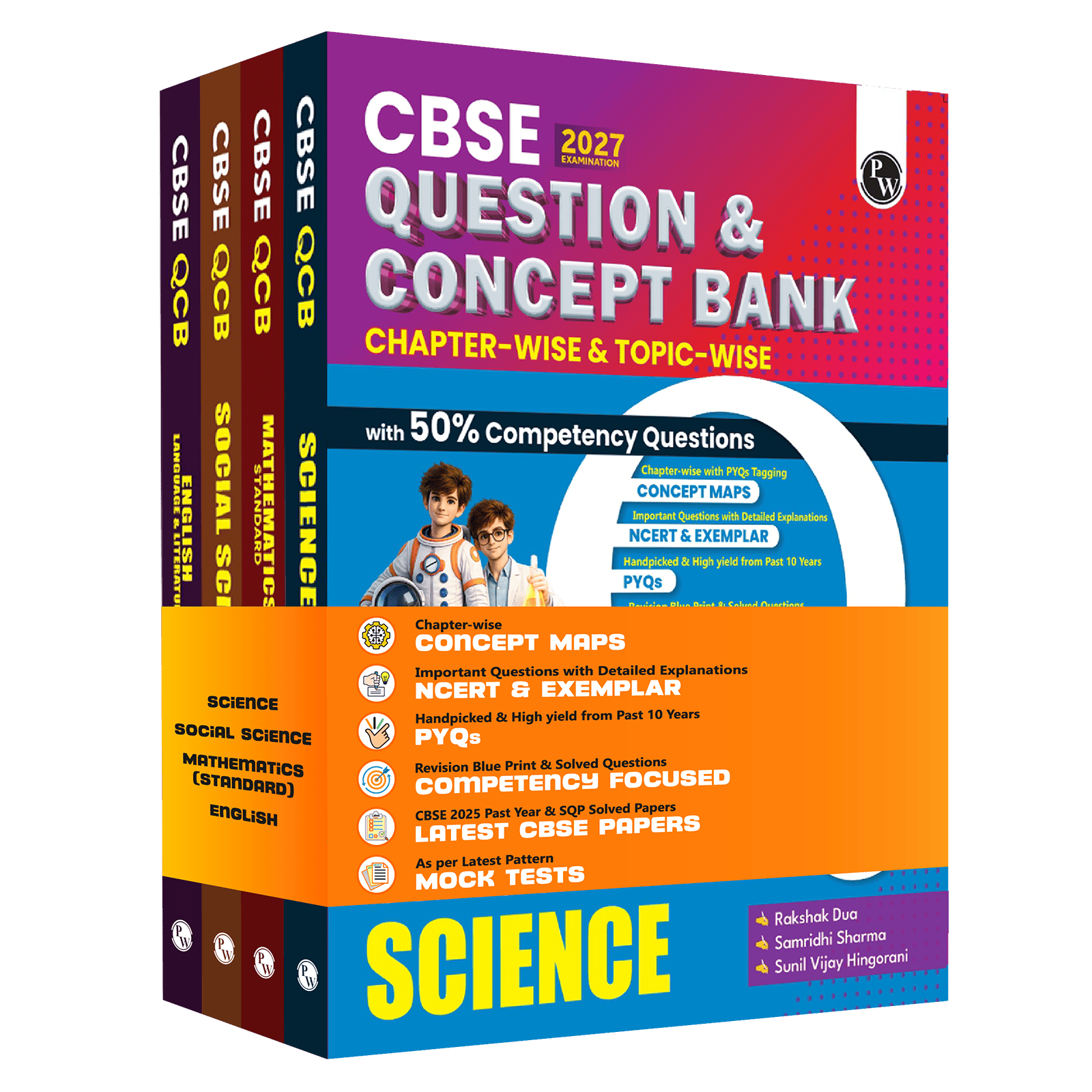
The CBSE question bank class 10 math isn't just a bunch of problems; it's a whole system for getting ready. Here are the most important parts:
-
Concept maps for each chapter: At the outset of each chapter, there is a graphic summary that lets you see all the formulas at once.
-
Solved PYQs: This book has the last five years' worth of board questions, so you can see what CBSE really asks.
-
Competency-Based Questions: In line with the NEP 2020 guidelines, the bank includes ample Case-Based, Assertion-Reason, and MCQ questions.
-
Step-by-Step Solutions: Every problem comes with a detailed explanation that follows the CBSE marking scheme, teaching you how to write answers that fetch full marks.
-
Level-Based Practice: The bank clearly segregates questions that are more likely to appear in the Standard exam versus those tailored for the Basic exam.
-
Self-Assessment Tests: At the end of each chapter, there are timed tests to help you gauge your speed and accuracy.
-
NCERT + Exemplar Questions Included: Strengthens your concepts with both standard and advanced-level questions
-
High-Yield Questions from Last 10 Years: Focus on important and frequently asked topics
-
Competency-Based Blueprints: Helps you prepare chapter-wise with a clear exam strategy
-
Fully Solved Sample Papers & Past Papers: Understand exam pattern and improve answer writing
-
Mock Tests Based on Latest Pattern: Practise in real exam-like conditions
-
Concept Maps Linked with PYQs: Helps connect theory with real exam questions
Tips to Use Your Question Bank Perfectly
Simply owning a CBSE Class 10 maths standard vs basic question bank isn't enough; you must use it strategically to see results.
-
Finish NCERT First: Always treat your NCERT textbook as the foundation. Once you finish a chapter there, move to the CBSE Class 10 maths basic question bank for advanced practice.
-
Focus on the Marking Scheme: Don't just look at the final answer. Study the step-by-step solutions to understand how marks are allocated for formulas, diagrams, and calculations.
-
Use a Timer: When solving the mock papers or chapter tests, set a timer. This builds the stamina required to handle the 3-hour board exam without panic.
-
Analyse Mistakes: Use a different coloured pen to mark the questions you got wrong. Revisit these specific problems every week until you can solve them effortlessly.
-
Clear doubts quickly: If you are stuck on a complex problem in the question bank, try looking at sample papers or PYQs.
The choice between Standard and Basic Mathematics should be based on your future goals and current comfort level with the subject. Regardless of the path you choose, a robust CBSE Class 10 maths standard vs basic question bank is the bridge that leads to academic success. By combining consistent practice with the right resources, you can turn your Mathematics exam from a source of stress into an opportunity to boost your overall percentage.
Read More: Score 100 Out of 100 in Class 10 Maths Board Exam
CBSE Class 10 Maths Standard vs Basic Question Bank FAQs
Can I change from Basic to Standard after the Class 10 results?
Yes, if you pass the Basic Mathematics exam and decide you want to take Mathematics in Class 11, you can appear for the Standard Mathematics exam during the CBSE Compartment window.
Is the syllabus different for the CBSE class 10 maths question bank for Basic and Standard?
No, the syllabus is exactly the same for both. The only difference lies in the difficulty level and the types of questions asked in the board exam.
Does the 10th CBSE maths question bank include case-study questions?
Absolutely. The question bank includes a dedicated section for competency-based questions, including case studies and assertion-reasoning, which now carry significant weightage in the board exams.
Is NCERT enough for the Maths Standard exam?
While NCERT is the base, the Standard exam often features "outside" questions that require application-based thinking. Using a question bank class 10 maths standard helps you prepare for these higher-level problems.
Will solving the CBSE Class X maths question bank improve my speed?
Yes, regular practice with the question bank, especially during timed sessions, significantly improves your calculation speed and helps you manage your time better during the actual exam.