How to Score Good Marks in Maths Using Class 10 Question Bank

Many students find mathematics challenging, especially with the pressure of board exams and a large syllabus. Often, the problem isn't a lack of ability but not having a clear plan for practice. Using a reliable Class 10 question bank every day can help.
It gives you more than just textbook examples and shows you the types of questions the board asks. By practising common topics and past trends, you can gain the confidence to solve even difficult geometry or algebra questions.
Check Out: CBSE Class 10th Books
Importance of Class 10 Question Bank
Moving from Class 9 to Class 10 means you need to use more logic and application. Textbooks give you the basics, but they usually don't offer enough practice for high scores. A dedicated Class 10 question bank helps you connect what you learn to how you'll perform on exam day.
-
Pattern Recognition: It helps you identify which chapters carry the most weight.
-
Variety of Questions: You get exposure to MCQs, assertion-reasoning, and case-based problems.
-
Confidence Building: Solving hundreds of problems reduces exam fright.
-
Time Management: It teaches you how much time to allocate to a 2-mark question versus a 5-mark one.
Understanding the CBSE Class 10 Question Bank Structure
Board exams are not only about getting the right answer but also about following the marking scheme. A good CBSE class 10 question bank matches the official curriculum and uses the latest assessment rules.
These resources are usually organized to match the board exam format. You’ll see sections for Very Short Answer, Short Answer, and Long Answer questions. This way, you practice the same types of questions you’ll see in the exam.
Mastering the Marking Scheme
When you use a question bank for class 10, you start to see a pattern in how marks are awarded. For instance, in a 5-mark question on Trigonometry or Surface Areas and Volumes, the board awards marks for:
-
Writing the correct formula.
-
The step-by-step substitution of values.
-
The final calculation with the correct unit.
How to Practise CBSE Class 10 Question Bank
Just having a book isn’t enough—you need to use it the right way. To score above 90%, use the CBSE Class 10 question bank Maths in a planned way. Begin with the topics you find hardest instead of picking chapters at random.
Focus on High-Weightage Chapters
Some chapters are more important than others. Algebra and Geometry often have the most marks. Try to solve at least 20 to 30 different questions from these topics. This will help you be ready for any surprises in the exam.
Solving Case-Based Questions
Case-study questions are a new part of the board exam. They ask you to use math concepts in real-life situations. A good CBSE Class 10 question bank gives you plenty of practice with these, so you can build the skills to understand the story behind the math.
Benefits of Using Class 10 Question Bank
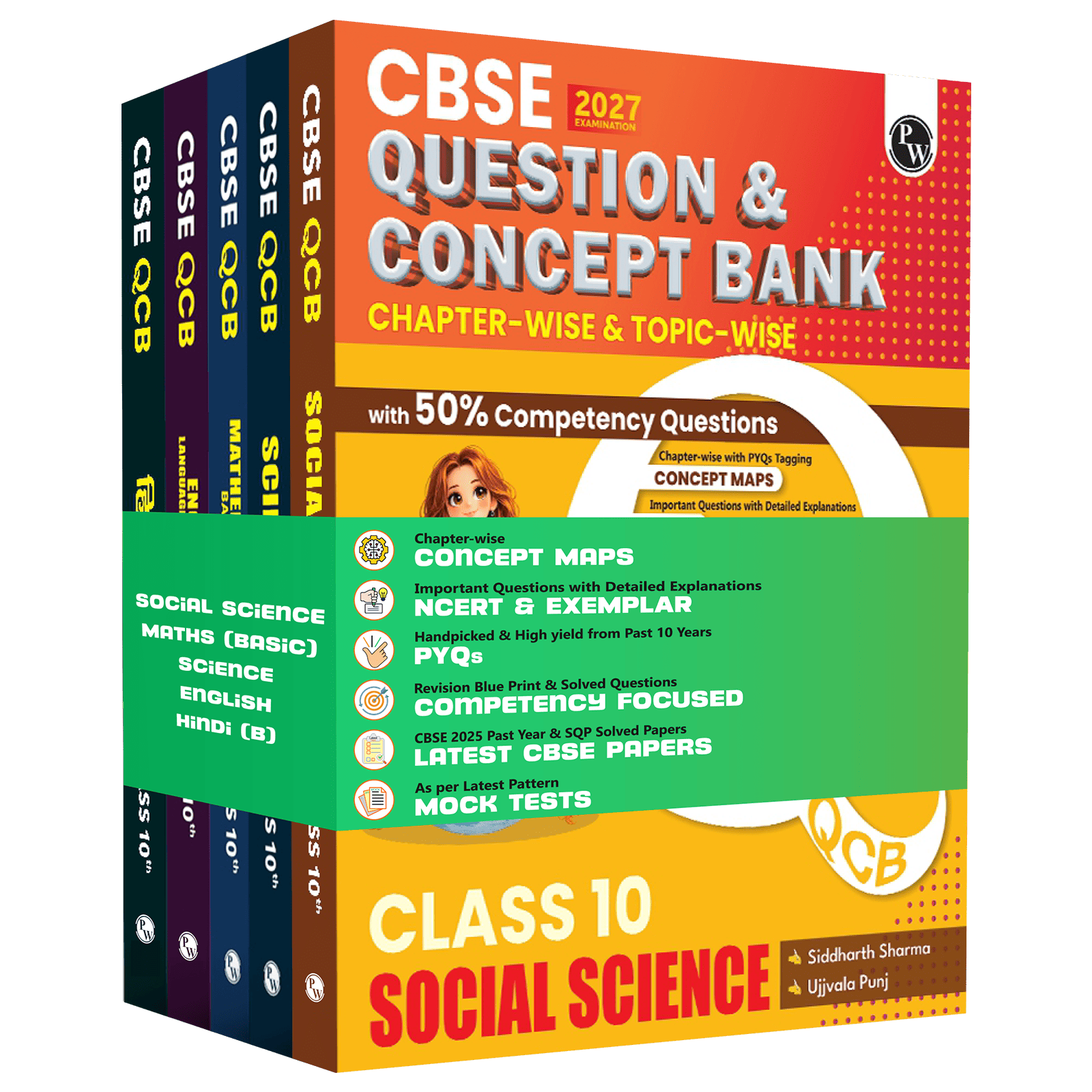
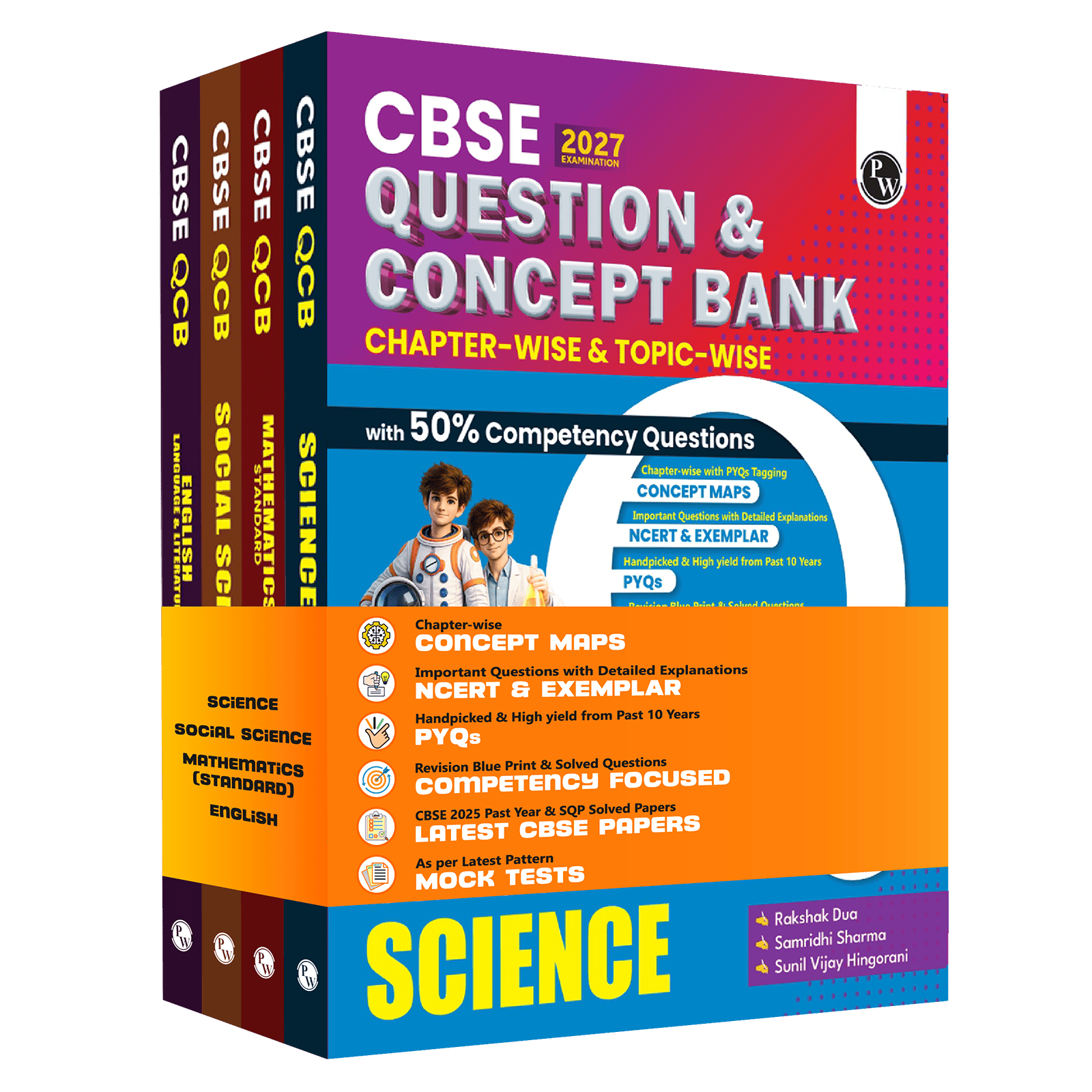
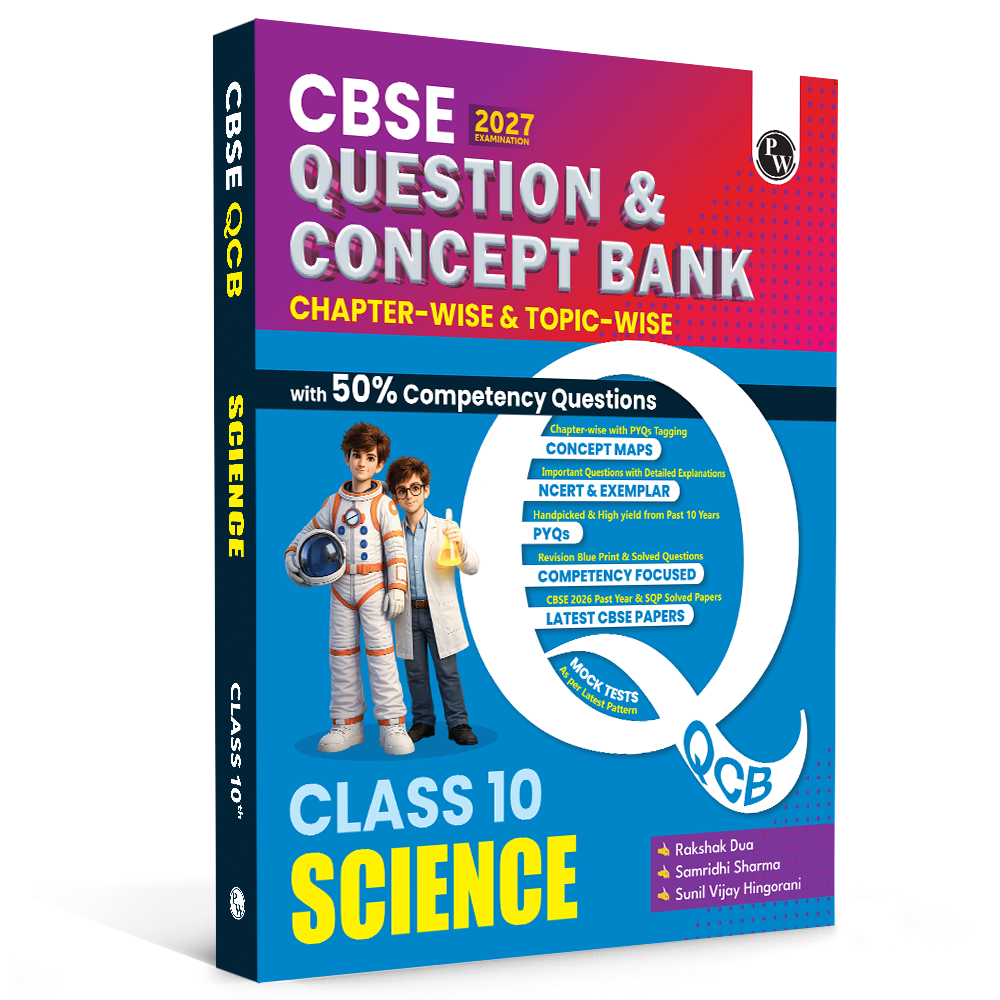
Among the various options available, the PW Class 10 question bank is specifically designed to cater to the needs of modern learners. It focuses on clarity and simplification, making it easier for students to grasp complex proofs and theorems.
-
Detailed Solutions: Every question comes with a step-by-step explanation.
-
Error-Free Content: Precision is key in mathematics, and these banks ensure accurate data.
-
Updated Syllabus: It strictly follows the 2025-26 academic guidelines.
-
Topper's Tips: Many sections include shortcuts and mnemonic devices to remember formulas.
Calculation mistakes are a common problem for math students. By practising regularly with a Class 10 question bank, you get better at mental math and spotting shortcuts. This helps you save time in the exam and gives you a chance to check your answers.
How to Use the Class 10 Question Bank Effectively
To make the most of your study material, try this easy four-step process:
-
Chapter Revision: Quickly go through your notes or NCERT once.
-
Unsolved Practice: Try solving 10 questions from the bank without looking at the answers.
-
Self-Assessment: Compare your steps with the solutions provided in the bank.
-
Doubt Clearance: Mark the questions you got wrong and revisit them after two days.
Keep a small logbook. Note down how many questions you solved correctly on the first attempt. This visual representation of your growth will keep you motivated throughout the academic year.
Check Out: CBSE Class 10th Previous Year Papers
Common Mistakes to Avoid in Class 10 Question Bank
Even with the best class 10 question bank, students often make avoidable errors. Being aware of these can save you those crucial 2–3 marks that make the difference between a 95 and a 98.
-
Skipping Steps: Boards award marks for steps. Don't jump directly to the answer.
-
Ignoring Units: Always write cm, m, or sq. units where applicable.
-
Poor Graph Work: Ensure your graphs are neat and scales are clearly mentioned.
-
Not Reading the Question: Sometimes the question asks for the diameter, but students find the radius and stop there.
The final month before the exam should be dedicated entirely to the class 10 question bank. Instead of learning new concepts, re-solve the "starred" or difficult questions you identified earlier in the year. This reinforces your memory and ensures you don't panic when you see a familiar but complex problem.
Tips for Class 10 Question Bank
As the exam gets closer, start practising with full-length mock papers. Most question banks have sample papers at the end. Find a quiet place, set a timer for three hours, and try to finish the paper in one sitting.
Doing this helps you build the focus and energy you’ll need for the real exam. It also lets you figure out your best starting strategy, like whether to begin with the 5-mark questions when you’re fresh or start with the 1-mark MCQs to get going.
Mathematics is a skill, not just a subject. Like learning music or a sport, it takes regular practice. If you spend just one hour each day with your Class 10 question bank, you can turn math into a subject where you score well.
Read More: CBSE Class 10 Question Bank PDF Download
Score Good Marks in Maths Using Class 10 Question Bank FAQs
Q1: Is the class 10 question bank enough for board exams?
While NCERT is the foundation, a question bank is essential for practising the variety of questions and patterns that NCERT alone might not cover.
Q2: When should I start using the question bank for class 10?
It is best to start using it as soon as you finish a chapter in school to reinforce what you have learned.
Q3: Does the pw class 10 question bank include previous year questions?
Yes, it includes a curated selection of previous year questions to help students understand the recurring trends in the board exams.
Q4: How many hours should I spend on the CBSE Class 10 question bank daily?
Spending 45 to 60 minutes daily on solving problems from the bank is usually sufficient for most students to see a significant improvement.