How to Prepare IBPS PO with Previous Year Papers?

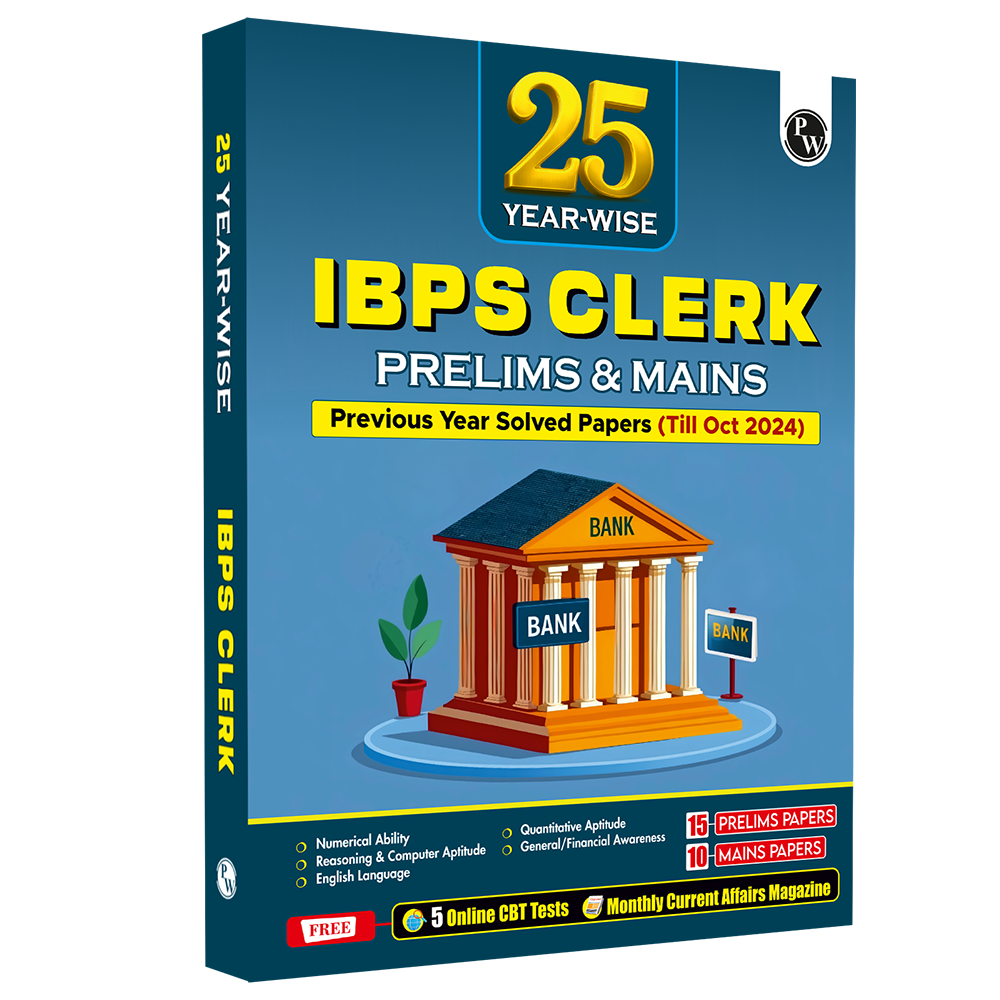
How to Prepare IBPS PO with Previous Year Papers: Preparing for IBPS PO with previous year papers is one of the most effective strategies for scoring well in the exam. These papers help candidates understand the real exam pattern, difficulty level, and frequently asked question types across Prelims and Mains. Regular practice improves speed, accuracy, and time management while also strengthening core concepts in Reasoning, Quantitative Aptitude, English, and Banking Awareness. By analyzing solutions, students can identify mistakes and learn better approaches to solve problems efficiently. The IBPS PO 25 Year-wise Prelims & Mains Previous Year Solved Papers is a highly useful resource that provides structured practice and helps aspirants build confidence for the actual exam.
IBPS PO 2026 Exam Pattern
The IBPS PO 2026 selection process is divided into three main stages: Preliminary Exam, Mains Exam, and Interview. Each stage is designed to assess different skill sets required for the role of a Probationary Officer in public sector banks. The exam is conducted in an online mode and follows a structured pattern with sectional timing, negative marking, and qualifying criteria for each stage. Candidates must clear each stage to progress to the next level of the recruitment process.
|
IBPS PO 2026 Exam Pattern: Prelims |
|||
|
Section |
No. of Questions |
Maximum Marks |
Duration |
|
English Language |
30 |
30 |
20 minutes |
|
Quantitative Aptitude |
35 |
35 |
20 minutes |
|
Reasoning Ability |
35 |
35 |
20 minutes |
|
Total |
100 |
100 |
60 minutes |
|
IBPS PO 2026 Exam Pattern: Mains |
|||
|
Section |
No. of Questions |
Maximum Marks |
Duration |
|
Reasoning & Computer Aptitude |
45 |
60 |
60 minutes |
|
General/Economy/Banking Awareness |
40 |
40 |
35 minutes |
|
English Language |
35 |
40 |
40 minutes |
|
Data Analysis & Interpretation |
35 |
60 |
45 minutes |
|
Descriptive Test (English) |
2 (Letter & Essay) |
25 |
30 minutes |
|
Total |
157 (Objective + Descriptive) |
225 |
3 hours 30 minutes |
For effective preparation, candidates should follow a structured approach and regularly practice mock tests and previous year questions, where Banking Books play an important role by strengthening concepts and improving accuracy. This combination helps aspirants perform better in competitive banking exams.
IBPS PO Important Topics 2026
To prepare effectively for the upcoming exam, it’s essential to focus on the most relevant and high-scoring topics. Analysing the IBPS PO previous year papers gives clear insights into the frequently asked topics and changing trends in the exam. However, go through the IBPS PO Important Topics 2026 below:
|
IBPS PO Prelims Exam |
|
|
Section |
Important Topics |
|
English Language |
Reading Comprehension, Cloze Test, Error Detection, Fill in the Blanks, Para Jumbles |
|
Quantitative Aptitude |
Simplification/Approximation, Number Series, Data Interpretation, Quadratic Equations, Arithmetic Word Problems |
|
Reasoning Ability |
Puzzles (Seating, Floor, Scheduling), Syllogism, Inequality, Blood Relations, Coding-Decoding, Alphanumeric Series |
|
Mains Exam |
|
|
Section |
Important Topics |
|
Reasoning & Computer Aptitude |
Advanced Puzzles, Input-Output, Coding-Decoding, Logical Reasoning, Data Sufficiency, Computer Awareness |
|
Data Analysis & Interpretation |
Caselet DI, Pie Chart, Bar Graph, Tabular DI, Missing DI, Probability, Data Sufficiency, Permutation & Combination |
|
English Language |
Reading Comprehension, Cloze Test, Sentence Connector, Error Spotting, Word Usage, Paragraph Completion |
|
General/Economy/Banking Awareness |
Current Affairs (last 6 months), Banking & Financial Awareness, Government Schemes, Budget, RBI Policies, Static GK |
|
Descriptive Test |
Essay Writing (Banking, Finance, Social Issues), Letter Writing (Formal/Informal) |
IBPS PO Exam Preparation Book
1. Statement & Conclusion
Statements:
Every molecule is an atom. No particle is a molecule. Only a few elements are matter.
Conclusions:
I. Some atoms are elements.
II. Some matter is particles.
Q. Which of the above conclusions logically follow?
a) Only I follows
b) Only II follows
c) Both I and II follow
d) Neither I nor II follow
2. Machine Input-Output
Input: 57 50 FGN KZU 74 NVS 91 OOS 17 HPDM
Q. How many elements are there between “RTV” and “NTS” in the step prior to the final step?
a) None
b) One
c) Two
d) Three
3. Word & Number Arrangement
Step 3: 74 100 50 FGN KZU YNS ORS 17 HPDM 51 37
Q. Which is the position of "EPSXN" in the step ??
a) 2nd from the left
b) 6th from the left
c) 7th from the right
d) None of these
4. Puzzle Arrangement
Ten persons are sitting in a line facing the north, even positions are Managers, odd positions are Associates.
Q. Who is seated exactly in the middle of R and the person who sits immediately to the left of Q?
a) Associate
b) Unknown person
c) Manager
d) Cannot be determined
5. Symbol Based Statement
If: "P @ Q" means "P is father of Q"
"P * Q" means "P is mother of Q"
Q. What does the expression "A @ B * C" mean?
a) A is the maternal uncle of C
b) A is father of B and B is mother of C
c) A is grandfather of C
d) None of the above
For more such IBPS PO PYQs PDF, click the link and explore the IBPS PO Book PDF, which provides structured practice material, previous year questions, and detailed solutions to help aspirants strengthen their preparation and improve exam performance.
How to Prepare IBPS PO with Previous Year Papers?
1. Understand the Paper Pattern through PYQs
Before starting the preparation, it is very important to know the paper pattern. The best way to do this is by going through the IBPS PO previous year question papers. These papers give you a clear idea about the number of questions, the marks, time allotted, and the sections involved.
2. Set a Daily Practice Routine
One of the effective ways to use IBPS PO previous year papers is to include them in your daily schedule. Instead of randomly picking topics every day, try to follow a fixed routine. This helps in covering all subjects equally and also gives you time for revision. Your practice should be a mix of full-length papers, topic-wise PYQs, and sectional practice.
|
Day |
Focus Area |
Activity |
|
Monday |
Quantitative Aptitude |
Solve PYQs from 2021 and 2022, focus on arithmetic and DI |
|
Tuesday |
English Language |
Attempt RC and Cloze Test PYQs, revise grammar rules |
|
Wednesday |
Reasoning Ability |
Practise puzzles and seating arrangement questions from previous years |
|
Thursday |
Full Prelims Paper (1 Hour) |
Solve a complete Prelims PYQ paper in exam-like conditions |
|
Friday |
Descriptive (Mains) |
Write 1 Essay & 1 Letter from PYQs, focus on clarity and format |
|
Saturday |
Banking Awareness + GK |
Revise topics from PYQ-based current affairs questions |
|
Sunday |
Full Mains-level Section (DI or RC) |
Attempt Mains-level PYQs from quant or English |
3. Make Notes While Solving Previous Year Questions
Note-making is one of the most powerful habits during IBPS PO preparation, especially when working with previous year papers. While solving questions, you may come across shortcuts, difficult logic, or tricky words. Instead of just understanding them and moving on, write them down in a separate notebook.
These notes should not just be one-word reminders but should explain why something works or doesn't work. For instance, if you made a mistake in a syllogism question, write down why your approach was wrong and what logic should have been applied.
-
Maintain separate sections for Quant, English, Reasoning, and GK in your notebook.
-
Use different colours to highlight formulas, important points, and error-prone areas.
-
Don’t just write, speak and write. Say the concept out loud while writing, this helps you remember the information better.
-
Revise notes twice a week, even if it’s for 15–20 minutes.
-
Convert tricky data or facts into small flashcards and pin them near your study area.
-
Use sticky notes on your mirror or cupboard for formulas or grammar rules you often forget.
4. Analyse Your Weak Areas Using PYQs
Solving IBPS PO previous year papers is not just about answering the questions. The real learning comes from analysing the paper after solving it.
Once you check your answers, go back and look at where you went wrong. Is it a calculation mistake? A conceptual error? Or did you misread the question? Write these errors down and categorise them. This analysis shows your weak zones. You can then spend extra time improving those particular areas.
|
Section |
Often Difficult Topics |
|
Quant Aptitude |
Time & Work, Probability, Pie Chart DI |
|
Reasoning Ability |
Puzzles (Floor, Box, Scheduling), Input-Output |
|
English Language |
Para Jumbles, Vocabulary-based questions |
|
General Awareness |
Budget, RBI Policies, Banking Abbreviations |
Check Out: Quantitative Aptitude, Reasoning Ability and English Language Combo Set of 3 Books
5. Use PYQs for Real-Time Time Management
Time management is one of the biggest challenges in the IBPS PO exam. Many students fail not because they don’t know the answers, but because they run out of time. Solving IBPS PO previous year question papers with a stopwatch helps build a habit of working under time pressure. Every time you solve a PYQ set, set an actual timer. Stick to the sectional time limits used in the real exam. For example:
-
English: 20 minutes
-
Reasoning: 20 minutes
-
Quant: 20 minutes
6. Revise PYQs Before the Exam Day
Once you're closer to the exam, don't focus too much on new things. Instead, revise what you have already done. Revisit your IBPS PO previous year questions, especially those you found difficult the first time. You may realise they are easier now, which boosts confidence.
-
Difficult puzzles and DI sets you struggled with
-
Essay and letter writing formats
-
Important grammar rules and commonly tested vocabulary
-
Important current affairs from the last 6 months
7. Use PYQs as Mock Tests in the Final Phase
-
After solving, analyse the paper the same day and note:
-
Which section took longer than expected?
-
Which mistakes are being repeated?
-
What score are you getting? Is it increasing or dropping?
8. Build Confidence Through Repeated PYQ Practice
Lastly, confidence doesn’t come from just reading books, it comes from solving real exam-like questions repeatedly. IBPS PO previous year papers give you that confidence. As you solve more and more PYQs, you will start seeing patterns, repeated question types, and familiar formats.
Read More: IBPS PO Syllabus 2026 for Prelims and Mains Exam
IBPS PO Previous Year Papers FAQs
1. How useful are IBPS PO previous year papers?
They help understand the exam pattern, question types, and difficulty level. Great for practice and revision.
2. Where can I find IBPS PO previous year question papers with solutions?
Available on the IBPS website, in exam preparation books, and on platforms like PW (Physics Wallah).
3. Should I solve PYQs before finishing the syllabus?
Start topic-wise PYQs after covering the basics. Full paper practice is better after 60–70% syllabus is done.
4. How many previous year papers should I solve?
At least 5–7 years' worth for both Prelims and Mains to get a good grip on the exam format.
5. Can PYQs be used as mock tests?
Yes, use them as mock tests during the final phase to build exam stamina and improve accuracy.