How to Prepare KYC Quantitative Aptitude for Banking Exams

Mastering the mathematical section is often the biggest hurdle for banking aspirants. Whether you are aiming for IBPS, SBI, or RBI exams, the pressure to solve complex calculations in seconds is immense. If you want to prepare KYC quantitative aptitude successfully, you need more than just rote learning; you need a structured approach that combines conceptual clarity with rapid-fire calculation techniques.
Many students struggle with time management and shifting exam patterns, making it essential to use targeted banking quant study material. This article breaks down the step-by-step strategy to ace the quant section using the right tools and practice methods.
Check Out - Banking Books
KYC Quantitative Aptitude Overview
The "Know Your Concept" (KYC) approach is designed specifically to simplify the vast syllabus of banking mathematics. When you prepare KYC quantitative aptitude, you are not just memorising formulas; you are learning the "why" behind every shortcut.
The framework focuses on three distinct levels of learning: basic conceptual understanding, application through practice, and speed enhancement through previous year patterns.
Banking exams have evolved. Gone are the days of simple interest-calculation questions. Today, examiners test your ability to interpret data and apply multiple concepts to a single problem.
By using a dedicated book, you can categorise your learning into arithmetic, data interpretation, and speed maths. This systematic division ensures that no topic is left untouched and that your foundation remains unshakable regardless of the difficulty level.
Importance of KYC Quantitative Aptitude
Success in the quantitative section relies on three pillars: accuracy, speed, and selection. You cannot afford to spend two minutes on a single arithmetic word problem. Therefore, your preparation must start with the basics of Vedic maths and mental calculation.
Mastering Calculation Speed
Before diving into heavy chapters like Probability or Time and Work, you must master the art of fast calculation. This includes:
-
Tables and Squares: Memorise tables up to 30, squares up to 50, and cubes up to 20.
-
Fraction to Percentage Conversion: Knowing that 1/7 is 14.28% saves crucial seconds during Data Interpretation.
-
Vedic Maths Techniques: Use base methods for multiplication and digit sums for verifying answers.
Building Conceptual Depth
Once your speed is under control, move to the core arithmetic topics. Banking exams heavily prioritise Percentages, Ratio and Proportion, and averages. These three topics form the "Arithmetic Trinity." If you master these, you can solve almost all of the quant section, including complex Data Interpretation sets. A reliable preparation book will provide chapter-wise breakdowns to help you navigate these topics logically.
How to Prepare for KYC Quantitative Aptitude
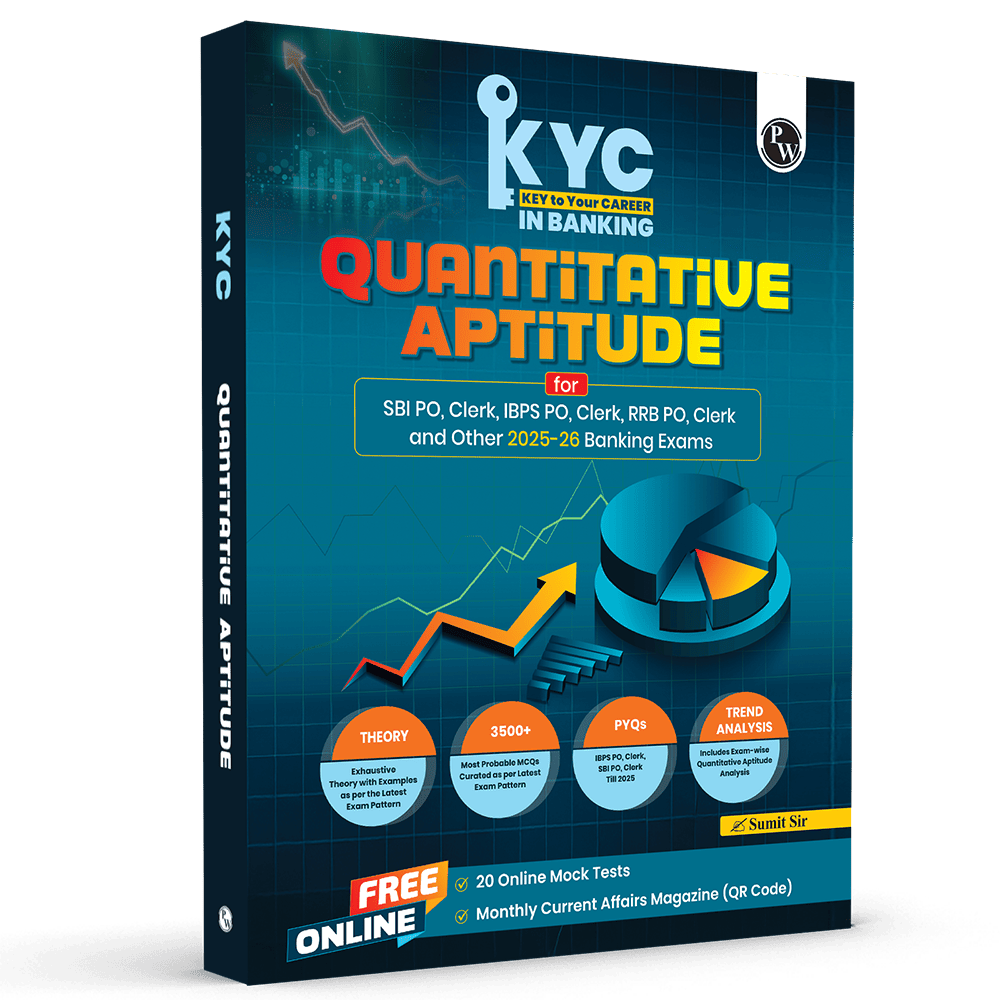
Choosing the right resources can make or break your preparation. The KYC Quantitative Aptitude book is widely considered a top-tier quant book for banking exams. Below are its key features:
-
Extensive Question Bank: It contains over 3,500+ solved questions, ensuring you never run out of practice material.
-
Level-Wise Practice: Questions are divided into different difficulty levels, allowing you to scale your skills from beginner to advanced.
-
Detailed Solutions: Unlike many books that only provide the final answer, this banking quant study material offers step-by-step explanations and alternative short tricks.
-
Latest Pattern Content: The book is updated for the 2025-26 exam cycle, covering new types of questions seen in recent mains exams.
Study Strategy for KYC Quantitative Aptitude
When you prepare KYC quantitative aptitude, a structured study plan becomes crucial. Consistency is more important than intensity; studying for three hours daily is better than a twelve-hour marathon once a week.
Phase 1: The Foundation (Weeks 1-4)
Start with the "Speed Maths" section. Practice simplification, approximation, number series, and quadratic equations daily. These topics carry 10-15 marks in preliminary exams and are the easiest to score. Use your book to solve at least 50 questions from these categories every morning.
Phase 2: Arithmetic Mastery (Weeks 5-10)
Dedicate one week to each major arithmetic topic. Start with Percentages, then move to Profit and Loss, and then Simple and Compound Interest. Ensure you solve the quantitative aptitude questions from the previous year for each topic to understand the specific language used by exam boards.
Phase 3: Data Interpretation and Caselets (Weeks 11-14)
Data Interpretation (DI) is the heart of the Mains exam. You should practice:
-
Tabular and Bar Graphs: The most common types.
-
Line and Pie Charts: Focus on converting degrees to percentages.
-
Caselet DI: Paragraph-based questions that require strong logical mapping.
-
Missing DI: Advanced sets where some data points must be calculated first.
Right Practises for KYC Quantitative Aptitude Preparation
You cannot truly prepare KYC quantitative aptitude without looking at the past. Analysing quantitative aptitude questions from previous years helps you identify "hot topics" that recur each year. For instance, you will notice that Boat and Stream questions or Partnership problems have recurring patterns.
By reviewing the last five years of papers, you can:
-
Identify the weightage of different chapters.
-
Understand the transition from easy prelims to difficult mains questions.
-
Learn how to manage time under the pressure of a ticking clock.
The KYC book integrates these previous year trends into its practice sets, so you are always practising relevant content rather than outdated syllabus material.
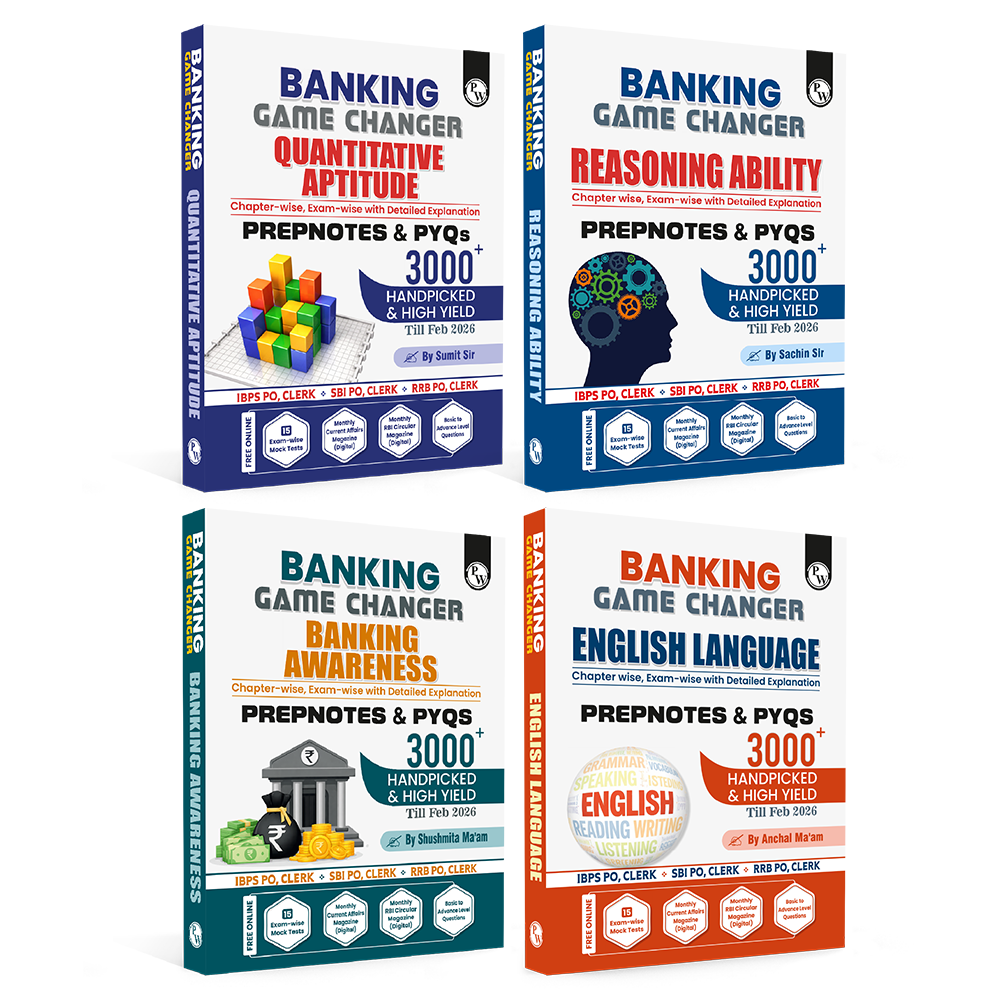
For a complete preparation cycle, your desk should have a mix of conceptual guides and practice workbooks.
-
KYC Quantitative Aptitude Book: The primary textbook for conceptual clarity and 3,500+ questions.
-
Question Sets: For advanced-level practice.
-
Sectional Mock Test Series: To simulate the real exam environment.
Using a dedicated quantitative aptitude MCQ book ensures that you are exposed to a variety of question formats, from multiple-choice to data-sufficiency types.
Mistakes to Avoid in KYC Quantitative Aptitude Preparation
Many students fail despite hard work because they fall into common traps. Avoiding these will put you ahead of thousands of competitors.
-
Ignoring the Basics: Skipping calculation practice to jump into "tough" problems is a recipe for failure. Accuracy comes from a strong foundation.
-
Over-reliance on Shortcuts: Shortcuts are great, but they only work when you know the underlying concept. If the examiner twists the question slightly, the shortcut might fail.
-
Neglecting Sectional Mocks: Don't just take full-length mocks. Take 20-minute sectional tests to improve your speed specifically for the quant portion.
-
Not Reviewing Errors: Solving 100 questions is useless if you don't analyse the 10 questions you got wrong. Use the detailed solutions in your banking maths preparation book to learn from your mistakes.
Checklist for KYC Quantitative Aptitude Preparation
Before you sit for your banking exam, ensure you have ticked these boxes:
-
Completed all 3,500+ questions from the KYC quantitative aptitude book.
-
Memorised all essential tables, squares, and cubes.
-
Solved at least 10 years of quantitative aptitude previous year questions.
-
Achieved a consistent score in at least 20 sectional mock tests.
-
Mastered the "Arithmetic Trinity" of Percentage, Ratio, and Average.
By following this roadmap and utilising the right banking quant study material, you transform a daunting subject into your strongest scoring area. The KYC methodology ensures you are not just prepared for the exam but prepared to excel.
Read More: Prepare Quantitative Aptitude for Bank Exams
KYC Quantitative Aptitude Book FAQs
Which is the right quant book for banking exams for beginners?
The KYC Quantitative Aptitude book by reputable stores or platforms is ideal for beginners as it starts with basic concepts and scales up to 3,500+ solved examples, making it a complete banking maths preparation book.
How can I improve my speed to prepare for the KYC quantitative aptitude?
Focus on Vedic maths, mental squares, and cubes. Daily practice of simplification and approximation questions from a quantitative aptitude MCQ book will significantly boost your calculation speed.
Does the KYC banking quant study material cover Mains-level questions?
Yes, the KYC book is designed for both the Preliminary and Mains exams, featuring high-level Data Interpretation and complex arithmetic problems aligned with the latest exam patterns.
Are the quantitative aptitude questions from the previous year included in the PW KYC book?
The book is curated based on the latest exam trends and incorporates patterns from previous-year quantitative aptitude questions to ensure students practice relevant, frequently asked topics.
Is one book enough to prepare for the KYC quantitative aptitude for SBI PO?
The KYC book is highly comprehensive, covering over 3,500+ questions. When combined with regular mock tests and consistent practice, it serves as an exhaustive resource for SBI PO and other major banking exams.