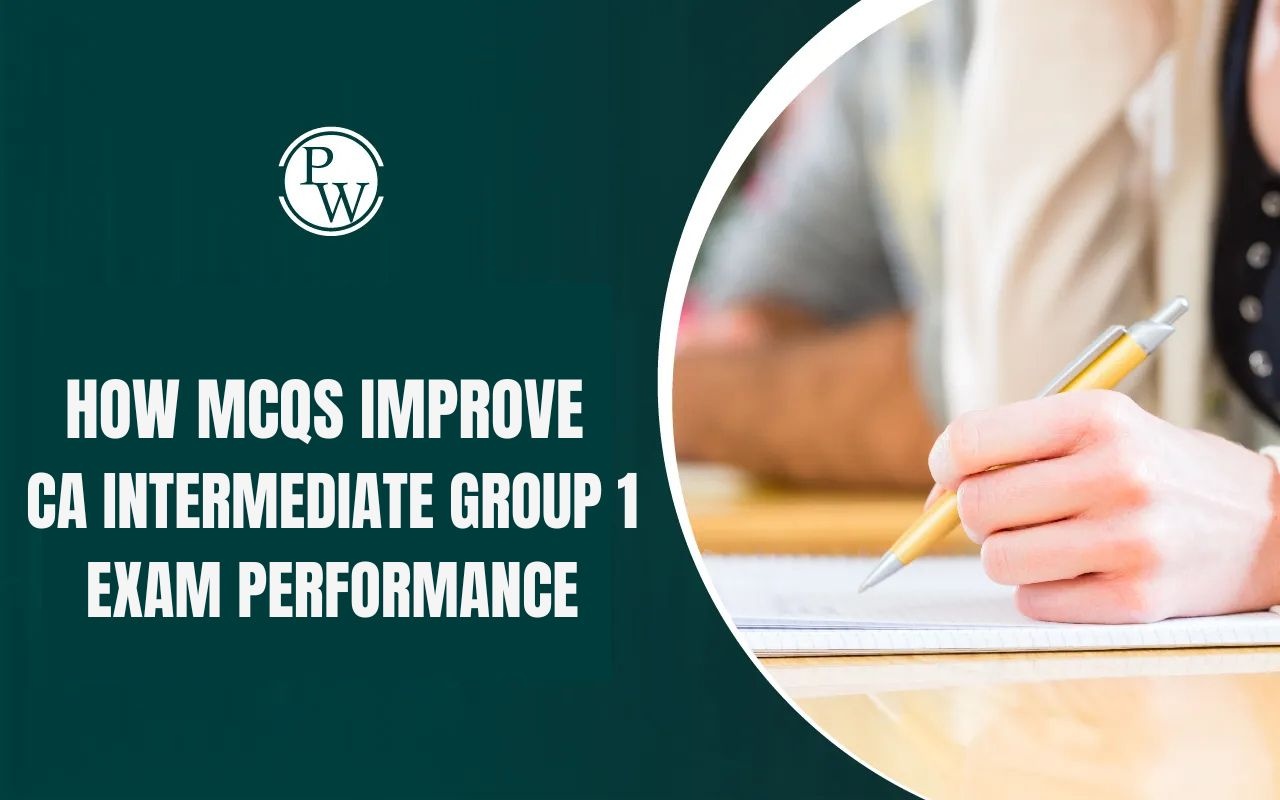
How MCQs Improve CA Intermediate Group 1 Exam Performance
Practicing with a CA Inter Group 1 MCQ bank is the most effective way to secure high marks in the ICAI exams. Since multiple-choice questions now carry significant weightage, students often struggle to balance descriptive answers with objective logic.
This article explores how targeted MCQ practice sharpens your conceptual clarity, improves time management, and ensures you are fully prepared for the January 2026 and May 2026 attempts.
Check Out: PW CA Books
Why CA Inter Group 1 MCQ Practice Matters
Integrating a CA Inter Group 1 MCQ routine into your daily study schedule helps you identify The ICAI exam pattern has evolved to test a student's analytical depth rather than just rote memorisation. At the Intermediate level, subjects such as Advanced Accounting, Corporate and Other Laws, and Taxation include a mandatory 30% MCQ component. These questions are not always direct; they often involve case-based scenarios that require a thorough understanding of the law and accounting standards.
small gaps in your knowledge that descriptive questions might miss. Because there is no negative marking in these papers, every correct MCQ response is a step closer to achieving an exemption.
How to Use CA Inter Group 1 MCQ for Exam Preparation?
Effective preparation for CA Inter Group 1 involves more than just reading the study material. ICAI has shifted towards "Case Scenario" based MCQs, especially in Paper 2 (Law) and Paper 3 (Taxation). These questions provide a long narrative or a business situation followed by a series of 4-5 MCQs.
To master these, you must practice reading the case study once and then scanning the questions to find relevant data points. This saves time and prevents you from getting bogged down by unnecessary information in the passage. Using a CA Inter MCQ book that categorises questions into "Standalone" and "Case-Based" is vital for this targeted approach.
Check Out: CA Intermediate Group I
Important CA Inter Group 1 MCQs for Taxation and Law
Taxation (Income Tax and GST) is often considered the most challenging part of Group 1. Practising CA Inter important MCQs in Taxation requires a focus on limits, dates, and exemptions. For Law, the focus shifts to sections, penalties, and time limits for filing forms.
By repeatedly engaging in MCQ practice, these numbers and sections become second nature. Instead of memorising a list of penalties, solving a scenario where a company fails to hold an AGM helps you remember the legal consequences more effectively.
How to Choose the right CA Inter Group 1 MCQ Book
Not all resources are created equal. When looking for an MCQ book, you should prioritise content that aligns with the latest ICAI syllabus for the 2026 attempts. A good book should offer:
-
Chapter-wise Segregation: This allows you to solve questions immediately after finishing a chapter.
-
Detailed Explanations: Just knowing the correct option isn't enough; you must understand why that option is correct and why others are wrong.
-
Updated Tax Rates: For the Taxation paper, ensure the book reflects the latest Finance Act amendments.
-
Ample Practice Volume: A bank with 1000+ questions across Group 1 subjects ensures comprehensive coverage.
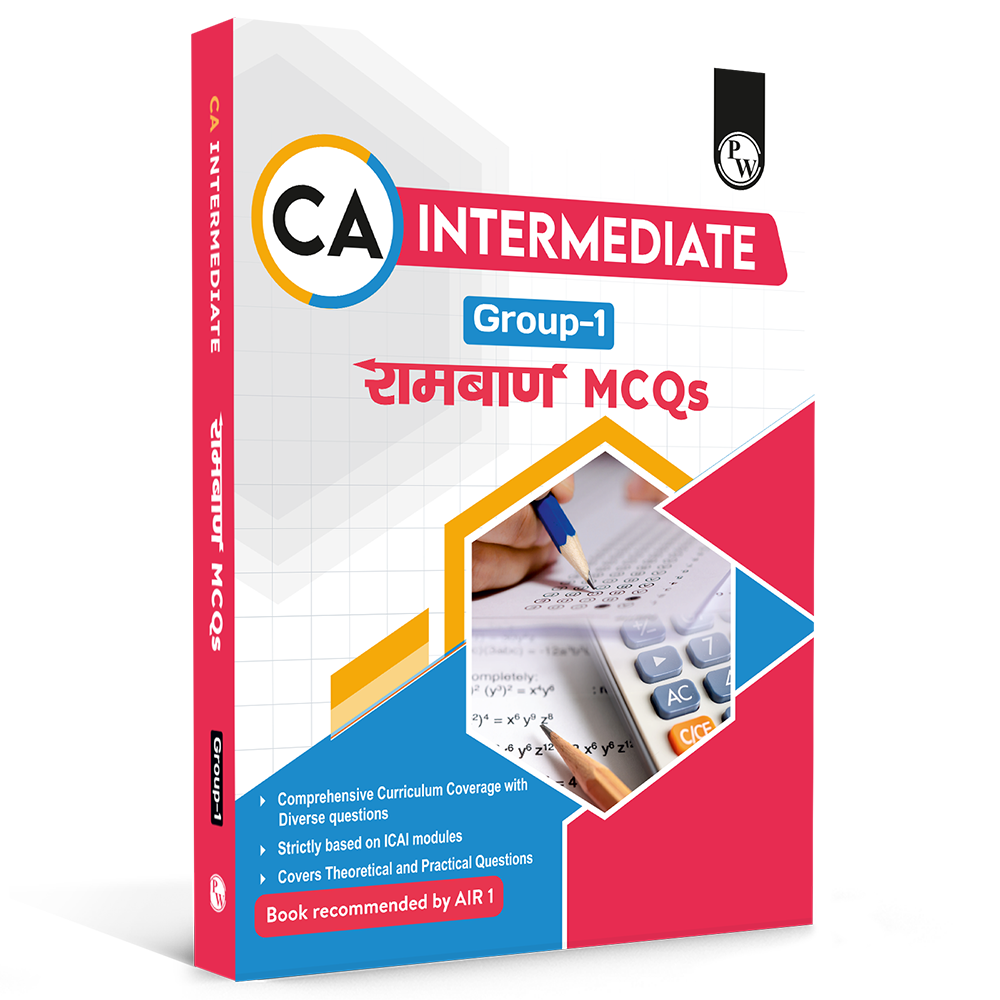
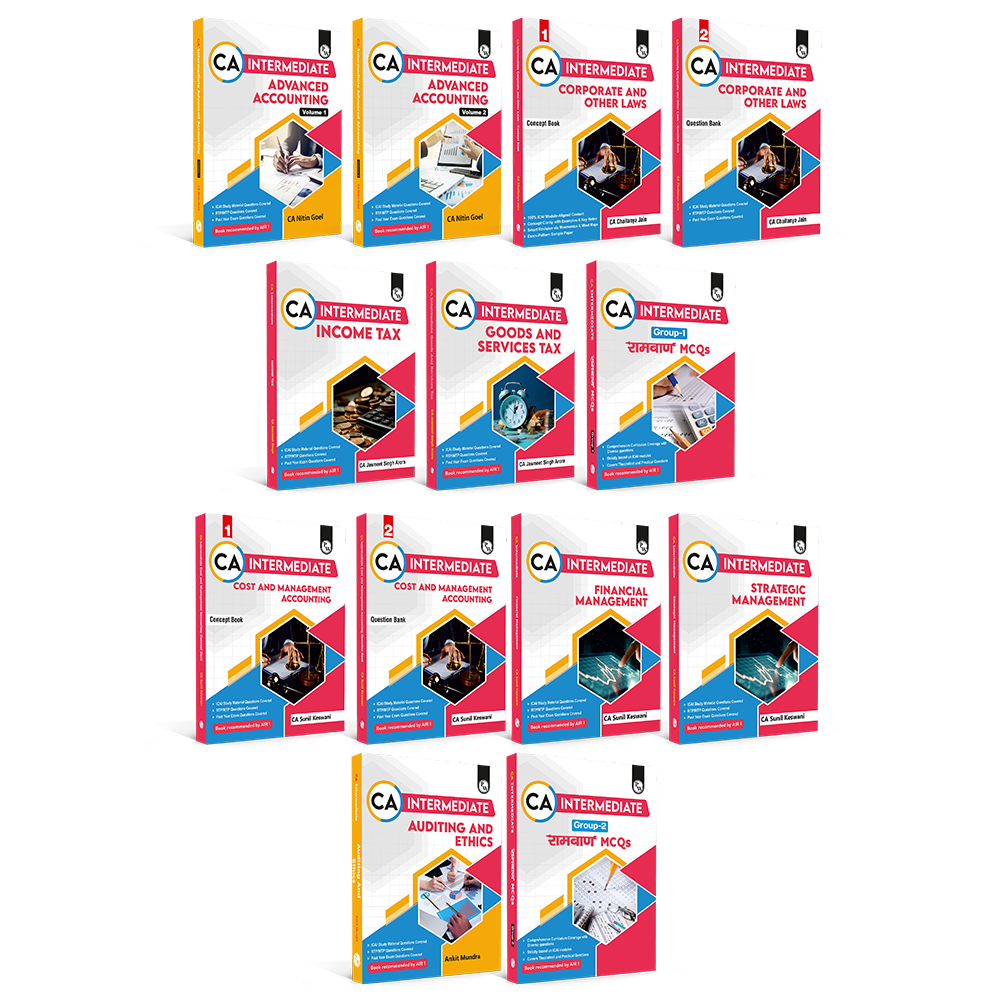
The CA Intermediate Raambaan MCQ Group 1 book is a prime example of a resource designed for the Jan 2027 and earlier attempts, focusing on the refined ICAI pattern.
Benefits of Using a CA Inter Group 1 MCQ
A dedicated CA Inter group 1 question bank acts as a diagnostic tool for your preparation. Instead of reading chapters repeatedly, solving questions allows you to apply theoretical concepts to practical problems.
-
Identifying Weak Areas: When you get an MCQ wrong, it highlights exactly which sub-topic requires more revision.
-
Speed and Accuracy: Solving MCQ questions under timed conditions builds the mental stamina needed for the actual three-hour exam.
-
Familiarity with Exam Trends: High-quality question banks include previous year questions (PYQs) and Revision Test Paper (RTP) content, giving you a glimpse into ICAI’s questioning style.
-
Confidence Building: Scoring well in practice sessions reduces exam-day anxiety, as you become accustomed to the "case-let" format used in Taxation and Law.
How CA Inter Group 1 MCQ Improves Retention
Active recall is a proven scientific method for better memory retention. When you look at CA Inter practice questions, your brain is forced to retrieve information. This is far more effective than passive reading.
Using CA Inter Group 1 MCQ book as a revision tool every weekend ensures that you don't forget the chapters you studied at the beginning of the month. Regular testing keeps the concepts of Accounting Standards and Corporate Law fresh in your mind.
How CA Inter Group 1 MCQ Impacts Overall Exam Scores
The introduction of MCQs has generally improved the passing percentage for Group 1. Since these questions are objective, there is no subjectivity in checking. If your answer is correct, you get the full mark. There is no scope for a moderator to cut marks for handwriting or presentation.
By securing 25+ marks in the CA Inter Group 1 MCQ section of each paper, you significantly reduce the pressure on the descriptive section. This strategy is the most reliable way to achieve an overall aggregate of 200/400 and pass the group in the first attempt.
Time Management Strategies with CA Inter Group 1 MCQ
Time management is the biggest hurdle in the CA exams. While descriptive answers take time to frame and write, MCQs can be solved quickly if your concepts are clear. During your CA Inter group 1 preparation, aim to solve 30 MCQs in 30 to 40 minutes.
Saving time on the objective section gives you an extra 20 minutes for the descriptive portion of the paper, which is often lengthy in Advanced Accounting. This "time-cushion" is the secret to completing the full 100-mark paper.
Common Mistakes in CA Inter Group 1 MCQ Practice
Many students lose marks in CA Inter MCQ questions due to silly errors rather than a lack of knowledge.
-
Not Reading the "Not": ICAI often phrases questions as "Which of the following is NOT an exception?" Skipping the word "not" leads to choosing the exact opposite of the correct answer.
-
Ignoring the Last Option: Sometimes "Both A and B" or "All of the above" is the correct answer, but students tick option A as soon as they see it is correct.
-
Overthinking Simple Questions: Not every question is a trap. Trust your first instinct if you have prepared well using a CA Inter group 1 question bank.
-
Poor OMR Filling: Ensure you practice marking circles on a sample OMR sheet to avoid errors during the actual exam preparation phase.
Read More: 5 Effective CA Exam Preparation Strategies
CA Inter Group 1 MCQ Book FAQs
Q1: Is there negative marking for CA Inter Group 1 MCQ in the Jan exam?
No, as per the current ICAI guidelines for the Intermediate level, there is no negative marking for incorrect answers in the multiple-choice section.
Q2: How many marks do MCQs carry in each paper of CA Inter Group 1?
In Group 1, papers such as Advanced Accounting, Law, and Taxation each contain 30 marks worth of MCQs, while the remaining 70 marks are descriptive.
Q3: Can I find case-study-based CA Inter MCQ questions in the ICAI study material?
Yes, ICAI provides sample case study booklets on its official website, and these are essential for understanding the exam's complexity.
Q4: Is a CA Inter Group 1 question bank enough to pass the exam?
While a question bank is vital for the 30-mark MCQ section, you must also practice descriptive questions and refer to the main study material to pass the 70-mark theory/practical section.