CUET Weightage Chapter Wise 2026 for Science, Commerce & Humanities
CUET Chapter-wise Weightage 2026 for UG helps students understand which chapters and topics are most important for exam preparation. CUET is a national-level entrance exam conducted by the National Testing Agency (NTA) for admission to undergraduate programmes in universities across India. Being aware of the weightage of each chapter allows candidates to identify high-scoring areas and allocate their study time wisely. This structured approach improves preparation efficiency, strengthens conceptual clarity, and increases confidence. By focusing more on topics with higher weightage, students can optimise their revision strategy and improve their overall performance in the CUET 2026 examination.
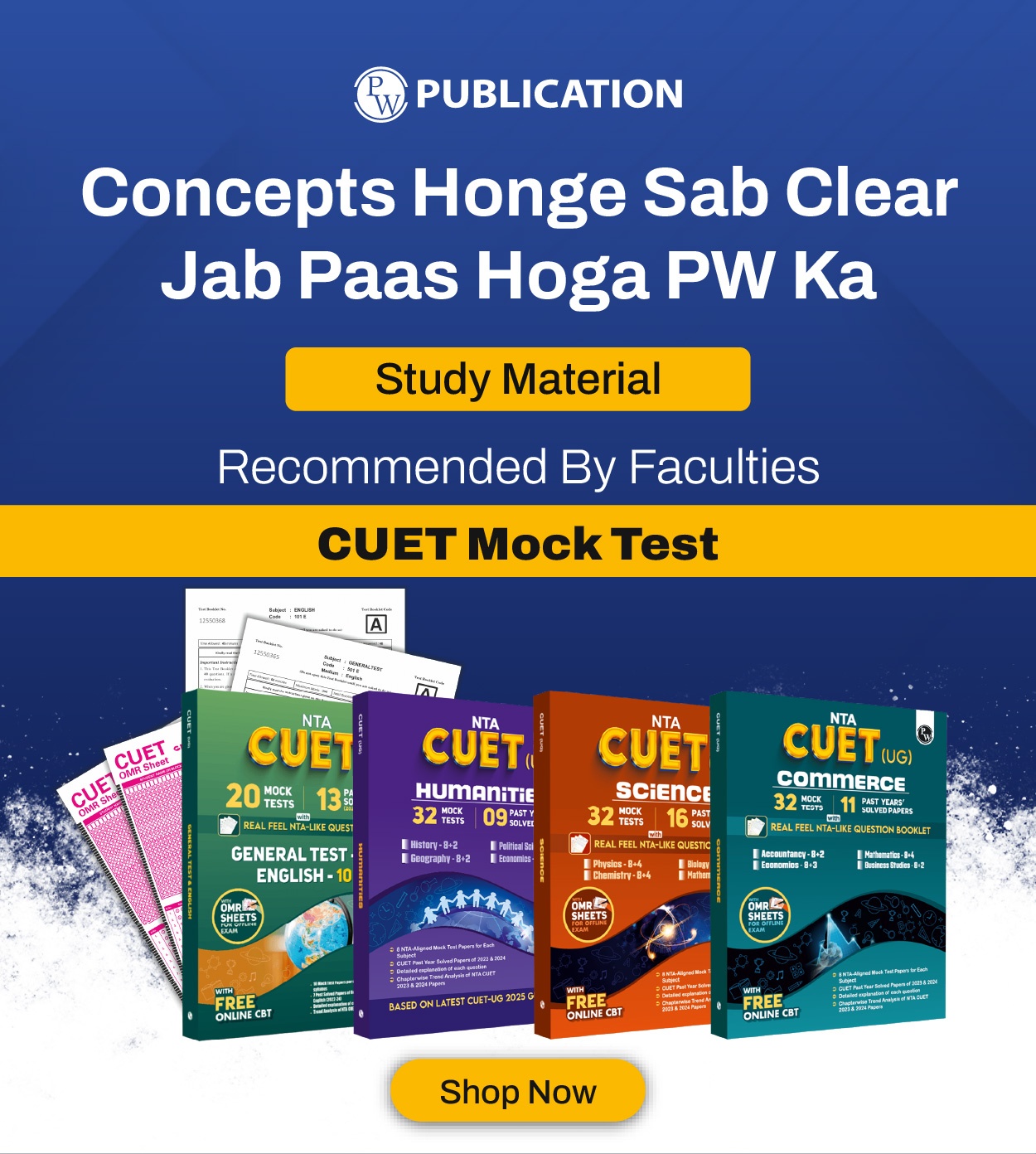
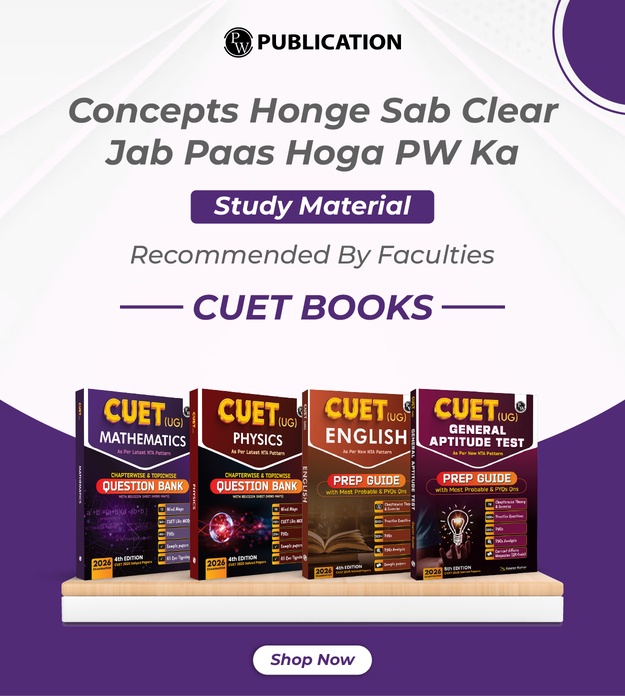
Check out: CUET Books
CUET Weightage Chapter Wise 2026
Below is a summary of CUET Chapter-wise Weightage 2026 for UG aspirants, highlighting sections, key focus areas, and the expected number of questions in each section.
|
CUET Weightage Chapter Wise 2026 |
||
|
Section |
Description |
Number of Questions |
|
Section I – Language |
Choose one language from 13 options; tests reading, grammar, vocabulary, and comprehension |
50 |
|
Section II – Domain Subjects |
Select up to 5 subjects from 23 domain subjects based on course eligibility; includes Science, Commerce, and Humanities |
50 per subject |
|
Section III – General Test |
Tests general knowledge, reasoning, and quantitative aptitude; applicable for all candidates |
50 |
Check out - CUET Question Bank
CUET General Test Chapterwise Weightage 2026
Here is the CUET Chapter-wise Weightage 2026 for the CUET General Test Syllabus 2026, which includes General Awareness, Logical Reasoning, and Numerical Ability. The table below provides an estimated distribution of questions from each topic, helping candidates understand topic importance, prioritise high-weightage areas, and plan their preparation strategy in a more organised and effective manner.
|
Chapter Wise Weightage for CUET General Test 2026 |
||
|
Section |
Topic / Category |
Number of Questions |
|
General Awareness |
Science |
4 |
|
|
Geography |
7 |
|
|
Sports |
1 |
|
|
Personalities |
4 |
|
|
Defence |
2 |
|
|
Awards |
2 |
|
|
Polity |
3 |
|
|
Miscellaneous |
1 |
|
|
Currency |
1 |
|
Reasoning |
Series |
2 |
|
|
Analogy |
1 |
|
|
Coding-Decoding |
2 |
|
|
Family Tree |
1 |
|
|
Calendar |
1 |
|
|
Clocks |
2 |
|
|
Data Sufficiency |
1 |
|
|
Directions |
1 |
|
|
Visual Reasoning |
4 |
|
|
Arrangement |
2 |
|
|
Statement-Conclusion |
1 |
|
Numerical Ability |
Simplification |
1 |
|
|
Fractions |
1 |
|
|
HCF-LCM |
1 |
|
|
Age |
1 |
|
|
Percentage |
1 |
|
|
Ratio |
2 |
|
|
Profit, Loss, Discount |
1 |
|
|
Simple Interest |
1 |
|
|
Area |
1 |
|
|
Volume |
1 |
|
|
Time and Work |
2 |
|
|
Time, Speed and Distance |
1 |
|
|
Mean-Mode |
1 |
|
|
Triangle |
1 |
|
|
Trigonometry |
1 |
CUET English Chapterwise Weightage 2026
For CUET 2026 aspirants, understanding the chapter-wise weightage for the English section is essential for focused preparation. The table below highlights the expected number of questions from each topic, helping students identify important areas, prioritise their study efforts, manage time effectively, and prepare strategically to improve accuracy and overall performance in the English section of the CUET 20
|
Chapter Wise Weightage for CUET English 2026 |
|
|
Topic |
No. of Questions |
|
Comprehension |
15 |
|
Parts of Speech |
3-4 |
|
Para Jumbles |
3-4 |
|
Synonyms and Antonyms |
2-3 |
|
Active/Passive Voice |
3-4 |
|
Fill in the Blanks |
3-4 |
|
Incorrect/Correct Statement |
3-4 |
|
Phrases and Meaning |
5-6 |
Check Out: CUET (UG) General Aptitude Test & English Language 40 Past Years Solved Papers
CUET Science Chapterwise Weightage 2026
For students preparing for CUET 2026, knowing the CUET chapter-wise weightage for Science subjects is crucial for effective preparation. This covers the expected number of questions from key subjects such as Biology, Chemistry, Physics, Mathematics, and Computer Science. Understanding this distribution helps students identify important topics, prioritise their study plan, manage revision time efficiently, and prepare in a structured manner for the CUET Science Syllabus 2026
|
CUET Chapter Wise Weightage for Science |
||
|
Subject |
Topic / Section |
Expected Number of Questions |
|
Biology |
Applications of Biotechnology |
4 |
|
|
Biodiversity and its Conservation |
5 |
|
|
Biotechnology: Principles and Processes |
4 |
|
|
Ecosystem |
4 |
|
|
Evolution |
4 |
|
|
Human Health and Diseases |
4 |
|
|
Human Reproduction |
3 |
|
|
Microbes in Human Welfare |
3 |
|
|
Molecular Basis of Inheritance |
5 |
|
|
Organisms and Populations |
3 |
|
|
Principles of Inheritance and Variation |
3 |
|
|
Reproductive Health |
5 |
|
|
Sexual Reproduction in Flowering Plants |
3 |
|
Chemistry |
Solid State |
4 |
|
|
Electrochemistry & Solutions (Case study - Slightly difficult) |
5 |
|
|
Chemical Kinetics |
2-3 |
|
|
P Block Elements |
2-3 |
|
|
D and F Block Elements (Case study - Easy) |
5 |
|
|
Coordination Compounds (Moderately difficult) |
5-6 |
|
|
Alcohols, Phenols, and Ethers |
4-5 |
|
|
Aldehydes, Ketones and Carboxylic Acids |
3-4 |
|
|
Organic Compounds containing Nitrogen |
4 |
|
|
Polymers |
1-2 |
|
|
Chemistry in Everyday Life |
1-2 |
|
Physics |
Electrostatics |
8 |
|
|
Current Electricity |
7 |
|
|
Magnetic Effects of Current and Magnetism |
8 |
|
|
Electromagnetic Induction and Alternating Current |
6 |
|
|
Electromagnetic Waves |
1 |
|
|
Optics |
8 |
|
|
Dual Nature of Matter and Radiation |
5 |
|
|
Atoms and Nuclei |
4 |
|
|
Electronic Devices |
3 |
|
Mathematics – Compulsory Section |
Linear Programming |
2 |
|
|
Differentiation |
2 |
|
|
Area Under Curves |
1 |
|
|
Probability |
2 |
|
|
Integration |
2 |
|
|
Differential Equations |
1 |
|
|
Application of Derivatives |
2 |
|
|
Matrices |
2 |
|
|
Determinants |
1 |
|
Mathematics – Core & Applied |
Core Maths |
4 |
|
|
Probability |
7 |
|
|
Differentiation |
3 |
|
|
Financial Maths |
6 |
|
|
Numbers |
2 |
|
|
Differential Equations |
1 |
|
|
Inferential Stats |
3 |
|
|
LPP |
2 |
|
|
Numbers |
2 |
|
|
Time Series |
2 |
|
|
Matrices |
4 |
|
|
Application of Derivatives |
3 |
|
Computer Science |
Networking |
10-12 |
|
|
SQL |
10-12 |
|
|
Bubble Sorting |
4-5 |
|
|
Assertion Reasoning |
2-3 |
|
|
Code Completion |
2-3 |
Check Out: CUET (UG) Science Stream 68 Past Years Solved Papers
CUET Humanities Chapterwise Weightage 2026
For CUET 2026 aspirants in the Humanities stream, understanding the chapter-wise weightage is essential for targeted preparation. The table below presents the expected number of questions from subjects such as History, Political Science, Psychology, Geography, and Legal Studies. This information helps students identify high-priority topics, plan their study schedule effectively, allocate time wisely, and strengthen preparation for scoring well in the CUET 2026 Humanities subjects.
|
CUET Chapter Wise Weightage for Humanities |
||
|
Subject |
Topic / Section |
Expected Number of Questions |
|
History |
2 Case Studies |
5 in each |
|
|
An Imperial Capital: Vijayanagara |
3-4 |
|
|
Kings and Chronicles |
3-4 |
|
|
The Mughal Courts |
3-4 |
|
|
Framing the Constitution |
2-3 |
|
|
Thinkers, Beliefs, and Buildings Cultural Developments |
2-3 |
|
|
Bhakti-Sufi Traditions |
2-3 |
|
Political Science |
Recent Developments in Indian Politics |
8-9 |
|
|
Challenges to the Congress System |
5 |
|
|
The End of Bipolarity |
2-3 |
|
|
Cold War Era |
3-4 |
|
|
US Hegemony in World Politics |
2-3 |
|
|
Alternative Centers of Power |
2-3 |
|
|
Contemporary South Asia |
2-3 |
|
|
International Organizations |
2-3 |
|
|
Security in Contemporary World |
2-3 |
|
|
Globalisation |
2-3 |
|
|
Environment and Natural Resources |
2-3 |
|
Psychology |
Psychological Disorders |
5-6 |
|
|
Therapeutic Approaches |
5-6 |
|
|
Meeting Life Challenges |
5 |
|
|
Self and Personality |
2-3 |
|
|
Variations in Psychological Attributes |
1-2 |
|
|
Attitude and Social Cognition |
1-2 |
|
|
Social Influence and Group Processes |
1-2 |
|
|
Psychology and Life |
1-2 |
|
|
Developing Psychological Skills |
1-2 |
|
Geography |
People: One Case Study |
7-8 |
|
|
Human Activities |
7-8 |
|
|
Transport, Communication & Trade |
4-5 |
|
|
Human Settlements |
2-3 |
|
|
Resources and Development |
2-3 |
|
|
Transport, Communication and International Trade |
2-3 |
|
|
Geographical Perspective on Selected Issues & Problems |
3-4 |
|
|
Map Work |
5 |
|
Legal Studies |
Judiciary |
3-4 |
|
|
Law Related Topics |
2-3 |
|
|
Arbitration, Tribunal Adjudication, and Alternative Dispute Resolution |
3-4 |
|
|
Human Rights in India |
3-4 |
|
|
Legal Profession in India |
2-3 |
|
|
Legal Services |
2-3 |
|
|
International Context |
1-2 |
|
|
Legal Maxims |
1-2 |
|
|
Case Study (Eg. Bhopal Gas Tragedy) |
|
Check Out: CUET (UG) Humanities Stream 58 Past Years Solved Papers
CUET Commerce Chapterwise Weightage 2026
For Commerce students appearing in CUET 2026, understanding the chapter-wise weightage is vital for focused preparation. This covers subjects like Economics, Accountancy, and Business Studies, along with the expected number of questions from each topic. Knowing this distribution helps students identify important areas, plan their study strategy efficiently, manage revision time better, and prepare in a structured way to score well in the CUET 2026 Commerce syllabus.
|
CUET Chapter Wise Weightage for Commerce 2026 |
||
|
Subject |
Topic / Section |
Expected Number of Questions |
|
Economics |
Consumer Behavior and Demand |
6-7 |
|
|
Introductory Microeconomics |
2 |
|
|
Balance of Payments |
4-5 |
|
|
Government Budget and the Economy |
3-4 |
|
|
Determination of Income and Employment |
3-4 |
|
|
National Income |
3-4 |
|
|
Money and Banking |
2-3 |
|
|
Rural Development |
4-5 |
|
|
Indian Economy 1950-1990 |
2-3 |
|
|
Infrastructure |
2-3 |
|
|
Development Experiences of India – A Comparison with Neighbors |
2-3 |
|
|
Indian Economy on the Eve of Independence |
1-2 |
|
|
Economic Reforms since 1991 |
1-2 |
|
Accountancy |
Reconstitution of Partnership |
10-12 |
|
|
Analysis of Financial Statements |
7-8 |
|
|
Accounting for Share and Debenture Capital |
6-7 |
|
|
Accounting – Not for Profit |
5-6 |
|
|
Computerized Accounting System |
4-5 |
|
Business Studies |
Business Environment (Case Study) |
7-8 |
|
|
Match the Following |
7-8 |
|
|
Staffing |
5-6 |
|
|
Sequence Wise Questions |
5-6 |
|
|
HR-related Case Study |
5-6 |
|
|
Planning |
4-5 |
|
|
Organizing |
3-4 |
|
|
Directing |
3-4 |
|
|
Business Finance |
2-3 |
|
|
Financial Markets |
2-3 |
|
|
Marketing |
2-3 |
Check Out: CUET (UG) Commerce Stream 54 Past Years Solved Paper
PW CUET Study Material for 2026 Exam Preparation
Comprehensive Question Bank
PW provides a well-structured question bank covering the full CUET 2026 syllabus. Questions range from basic to advanced levels to build strong concepts and accuracy.
Previous Year Questions (PYQs)
Solved CUET PYQs help students understand exam trends, important topics, and question patterns, making preparation more exam-oriented.
Mock Tests & Practice Papers
Full-length and section-wise mock tests help improve speed, time management, and confidence before the actual CUET exam.
Updated & Exam-Focused Content
All study material is aligned with the latest CUET 2026 syllabus and exam pattern for effective preparation.
CUET Weightage Chapter Wise 2026 FAQs
1. What is CUET Weightage Chapter Wise 2026?
It refers to the distribution of questions from each chapter and topic in the CUET 2026 exam, helping students know which areas carry more marks.
2. Why is knowing chapter-wise weightage important?
It helps candidates prioritise high-weightage topics, plan their study schedule wisely, and improve preparation efficiency.
3. Does weightage vary by subject?
Yes, each subject (like English, Science, Commerce, Humanities) has a different chapter-wise weightage based on the CUET syllabus.
4. How does weightage help in revision?
It guides students to focus on frequently asked topics, making revision targeted and effective.
5. Is the weightage fixed?
The weightage is based on trends and expected patterns, but the actual number of questions may vary slightly in the exam.