GATE ECE Subject Wise Weightage 2026

The GATE ECE weightage 2026 is the distribution of 100 total marks across various subjects in the Electronics and Communication Engineering paper. While you plan to prepare for the exam of GATE ECE, it is important to understand the high-scoring sections like Maths and Communications, which can overall improve your marks. By knowing this, you can prioritise the topics and your focus areas as per your time. This will increase your chance of qualifying for the exams by working on your strength and the highest-scoring areas.
Here in this article we have discussed the weightage of GATE ECE as per subject for 2026, which will help you plan your coming GATE exam with confidence and awareness.
Check Out: GATE Books
GATE ECE Weightage 2026 Overview
To qualify for the exam, have a clear mind map of which are the areas where you can score the maximum marks. The GATE ECE weightage 2026 shows a consistent pattern across three major sections: General Aptitude, Engineering Mathematics, and Core ECE subjects.
General Aptitude is a high-scoring subject that has 15% of the total marks. Engineering Mathematics has about 13%, while the remaining 72% is dedicated to core technical subjects. The proper distribution of the sections explains to focus on your technical skills more, and other sections are also important for overall scores.
Key Highlights of Mark Distribution in GATE ECE
-
Total Marks: 100
-
Total Questions: 65
-
Core Subjects Weightage: 72 Marks
-
General Aptitude: 15 Marks
-
Engineering Mathematics: 13 Marks
What is the Exam Structure of GATE ECE?
The GATE ECE paper consists of three important types of questions: Multiple Choice Questions (MCQs), Multiple Select Questions (MSQs), and Numerical Answer Type (NAT) questions. For MCQs, there is negative marking, and MSQs and NATs there is no negative marking. This makes the GATE ECE subject wise weightage 2026 even more critical, as you can plan which high-weightage topics to attempt first to maximise your score without losing marks.
MCQ negative marking is usually 1/3rd for 1-mark questions and 2/3rd for 2-mark questions, while MSQ and NAT do not carry negative marking.
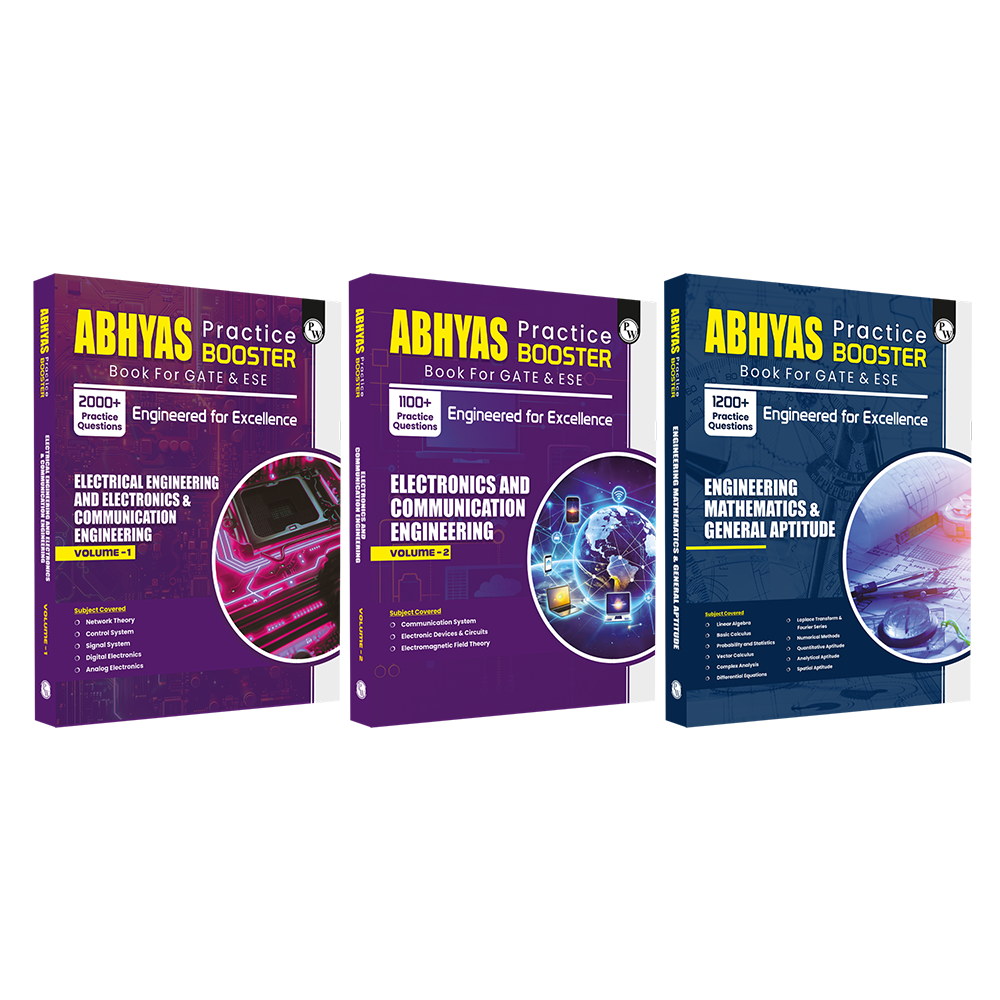
Check Out: GATE & ESE Books
Detailed GATE ECE Syllabus Weightage 2026
When we look at the GATE ECE syllabus for 2026, certain subjects stand out as heavy hitters. Subjects like Communications, Signals and Systems, and Control Systems often carry higher marks compared to others.
|
Subject Name |
Expected Weightage (Marks) |
Frequency Trend |
|
General Aptitude |
15 |
Mandatory/Consistent |
|
Engineering Mathematics |
13 |
High Importance |
|
Communications |
10 – 12 |
Very High |
|
Networks, Signals & Systems |
10 – 11 |
High |
|
Analog Circuits |
8 – 10 |
Moderate to High |
|
Digital Circuits |
7 – 9 |
Moderate |
|
Control Systems |
7 – 8 |
Moderate |
|
Electronic Devices (EDC) |
7 – 8 |
Moderate |
|
Electromagnetics (EMTL) |
8 – 10 |
Moderate to High |
What are the High-Priority Core Subjects for GATE ECE?
-
Communications: This is often the most significant part of the technical section. Focus on Random Processes, Digital Communication, and Information Theory.
-
Networks, Signals & Systems: These form the foundation. Mastery here helps you solve problems in almost every other technical subject.
-
Engineering Mathematics: Don't ignore this. It's a "rank-booster" because the syllabus is defined and the questions are usually predictable.
If you are short on time, prioritise Communications + Networks/Signals + Maths first, then add Analog and EMTL next because they frequently contribute steady marks.
Important Topics in GATE 2026 ECE Subject Weightage
Success isn't just about the subject; it's about the specific topics within them. Based on previous trends, certain chapters within the GATE ECE weightage 2026 are more important than others.
Top Scoring Topics by Subject for GATE ECE 2026
-
Signals & Systems: LTI Systems, Laplace, and Z-Transforms.
-
Networks: Network Theorems (Thevenin, Norton) and Transient Analysis.
-
Communications: PCM, Delta Modulation, and Digital Modulation (ASK, PSK, FSK).
-
Electromagnetics: Transmission lines, Smith charts, and Maxwell’s equations.
-
Control Systems: Routh-Hurwitz, Nyquist criteria, and State-space analysis.
Topic Importance Table for GATE ECE:
|
Priority Level |
Subjects |
|
Tier 1 (Crucial) |
General Aptitude, Engineering Maths, Communications |
|
Tier 2 (Core) |
Networks, Signals & Systems, Analog Circuits |
|
Tier 3 (Specific) |
Digital Circuits, Control Systems, EDC, EMTL |
You can focus on Tier 1 and Tier 2 subjects first; this covers nearly 65-70% of the paper. This strategy helps you reach the qualifying marks quickly, allowing you to spend more time on complex subjects in Tier 3 to improve your rank.
Why Weightage Matters in GATE ECE?
Using the GATE 2026 ECE subject weightage, you can decide which subjects to finish early. If you're short on time, you might choose to skim through Electronic Devices but dive deep into Communications. This ensures you spend your energy where it yields the most marks.
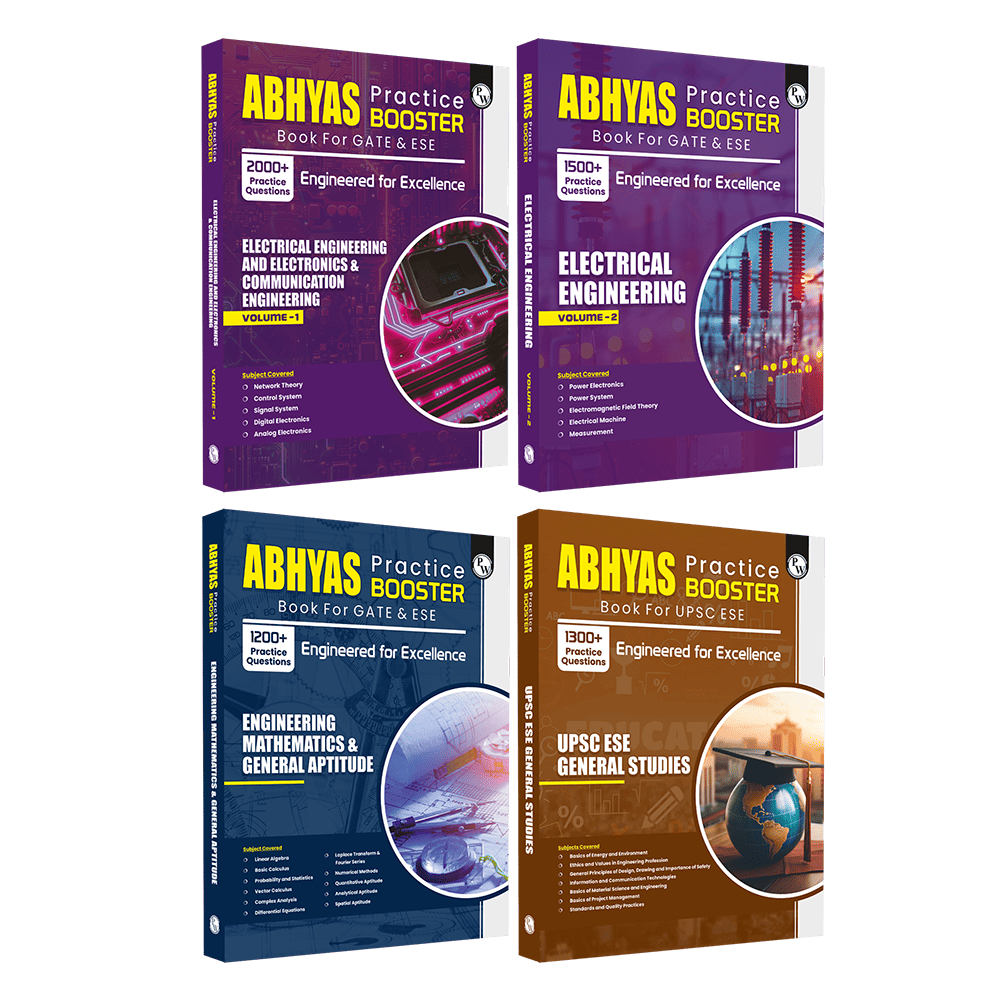
Check Out: GATE & ESE For ECE/EE Vol 1, Combo Set of 4 Books
How to Study for GATE ECE Weightage 2026?
To use the gate ece weightage 2026 effectively, we recommend a three-phase preparation strategy. This approach ensures you don't feel overwhelmed by the vast syllabus.
Phase 1: Foundation Building (Months 1-3)
Focus on Engineering Mathematics and Networks. These subjects build the logic required for others. For instance, you can't master Analog Circuits without a strong grip on Network Theorems.
Phase 2: Core Mastery (Months 4-6)
Dive into high-weightage subjects like Communications and Signals & Systems. These require more time and conceptual clarity. Use the GATE ECE syllabus weightage 2026 to ensure you aren't spending too much time on low-scoring sub-topics.
Phase 3: Rank Boosting & Revision (Months 7-8)
Focus on Control Systems and Digital Circuits. These are scoring and less time-consuming. Start taking full-length mock tests to see if your mark distribution matches the expected GATE ECE subject-wise weightage 2026.
Pro-Tips for Aspirants of GATE ECE:
-
Don't skip Aptitude: It's the easiest 15 marks you can get.
-
Practice NATs: These have no negative marking, so they're "safe" marks.
-
Short Notes: Create a formula sheet for each high-weightage subject for quick revision.
Read More: GATE Subject Wise Weightage 2026 Exam
GATE ECE Subject Wise Weightage FAQs
1. Which subject has the highest marks in GATE ECE 2026?
Communications has the highest marks in the technical subjects, which range between 10 to 12 marks. However, general aptitude does have good weightage of about 15 marks.
2. Is Engineering Mathematics important for ECE?
Yes, Engineering Mathematics is important because it has about 13% of the total weightage. It's also a scoring section that helps improve your overall rank significantly.
3. What is the weightage of General Aptitude?
General Aptitude has a fixed weightage of 15% (15 marks) in the GATE exam. It includes verbal, numerical, and spatial aptitude questions.
4. How many questions are there in GATE ECE 2026?
There are 65 questions in total, adding up to 100 marks. These include a mix of 1-mark and 2-mark questions across different formats like MCQ, MSQ, and NAT.
5. Can I qualify for GATE ECE by only studying high-weightage subjects?
While focusing on high-weightage subjects like Communications, Maths, and Networks helps you reach the cutoff, you should cover the entire syllabus to get a high rank for PSU recruitment or IIT admissions.