Arjuna JEE Chemistry Preparation Tips for Beginners
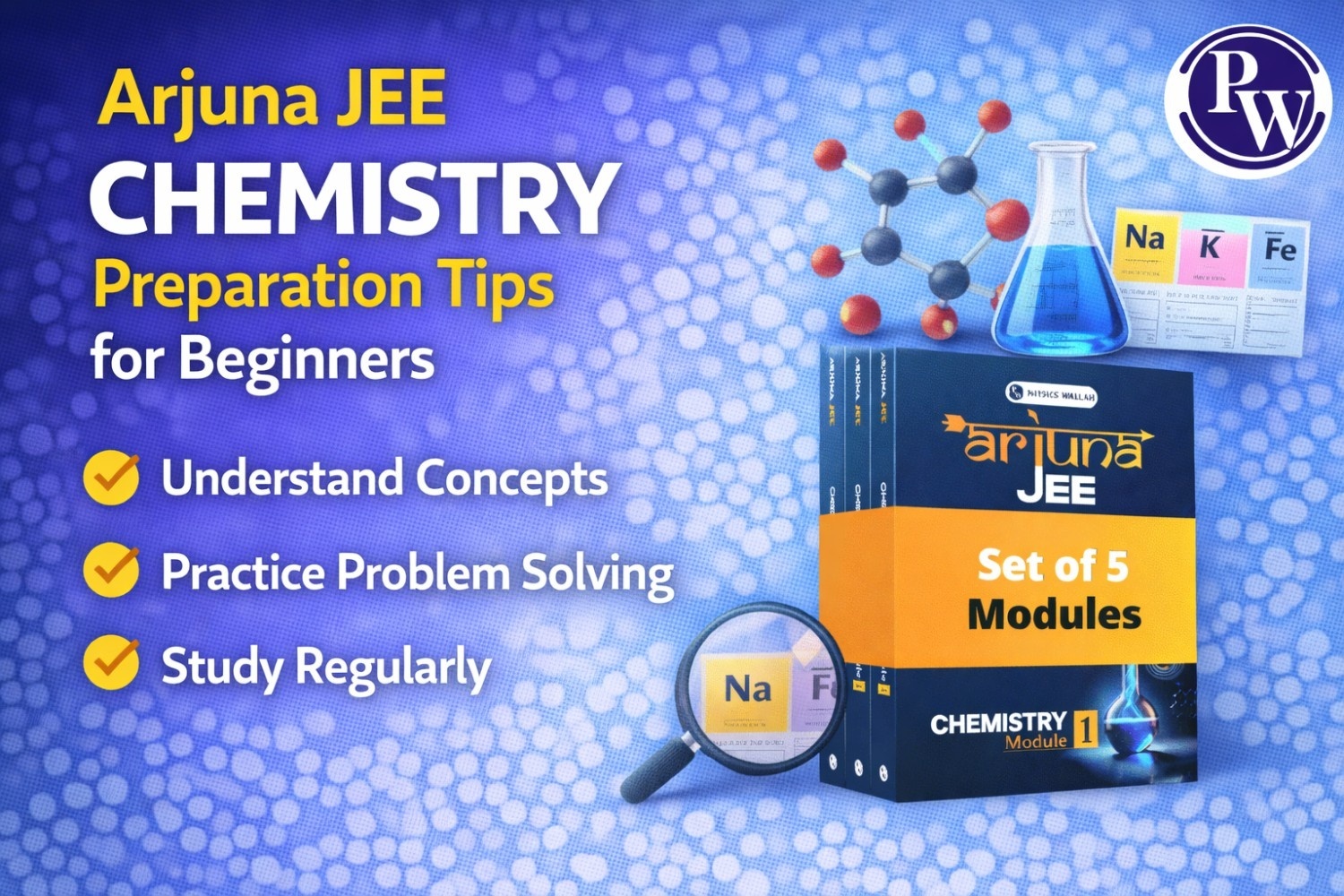
Starting JEE Chemistry preparation in Class 11 is a major transition for most students. Even those who scored well in school exams often feel confused when JEE-level questions appear. If you are a beginner studying through the PW Arjuna JEE batch, this confusion is normal—and solvable.
This blog is written to give you clear, practical, and beginner-friendly Chemistry preparation tips, keeping the JEE Main and JEE Advanced exam pattern in mind. The focus is not on shortcuts, but on building concept clarity, daily practice habits, and strong revision structure.
Check Out: PW JEE Books
Why Chemistry Feels Difficult for JEE Beginners
Most Class 11 beginners share similar concerns:
-
“I understand the lecture, but I can’t solve questions.”
-
“Physical Chemistry numericals take too much time.”
-
“Organic reactions don’t stay in memory.”
-
“Inorganic Chemistry feels like pure memorisation.”
These problems do not mean you are weak in Chemistry. They usually arise because JEE Chemistry demands a different study approach compared to school exams. Without the right structure, even sincere students feel stuck.
Why Beginners Struggle in JEE Chemistry
1. Sudden Increase in Concept Depth
JEE Chemistry combines:
-
Theory
-
Mathematical application
-
Logical reasoning
-
Memory-based recall (especially in Inorganic)
School-level preparation does not train students for this combination, which is why beginners feel pressure early.
2. Lack of Proper Practice Progression
Many beginners either:
-
Jump directly to very tough questions, or
-
Practice only easy examples
Both approaches are harmful. JEE requires gradual difficulty progression.
3. No Daily Practice and Revision System
Chemistry cannot be studied only through lectures. Without:
-
Daily topic-wise practice
-
Chapter-level evaluation
-
Regular revision
Concepts fade quickly, especially in Organic and Inorganic Chemistry.
Arjuna JEE Chemistry Preparation Tips for Beginners
Tip 1: Treat Physical, Organic, and Inorganic Separately
Never study Chemistry as a single subject. Divide it clearly:
-
Physical Chemistry – Formula understanding + numericals
-
Organic Chemistry – Reaction mechanisms + logic
-
Inorganic Chemistry – NCERT-based conceptual clarity
Each part requires a different preparation strategy.
Tip 2: Follow the Concept → Practice → Test → Revise Cycle
For every Chemistry chapter, follow this exact cycle:
-
Concept clarity after lectures
-
Topic-wise daily practice
-
Chapter-wise testing
-
Short and frequent revision
Most beginners fail not because of lack of effort, but because this cycle is incomplete.
Check Out: Arjuna For JEE Main & Advanced Class 11 Chemistry Modules
How PW Module 2.0 Solves Chemistry Preparation Problems Step-by-Step
If you feel confused about what to practice, how much to practice, and at what level, then the problem is not your dedication—it’s the absence of a structured, exam-oriented system.
This is where PW Module 2.0 fits naturally into JEE Chemistry preparation.
Best Questions Booklet – The Right Starting Point
For beginners, solving random high-level questions can destroy confidence. The Best Questions Booklet fixes this issue.
-
100–150 high-probability chapter-wise questions
-
Questions based on PYQ-based patterns
-
Includes one-page formulas and short notes
This helps beginners:
-
Understand what type of questions JEE actually asks
-
Build confidence gradually
-
Revise key formulas and reactions efficiently
Check Your Understanding (CYU) – Daily Chemistry Practice
After lectures, students often think they understand everything—but real clarity comes only after practice.
CYU provides:
-
Topic-wise practice sets
-
10–15 questions per topic
-
Similar to Daily Practice Problems (DPPs)
This ensures:
-
Immediate concept verification
-
Strong foundation in Physical numericals
-
Better retention of Organic and Inorganic concepts
QR – Make Your Own Test (Major Highlight)
One of the biggest beginner mistakes is delaying test practice.
With QR-based testing, students can:
-
Pick any 3 Chemistry chapters
-
Attempt 120 questions in 180 minutes
-
Follow JEE Main exam pattern
This builds:
-
Time management skills
-
Exam temperament
-
Multi-chapter application ability
Chapter-End Tests – Measure Real Understanding
Studying a chapter without testing is incomplete.
Chapter-End Tests include:
-
40 questions
-
1-hour duration
-
Full single-chapter evaluation
These tests help beginners:
-
Identify weak areas early
-
Avoid last-minute syllabus panic
-
Improve accuracy and confidence
SETU / Conceptual Exercise – Bridge for Higher-Level Questions
Many beginners struggle when difficulty suddenly increases.
SETU provides:
-
30–50 medium-level questions for JEE
-
Smooth bridge from JEE Main to Advanced level
This is especially useful in:
-
Physical Chemistry mixed numericals
-
Organic Chemistry multi-step reactions
Challenger 2.0 (JEE Only) – Advanced Exposure at the Right Time
For students aiming high:
-
Pure JEE Advanced replica questions
-
Exam-aligned difficulty
Beginners should attempt this only after completing earlier stages, ensuring confidence is built progressively.
Who Should Follow This JEE Chemistry Strategy?
This approach is ideal for:
-
Class 11 beginners
-
PW Arjuna batch students
-
Average students aiming for strong ranks
-
Students struggling with revision or practice consistency
PW Arjuna JEE Chemistry Modules PDF
PW Arjuna JEE Modules provide concept clarity, PYQ based practice, daily practice problems, chapter wise tests, and exam oriented structure for strong JEE Main and Advanced preparation.
|
JEE Arjuna Chemistry Module Some Basic Concepts of Chemistry |
|
|
JEE Arjuna Chemistry Module States of Matter |
|
|
JEE Arjuna Chemistry Module Some Basic Principles and Techniques |
|
|
JEE Arjuna Chemistry Module The p-Block Elements |
Arjuna JEE Chemistry Preparation Tips for Beginners FAQs
Is JEE Chemistry difficult for beginners?
No. JEE Chemistry feels difficult mainly due to lack of structure. With concept clarity, daily practice, and regular tests, beginners can score well.
How many hours should a beginner study JEE Chemistry daily?
Around 2–3 hours daily is sufficient if divided into lecture revision, topic-wise practice, and short revision.
Is NCERT enough for JEE Chemistry?
NCERT is mandatory but not sufficient. JEE requires PYQ-based practice, numericals, and application-oriented questions along with NCERT.
How should beginners practice JEE Physical Chemistry?
Focus on:
-
Formula understanding
-
Step-by-step numericals
-
Regular topic-wise practice before moving to mixed questions