IIT Full Form: Indian Institute of Technology – Exams, Admission & Syllabus
IIT Full Form: The full form of IIT is Indian Institute of Technology. These are top engineering colleges in India. To get into an IIT, students have to clear two main exams: JEE Main and JEE Advanced.
JEE Main is the first exam. It is conducted by the National Testing Agency (NTA). Students from all over India appear for this exam after Class 12. The top students from JEE Main then qualify for JEE Advanced. This second exam is tougher and is conducted by one of the IITs every year.
Only the students who clear JEE Advanced with a good rank can get admission into the IITs. Both exams test your knowledge in Physics, Chemistry, and Maths. The questions are based on concepts, problem-solving, and speed.
Every year, lakhs of students prepare for these exams because getting into an IIT is considered a big achievement. The Indian Institutes of Technology offer some of the best courses, great teachers, and good job opportunities after graduation. Check out the details here.
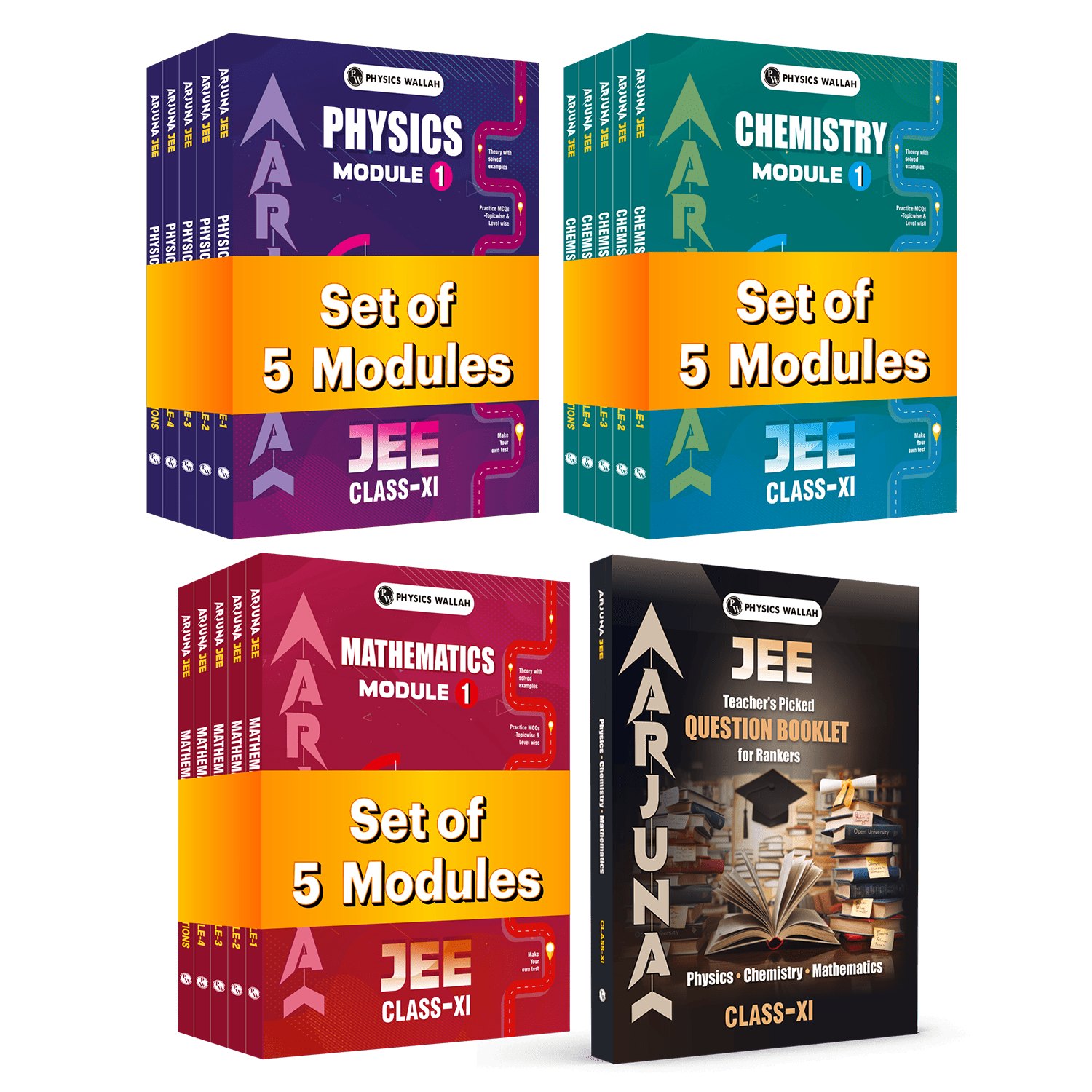
prepare with structured study material designed to strengthen concepts, improve problem-solving skills, and support effective revision. IIT JEE Books help students build a strong foundation and prepare confidently for JEE Main and JEE Advanced.
What is the Full Form of IIT?
The full form of IIT is Indian Institute of Technology, a group of public technical universities in India that are recognised as the country’s top institutions for engineering and technology education.
These institutes are governed by the Institutes of Technology Act, 1961, which not only defines the IIT full form but also declares them as Institutes of National Importance. Currently, there are 23 IITs across India, each functioning independently but coordinated through a common governing body known as the IIT Council.
This council ensures standardisation and oversees all the major administrative and academic decisions across the IITs. Every Indian Institute of Technology (IIT) upholds high standards in teaching, research, and innovation, making them some of the most prestigious institutions in the world for science and technology studies.
How to Get Admission in IITs?
To get admission in any IIT, students need to clear two exams: JEE Main and JEE Advanced. Both exams are important. First, students appear for the JEE Main exam. If they score well, they become eligible to write the JEE Advanced exam. Only the top rankers in JEE Advanced can get a seat in one of the IITs.
Students must also complete their Class 12 with Physics, Chemistry, and Mathematics as main subjects. They should have at least 75% marks in their board exams. For SC, ST, and PwD category students, the required marks are 65%.
practise real exam questions to understand important trends, improve concept application, and build confidence for test day. Regular JEE Previous Year Papers solving helps students strengthen accuracy, speed, and exam strategy for JEE Main and JEE Advanced.
JEE Main Exam
JEE Main is conducted by the National Testing Agency (NTA). It is the first step to enter IITs. This exam is held multiple times a year and students can choose the best score for admission.
|
Section |
Subject |
Total Questions |
Questions to Attempt |
Total Marks |
|
1 |
Physics |
30 |
25 |
100 |
|
2 |
Chemistry |
30 |
25 |
100 |
|
3 |
Mathematics |
30 |
25 |
100 |
|
Total |
90 |
75 |
300 |
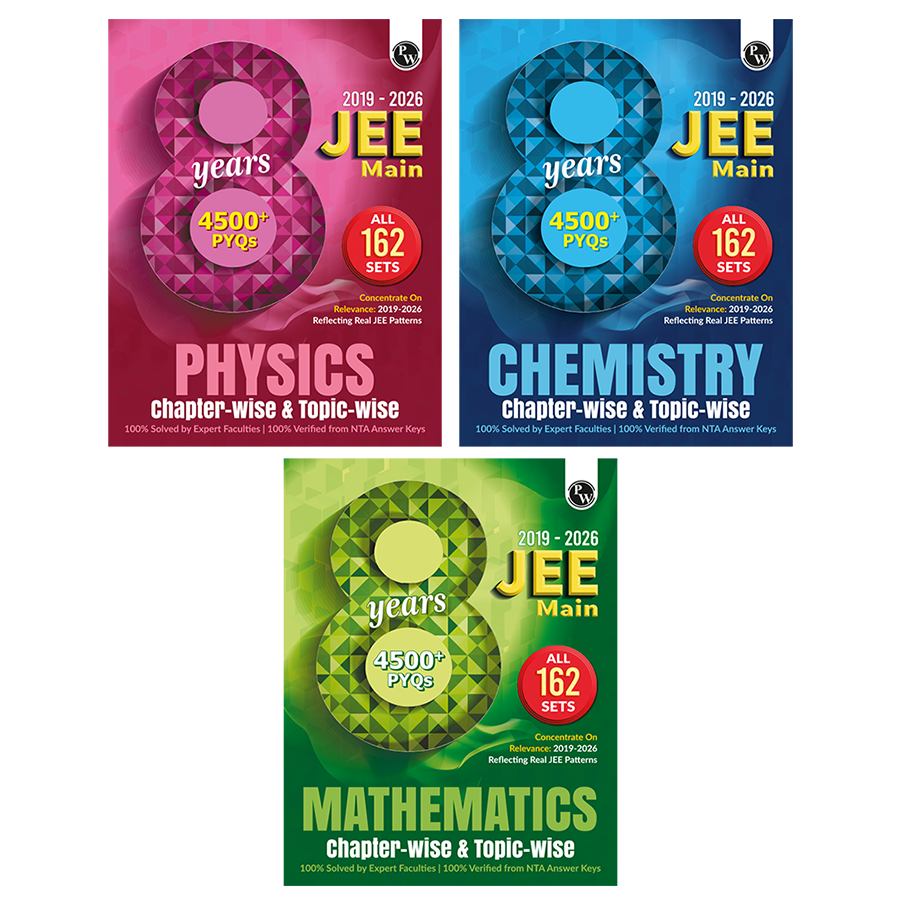
JEE Main 8 Years PYQ Combo Set of 3 Books — practise previous year questions in a structured way and understand actual exam patterns chapter by chapter. This combo helps improve concept application, strengthen accuracy, and build confidence through focused JEE Main preparation.
JEE Advanced Exam
Students who clear JEE Main and are among the top rankers become eligible to appear for JEE Advanced. This is the second and final exam to get into IITs. JEE Advanced is tougher than JEE Main. It checks the student’s deep understanding of concepts.
JEE Advanced has two papers: Paper 1 and Paper 2. Both papers are compulsory. The pattern and marking scheme change slightly every year.
|
Paper |
Subjects |
Type of Questions |
Duration |
|
Paper 1 |
Physics, Chemistry, Maths |
MCQs, Numerical, Match the columns |
3 hours |
|
Paper 2 |
Physics, Chemistry, Maths |
MCQs, Numerical, Match the columns |
3 hours |
49 Years JEE Advanced Previous Year Papers Combo Set of 3 Books — practise decades of real JEE Advanced questions to understand evolving exam patterns, important concepts, and difficulty trends. This combo helps strengthen problem-solving skills, improve accuracy, and build exam-level confidence through extensive PYQ practice.
JEE Exam Syllabus
Both JEE Main and JEE Advanced cover topics from Physics, Chemistry, and Mathematics. The syllabus is mostly based on Class 11 and Class 12 NCERT topics.
|
Subject |
Class |
Topics |
|
Physics |
11 |
Units and Measurements, Kinematics, Laws of Motion, Work, Energy, Power, Rotational Motion, Gravitation, Properties of Matter, Thermodynamics, Oscillations, Waves |
|
12 |
Electrostatics, Current Electricity, Magnetic Effects of Current, Electromagnetic Induction, Alternating Current, Optics, Modern Physics, Dual Nature of Matter |
|
|
Chemistry |
11 |
Basic Concepts of Chemistry, Structure of Atom, Classification of Elements, Chemical Bonding, Thermodynamics, Equilibrium, Redox Reactions, Hydrocarbons |
|
12 |
Solid State, Solutions, Electrochemistry, Chemical Kinetics, Surface Chemistry, Coordination Compounds, Organic Chemistry, Biomolecules |
|
|
Maths |
11 |
Sets, Relations and Functions, Trigonometry, Complex Numbers, Quadratic Equations, Sequences and Series, Permutations and Combinations, Binomial Theorem, Probability, Coordinate Geometry |
|
12 |
Matrices and Determinants, Continuity and Differentiability, Application of Derivatives, Integrals, Differential Equations, 3D Geometry, Vectors, Linear Programming |
Difference Between JEE Main and JEE Advanced
-
JEE Main is easier than JEE Advanced.
-
JEE Main is for admission to NITs, IIITs and eligibility for JEE Advanced. JEE Advanced is only for admission to IITs.
-
Lakhs appear for JEE Main; only top 2.5 lakh qualify for JEE Advanced.
-
JEE Main has fixed pattern, JEE Advanced has variable pattern each year.
Number of IITs in India
At present, there are 23 IITs in India. Some of the popular ones are:
-
IIT Bombay
-
IIT Delhi
-
IIT Madras
-
IIT Kanpur
-
IIT Kharagpur
IIT JEE Study Materials
For students preparing for JEE, having the right study material is very important. JEE Study Materials, notes, and practice questions should be clear and easy to follow. Platforms like PW provide well-organised materials that focus on the latest exam pattern. Students can access topic-wise explanations, solved examples, and doubt sessions that help them stay consistent in their preparation.
Whether it's Physics, Chemistry, or Maths, the content is designed to match the level of JEE Main and Advanced. Many students can also use PW’s test series and question banks to get used to solving problems within time limits. These tools help students practise more and feel confident before the exam.
How to Prepare for IIT JEE?
1. Make a Proper Study Plan
A good JEE 2026 study plan helps students manage time better. It keeps the day organised and avoids last-minute stress. Your timetable should cover all three subjects and include time for revision and practice tests.
-
Divide the day into small sessions for Physics, Chemistry, and Maths.
-
Keep some time for solving sample papers and previous year questions.
-
Always include short breaks between study slots.
2. Learn to Make Useful Notes
Making JEE notes helps in quick revision and understanding. Writing down formulas, definitions, and short tricks helps students remember better.
-
Keep separate notebooks for each subject.
-
Write down formulas and important concepts in short.
-
Highlight the topics that are hard to understand so you can revise them more.
3. Understand the Syllabus Properly
Before starting preparation, students must know what topics are included. The syllabus for JEE covers both Class 11 and Class 12 chapters.
-
Download the latest syllabus from official websites.
-
Check which topics carry more weight.
-
Focus on completing high-weightage chapters first.
4. Use the Right Books and Study Materials
Good JEE books and materials help in learning concepts clearly. Many students use NCERT books along with other reference materials.
-
Study from NCERT for basics.
-
Use additional books for problem-solving.
-
Use platforms like PW for detailed notes, lectures, and practice sets.
5. Practice Regularly and Solve Mock Tests
Practising problems every day helps improve speed and accuracy. Solving mock tests also helps students get used to the real JEE exam pattern.
-
Solve previous year question papers weekly.
-
Take mock tests at the same time as the actual exam.
-
Check answers and understand your mistakes after each test.
6. Focus on Time Management During Exam
Time is very important in JEE exams. Students must learn how to manage time properly while solving questions.
-
Try to solve easier questions first.
-
Avoid spending too much time on one question.
-
Use a timer while solving practice papers.
7. Clear Doubts and Revise Regularly
It is important to clear doubts on time. Regular revision helps to remember what you studied.
-
Ask your teachers or join doubt sessions on learning platforms.
-
Revise notes at the end of the week.
-
Make a revision plan every month.
Read More: Top IIT, IIITS, NITS and Engineering Colleges in India
IIT Full Form FAQs
1. What is the full form of IIT?
The IIT full form in english is Indian Institute of Technology. It is one of the most respected names in engineering education in India.
2. What is IIT known for?
IITs are known for their quality education in science, engineering, and technology, as well as good placements and research opportunities.
3. How many IITs are there in India?
There are a total of 23 IITs in India located in different states.
4. What are the two exams required to get into IITs?
Students need to qualify JEE Main and then JEE Advanced to get admission into IITs.
5. What subjects are required in Class 12 to apply for IIT?
Students should have studied Physics, Chemistry, and Mathematics in Class 12.