JEE Advanced 2026 Exam Pattern and Marking Scheme

JEE Advanced exam pattern includes two mandatory three-hour papers featuring objective-type questions in physics, chemistry, and mathematics. Conducted online, the pattern varies yearly, involving multiple-choice, numerical, and list-match questions designed to test deep conceptual understanding and analytical skills.
Many students find it hard to move from JEE Main to Advanced because they don't know what kinds of questions will be on the test or how they will be graded. This article shows you how the 2026 exam will be set up so you can study well.
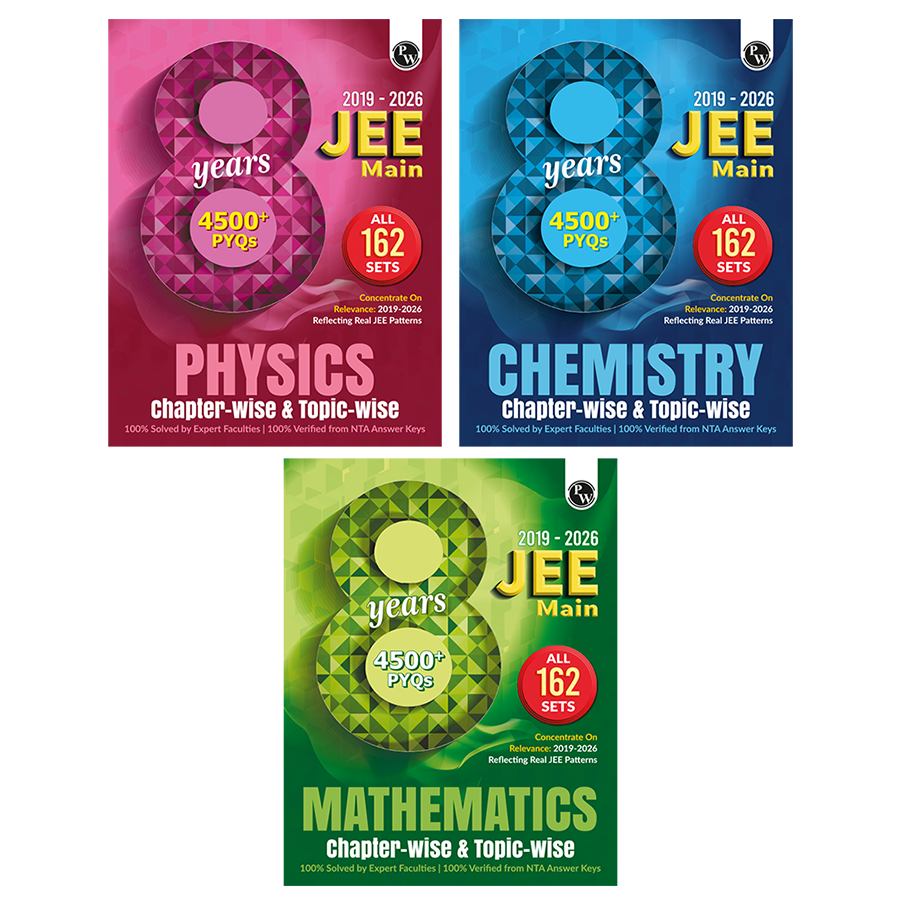
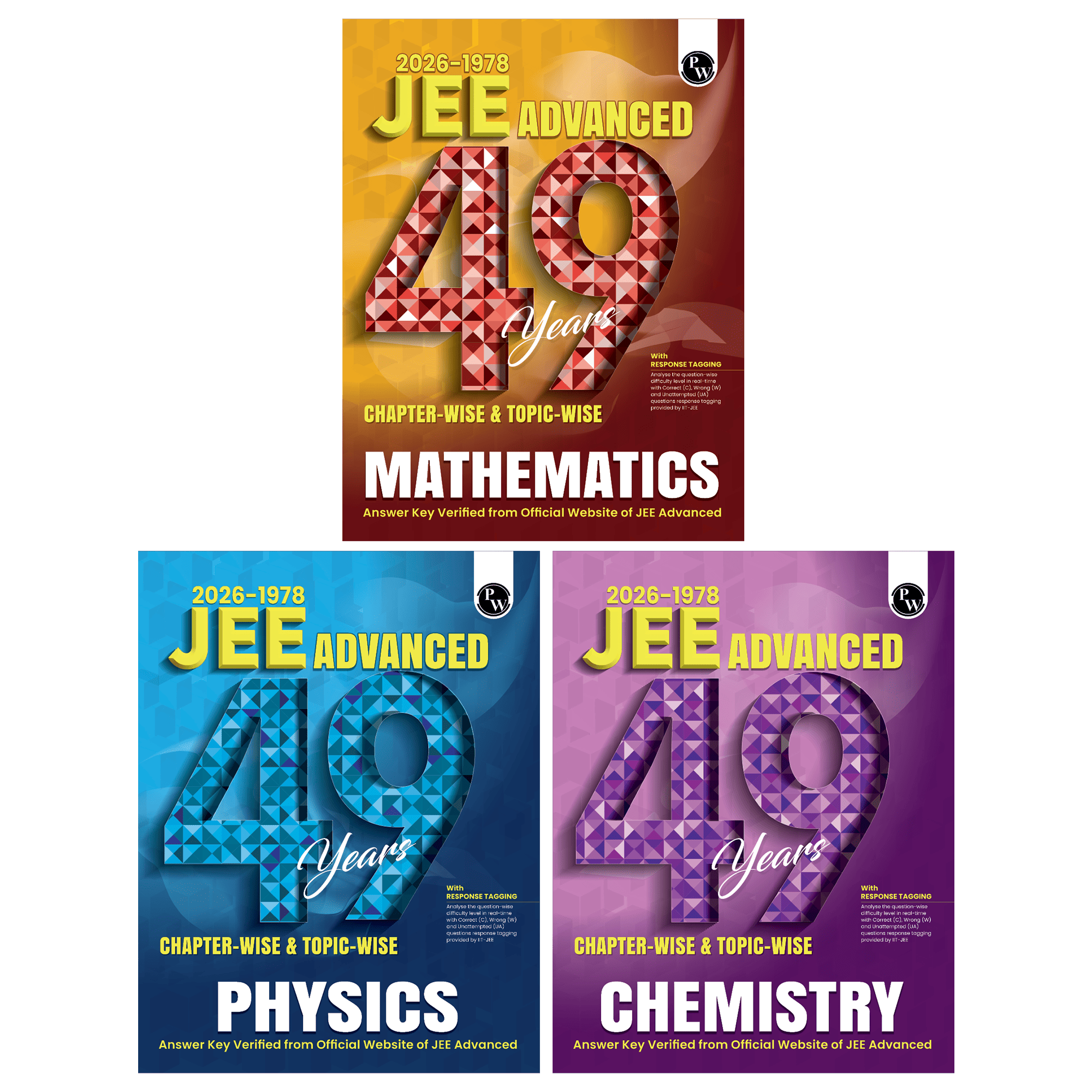
PW IIT JEE Books — prepare with structured learning resources designed to strengthen concepts, improve problem-solving ability, and support systematic revision for JEE Main and JEE Advanced. From theory and practice questions to exam-focused preparation, PW IIT JEE Books help students stay consistent throughout their journey.
JEE Advanced Exam Pattern 2026
The JEE Advanced test is different from other tests because it doesn't have the same format every year. Certain structural aspects, on the other hand, stay the same. The test is done completely in a computer-based test (CBT) style. Candidates must take two required papers: Paper 1 and Paper 2. Both papers are held on the same day, usually in the morning and afternoon.
There are three disciplines on each paper: maths, chemistry, and physics. Each paper lasts three hours. One important thing is that both papers are required. If a candidate misses one paper, they are disqualified from the ranking process. The questions are available in two languages: English and Hindi, giving students the flexibility to switch between them during the exam.
Please note that applicants are given "scribble pads" to use for rough work, and they must be returned after each session. It's also important to get to know the virtual calculator and the navigation palette, as these are the only digital tools you can use during the six-hour test.
JEE Previous Year Papers — strengthen your preparation by practicing real exam questions and understanding actual JEE patterns. Regular JEE Previous Year Papers practice helps improve speed, accuracy, concept application, and confidence for JEE Main and JEE Advanced.
Subject Distribution in JEE Advanced Exam Pattern
The test makes sure that all three key subjects are given the same amount of weight. The total number of questions may vary, but the distribution among physics, chemistry, and mathematics stays the same.
|
Subject |
Section Overview |
Focus Area |
|
Physics |
Mechanics, Electromagnetism, Optics |
Application of concepts |
|
Chemistry |
Physical, Organic, Inorganic |
Theory and Reactions |
|
Mathematics |
Calculus, Algebra, Geometry |
Logical Reasoning |
In the JEE Advanced, each subject is divided into different sections based on question formats. This variety ensures that students cannot rely on rote learning but must possess a versatile problem-solving approach.
JEE Advanced Question Types and Marking Scheme
One of the most talked-about features of the JEE Advanced exam is the marking scheme. It often includes "Partial Marking," which can be a lifesaver for students.
-
Multiple Choice Questions (MCQs): These usually have a single correct option.
-
Multiple Correct Option Questions: These are the toughest. You get full marks only if you select all the correct options. The JEE Advanced exam now allows partial marks for selecting some correct options without choosing any wrong ones.
-
Numerical Value Questions: Students must enter a numerical answer. These typically do not have negative markings.
-
Matching List Questions: You match items from two or three columns.
-
Integer Type Questions: The answer is a single-digit or multi-digit integer.
The JEE Advanced exam pattern for 2026 will likely continue the trend of using negative marking for MCQs to discourage guessing. Understanding when to skip a question is as important as knowing how to solve it.
JEE Test series — practice under real exam conditions and evaluate your preparation through structured mock tests. Regular testing helps improve accuracy, time management, question selection, and overall performance for JEE Main and JEE Advanced.
JEE Advanced Exam Pattern: Total Marks and Duration
While the exam duration is fixed at 6 hours (3 hours per paper), the JEE Advanced exam pattern total marks vary. In previous years, the total marks have fluctuated between 306, 360, and even 372.
|
Exam Feature |
Details |
|
Total Duration |
6 Hours (3 Hours per paper) |
|
Mode of Exam |
Computer-Based Test (CBT) |
|
Total Marks |
Variable (Confirmed on the exam day) |
|
Number of Papers |
Two (Paper 1 & Paper 2) |
Since the JEE Advanced exam pattern and marks are not fully revealed until the candidate opens the question paper, candidates must be psychologically prepared for any total. The IIT entry system is known for being unpredictable, which tests how well a student can adjust under stress.
Instructions for JEE Advanced Exam
To navigate the exam pattern successfully, students should be aware of the digital interface. The CBT environment allows you to:
-
Save and Next: Saves your answer and moves to the next question.
-
Clear Response: Deletes your chosen option.
-
Mark for Review: Lets you go back to a question later.
The JEE Advanced exam requires a strategic approach. Since Paper 1 and Paper 2 are on the same day, physical and mental endurance are vital. Instead of talking about how hard the first paper was, you should use the time between the two sessions to rest.
JEE Advanced Exam Pattern and Marks Distribution
Preparation for the JEE Advanced exam involves rigorous mock testing. Because the marking scheme changes, practicing with diverse sets of previous years' papers is the best strategy.
-
Analyse Partial Marking: In the JEE Advanced exam, partial marking helps you score even if you aren't 100% sure of all options in a multi-correct question.
-
Focus on Accuracy: With negative marking, your accuracy in the JEE Advanced exam is more important than the number of questions attempted.
-
Set a time limit for each section: To make sure you don't miss any easy questions in your "weaker" areas, break up your 180 minutes per paper into 60-minute blocks for each subject.
The exam might seem hard, but consistent practice helps in decoding the logic behind the question placements.
Read More: JEE Advanced Previous Year Question Papers with Solutions
JEE Advanced Exam Pattern FAQs
Is there negative marking in the JEE Advanced exam?
Yes, most parts of the test give you negative points for wrong responses, especially for single- and multiple-choice questions. However, numerical value questions often do not have negative marking.
Can I skip Paper 2 in the JEE Advanced exam 2026?
No, you have to take both Paper 1 and Paper 2. You won't be graded for a rank if you skip one.
What is the total marks in the JEE Advanced exam?
The total number of marks is not set and changes from year to year. The overall score for both papers is usually between 300 and 400 points.
Does the JEE Advanced exam include partial marking?
Yes, the structure often includes partial marking for multiple-choice questions, allowing students to earn points for every correct option selected.
How many subjects are included in the JEE Advanced 2026?
The JEE Advanced exam 2026 covers three main subjects: physics, chemistry, and mathematics, distributed equally across two papers.