JEE Important Questions Chemistry 2026 with Solutions
JEE Important Questions Chemistry: Preparing for the Joint Entrance Examination (JEE) is one of the most challenging journeys for engineering aspirants in India. The exam is conducted in two stages, JEE Main and JEE Advanced, and it tests a student’s understanding of Physics, Chemistry, and Mathematics. Among these, Chemistry often becomes a mixed experience for students. Some find it scoring and straightforward, while others feel it is boring or difficult due to its vast syllabus and memory-based parts.
In reality, Chemistry plays a crucial role in improving overall marks, as it usually has more direct questions compared to Physics and Maths. The subject itself is divided into three main branches: Physical Chemistry (concepts and numerical problems), Organic Chemistry (reaction mechanisms and structures), and Inorganic Chemistry (facts, trends, and memory-based topics).
Each section demands a different strategy, and knowing the important questions of Chemistry for JEE Mains can make preparation more effective. In the following article, you will find a carefully structured list of JEE Main Chemistry important questions that cover all three branches. These questions will not only help you practise the right type of problems but also give you a clear idea of the exam pattern and frequently asked concepts.
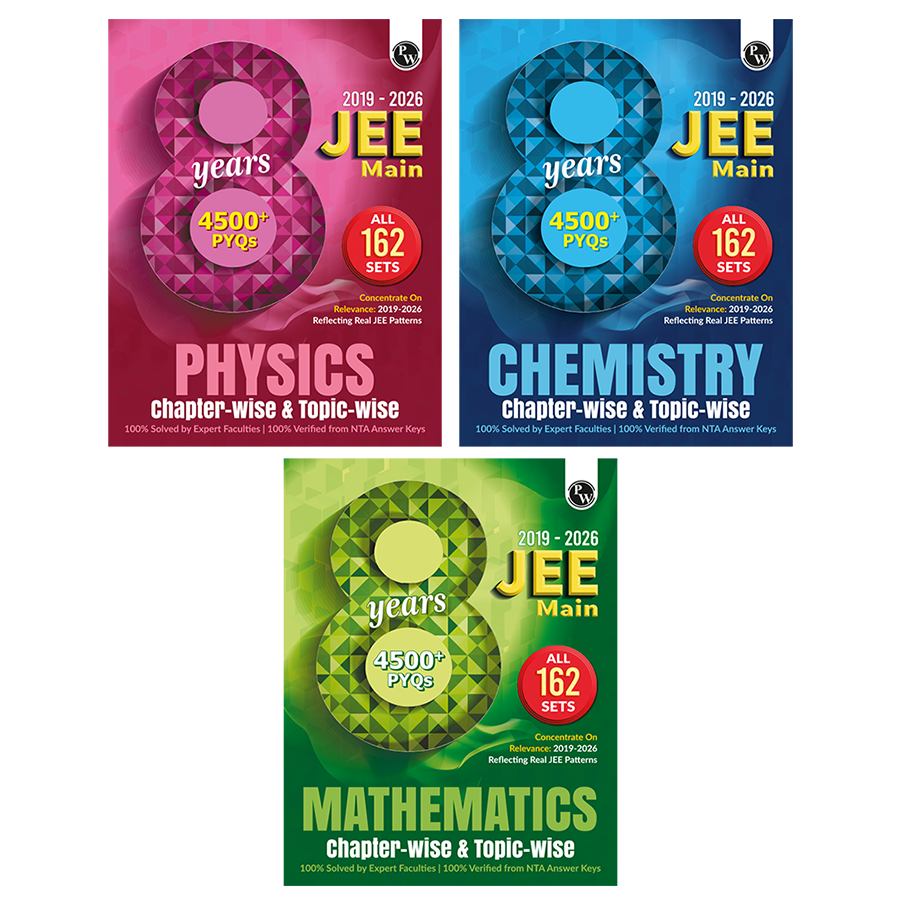
Check Out: PW JEE Books
JEE Chemistry Exam Pattern
The JEE Main exam is conducted online as a Computer-Based Test (CBT). It includes three subjects: Physics, Chemistry, and Mathematics, with equal weightage. In the Chemistry section, the paper usually has 30 questions (divided into two parts).
-
Section A: 20 questions are single correct multiple-choice questions (MCQs).
-
Section B: There are 10 numerical value-type questions, out of which students need to attempt any 5.
Each question carries 4 marks, and there is a negative marking of -1 mark for every wrong answer (both in MCQs and numerical type). This makes the Chemistry section worth 100 marks out of the total 300.
Check Out: JEE Previous Year Papers
Important questions for JEE Mains Chemistry
Q1. Choose the correct statements.
(A) Weight of a substance is the amount of matter present in it.
(B) Mass is the force exerted by gravity on an object.
(C) Volume is the amount of space occupied by a substance.
(D) Temperatures below 0°C are possible in Celsius scale, but in Kelvin scale negative temperature is not possible.
(E) Precision refers to the closeness of various measurements for the same quantity.
Choose the correct answer from the options given below:
(a) (B), (C), and (D) only
(b) (A), (B), and (C) only
(c) (A), (D), and (E) only
(d) (C), (D), and (E) only
Q2. Choose the Incorrect Statement about Dalton’s Atomic Theory:
(A) Compounds are formed when atoms of different elements combine in any ratio.
(B) All the atoms of a given element have identical properties including identical mass.
(C) Matter consists of indivisible atoms.
(D) Chemical reactions involve reorganization of atoms.
Choose the correct answer from the options given below:
(a) (B), (D) only
(b) (A), (B), (D) only
(c) (C), (D), (E) only
(d) (A) only
3. The average molar mass of chlorine is 35.5 g mol–1. The ratio of 35Cl to 37Cl in naturally occurring chlorine is close to:
(a) 4 : 1 (b) 3 : 1
(c) 2 : 1 (d) 1 : 1
4. Mass of magnesium required to produce 220 mL of hydrogen gas at STP on reaction with excess of dil. HCl is
Given : Molar mass of Mg is 24 g mol–1.
(a) 235.7 g (b) 0.24 mg (c) 236 mg (d) 2.444 g
5. On complete combustion 1.0 g of an organic compound (X) gave 1.46 g of CO2 and 0.567 g of H2O. The empirical formula mass of compound (X) is _________ g.
(Given molar mass in g mol–1 C : 12, H : 1, O : 16)
(a) 30 (b) 45 (c) 60 (d) 15
6. The number of N atoms in 681 g of C7H5N3O6 is x × 1021. The value of x is____________.
(NA = 6.02 × 10²³ mol–1) (Nearest Integer)
7. 56.0 L of nitrogen gas is mixed with excess of hydrogen gas and it is found that 20 L of ammonia gas is produced. The volume of unused nitrogen gas is found to be___ L.
8. NaClO3 is used, even in spacecraft, to produce O2. The daily consumption of pure O2 by a person is 492L at 1 atm, 300 K. How much amount of NaClO3, in grams, is required to produce O2 for the daily consumption of a person at 1 atm, 300 K?
NaClO3(s) + Fe(s) → O2(g) + NaCl(s) + FeO(s)
R = 0.082 L atm mol–1 K–1
9. Consider the complete combustion of butane, the amount of butane utilized to produce 72.0 g of water is__________ ⋅ 10−1g, (in nearest integer)
10. The complete combustion of 0.492 g of an organic compound containing ‘C’, ‘H’ and ‘O’ gives 0.793g of CO2 and 0.442 g H2O. The percentage of oxygen composition in the organic compound is _________. (nearest integer)
For more JEE Main Important Questions Chemistry, check out the PDF Link.
JEE Main Books: Chemistry
JEE Advanced Chemistry Questions
Q1. In an electrochemical cell, dichromate ions in aqueous acidic medium are reduced to Cr³⁺. The current (in amperes) that flows through the cell for 48.25 minutes to produce 1 mole of Cr³⁺ is ______.
Use: 1 Faraday = 96500 C mol⁻¹
Q2. At 25°C, the concentration of H⁺ ions in 1.00 × 10⁻⁷ M aqueous solution of a weak monobasic acid having acid dissociation constant (Kₐ) of 4.00 × 10⁻¹⁰ is X × 10⁻⁷ M. The value of X is ______.
Use: Ionic product of water (Kᵥ) = 1.00 × 10⁻¹⁴ at 25°C
Q3. The heating of NH4NO2 at 60 −70° C and NH4NO3 at 200 −250°C is associated with the formation of nitrogen containing compounds X and Y, respectively. X and Y, respectively, are
(a) N2 and N2O (b) NH3 and NO2 (c) NO and N2O (d) N2 and NH3
Q4. Regarding the molecular orbital (MO) energy levels for homonuclear diatomic molecules, the INCORRECT statement(s) is(are)
(a) Bond order of Ne2 is zero.
(b) The highest occupied molecular orbital (HOMO) of F2 is σ-type.
(c) Bond energy of O2+ is smaller than the bond energy of O2.
(d) Bond length of Li2 is larger than the bond length of B2.
Q5. Molar volume (Vm) of a van der Waals gas can be calculated by expressing the van der Waals equation as a cubic equation with Vm as the variable. The ratio (in mol dm−3) of the coefficient of Vm 2 to the coefficient of Vm for a gas having van der Waals constants a = 6.0 dm6 atm mol−2 and b = 0.060 dm3 mol−1 at 300 K and 300 atm is ______.
Use: Universal gas constant (R) = 0.082 dm3 atm mol−1 K−1.
For more Chemistry JEE Advanced Questions, PDF Link.
JEE Advanced Books: Chemistry
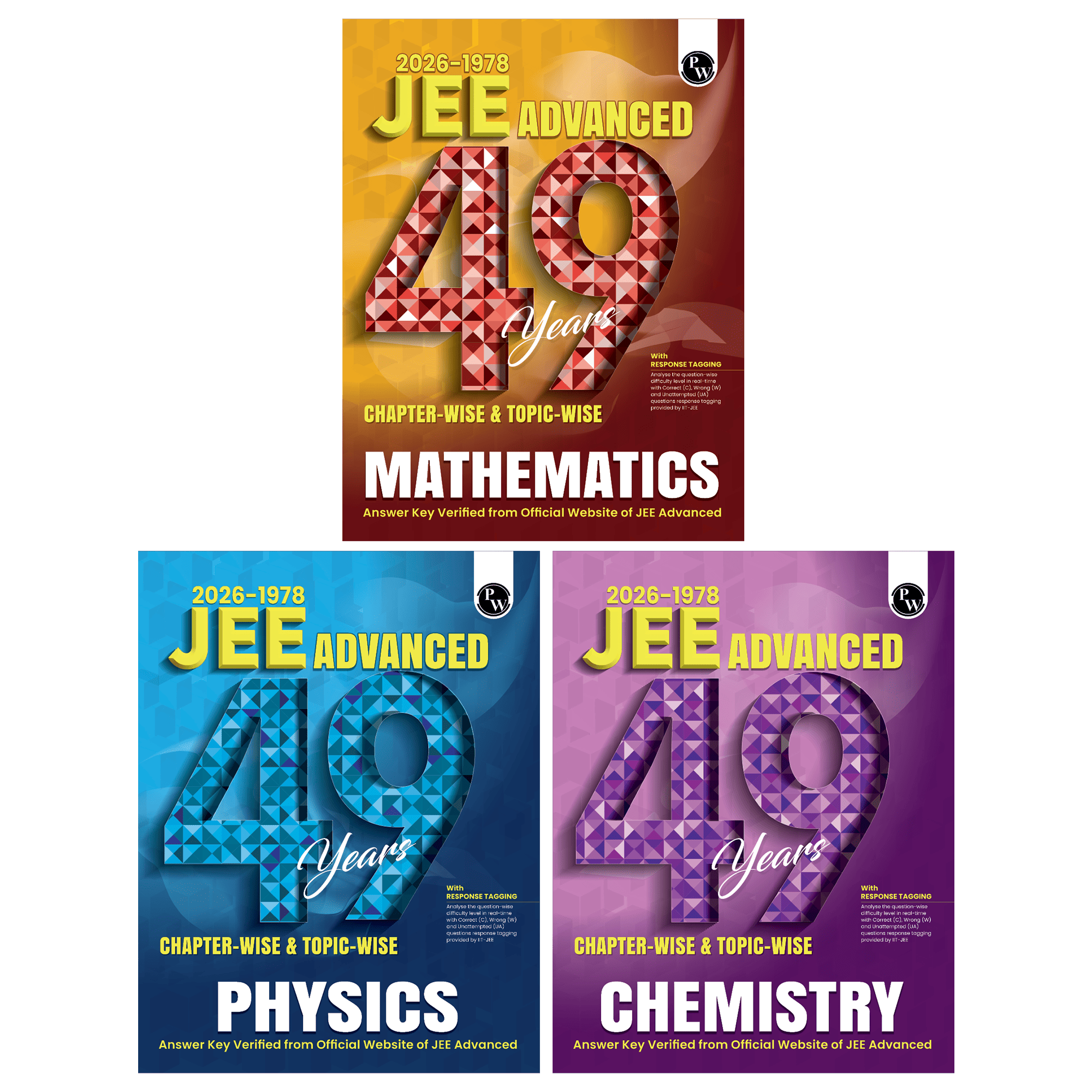
Unlike JEE Main, where many questions are direct, JEE Advanced tests a student’s ability to apply concepts in new and tricky ways. That is why choosing the right books for Chemistry is a must. A PW JEE Advanced Chemistry book covers all three parts—Organic, Inorganic, and Physical Chemistry—with detailed theory, solved examples, and high-level practice problems. Check out the books here:- Students can also strengthen their preparation with JEE Advanced Chemistry PYQ 2027, which helps in understanding exam patterns through previous year questions. Along with this, the JEE Advanced Ranker Test Series 2026 is useful for full syllabus practice and improving performance in real exam conditions.
How to Prepare for JEE Chemistry?
Chemistry plays a very important role in JEE because many questions are asked directly from the NCERT, and with the right method, it can become your scoring subject. Below are simple steps to prepare for JEE Main Chemistry important questions and also for JEE Advanced Chemistry questions in an effective way.
1. Start with the NCERT First
Most of the JEE Chemistry questions in the exam come directly or indirectly from NCERT textbooks. Especially in Inorganic Chemistry, almost every line of the NCERT matters. Reading it carefully makes a huge difference.
-
Read the NCERT line by line and highlight important facts.
-
Make short notes of reactions, formulas, and definitions.
-
Revise the NCERT multiple times before moving to reference books.
2. Complete Each Chapter Step by Step
Chemistry has three parts: Physical, Organic, and Inorganic. Each of them needs a different way of preparation. Completing chapters in small portions helps avoid pressure.
-
Do not leave any chapter half-done; complete theory and problems together.
-
Write down formulas and reaction mechanisms in a notebook.
-
After completing a chapter, solve basic questions to check your understanding.
3. Note Making for Quick Revision
Notes help in quick revision before the exam. For Chemistry, writing in your own words is very helpful, especially for the Inorganic and Organic parts.
-
Make separate pages for formulas, important reactions, and exceptions.
-
Keep your notes short, so you can revise them in a few minutes.
-
Add extra points from practice papers and PYQs to your notes.
4. Practise Important Questions Regularly
Solving the important questions of Chemistry for JEE Mains is a must. These questions give you the real idea of what type of problems are asked in the exam. For JEE Advanced, you need a higher level of practice.
-
Solve JEE Main Chemistry important questions from previous years.
-
Try JEE Advanced Chemistry questions after completing the basics.
-
Mark the questions you find tricky and revise them again later.
5. Focus on Repeated and High-Weightage Topics
In Chemistry, some topics are asked again and again. Giving extra time to these can increase your score quickly.
-
Learn all NCERT-based reactions in Inorganic Chemistry.
-
Practice Physical Chemistry numerical problems daily.
-
Revise Organic Chemistry mechanisms again and again.
6. Mock Tests and Chapter-wise Practice
Taking tests helps you judge your speed and accuracy. They also make you aware of your weak areas.
-
Attempt chapter-wise tests just after finishing the chapter.
-
Take full-length mock tests once you complete the syllabus.
-
Analyse your mistakes and revise the same topics from notes.
7. Revise Again and Again
Revision is the real key to making Chemistry easy. Without revision, even strong topics can feel confusing in the exam hall.
-
Revise the NCERT at least 3–4 times before the exam.
-
Go through your notes and mark important questions regularly.
-
In the last days, focus only on the JEE Chemistry questions that you got wrong earlier.
Read More: 17 Most Important Topics in CHEMISTRY for JEE Exam
JEE Important Questions Chemistry FAQs
1. Why should I choose PW’s Chemistry books for JEE?
PW’s books focus on relevant and updated questions from 2019–2025, covering all recent exam trends.
2. Do these books have Previous Year Questions (PYQs)?
Yes, they include all 144 shift papers from the last 6 years, giving you complete coverage of PYQs.
3. Are the questions at the same level as JEE Main?
Yes, the questions are designed to match the real exam level, so you practise exactly what is asked in JEE.
4. Do the books provide topic-wise practice?
Yes, questions are arranged topic-wise, making it easy to focus on Organic, Inorganic, or Physical Chemistry separately.
5. Can I also use these books for revision?
Yes, because they include weightage analysis and frequently asked questions, which make revision easier and focused