How to Study Physics with JEE Previous Year Question Paper
Physics can feel tricky when you’re preparing for the JEE Main exam. But you don’t need to be scared. Using the JEE Previous Year Question Paper is a powerful way to make your Physics strong. These papers show you exactly what kind of questions are asked, how they are framed, and what topics are important.
We will talk about how to study Physics using the JEE Mains previous year question paper.
Why Use JEE PYQs for Physics?
Physics in JEE can be tough because it has both theory and calculations. Previous year question paper JEE mains collections are especially helpful for Physics because they help you:
-
Get better at solving numerical problems
-
Learn shortcuts that save time
-
Understand which concepts are tested most often
-
Build confidence with the types of questions asked
How to Study with JEE PYQs
To use previous papers well, follow these steps:
-
First learn the basic concepts from your textbooks
-
After finishing each topic, solve related questions from past papers
-
Note which topics you find hardest
-
Practice with time limits to build speed
When looking at JEE mains PYQ physics collections, you'll notice some topics appear more often than others. Recent analysis shows equal importance to 11th and 12th grade topics. Some high-scoring areas include:
-
Ray Optics
-
Electrostatics
-
Thermodynamics
-
Rotational Motion
Make sure to give these topics special attention, but don't ignore the rest of the syllabus.
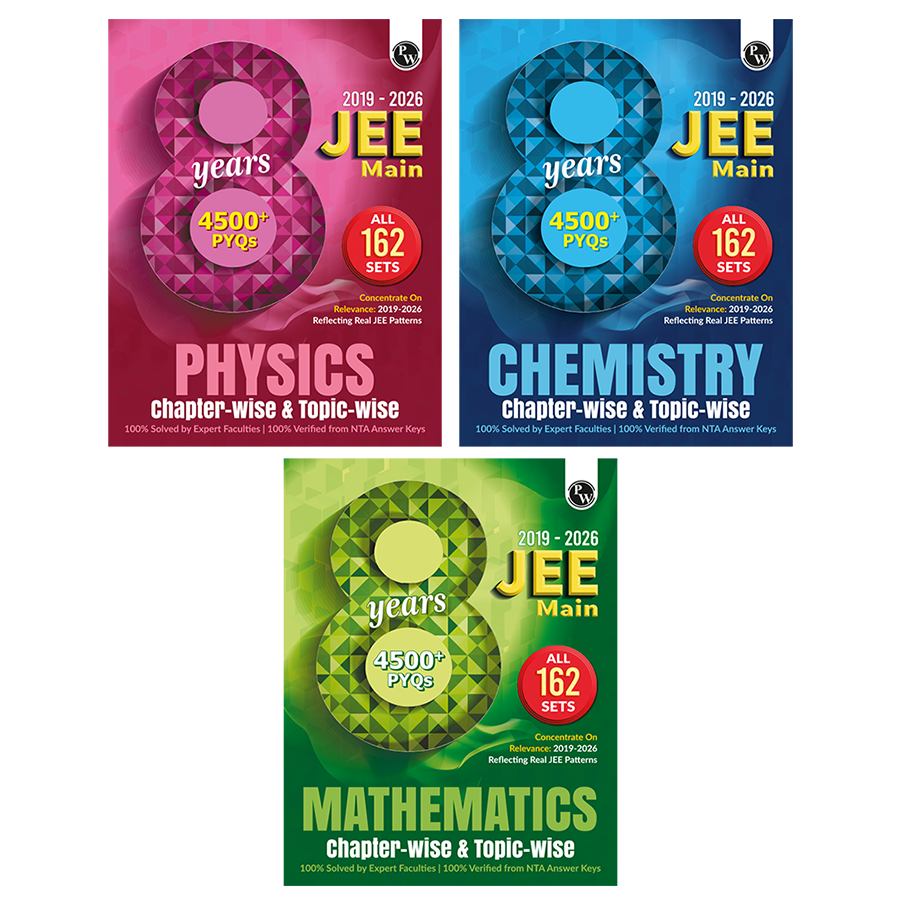
Check Out: PW IIT JEE Books
How to Solve JEE Previous Paper Questions
1. Start with the Basics
Before you open any JEE Mains PYQ Physics, make sure you have studied your chapters. You can use NCERT books or standard Physics books. Try to understand the core idea behind each concept.
If you don’t understand the chapter, the questions from the previous year's question paper of JEE Mains will confuse you. First, get your basics clear.
2. Pick One Chapter at a Time
Don’t jump around. Pick one topic, like Laws of Motion or Current Electricity, and study it fully. Then go to the JEE Main previous year question paper and solve the Physics questions from that chapter.
This will help you understand how that topic is covered in the exam. When you see the same idea in different ways, you will get better at solving it.
3. Solve Questions Without Looking at Answers
Take a physics PYQ JEE mains test and solve it like a test. Don’t check the answer right away. Try to solve it by yourself.
After finishing, check your answers and mark the ones you got wrong. Try to understand why you made a mistake. Was it a silly calculation error? Or did you not understand the concept?
Learning from your mistakes is the best way to grow.
4. Create a Mistake Notebook
Whenever you solve a JEE Mains previous year question paper, write down the mistakes you made. Note what topic it was from and what went wrong.
This book will be your secret weapon. Before the exam, revise all the mistakes you made. It will stop you from repeating them.
5. Practice with a Timer
The JEE exam has time limits. Solving Physics questions takes time, especially the calculation ones.
So, while doing the JEE previous year question paper, always use a timer. Give yourself the exact time the real exam gives you. This way, you’ll learn how to manage time and stay calm.
Managing Your Time Better
JEE gives you a limited time, and Physics problems often take longer to solve. By practicing with previous papers, you learn which questions need more time and which you can solve quickly.
Try solving full previous year papers with proper timing. This builds your exam stamina and reduces stress on exam day. As one JEE topper advised: "Keep giving mock tests using previous papers. It's better to make mistakes during practice than in the real exam."
High-Weightage Topics in JEE Main Physics
Based on analysis of JEE Main previous year question paper sets, here's how to approach key Physics topics:
Mechanics
Questions are usually concept-based. Focus on Rotational Motion, which frequently appears in papers. Practice lots of numerical problems to build speed.
Electrostatics
This topic's importance has grown in recent years. Master both theory and calculations. Previous year papers show many questions on electric fields and potential.
Ray Optics
A consistently important topic. JEE mains PYQ physics collections show that this topic tests your application skills more than memory.
Thermodynamics
Questions often combine multiple concepts. Previous papers show that understanding processes and cycles is key.
For each topic, follow this approach:
-
Study the basic concepts
-
Solve simple problems
-
Look at how the topic appeared in the previous 5-10 years of papers
-
Practice similar problems with variations
-
Review tough questions regularly
Check Out: JEE Question Banks
Do's and Don'ts During JEE Preparation
What to Do:
-
Solve at least 10 years of previous year question paper JEE mains
-
Use reliable sources for solutions
-
Stay aware of any syllabus changes over the years
-
Focus on understanding the method, not just the answer
What to Avoid:
-
Skipping topics that appear less often
-
Memorizing solutions instead of understanding approaches
-
Ignoring new question formats
-
Putting too much pressure on yourself
Books for JEE Mains PYQ
Without knowing the right book you can't prepare for the exam.
|
Book Name |
Link |
|
JEE Main 7 Years Chemistry PYQ Book |
|
|
JEE Main 7 Years (2019-2024) Maths PYQ Book |
|
|
JEE MAIN Session-1 10 Previous Year Solved Paper |
Fitting JEE Previous Question Papers into Your Study Schedule
Here's how to include previous papers in your daily routine:
-
Daily: Solve 5-10 questions from previous papers on topics you studied that day
-
Weekly: Review questions you found difficult
-
Monthly: Take a full previous year paper under timed conditions
-
Create a system to revisit important concepts regularly
Make a Weekly Plan
Here’s how you can include the previous year's JEE Mains question paper in your weekly schedule:
|
Day |
Task |
|
Monday |
Study a new topic + solve its PYQs |
|
Tuesday |
Solve mixed questions from 2 topics |
|
Wednesday |
Revise last week’s PYQs |
|
Thursday |
Solve a full Physics section from a past paper |
|
Friday |
Analyze mistakes + revise weak areas |
|
Saturday |
Timed test using JEE Main previous year question paper |
|
Sunday |
Rest or light revision |
Follow this plan for 2-3 months, and you’ll feel more confident in Physics.
Physics becomes easy when you stop fearing it. The JEE Mains previous year question paper is not just a set of old questions. It’s a tool to help you think better, solve faster, and stay calm during the exam.
By studying one topic at a time, solving real JEE questions, understanding mistakes, and revising smartly, you can improve day by day. The JEE previous year question paper is your best friend on this journey.
Read More: JEE Main Chapter Wise PYQ
JEE previous year question paper FAQs
1.How can I effectively analyze my mistakes in physics PYQ JEE mains?
Create an error log where you categorize mistakes as conceptual misunderstandings, calculation errors, or application issues. For each wrong answer, write down the correct approach and solution. Review this log weekly to ensure you don't repeat the same mistakes. This analysis helps target specific improvement areas.
2. When is the best time to start solving JEE main previous year question paper collections?
The ideal time to start is after you've built a solid understanding of the basic concepts in a topic. Don't wait until you've completed the entire syllabus. Instead, finish a topic first, then immediately solve related questions from previous papers to strengthen your understanding and identify application patterns.
3. Which Physics topics appear most frequently in JEE previous year question papers?
Analysis of previous year question paper JEE mains shows that Mechanics (especially Rotational Motion), Electrostatics, Ray Optics, and Thermodynamics consistently appear with higher weightage. However, the syllabus coverage can vary year-to-year, so prepare all topics thoroughly while giving these high-yield areas special attention.
4. How can I use previous papers to identify my weak areas in Physics?
Track your performance topic-wise when solving previous papers. If you consistently struggle with certain topics or question types, these are your weak areas. Assign a difficulty score (1-5) to each question you solve. Topics with higher average difficulty scores need more attention. Return to the theory, solve more basic problems, and then attempt advanced questions from those topics again.