When to start JEE Physics PYQ practice for a January Main attempt
In case you are aiming for a January attempt, the perfect time to start solving your first JEE Main Physics PYQ is around August or September, once you have completed about 60% of your syllabus. This article gives you a levelled runway of 4-5 months before January to build speed, strengthen weak areas, and learn the exact exam pattern.
Importance of Solving JEE Main Physics PYQ
The way you retain complex concepts will change when you start your preparation at the right time. Physics needs theory and clarity as well as the use of formulas. If you wait until December to do your practice, you might get panicky, learn shallowly and make unforced errors on the real exam.
Starting from August or September gives you the opportunity to align previous questions with your classroom or self-study schedule. That means your answers are not just memorised but you have an understanding of the core engineering mechanics and electromagnetic principles that are needed to qualify.
When to Start with JEE Main Physics PYQ for January JEE Mains?
The January session offers a unique advantage because the competition is often less intense compared to the April session. However, the timeline is tight.
-
Syllabus Completion: You need to wrap up the core chapters by October or November.
-
Revision Window: December must be reserved entirely for full-length mock tests and final revision.
-
Confidence Building: Solving JEE previous year papers early removes the fear of the actual exam format.
What is the Ideal Time to Start Your JEE Main Physics PYQ Practice?
The perfect starting window depends heavily on your current syllabus coverage. Let us break down the timeline into three realistic phases based on student progress.
Phase 1: August to September (The Ideal Window)
By August, most serious aspirants have covered crucial Class 12 topics like Electrostatics and Current Electricity, alongside their Class 11 portion. Starting your JEE main physics PYQ journey here helps you bridge the gap between textbook problems and real exam-level questions.
Phase 2: October to November (The Transition Phase)
If you are slightly behind, October is your absolute deadline to start. At this stage, you should focus on a JEE chapter wise PYQ approach. Instead of solving full-length papers, solve past questions right after finishing a specific chapter to save time.
Phase 3: December (The Emergency Phase)
Starting in December is risky but manageable if you stream-line your focus. In this phase, do not try to solve every question from the last twenty years. Stick to the most recent three to four years of papers to understand the current trend of the testing agency.
How to do Daily Past Year Question Practice with JEE Main Physics PYQ?
Randomly picking questions will lead to frustration. A structured approach ensures systematic improvement in problem-solving speed.
Step 1: Topic-Wise Segregation
Never jump directly into full mock papers in the initial months. Use a JEE mains PYQ chapterwise physics guide to target specific chapters. For instance, if you just finished Mechanics, solve questions only from that module to consolidate your learning.
Step 2: Set a Timer
JEE Main is as much about speed as it is about accuracy. When solving past questions, allocate approximately two minutes per question. This builds the mental stamina needed to handle the pressure of the computer-based test format.
Step 3: Analyze Mistakes Thoroughly
Maintain a separate error notebook. If you fail to solve a question on Rotational Mechanics, write down whether it was a calculation error, a conceptual misunderstanding, or a formula memory lapse.
Year-Wise JEE Main Physics PYQ of Papers
The exam pattern has evolved significantly over the last decade. Your practice strategy should reflect these changes.
|
Exam Year Range |
Primary Focus Area |
Recommended Practice Method |
|
2021 to 2025 |
High Priority |
Solve as timed online mock tests |
|
2018 to 2020 |
Medium Priority |
Use for JEE main PYQ physics chapter-wise drills |
|
2015 to 2017 |
Conceptual Base |
Use for untimed homework assignments |
How to Balance Syllabus Completion with JEE Main Physics PYQ
A common dilemma among students is whether to finish the entire syllabus before touching past questions. The answer is a definitive no.
Waiting to finish the whole syllabus means you will only start solving past papers in December. By then, you will have forgotten the chapters you studied in April. A parallel approach where you finish a chapter and immediately solve its JEE PYQ physics problems is the most efficient system.
Having the right resources makes a massive difference in your daily efficiency. Looking for digital copies like a JEE mains PYQ physics pdf can help for quick reference during short breaks or travel.
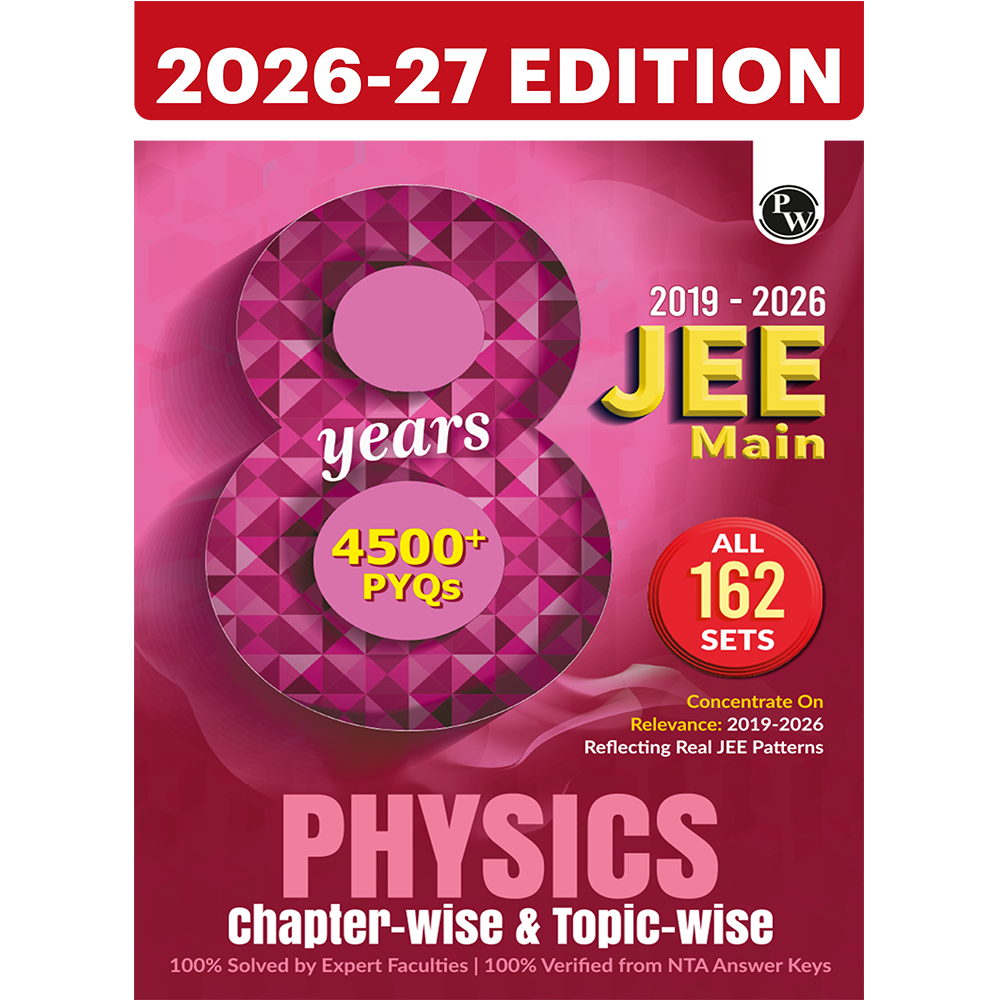
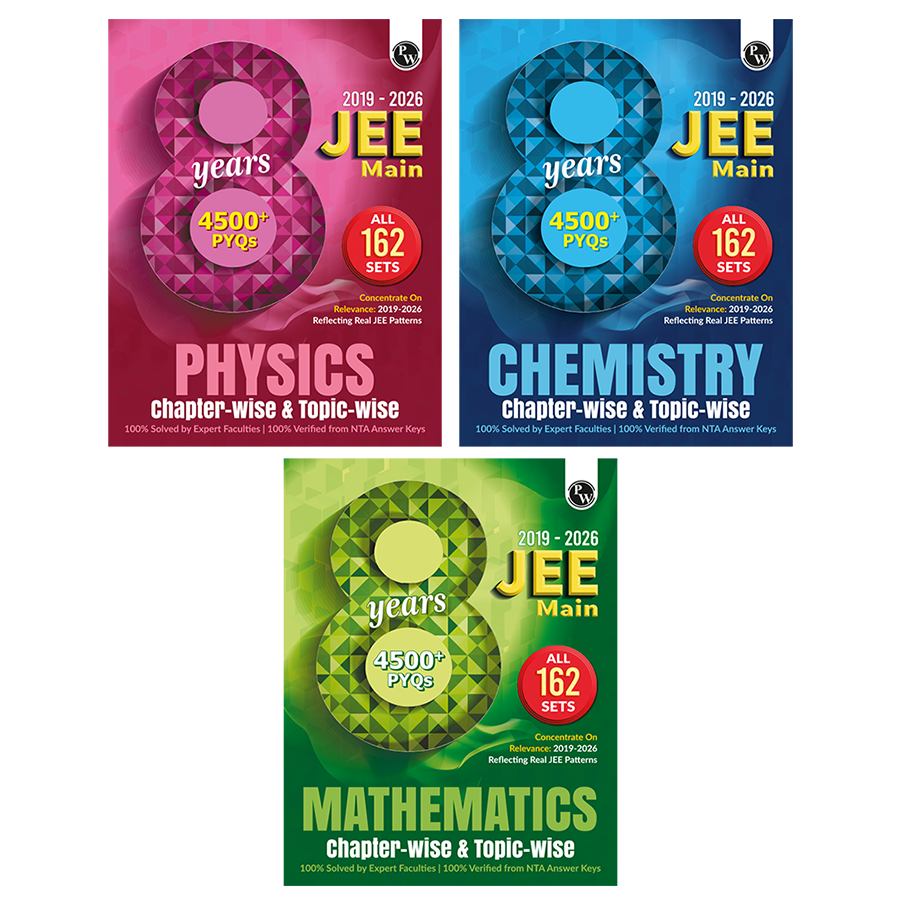
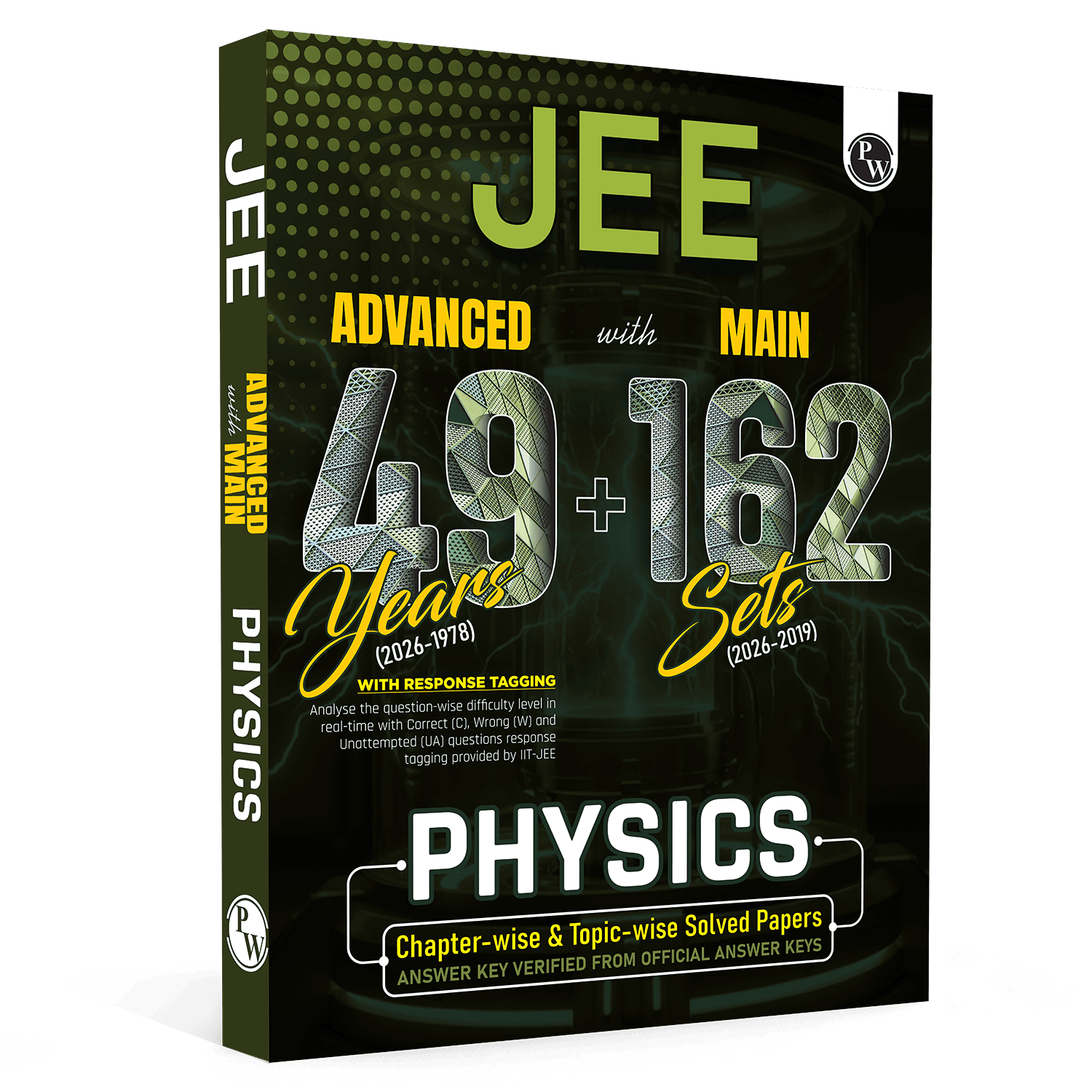
However, for your main study hours, having a dedicated physical book helps you highlight key steps and make notes directly next to tough questions. For a highly structured collection of recent past papers with detailed explanations, you can check out the 8 Years JEE Physics PYQ Book to streamline your daily practice sessions. Along with this, using well-organized JEE Books supports concept building, structured revision, and consistent practice throughout your preparation journey.
What are the Key JEE Main Physics PYQ Chapters to Prioritize?
Not all chapters carry equal weight in the January attempt. You should plan your question practice around high-yield topics to maximise your score quickly.
-
Modern Physics: High weightage, relatively straightforward, and less formula-heavy.
-
Current Electricity: Consistently features around two to three questions every year.
-
Thermodynamics and KTG: Easy to master and highly scoring.
-
Semiconductors: A guaranteed question that requires basic conceptual clarity.
Mistakes to Avoid with JEE Main Physics PYQ
When you get stuck on a difficult question, do not look at the solution immediately. Give it at least three honest attempts using different methods. The real learning happens when your brain struggles to find the solution.
Ignoring the Numerical Value Questions
The integer-type questions require high precision since there is no option-elimination method available. Make sure you practice entering exact values without rounding off errors prematurely during your calculations.
Over-focusing on Advanced Questions
The January Main attempt checks your speed and basic concepts. Do not waste weeks solving complex, subjective problems meant for the Advanced stage until you have completely mastered the Main-level past questions.
Read More: JEE Mains Physics PYQ PDF with Solutions
JEE Main Physics PYQ FAQs
When is the absolute latest I can start solving past papers for the January attempt?
The absolute latest you should start is October. This gives you around three months to cover the major high-weightage chapters systematically before final full-length mocks begin in December.
Should I solve all questions from the past twenty years?
No, focusing on the last five to eight years is generally sufficient because the exam pattern and question style changed significantly after the online testing format was introduced.
Is it better to solve questions chapter-by-chapter or as full papers?
You should solve them chapter-by-chapter from August to November while completing your syllabus. Switch to full-length past papers in December to build overall exam endurance and time management skills.
How many physics questions should I practice daily?
Aim for approximately twenty to twenty-five high-quality past questions daily. Focus entirely on understanding the underlying concepts rather than just rushing to increase the question count.
Can I rely only on online PDFs for my preparation?
While digital copies are useful for quick access, using a dedicated printed book allows you to mark difficult questions, avoid screen fatigue, and simulate real exam-like focus during study hours.