List of Festivals of India for Kids
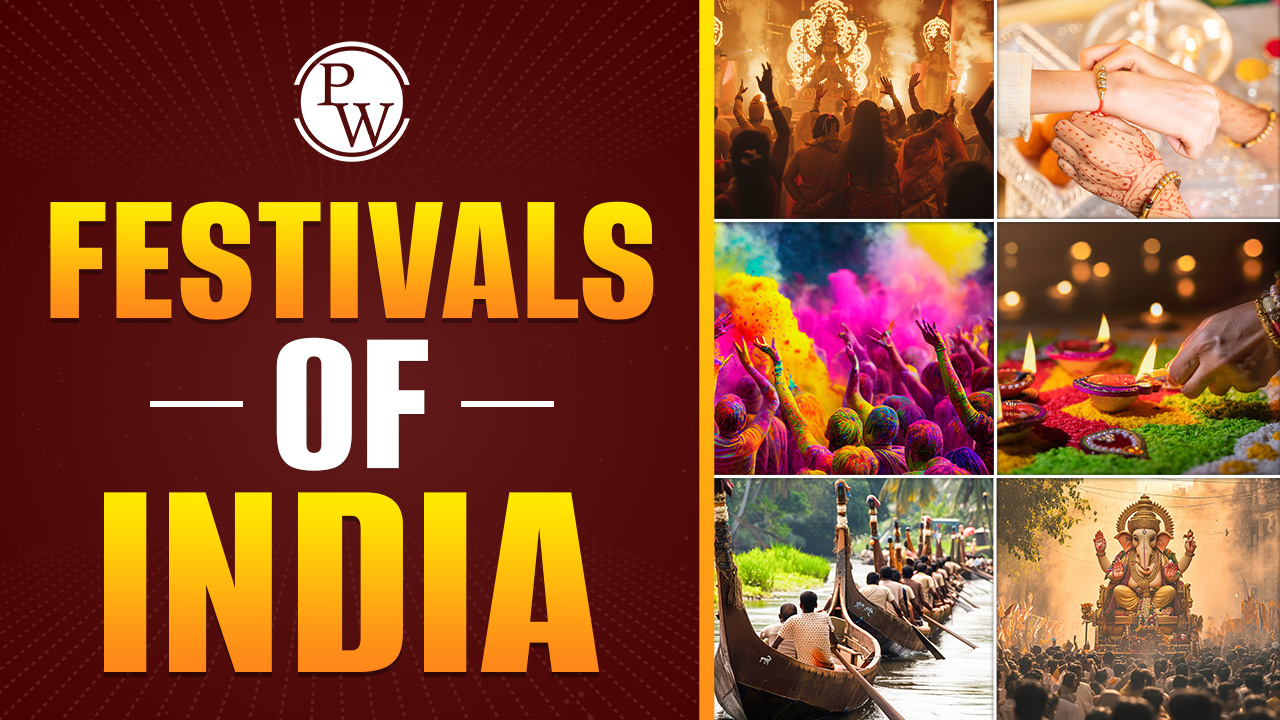
List of Festivals of India for Kids: India is a land where every day feels like a celebration. Whether you're in the snowy hills of the north, the sunny coasts of the south, the bright deserts of the west, or the green forests of the east, every part of India has its own way of celebrating. And that’s what makes our country so full of colour and joy.
Festivals in India are not just about sweets and decorations, they’re about coming together, remembering our stories, and showing love and respect for one another. Every festival has a meaning behind it. Some tell us stories of bravery, others about truth, kindness, or how good always wins over bad.
Learning about festivals isn’t just fun, it’s also helpful in school. Many times, questions about festivals come up in quizzes and exams. You might be asked why we celebrate a festival, where it’s celebrated the most, or what special traditions are followed. So, knowing about festivals helps you in studies and also brings you closer to the heart of India. After all, to know our festivals is to understand our culture a little better.
Check Out: PW Kids' Books
Types of Festivals in India
India is home to a variety of cultures, languages, and traditions, and that’s exactly why we celebrate so many different kinds of festivals! But to understand them better, we can group them into four broad categories: National, Religious, Seasonal, and Regional festivals.
1. National Festivals
National festivals are those that every Indian celebrates, no matter where they come from or what religion they follow:
-
Republic Day (26th January): This is the day when India’s Constitution came into effect in 1950. Schools, colleges, and government offices organise parades and cultural performances, and the national flag is proudly hoisted across the country.
-
Independence Day (15th August): A day to remember India’s freedom from British rule in 1947. It’s celebrated with flag hoisting, patriotic songs, and inspiring speeches. It fills every Indian heart with pride.
-
Gandhi Jayanti (2nd October): This day honours Mahatma Gandhi, the Father of the Nation. People remember his teachings of peace, non-violence, and truth.
2. Religious Festivals
Religious festivals are linked to different faiths and beliefs. Even though they belong to a particular religion, people from other religions often take part too, making them beautiful examples of unity in diversity.
Hindu Festivals
-
Diwali: Known as the festival of lights, symbolises the victory of good over evil.
-
Holi: The festival of colours celebrated with joy, dancing, and coloured powders.
-
Navratri: A nine-day celebration of Goddess Durga’s different forms, especially popular in Gujarat and West Bengal.
-
Janmashtami: Celebrates the birth of Lord Krishna.
Muslim Festivals
-
Eid-ul-Fitr: Celebrated after the month of Ramadan with prayers, food, and charity.
-
Eid-ul-Adha: Also called Bakrid, known for the sacrifice and sharing of meat with the needy.
Christian Festivals
-
Christmas: Celebrated on 25th December to mark the birth of Jesus Christ.
-
Easter: Celebrated to mark the resurrection of Jesus.
Sikh Festivals
-
Guru Nanak Jayanti: Marks the birth of Guru Nanak Dev Ji, the founder of Sikhism.
-
Baisakhi: Celebrated as the Sikh New Year and harvest festival.
3. Seasonal Festivals
India’s farming traditions and changing weather play a huge role in seasonal festivals.
-
Makar Sankranti: Celebrated in January when the sun moves into the Capricorn zodiac. It marks the end of winter and the beginning of longer days. People fly kites, eat sesame sweets, and pray for good harvests.
-
Pongal: A harvest festival mainly in Tamil Nadu. Farmers thank the Sun God for a successful harvest. Families cook sweet dishes and decorate their homes.
-
Onam: A grand harvest festival in Kerala that celebrates the return of the legendary King Mahabali.
4. Regional Festivals
Each state in India has its own unique festivals that shows its local culture, age-old traditions, and rich history. These festivals might not be known across the whole country, but for the people who celebrate them, they hold deep meaning and pride.
-
Bihu (Assam): Celebrated thrice a year, but the most popular one is Bohag Bihu in April, which marks the Assamese New Year and the arrival of spring.
-
Durga Puja (West Bengal): A huge celebration dedicated to Goddess Durga. Pandals are set up, people dress in traditional attire, and the city lights up for days.
-
Lohri (Punjab): Celebrated in January to mark the end of winter and the harvest of rabi crops. Bonfires, singing, and dancing are the highlights.
-
Gudi Padwa (Maharashtra): This marks the Marathi New Year. People hoist a Gudi (a decorated stick with a cloth) outside their homes as a sign of victory and happiness.
Check Out: PW Activity Books
Cultural Festival of India
India is not just known for its religious and regional festivals, but also for its vibrant cultural festivals. These events celebrate the country’s rich artistic heritage, from music and dance to literature and crafts:
|
Festival Name |
Typical Dates |
Significance |
Region/Location |
|
Hornbill Festival |
December |
A vibrant display of the tribal culture and heritage of Nagaland. |
Nagaland |
|
Khajuraho Dance Festival |
February |
Classical dancers from all over India perform in front of ancient temples. |
Khajuraho, Madhya Pradesh |
|
Goa Carnival |
February |
A lively celebration with floats, music, food, and dance capturing Goa’s spirit. |
Goa |
|
Thrissur Pooram |
April/May |
Features grand processions with decorated elephants and rhythmic drum shows. |
Thrissur, Kerala |
|
Hampi Utsav |
November |
Revives the glory of Vijayanagara through performances and historical showcases. |
Hampi, Karnataka |
|
Pushkar Camel Fair |
November |
Combines livestock trading with folk music, dance, and rural competitions. |
Pushkar, Rajasthan |
|
Sufi Music Festival |
March |
A spiritual celebration of Sufi traditions through music and poetry. |
Delhi |
|
Toshali National Crafts Mela |
December |
Promotes local artisans and traditional handlooms from across India. |
Bhubaneswar, Odisha |
|
International Film Festival of India |
November |
Screens national and international films and supports global cinema culture. |
Goa |
|
Mysuru Dasara |
September/October |
Royal processions, cultural performances, and lighting mark this grand event. |
Mysuru, Karnataka |
|
Kala Ghoda Arts Festival |
February |
A multi-disciplinary celebration of arts, crafts, music, and installations. |
Mumbai, Maharashtra |
|
Teej Festival |
July/August |
A women-centric festival marked by fasting, dressing up, and cultural rituals. |
Rajasthan |
|
Puri Beach Festival |
November |
A lively beachside celebration featuring crafts, local cuisine, and performances. |
Puri, Odisha |
|
Konark Dance Festival |
December |
Classical dances performed in the backdrop of the historic Sun Temple. |
Konark, Odisha |
|
Rann Utsav |
November:February |
A desert festival highlighting the crafts, dance, and traditions of Kutch. |
Kutch, Gujarat |
|
Jaipur Literature Festival |
January |
Brings together global authors, poets, and thinkers for literary discussions. |
Jaipur, Rajasthan |
Check Out: Kids Reading Books
Top 10 Festivals of India
Here are 10 of the most important and popular festivals celebrated across India, with details about their customs, regions, and significance.
1. Durga Puja

Durga Puja is one of the biggest festivals in eastern India, especially in West Bengal, Odisha, and Assam. It honours the goddess Durga and her victory over the demon Mahishasura, a powerful reminder of how good always wins over evil.
For several days, beautifully crafted idols of Durga are worshipped in decorated pandals. People dress up, visit friends and family, enjoy dance, music, and offer prayers. The last day, called Vijaya Dashami, ends with grand processions where the idols are taken for immersion in rivers.
2. Diwali

Diwali, or the Festival of Lights, is one of the most widely celebrated festivals in India. It marks Lord Rama’s return to Ayodhya after defeating Ravana and spending 14 years in exile.
Homes are lit up with oil lamps, candles, and fairy lights. People clean and decorate their homes, make sweets, burst firecrackers, and offer prayers to Goddess Lakshmi for prosperity. It’s a time when families come together and share joy.
3. Holi

Holi is the festival of colours. It’s celebrated as a welcome to spring and also remembers the story of Prahlad and Holika, showing that faith and goodness always win.
On the day of Holi, people throw colours at each other, splash water, and enjoy music and dance. The evening before, people gather around a bonfire called Holika Dahan, which symbolises the burning away of evil.
4. Navratri

Navratri is a nine-night festival dedicated to Goddess Durga and her different forms. It’s especially popular in Gujarat and North India. Every evening, people gather for Garba and Dandiya dances in colourful traditional outfits.
Each day of Navratri has a different colour and meaning. The festival ends with Dussehra, which celebrates the victory of good over evil, either of Lord Rama over Ravana or Durga over Mahishasura.
5. Ganesh Chaturthi

Ganesh Chaturthi celebrates the birth of Lord Ganesha, the god of wisdom and new beginnings. It is most grandly celebrated in Maharashtra.
People bring home Ganesha idols and worship them for several days. Public pandals are also set up with large idols, decorations, and music. On the last day, the idols are taken through the streets in joyful processions and immersed in water.
Also Check, Kids Writing & Pattern Books
6. Eid-ul-Fitr

Eid-ul-Fitr is an important Muslim festival that comes at the end of the month-long fasting period of Ramadan. It’s a time of prayer, kindness, and celebration.
People wear new clothes, gather for special prayers at mosques, and share meals with family and friends. Traditional dishes like biryani and seviyan are enjoyed, and it’s also a time to help the poor by giving charity.
7. Christmas

Christmas is celebrated on 25th December to mark the birth of Jesus Christ. It’s a joyful time for Christian communities, especially in places like Goa, Kerala, and parts of northeast and southern India.
Churches are beautifully decorated, midnight masses are held, and homes are filled with lights, Christmas trees, cakes, and gifts. Children look forward to Santa Claus and the happiness the season brings.
8. Bihu

Bihu is the main festival of Assam and is celebrated three times a year. Rongali Bihu in April is the most popular, marking the Assamese New Year and the arrival of spring.
People wear traditional clothes, perform Bihu dances, sing folk songs, and prepare special food. Bihu is not just a celebration, it’s a way of life that brings people closer to nature and community.
9. Onam

Onam is Kerala’s biggest festival and a beautiful mix of culture, harvest, and legend. It welcomes the return of King Mahabali, who is remembered for his kindness and justice.
Celebrations include grand feasts called Onasadya served on banana leaves, boat races, traditional dances, and flower decorations called Pookalam. Onam is a 10-day celebration that reflects the heart and hospitality of Kerala.
10. Pongal

Pongal is Tamil Nadu’s harvest festival and a way to thank nature, especially the Sun God, for a good crop. It’s celebrated in January over four days.
People cook a special dish called Pongal made with new rice and milk, decorate their homes with colourful kolams, and even honour their cattle. Pongal brings families together and celebrates the bond between humans and nature.
Read More: Tree Names in English and Hindi for Kids
Festival Celebrated in India FAQs
1. Which is the biggest festival celebrated in India?
Diwali is often considered the biggest festival in India. It’s celebrated across religions and states with lights, sweets, and family gatherings.
2. What is the national festival of India?
India has three national festivals, Republic Day (26th January), Independence Day (15th August), and Gandhi Jayanti (2nd October).
3. Which is the most colourful festival of India?
Holi is known as the most colourful festival. People play with gulal (colours), water, dance to music, and enjoy sweets like gujiya.
4. What is the oldest festival celebrated in India?
Makar Sankranti is considered one of the oldest festivals, with roots in ancient agricultural traditions and astronomy.
5. Which are the major harvest festivals in India?
Some popular harvest festivals are Pongal (Tamil Nadu), Baisakhi (Punjab), Lohri (North India), and Onam (Kerala).