How Finger Painting Helps Kids Improve Creativity
Finger painting is more than just a messy afternoon; it is a vital developmental tool. While parents often worry about the cleanup, children are busy exploring textures and colours. This finger painting activity bridges the gap between play and essential skill-building, allowing kids to express themselves without the frustration of holding a brush.
By removing the tools and using just their hands, children feel a direct connection to their work, which boosts their confidence and sparks genuine creative thinking.
Check Out: PW Kids' Books
What is the Finger Painting Activity?
At its core, a finger painting activity is a sensory experience. Unlike drawing with a pencil, where the focus is often on staying within lines, painting with fingers is about the feel of the paint. Children learn about "squishy" textures and how different movements create different patterns on the paper.
This form of art is particularly effective because it is intuitive. There is no "right" way to do it. When a child dips their hand into a pot of bright blue paint and smears it across a page, they are making executive decisions about space and form. This freedom is exactly what fosters a creative mindset from a very young age.
How Finger Painting Activity Helps Children
If you are looking to set up finger painting activities for children at home, preparation is the secret to a stress-free session. Having a dedicated space makes the process much smoother for everyone involved. Using a kit designed for this purpose can ensure the paints are safe and easy to wash off.
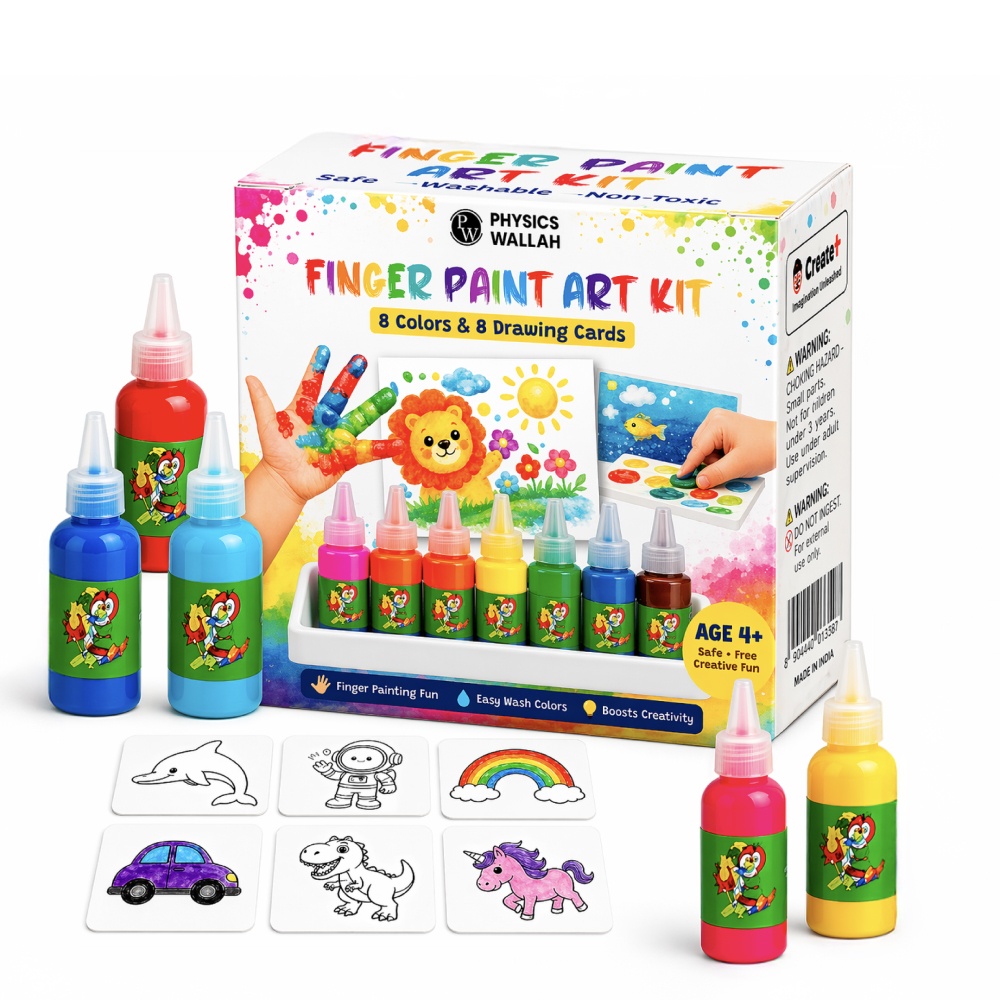
You might want to check out the Finger Paint Art Kit which is specifically designed for young learners. It provides the right consistency of paint that stays on the finger without dripping too much, making the creative process more manageable for small hands.
-
Tape the Paper: Use masking tape to secure the corners of the paper to the table so it doesn't slide around while they work.
-
Cover the Area: Use an old tablecloth or newspapers to catch any stray splatters.
-
Wet Wipes Ready: Keep a damp cloth or wipes nearby for quick transitions between colours.
-
Focus on the Process: Avoid asking "What is it?" Instead, try saying "I love the bright colours you used here."
Many adults avoid these activities because of the cleanup involved. However, modern paints are designed to be water-soluble and non-toxic. Setting clear rules—such as "paint stays on the paper"—helps children learn discipline while they play. Once the session is over, involving the child in the cleanup can also be a learning moment about responsibility.
By making art a regular part of the weekly routine, it becomes less of a "special event" requiring extensive preparation and more of a natural way to unwind and think. Consistent access to creative tools is the best way to ensure a child's imagination continues to grow as they get older.
Role of Finger Painting Activity for Preschoolers
For children aged three to five, art is a primary way of communicating emotions that they might not have the words for yet. Finger painting for preschoolers acts as a safe emotional outlet. A frustrated child might use bold, heavy strokes, while a calm child might create light, swirling patterns.
In a classroom or group setting, it also teaches social boundaries. Sharing paint pots and respecting the "workspace" of a peer helps preschoolers understand cooperation. It is a communal experience where they can look at a friend's work, get inspired, and try a new technique themselves.
|
Feature |
Benefit for the Child |
|
Tactile Feedback |
Improves sensory processing and comfort with textures. |
|
Colour Mixing |
Teaches basic colour theory and visual logic. |
|
Tool-free Art |
Reduces frustration for kids with developing grip strength. |
|
Large Canvas |
Encourages big, confident physical movements. |
Check Out: Kids Coloring Books
Benefits of Finger Painting Activity
The advantages of this art form extend far beyond the final picture on the fridge. One of the most significant finger painting benefits for kids is the development of fine motor skills. Strengthening the small muscles in the hands and fingers is crucial for later tasks like writing, buttoning clothes, and using cutlery.
Additionally, this activity supports:
-
Hand-Eye Coordination: Navigating the hand across the paper to place paint in a specific spot.
-
Sensory Integration: Learning to process different tactile sensations, such as cold, wet, or slippery paint.
-
Language Skills: Kids often describe what they are doing, using words like "smooth," "thick," or "bright."
Cognitive Growth Through Art
When children engage in finger-painting activities, they are actually conducting basic scientific experiments. They observe cause and effect in real-time. For example, they might notice that pressing harder makes a darker mark, or that moving their finger quickly creates a different streak than moving it slowly.
This process encourages problem-solving. If a child wants to make a shape but the paint is too thin, they have to figure out how to add more or change their technique. These small moments of "figuring it out" are the building blocks of logical thinking and creative intelligence.
Check Out: Kids Activity Books
Ideas for Finger Painting Activity
To keep the experience fresh, it helps to vary the approach. Simple paper is great, but there are many kids finger painting ideas that can expand their horizons. You can change the canvas or the additives to create entirely new textures and visual results.
Consider trying these variations:
-
Nature Painting: Collect leaves or stones and use fingers to paint patterns directly onto them.
-
Texture Mixing: Add a small amount of sand or salt to the paint to create a gritty texture that kids can feel as they move their hands.
-
Mixing Stations: Give them only primary colours (red, blue, yellow) and let them discover how to create green, orange, and purple.
-
Mirror Art: Paint on one half of the paper, fold it in half, and press down to create a symmetrical "butterfly" print.
Read More: Rainbow Colours Names in English for Kids
Finger Painting Helps Kids Improve Creativity FAQ
How do finger painting activities for children support school readiness?
These activities build the muscle strength and coordination needed for holding pencils and pens. They also help children follow multi-step instructions and improve their ability to focus on a single task for a set period.
Can finger painting for preschoolers help with emotional regulation?
Yes, it serves as a non-verbal outlet for feelings. The physical act of moving paint around a page can be very soothing and helps children process high-energy emotions in a constructive, creative way.
What are the best kids' finger painting ideas for beginners?
Start with "dot art", where they use one finger to make spots. Then move to "swirl art" using the whole hand. You can also try "stencil painting", where you place a shape on the paper, paint over it, and lift it to reveal the clean space underneath.
Are there specific benefits of finger painting for kids with sensory sensitivities?
It can be a very helpful way to gently introduce different textures. For kids who are hesitant to get their hands dirty, you can start by putting paint inside a sealed plastic bag and letting them "paint" by pressing on the outside of the bag.
Is a finger painting activity suitable for older children?
While it is popular with younger kids, older children can use it to learn about impressionism and texture. They can create more complex landscapes or abstract art by layering colours and using different parts of their hands to create specific effects.