Planet Names for Kids: Fun Facts & Learning Guide
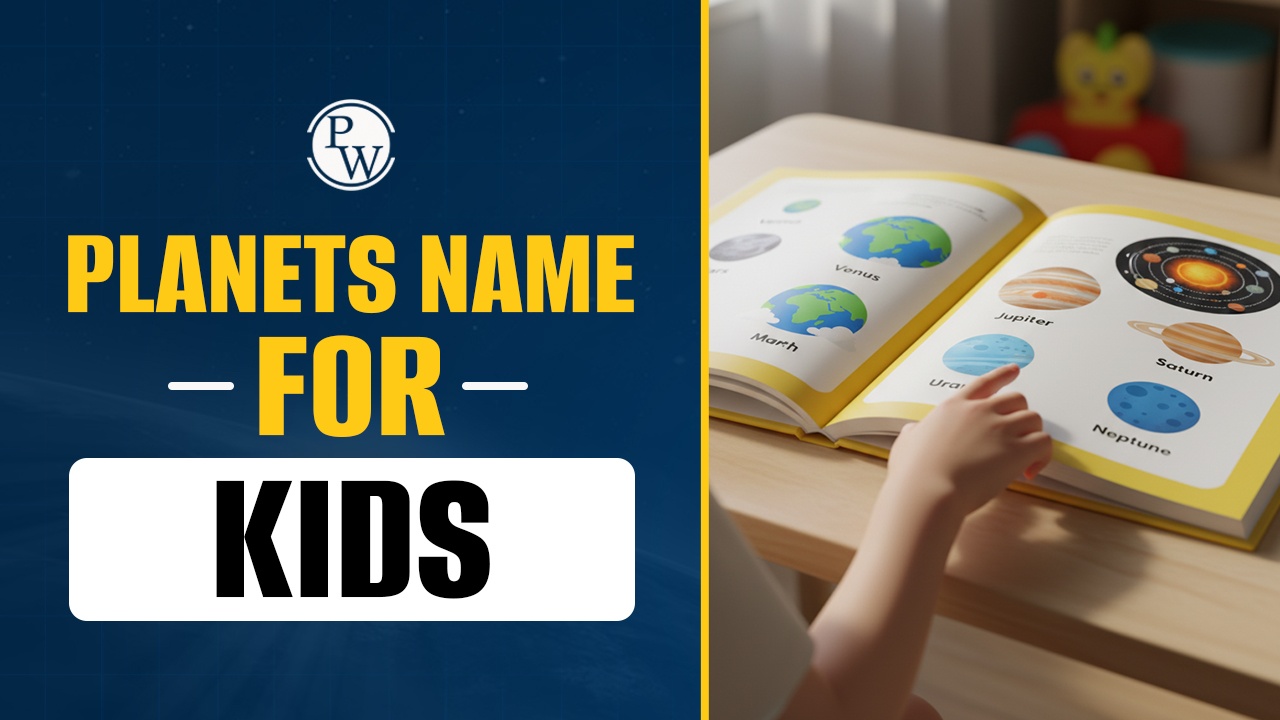
Learning planet names for kids is important because it helps them understand space and the world around them. Planets are large objects that move around the Sun in space. They are part of our solar system, which also has the Sun, moons, stars, and other objects. Our Earth is one of these planets. It is a small planet made of rocks and water, and it is the only planet where we know life exists.
Other planets are different; some have rings, some are made of gas, and some are very hot or very cold. By learning planet names in solar system, kids can explore space and enjoy discovering new facts. Keep reading to learn more about all the planet names in order.
Check Out: Kids Books
Planet Names in Solar System
There are eight planets in our solar system which are Mercury, Venus, Earth, Mars, Jupiter, Saturn, Uranus, and Neptune. These planets go around the Sun in their fixed paths called orbits. The first four planets, which are Mercury, Venus, Earth, and Mars, are called rocky or inner planets because they are made of solid surfaces.
The other four planets, which are Jupiter, Saturn, Uranus, and Neptune, are known as gas and ice giants, as they are made mostly of gases and are much bigger in size. Each planet is different in colour, size, and temperature. Some are hot, some are cold, and some have rings or many moons. Before learning about the list of planets in order, let’s first understand our solar system quickly.
Check Out: Kids First Library Box Set of 20 Board Books
Solar System Pictures with Names
The solar system is a big family that includes the Sun and all the planets that move around it. The Sun is at the center, and its strong force, called gravity, keeps all the planets in their places. The planet names in solar system include Mercury, Venus, Earth, Mars, Jupiter, Saturn, Uranus, and Neptune. Along with these, there are moons, asteroids, comets, and many other space objects that make our solar system complete.

The name "solar system" comes from the word Sol, which means Sun in Latin. Scientists believe that the solar system was formed more than four billion years ago after the Big Bang. In the solar system pictures with names given above, you can see how each planet looks different in colour, size, and distance from the Sun.
Planet Names in Order
Let’s learn the planet names in order from the Sun. There are eight main planets in our solar system. Each one is special in its own way. Learning the planet names helps kids understand how our solar system works and how different each planet is. Here is the list of planets in order, with some fun facts about each one:
1. Mercury: The Nearest Planet
Mercury is the closest planet to the Sun and also the smallest one.
-
It moves very fast and finishes one round around the Sun in just 88 days.
-
Because it is so close to the Sun, it becomes very hot during the day.

2. Venus: The Hottest Planet
Venus is the second planet from the Sun.
-
It is almost the same size as Earth.
-
It is covered with thick clouds that trap heat, which makes it the hottest planet in the solar system.
Check Out: Kids Activity Books

3. Earth: Our Home Planet
Earth is the third planet from the Sun and the only one where life exists.
-
It has water, air, and land, which make it ideal for living things.

4. Mars: The Red Planet
Mars comes fourth in the 8 planets name list.
-
It looks red because of the iron dust on its surface.
-
Scientists are very interested in Mars because they think it may have had water in the past.

5. Jupiter: The Largest Planet
Jupiter is the biggest planet in the solar system.
-
It is made mostly of gas and has a big red spot, which is a huge storm.
-
Jupiter also has many moons that move around it.
Read More: Fruits Name that Start with N

6. Saturn: The Planet with Rings
Saturn is easy to recognise because of its beautiful rings made of ice and dust.
-
It’s the second-largest planet and looks very bright in the sky.

7. Uranus: The Cold and Side-Spinning Planet
Uranus is a very cold planet and one of the “gas giants”.
-
It spins on its side, which makes it very different from the other planets.

8. Neptune: The Farthest Planet
Neptune is the last planet in our solar system and farthest from the Sun.
-
It takes 165 years to complete one round around the Sun.
-
It looks blue because of the gases in its atmosphere.
Check Out: Riddle Book for Kids

Interesting Facts About Planets for Kids
Now that you know the planet names, let’s learn some fun and interesting facts about them:
-
Jupiter is the biggest planet, while Mercury is the smallest.
-
Earth spins around once every day and takes 365 days to go around the Sun.
-
Saturn’s beautiful rings are made mostly of ice and dust.
-
Long ago, people thought the Earth was flat, but all planets are actually round like balls.
-
Venus is the hottest planet, while Uranus is the coldest.
-
Earth is the only planet where life has existed until now.
-
Every planet’s name, except Earth, comes from Roman or Greek gods.
-
Mercury and Venus are the only planets that don’t have any moons.
-
You can see Venus and Mercury from Earth even without a telescope.
-
Pluto used to be the 9th planet, but now it is called a dwarf planet.
Read More: Fruits Name in English for Kids
Activities That Will Help You Teach Planet Names to Your Kids
Learning the planet names in the solar system can be so much fun for children when it’s taught in a playful way. These simple activities will help your child easily remember all planet names while also enjoying their learning time.
Teach with Flashcards
Make colourful flashcards with solar system pictures with names. Show each card one by one and tell your kid the name of the planet.
Then, mix them up and ask your child to arrange the planet names in order or identify them.
Draw and Colour the Planets
Drawing and colouring help kids remember better. Show them pictures of the 9 planets name (including Pluto as a dwarf planet) and ask them to draw and colour each one.
You can also use the Coloring Books for Kids, which make this activity even more enjoyable for them.
Read and Learn with Activity Books
Learning about the list of planets in order becomes easier for your child when you use interesting books about space and the universe. PW's First Encyclopedia Earth and Beyond Activity Book for Kids is useful for this.
It explains planets with pictures, tells facts about space, and gives interesting activities that help kids remember what they learn.
Team Them Through Poems or Rhymes
Teach your child a simple planet rhyme like “Planet Roll Call”. Rhymes are easy to remember and make learning about planet names in the solar system more exciting.
Play the “Name the Next Planet” Game
Say the name of any planet, and let your child tell which planet comes next in the solar system. This activity helps them memorise the planet names in order quickly.
With these fun activities, learning the planet names for kids becomes a joyful experience for your child.
Planet Names for Kids FAQs
Q.1. What are planets?
Ans. Planets are large, round objects that move around the Sun. They do not make their own light but shine because they reflect the Sun’s light.
Q.2. Give a list of planet names in order.
Ans. The eight planets in order from the Sun are Mercury, Venus, Earth, Mars, Jupiter, Saturn, Uranus, and Neptune.
Q.3. Which planet in the solar system is known as the red planet?
Ans. Mars is called the Red Planet because its surface looks reddish due to the presence of iron dust.
Q.4. What are the 9 planets' names?
Ans. Before, when Pluto was also considered a planet, the 9 planets' names were Mercury, Venus, Earth, Mars, Jupiter, Saturn, Uranus, Neptune, and Pluto. But now Pluto is called a dwarf planet.
Q.5. Why is learning planet names for kids important?
Ans. Learning planet names helps kids understand our solar system better. It also makes them curious about space, the universe, and science.