Words Search for Kids to Build Vocabulary

Word search puzzle for kids is a simple game where children find words hidden in a grid of letters. These words search for kids are fun and help kids recognize words in a playful way. Parents and teachers like word search games because they make learning fun. Words Search for Kids can give kids practice with many words at once. As children search the grid for hidden words, they see each word over and over. This repeated exposure helps them learn new vocabulary and remember how to spell words. For example, a word search for kids about animals might list LION, TIGER, and BEAR. When the child finds each animal name in the grid, they practice spelling and see the word in context. Word searches often have a fun theme or picture to match the words. Children enjoy the challenge, and because the puzzle feels like a game, they stay engaged. With each word found, they gain confidence and want to find more.
Check Out: PW Kids' Books
Benefits of Word Search Puzzles
Build Vocabulary: Words Search for Kids introduce children to new words on a topic. As children find each word, they connect its letters and meaning. Teachers often use puzzles with topic vocabulary (like science words or historical names) to help students remember terms.
Spelling Practice: These puzzles give children practice with spelling. Seeing the letters of each word in order helps kids learn correct spellings. Educators note that finding words in the puzzle improves spelling accuracy because kids focus on each letter while searching.
Concentration & Focus: Solving a word search requires attention. Children must scan the grid carefully to find words, which boosts their focus. This searching exercise builds skill in recognizing patterns as kids look for each word’s shape in the jumble of letters.
Relaxation and Confidence: Words Search for Kids can be calming and give kids a confidence boost. Finding words feels rewarding to children. Finishing a puzzle gives them a sense of success, which makes them feel proud and excited to try more words.
Cross-Subject Learning: Word search puzzles can cover any school subject. Teachers can make puzzles with math terms, science words, or history names to reinforce lessons. This makes learning facts more engaging, and the repetitive search helps students remember key concepts.
Inclusive for All Learners: Word searches are easy to adapt for any skill level. You can make them simple for young children or harder for older ones, so word searches are a versatile learning tool for everyone.
Check Out: Kids Writing & Pattern Books
Tips for Solving Word Search Puzzles
1. Review the Word List: Look at the list of words before you start. Knowing what you are searching for makes the puzzle easier.
2. Look for Unique Letters: Find uncommon letters (like Q, X, or Z) first. These letters stand out in the grid and can help you spot the word.
3. Scan the Grid Systematically: Move your eyes row by row or column by column. Check in order so you don’t miss any letters.
4. Mark Words When You Find Them: Use a pencil to circle or highlight each word as you find it. This helps you keep track of which words are left.
5. Search in All Directions: Words can be hidden backwards or diagonally. If you can’t find a word in one direction, try looking the other way or at an angle.
6. Take Breaks if Needed: If you get stuck, take a short break. A fresh look can help you see words you missed before.
Recommended Words Search Book for Kids
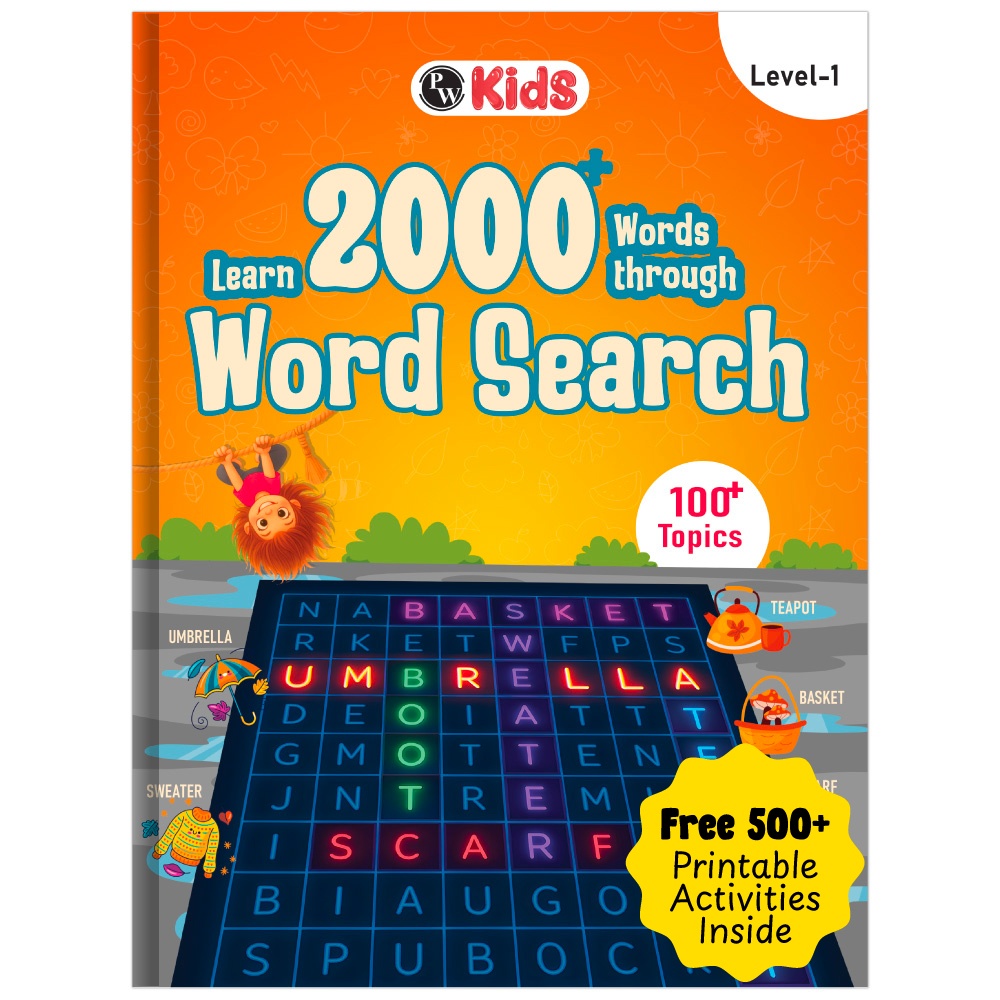
Words Search for Kids is the right book that will enhance children's vocabulary and spelling skills.
What Makes This Book Special
With over 2000 word search and crossword activities, this book provides substantial learning material that can keep children engaged for extended periods. The large volume ensures that children have plenty of practice opportunities without quickly exhausting the available content.
Educational Foundation
Coming from Physics Wallah, a trusted name in educational content, this book reflects quality educational standards. The activities are designed not just for entertainment but for genuine skill development in language arts.
Vocabulary Expansion
The book's primary strength lies in its vocabulary-building capabilities. Through repeated exposure to words in different contexts, children naturally expand their working vocabulary. The variety of puzzle types ensures that learning remains engaging rather than repetitive.
Spelling Improvement
Crossword puzzles particularly help with spelling accuracy. When children must fill in letters to complete words, they practice correct spelling patterns. This active engagement with spelling creates stronger memory connections than passive reading alone.

When children encounter unfamiliar words, encourage them to discuss meanings and use new vocabulary in conversations. This extends learning beyond the puzzle-solving activity.
Choosing the Right Puzzle Level
Selecting appropriate words search for kids is important for maintaining children's interest and confidence. Puzzles that are too easy become boring, while overly difficult ones cause frustration.
Beginner Level
Start new puzzle solvers with small grids containing short, familiar words. Use themes that match children's interests, such as favorite animals or toys. Make sure words only go horizontally and vertically to keep things simple.
Intermediate Level
As children improve, introduce larger grids with longer words. Add diagonal word placement to increase the challenge. Include some less familiar vocabulary to encourage learning.
Advanced Level
Experienced puzzle solvers can handle complex grids with words going in all directions. Include challenging vocabulary and consider puzzles with overlapping words for extra difficulty.
Check Out: Kids Activity Books
Creating a Positive Puzzle Experience
The way adults present and support word search activities greatly influences children's enjoyment and learning outcomes.
Encourage Effort Over Speed
Praise children for their persistence and strategy rather than focusing primarily on how quickly they complete puzzles. This builds confidence and encourages continued learning.
Provide Gentle Guidance
When children feel stuck, offer helpful hints rather than showing them the answer directly. This maintains their sense of accomplishment while preventing frustration.
Celebrate Success
Acknowledge completed puzzles and discuss the words children found. This reinforces learning and shows that their efforts are valued and appreciated.
Words search for kids activities provide an excellent way to combine learning with entertainment. These versatile puzzles help children develop essential skills while having fun. From building vocabulary to improving focus, the benefits extend far beyond simple puzzle solving.
Whether using paper puzzles at home or digital versions in the classroom, word search games offer valuable learning opportunities. They adapt to different skill levels and interests, making them suitable for various ages and abilities.
Read More: List of Basic English Words for Kids
Words Search for Kids FAQs
1.What age group is this word search and crossword book suitable for?
This book is designed for elementary to middle school children, typically ages 6-14. The variety of difficulty levels accommodates different skill levels, making it suitable for beginning readers as well as more advanced students who want to expand their vocabulary.
2.How many activities are actually included in the book?
The book contains over 2000 word search and crossword activities combined. This extensive collection provides months of learning material, ensuring children have plenty of practice opportunities without quickly running out of content.
3.Can children with different skill levels use the same book?
Surely. The book includes activities of varying difficulty levels, making it suitable for children with different vocabulary and spelling abilities. Younger or beginning readers can start with simpler puzzles while advanced students can tackle more challenging activities.
4. How can parents track their child's progress with this book?
Parents can easily monitor progress by observing completed sections and discussing new vocabulary words their children encounter. The physical format makes it simple to see which activities have been completed and identify areas where children might need additional support.