2 Years Study Plan for NEET Exam

2 Years Study Plan for NEET Exam: The NEET exam (National Eligibility cum Entrance Test) is one of the most important medical entrance exams in India. Every year, lakhs of students appear for this exam with the dream of getting admission into top government and private medical colleges. Since the competition is very high and the syllabus is vast, it requires proper planning and a disciplined study routine to crack NEET with a good score.
The good time to start preparing for NEET is from Class 11 itself. This is because the NEET syllabus is mainly based on Class 11 and Class 12, NEET Books, especially in subjects like Physics, Chemistry, and Biology. Starting early helps students understand concepts properly, revise them on time, and avoid last-minute pressure. It also gives enough time for regular practice, doubt solving, and mock tests.
A 2-year study plan will make the entire preparation journey more organised and stress-free. So, if you are serious about cracking NEET, beginning your preparation in Class 11 is a wise and smart decision. Thus, continue reading the article below for a proper 2 Years Study Plan for NEET Exam.
Check Out: NEET Previous Year Papers
NEET Exam Details
The NEET (National Eligibility cum Entrance Test) is a national-level entrance exam conducted for admission to undergraduate medical courses like MBBS, BDS, and AYUSH programmes in India. It is conducted once a year, usually in the month of May, by the National Testing Agency (NTA). Below is a detailed overview of the NEET exam:
|
Particulars |
Details |
|
Exam Name |
NEET (National Eligibility cum Entrance Test) |
|
Conducting Body |
National Testing Agency (NTA) |
|
Exam Level |
National Level |
|
Frequency |
Once a Year |
|
Courses Offered |
MBBS, BDS, BAMS, BHMS, BUMS, BSMS, etc. |
|
Exam Mode |
Offline (Pen and Paper Based) |
|
Question Type |
Multiple Choice Questions (MCQs) |
|
Subjects Covered |
Physics, Chemistry, Biology (Botany + Zoology) |
|
Total Questions |
200 (180 to be attempted) |
|
Total Marks |
720 |
|
Exam Duration |
3 hours 20 minutes |
|
Marking Scheme |
+4 for correct answer, -1 for wrong answer |
|
Official Website |
https://neet.nta.nic.in |
NEET Important Topics
Since the exam is highly competitive and the syllabus is vast, focusing on high-weightage chapters can make your study plan for NEET more effective. Whether you're following a 1-year or a 2-year study plan for NEET, these topics form the foundation of your preparation. Below is a well-structured table covering the most important topics from Physics, Chemistry, and Biology for both Class 11 and 12 based on past year trends and expert analysis.
|
Subject |
Class |
Important Topics |
|
Biology |
11 |
|
|
12 |
|
|
|
Physics |
11 |
|
|
12 |
|
|
|
Chemistry |
11 |
|
|
12 |
|
NEET Study Materials
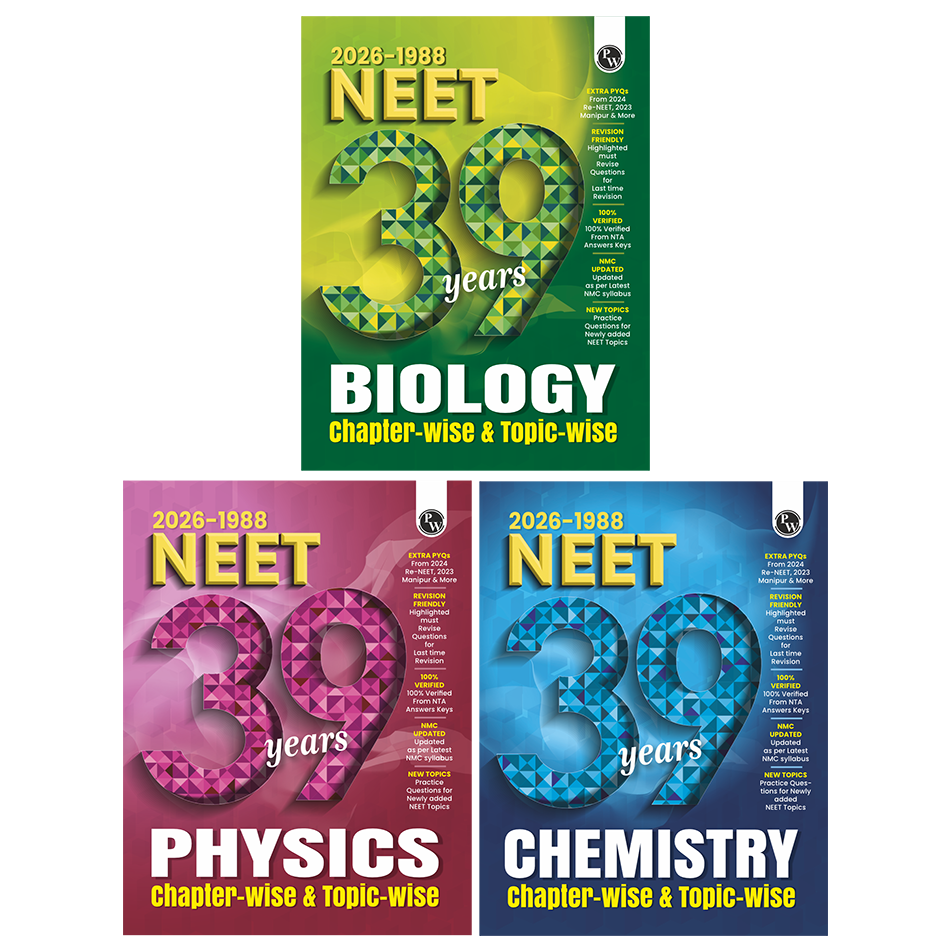
NEET Study Materials play an important role in building a strong preparation strategy for aspirants aiming for high scores in the NEET exam. A well-structured study plan should include concept building, revision notes, and regular practice through tests and previous year questions. The 39 Years NEET PYQ books helps students understand real exam patterns and important topics from Physics, Chemistry, and Biology. For quick and effective revision, the NEET PCB Med Easy Handwritten Notes books provides concise notes covering all key concepts in an easy-to-revise format. To improve speed, accuracy, and exam confidence, students can also practice with the NEET Dream 720 Mock Test 2026, which simulates the real exam environment. Together, these resources help aspirants strengthen concepts, revise efficiently, and perform better in NEET 2026.
2 Years Study Plan for NEET Exam
The ideal time to begin is from Class 11, as the NEET syllabus is mainly based on Class 11 and 12 NCERT textbooks. By dividing your preparation smartly across these two years, you can cover all the important topics, revise well, and practise effectively. Here’s a detailed NEET study plan for both years to help you understand how to prepare for NEET step by step.
NEET Study Plan for Class 11
The first year of your 2 year study plan for NEET should be focused on building a strong foundation. Class 11 covers many core concepts that are frequently asked in NEET. If your basics are clear from the start, your Class 12 syllabus will feel more manageable, and your overall NEET preparation will become smoother. Check out the NEET Study Plan for Class 11:-
1. Understand the NEET Syllabus: Start by checking the NEET syllabus and identifying which topics are from Class 11. Make a list of chapters from all three subjects. This will help you follow the right path without wasting time on less important content.
2. Focus on Concepts: Give attention to understanding the basics of each topic. In Physics and Chemistry, don’t try to memorise formulas blindly. Instead, learn how they are used. Important Class 11 topics include:
-
Laws of Motion
-
Work, Energy and Power
-
Cell Structure and Function
-
Plant Physiology
-
Basic Concepts of Chemistry
3. Make Your Own Notes: Make short notes in your own words while studying. Write down key points, formulas, and diagrams. Keep your notes clean and well-organised. They will help you a lot when you revise in Class 12.
4. Stick to NCERT: Follow the NCERT books properly. Most of the NEET questions, especially in Biology, come directly from NCERT. Read each line carefully and underline important facts.
5. Solve Questions After Every Chapter: Once you finish a chapter, solve its questions from your textbook or coaching material. Try solving different types of questions, especially in Physics and Biology.
6. Weekly Revision: Set one day each week to revise what you studied. Go through your notes, formulas, and diagrams again. This way, you won’t forget old chapters when you move ahead.
7. Manage Your Time: If you are in school or coaching, you still need to give 2–3 hours every day for your personal study. Make a simple timetable and follow it regularly.
NEET Study Plan for Class 12
Class 12 is the turning point of your study plan for NEET 2025. This is when you must prepare for board exams and NEET at the same time. With regular practice and smart revision, you can manage both without feeling tired or overloaded. Here’s how to continue your NEET study plan in Class 12:
1. Focus on Class 12 Chapters First: As half of the NEET paper is based on Class 12, it is important to learn those chapters well. Pay extra attention to topics like:
-
Human Physiology
-
Reproduction
-
Genetics and Evolution
-
Optics
-
Electrostatics
-
Coordination Compounds
Make a target for each month and try to follow it without falling behind.
2. Keep Revising Class 11 Notes: Keep your Class 11 notes with you and revise them side by side. Many Class 12 topics are linked with Class 11. For example, to learn Genetics, you need to know Cell Biology from Class 11. Use weekends or alternate days to revise these old topics.
3. Give Mock Tests Regularly: Start giving mock tests every two weeks. This will help you check how well you are doing. Later, increase the number of tests to one per week. These tests will also help you practise solving questions within time.
4. Solve Previous Year Papers: Try to solve NEET papers from past years. You will get an idea of how the questions are asked and what kind of topics are repeated.
5. Join a Test Series: If possible, join a test series from a good coaching institute. It will give you regular practice and help you understand where you need to improve.
6. Make a Daily Routine: Make a simple daily routine where you study for 6–7 hours, including school or coaching. Take breaks between study hours. Eat healthy food and get enough sleep every day.
7. Stay Consistent: Don’t compare your journey with others. Stay focused and study regularly. Consistent efforts over time bring better results than last-minute pressure.
Timetable for NEET Preparation
Whether you are in Class 11 or Class 12, having a fixed daily routine helps in maintaining a balance between school studies and NEET preparation. This basic 2-year NEET study plan is designed in a way that you can continue with your school classes while building a strong foundation for NEET.
NEET timetable includes study hours for NEET subjects, Physics, Chemistry and Biology, along with time for revision, school homework, and general reading. You can adjust it slightly based on your school timings or coaching schedule.
|
Time |
Activity |
|
05:30 |
Wake up and freshen up |
|
6:00 AM – 6:30 AM |
Light reading (daily current affairs, science news, general awareness) |
|
6:30 AM – 7:30 AM |
Revise a previously studied topic (light revision) |
|
7:30 AM – 2:00 PM |
School hours + travel time (have lunch before or after) |
|
2:00 PM – 3:00 PM |
Rest or take a short nap |
|
3:00 PM – 4:30 PM |
Study NEET subject 1 (e.g., Physics – numerical practice or theory) |
|
4:30 PM – 5:00 PM |
Tea/snack break |
|
5:00 PM – 6:30 PM |
Study NEET subject 2 (e.g., Biology – NCERT + notes) |
|
6:30 PM – 7:30 PM |
Coaching class/online lecture/self-practice (if any) |
|
7:30 PM – 8:30 PM |
Dinner + relax with family |
|
8:30 PM – 9:30 PM |
Study NEET subject 3 (e.g., Chemistry – reactions/practice) |
|
9:30 PM – 10:00 PM |
Quick revision of the day’s studies + plan for next day |
|
22:00 |
Go to sleep (minimum 7 hrs of sleep is important) |
NEET Study Plan FAQs
1. When should I start preparing for NEET?
It’s best to start your NEET preparation from Class 11 itself. This gives you two full years to understand the syllabus deeply and revise properly.
2. Is a 2-year study plan enough to crack NEET?
Yes, two years is more than enough if you study regularly, follow a proper timetable, and stick to the NCERT books for all subjects.
3. Should I join coaching for the 2-year NEET preparation?
Coaching can help you stay on track with expert guidance. However, with self-discipline and the right resources, you can also prepare well on your own.
4. Can I manage NEET and board exam preparation together?
Yes. NEET syllabus is based on Class 11 and 12 subjects, so board preparation naturally helps with NEET too. Just ensure you revise regularly.
5. Are NCERT books enough for NEET?
Yes, for Biology, NCERT is most important. For Physics and Chemistry, use NCERT as a base and refer to additional question banks for practice.