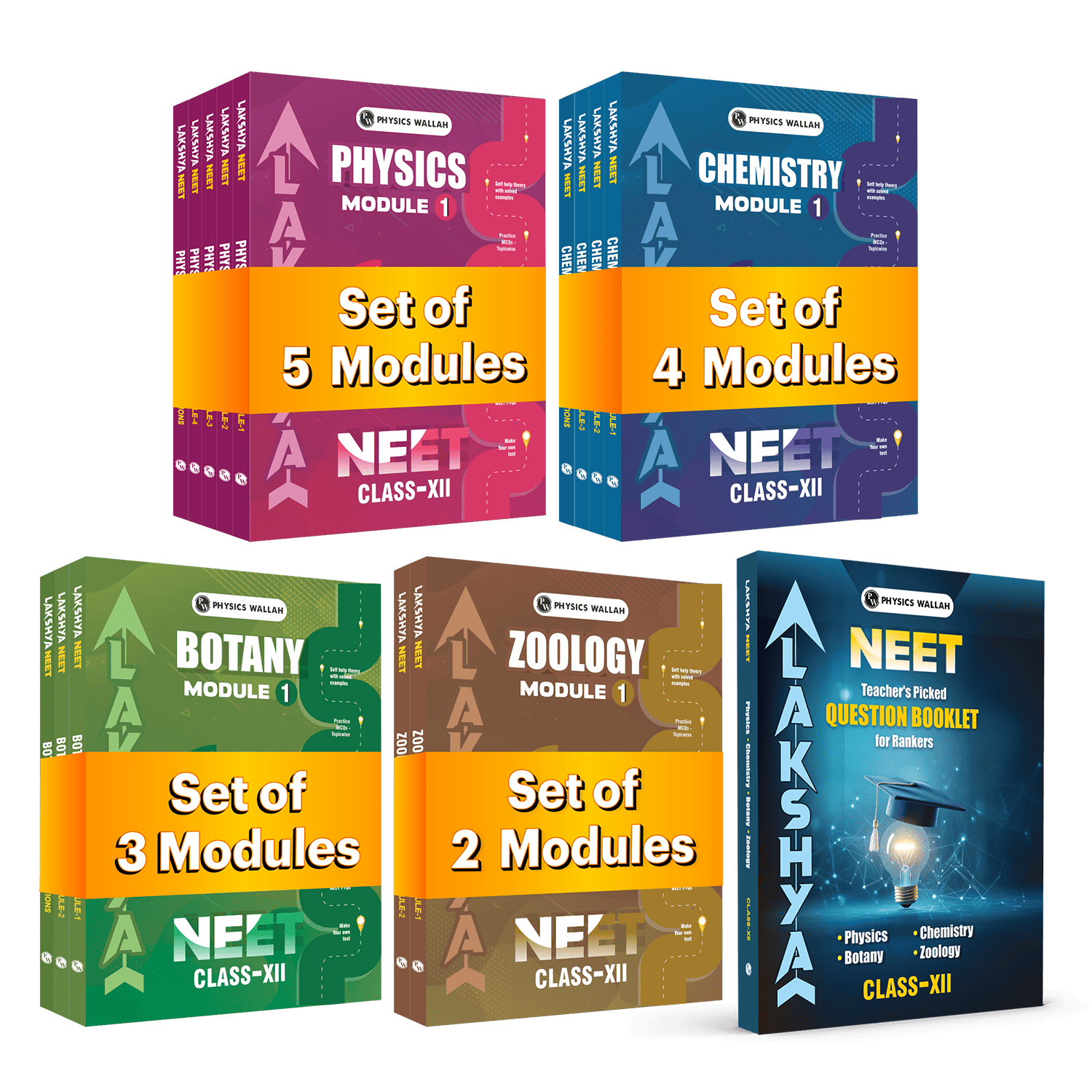
Biology Revision Strategy with NEET Lakshya Modules

Biology is often considered the highest scoring subject in NEET, yet it is also the subject where students lose maximum marks due to poor revision strategy. Most NEET aspirants studying in Lakshya batch face the same problems again and again:
-
“I have studied everything, but I keep forgetting Biology.”
-
“Notes padh leta hoon, but questions galat ho jaate hain.”
-
“Revision karte time samajh nahi aata kya revise karun aur kaise.”
If you relate to this, the issue is not your hard work. The real issue is unstructured Biology revision.
This article explains a clear, practical Biology revision strategy using NEET Lakshya Modules (Module 2.0) so that your revision becomes systematic, exam-oriented, and retention-focused, instead of random re-reading.
Check Out: NEET Books
Why Biology Revision Becomes a Problem for NEET Aspirants
Before fixing the strategy, it’s important to understand why Biology revision feels overwhelming.
1. Vast Syllabus + Memory-Based Subject
Biology includes:
-
NCERT-heavy theory
-
Diagrams
-
Keywords
-
Statement-based MCQs
Without regular revision, information fades quickly.
2. Passive Revision Habits
Most students revise Biology by:
-
Re-reading NCERT
-
Highlighting lines again and again
This creates an illusion of preparation but does not improve question-solving accuracy.
3. No Testing During Revision
Revision without questions means:
-
You don’t know what you’ve forgotten
-
Weak areas remain hidden till mock tests
This is exactly why a NEET module based revision approach is needed.
Biology Revision Strategy Using NEET Lakshya Module 2.0
NEET Lakshya Module 2.0 is designed to convert revision into active recall + exam practice, provided you follow the correct sequence.
Questions Booklet – Core Revision Anchor
This should be the starting point of every Biology revision cycle.
How to use it for revision:
-
Revise NCERT theory once (quick reading)
-
Immediately start the Best Questions Booklet
-
Solve questions in small slots (40–50 questions)
What it includes:
-
100–150 high-probability chapter-wise Biology questions
-
NCERT line-based and PYQ-inspired patterns
-
One-page formulas, flowcharts, and short notes
Why it works for Biology:
-
Forces active recall instead of passive reading
-
Highlights weak NCERT lines and confusing statements
If you struggle here, revise only that NCERT portion again — not the entire chapter.
Check Your Understanding (CYU) – Micro Revision Tool
CYU is extremely powerful for short, frequent Biology revision.
How to use CYU:
-
Use it after revising one topic or sub-topic
-
Treat it like daily Biology practice
Structure:
-
10–15 topic-wise MCQs
-
Focused on conceptual clarity and NCERT wording
Why CYU is crucial:
-
Prevents accumulation of weak topics
-
Helps retain information long-term
-
Works perfectly for Lakshya students with limited time
CYU ensures you don’t carry doubts into final revision months.
QR – Make Your Own Test (Major Highlight for Revision)
This feature is a game-changer for Biology revision.
Correct way to use it:
-
Pick any 3 Biology chapters
-
Attempt:
-
120 questions
-
180 minutes
-
Exact NEET exam pattern
Best time to use:
-
During full syllabus revision
-
Every 10–15 days
Why it is important:
-
Trains your brain to switch between Botany & Zoology
-
Improves stamina and accuracy
-
Simulates real NEET pressure
This step transforms revision into exam rehearsal.
Chapter-End Tests – Revision Validation Tool
These tests confirm whether your revision is effective or not.
How to use:
-
Attempt after completing full revision of a chapter
-
Avoid revising just before the test
Test format:
-
40 MCQs
-
1-hour duration
-
Single-chapter Biology test
Outcome:
-
Identifies forgotten NCERT facts
-
Improves confidence in chapter-wise scoring
Analyse mistakes carefully — most errors come from ignored NCERT lines.
SETU / Conceptual Exercise – Strengthening Biology Concepts
Biology is not just memory-based; NEET increasingly asks concept-linked questions.
What SETU offers:
-
10–20 NEET-level conceptual MCQs
-
Questions that test:
-
Assertion–reason logic
-
Statement combinations
-
Conceptual traps
How to use:
-
Solve after Chapter-End Test
-
Focus deeply on why options are correct or incorrect
This step ensures Biology revision goes beyond mugging up.
Important Note for NEET Students
The Challenger 2.0 section is meant for JEE Advanced aspirants.
NEET Biology students should focus completely on:
-
Best Questions Booklet
-
CYU
-
SETU
-
Chapter-End Tests
-
QR Mixed Tests
This combination is more than sufficient for NEET Biology.
How This Biology Revision Strategy Improves NEET Performance
Using NEET Lakshya Module 2.0 in this structured way leads to:
-
Strong NCERT retention
-
Higher accuracy in statement-based MCQs
-
Better diagram-based question handling
-
Reduced revision stress
-
Improved confidence in full-length mock tests
You stop asking “Kitna revise kaafi hai?” because your performance gives the answer.
Who Should Follow This Biology Revision Strategy?
This approach is ideal for:
-
NEET Lakshya Modules (droppers & repeaters)
-
Students forgetting Biology repeatedly
-
Aspirants stuck in revision cycles
-
Students aiming for 340+ in Biology
PW NEET Lakshya Class 12 Botany Modules PDF
|
NEET Lakshya Class 12 Botany Sexual Reproduction in Flowering Plants Modules |
|
|
NEET Lakshya Class 12 Botany Microbes in Human Welfare Modules |
PW NEET Lakshya Class 12 Zoology Modules PDF
|
NEET Lakshya Class 12 Zoology Human Health and Disease Modules |
|
|
NEET Lakshya Class 12 Zoology Human Reproduction Modules |
Biology Revision with NEET Lakshya Modules FAQs
Is NEET Lakshya Module 2.0 enough for Biology revision?
Yes. When used with NCERT, it is exam-oriented study material designed specifically for NEET revision.
Should I revise NCERT or modules first?
Start with quick NCERT reading, then immediately solve module questions. Questions reveal what needs deeper revision.
How often should I revise Biology?
-
CYU: Daily
-
Chapter-wise revision: Weekly
-
QR Mixed Tests: Every 10–15 days
How many times should I revise each chapter?
Minimum 3–4 active revisions using questions, not just reading.