Most Scoring NEET Chemistry PYQs 2026

Preparing for the National Eligibility cum Entrance Test (NEET) can feel like an uphill battle, especially with the vast syllabus of Chemistry. Many students struggle to identify which topics deserve the most time. This is where NEET Chemistry PYQ becomes your most valuable asset. By analysing past trends, you can pinpoint exactly where the examiners focus their attention.
Chemistry is often considered the "score-booster" subject. Unlike Physics, which requires heavy calculation, or Biology, which demands massive memorisation, Chemistry offers a balance. If you understand the underlying patterns in Chemistry from the previous year's NEET papers, you can solve questions much faster. This article breaks down the high-yield chapters and provides a roadmap for using previous year questions to your advantage.
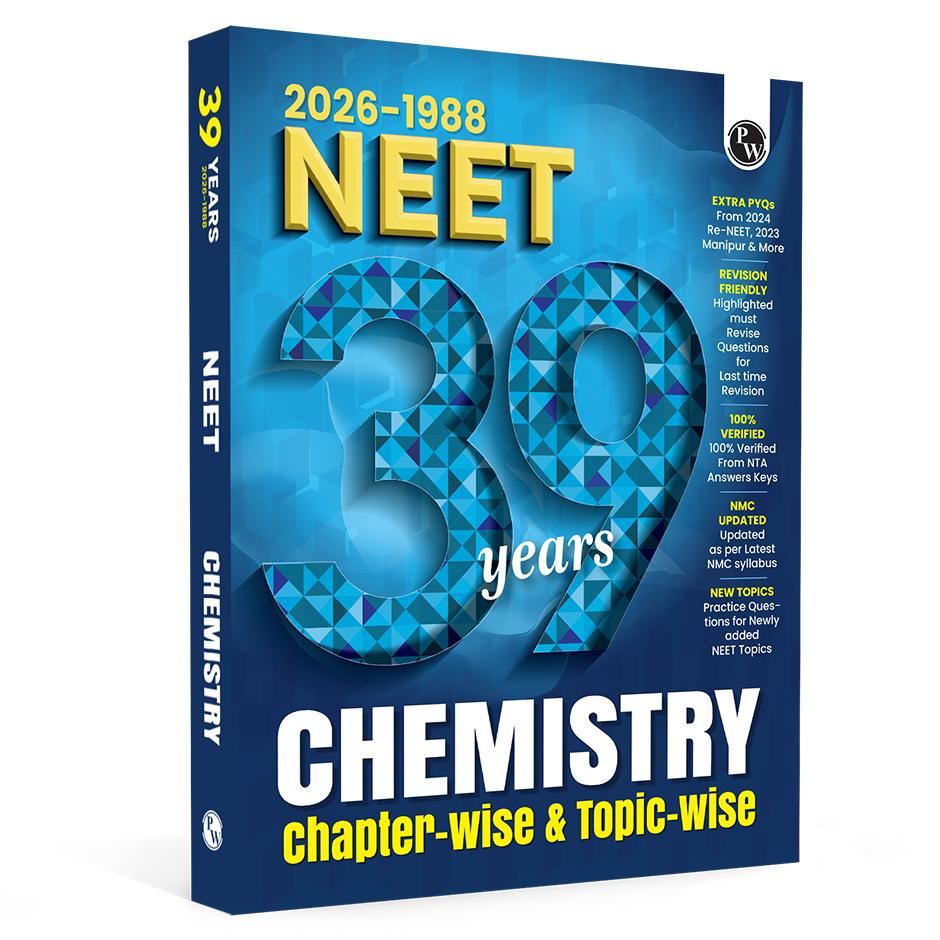
Check Out: NEET Books
High-Weightage Chapters in NEET Chemistry PYQ
Not all chapters are created equal. Some units consistently contribute more questions to the paper than others. When you look through a NEET Chemistry PYQ book, you will notice certain "hot zones." Focusing on these areas ensures you get the maximum return on your study hours.
Organic Chemistry: The Logic-Based Scoring Zone
Organic Chemistry usually accounts for about 33% of the Chemistry section. It is highly predictable if you know your named reactions.
-
Hydrocarbons: Frequent questions on Alkanes, Alkenes, and Alkynes.
-
Aldehydes, Ketones, and Carboxylic Acids: A major chunk of the Chemistry NEET PYQ comes from this unit.
-
General Organic Chemistry (GOC): This is the foundation. You cannot skip this if you want to score well.
Inorganic Chemistry: The Memory-Based Scoring Zone
This section is straight from the NCERT. If you have practised Chemistry PYQ for NEET, you will see that many questions are repeated almost verbatim.
-
Chemical Bonding: This is the most important chapter in Inorganic Chemistry.
-
p-Block Elements: A lengthy section but highly rewarding in terms of marks.
-
Coordination Compounds: Focus on isomerism and VBT/CFT theories.
Physical Chemistry: The Calculation Zone
Physical Chemistry requires a mix of formula application and conceptual clarity.
-
Equilibrium: Both Ionic and Chemical equilibrium are vital.
-
Thermodynamics: Often features conceptual questions on entropy and enthalpy.
-
Solutions: Simple but consistent presence in the exam.
Benefits of NEET Chemistry PYQ
One of the biggest mistakes students make is solving full-length papers before finishing the syllabus. Instead, using NEET PYQ chapter-wise Chemistry resources allows for a more structured approach. This method helps you master one topic at a time before moving to the next.
Immediate Feedback and Concept Reinforcement
When you finish a chapter, say "Atomic Structure," and immediately solve the last 10 years of questions for that specific chapter, you reinforce what you just learned. It highlights your weak spots instantly. You might know the formulas, but can you apply them to the specific way NEET asks the question?
Understanding Exam Temperament
The difficulty level of Chemistry in NEET isn't just about the complexity of the question; it is about the time limit. By solving NEET Chemistry PYQ, you train your brain to recognise patterns. You start seeing which questions are "traps" (long calculations) and which are "sitters" (direct theory).
How to Use a NEET Chemistry PYQ Book
Simply owning a book isn't enough; you need a system. A right NEET Chemistry PYQ book should offer detailed explanations rather than just an answer key. Here is a step-by-step strategy to use these books:
-
First Pass: Solve questions without a timer. Focus on getting the logic right.
-
Second Pass: Circle the questions you got wrong or those that took too long. These are your "revision triggers."
-
Third Pass: Solve the circled questions again after a week to see if the concept has actually stuck.
|
Category |
Recommended Focus |
Difficulty Level |
|
Physical |
Formula Memorisation & Units |
Moderate |
|
Organic |
Reaction Mechanisms & Reagents |
High |
|
Inorganic |
NCERT Facts & Exceptions |
Low to Moderate |
Check Out -
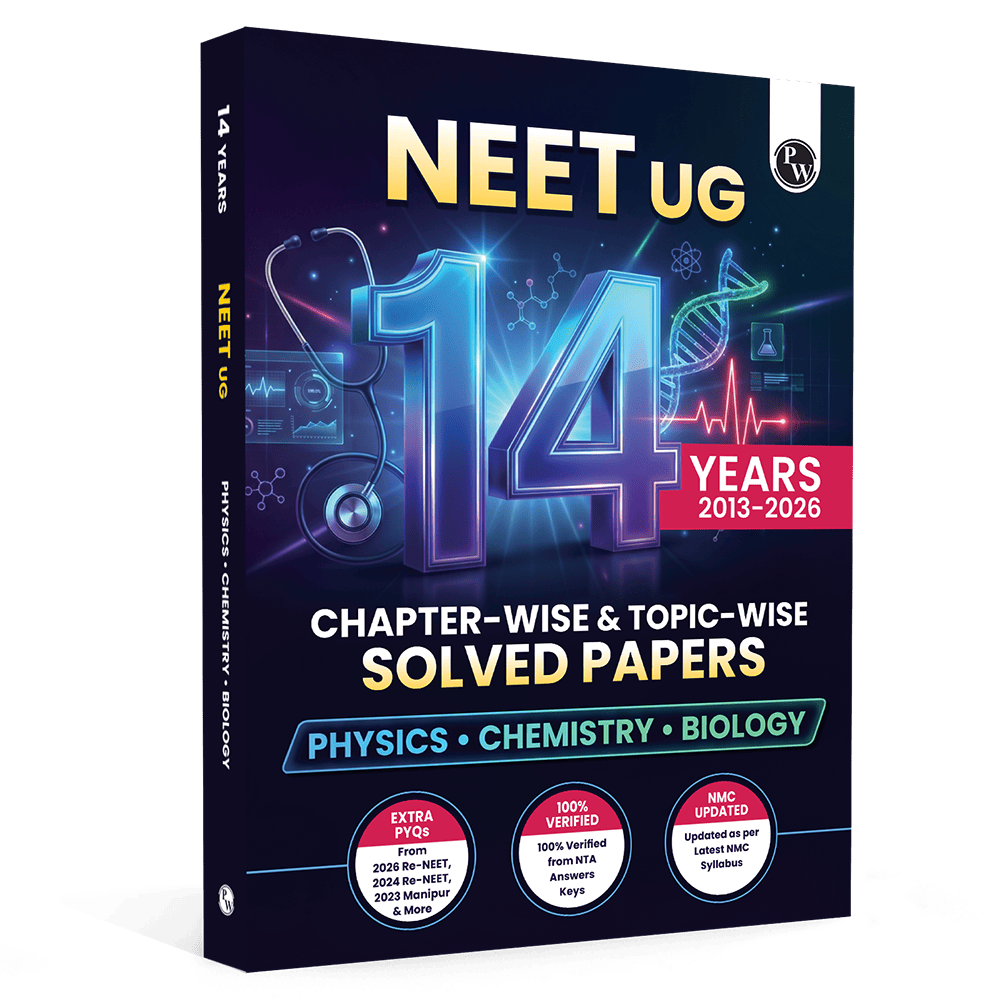
PW 14 Years NEET PYQ Hindi Book
Study Tips Using NEET Chemistry PYQ
To reach the top tier of marks, you need more than just casual reading. You need a data-driven approach based on NEET Chemistry PYQ trends.
Focus on NCERT Direct Lines
In the last five years, nearly 90% of Inorganic and Organic questions have been derived directly from NCERT lines. When you review your Chemistry NEET PYQ, keep your textbook open. Highlight the lines from which the questions were framed. This makes your textbook a "super-resource" for final revisions.
Time Management and Accuracy
The Chemistry section should ideally be completed in 40 to 45 minutes. This leaves more time for the challenging Physics section. Regular practice of Chemistry PYQ for NEET builds the "muscle memory" needed to solve questions at this speed.
Analysing the "Why" Behind Mistakes
Don't just move on after checking the answer. If a question in your NEET Chemistry PYQ practice goes wrong, ask:
-
Was it a calculation error?
-
Did I misread the "Not Correct" or "Incorrect" statement?
-
Was the concept completely unknown to me?
Also Check, PW NEET Test series Books
Mistakes to Avoid in NEET Chemistry PYQ Preparation
Even with the best NEET Chemistry PYQ resources, students often fall into common traps. Avoiding these can save you valuable marks.
-
Ignoring the Easy Chapters: Chapters like "Chemistry in Everyday Life" or "Environmental Chemistry" are often ignored. However, they provide easy, direct marks in the exam.
-
Overcomplicating Organic: Stick to the reagents mentioned in the last 20 years of the literature. You don't need to learn Ph.D. level mechanisms.
-
Neglecting Graphs and Tables: Many recent questions are based on the trend tables and graphs found in the NCERT. Pay close attention to these during your NEET PYQ chapter-wise Chemistry sessions.
Read More: NEET Previous Year Question Papers with Solutions PDF
Most Scoring NEET Chemistry PYQs FAQs
Q1. How many years of NEET Chemistry PYQ should I solve?
Ideally, you should solve at least the last 15 to 20 years of questions to cover all possible variations and syllabus changes.
Q2. Is solving Chemistry NEET PYQ enough to get a good rank?
While PYQs are essential for understanding trends, you must also have a strong grip on NCERT concepts to handle new or modified questions.
Q3. Which is the best way to practice Chemistry PYQ for NEET?
The most effective way is to solve them chapter-wise first, and then transition to full-length mock tests as the exam approaches.
Q4. Are questions repeated in the NEET Chemistry PYQ book?
While exact questions are rarely repeated, the concepts, reaction types, and numerical patterns are frequently reused by examiners.
Q5. How does NEET PYQ chapter-wise Chemistry help in revision?
It helps you identify specific topics where you consistently lose marks, allowing you to focus your final revision on your weakest areas.