Toughest NEET Physics PYQ & How to Solve Them

Physics often makes the difference between getting a medical seat and having to try again next year. Many students find that understanding the theory is not the hard part—it's applying those ideas to tough numerical problems. NEET Physics PYQs (Previous Year Questions) give you a clear idea of what to expect and how high the standard is.
Many students have trouble managing their time and solving questions that mix different topics. This article explains which parts of the exam are the hardest and gives you a clear plan to tackle them with the right tools and attitude.
Check Out: NEET Books
Importance of NEET Physics PYQ
Practising NEET Physics PYQs is not just about revision. It helps you understand the exam pattern. The National Testing Agency (NTA) often repeats the logic of questions, even if the numbers are different. Working through these questions helps you get used to how the exam is set.
Understanding the Exam Pattern
The NEET exam checks how fast and accurately you are. Physics has about 45 questions. By solving NEET Physics PYQs, you can see which topics come up most often, like Modern Physics or Semiconductor Electronics, so you can focus your study time where it matters most.
Building Mathematical Fluency
A lot of students struggle because their math skills are not strong enough. Practising NEET PYQs regularly helps you get better at things like integration, differentiation, and vector algebra, which are key to solving tough Physics questions.
Which Chapters are the Toughest in NEET Physics PYQ?
Some chapters take more time or are harder to understand. If you spot these early, you can spend extra time on them by practising NEET Physics PYQs for each chapter.
Mechanics: The Foundation of Difficulty
Mechanics is usually seen as the hardest part because you need to really understand the concepts. NEET Physics PYQs often include questions on friction, circular motion, and rotational dynamics. To solve these, you often need to draw Free Body Diagrams (FBDs) and use several laws of motion at once.
Electrodynamics and Magnetism
This unit has a lot of formulas and requires you to picture fields in three dimensions. By practising NEET Physics PYQs chapter by chapter, you can work on Electrostatics, Current Electricity, and Moving Charges one at a time before you try full mock tests.
Optics and Modern Physics
Modern Physics usually helps you score well, but Optics can be tough because of sign rules and complicated ray diagrams. Practising these topics with PYQs and solutions helps you avoid simple mistakes and keeps you from losing easy marks.
How to Solve Difficult NEET Physics PYQ
Solving tough problems requires a systematic approach rather than a hit-and-trial method. If you find yourself stuck on a NEET Physics PYQ, follow these steps to break through the difficulty.
1. Identify the Core Concept
Before jumping into calculations, read the question twice. Ask yourself which chapter the problem belongs to and which specific principle (like Conservation of Energy or Momentum) applies here.
2. Draw Diagrams and List Givens
Visualising the problem is half the battle won. Whether it is a circuit diagram or a pulley system, drawing it out helps in identifying the variables. List all the values provided in the question to avoid missing any crucial data.
3. Use the Elimination Method
In many NEET Physics PYQ papers, two out of four options can be eliminated just by checking the units or through logical estimation. This saves time and increases your chances of getting the correct answer even if the calculation is lengthy.
4. Consult Detailed Solutions
When you cannot solve a problem after two attempts, refer to a PYQ book. Look for solutions that explain the "why" behind every step, as this helps in building a logical framework for similar questions in the future.
Right Resources for NEET Physics PYQ Practice
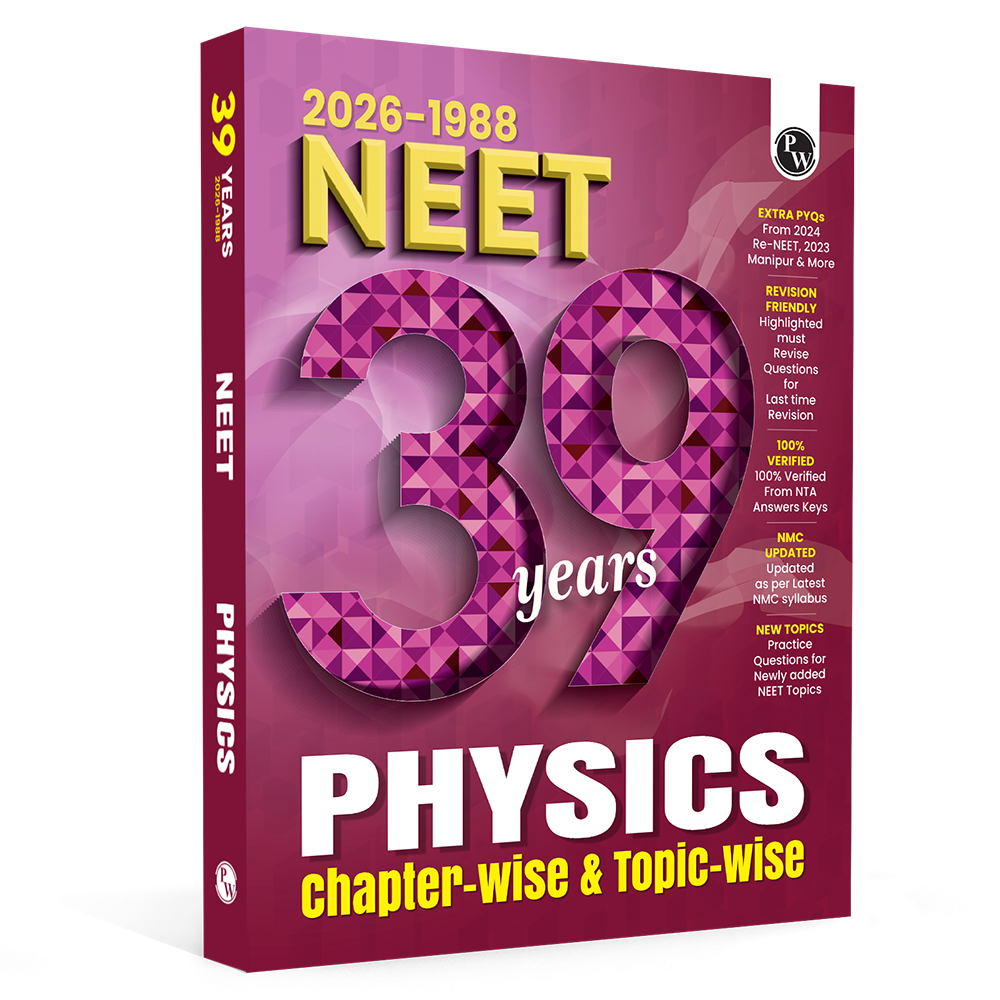
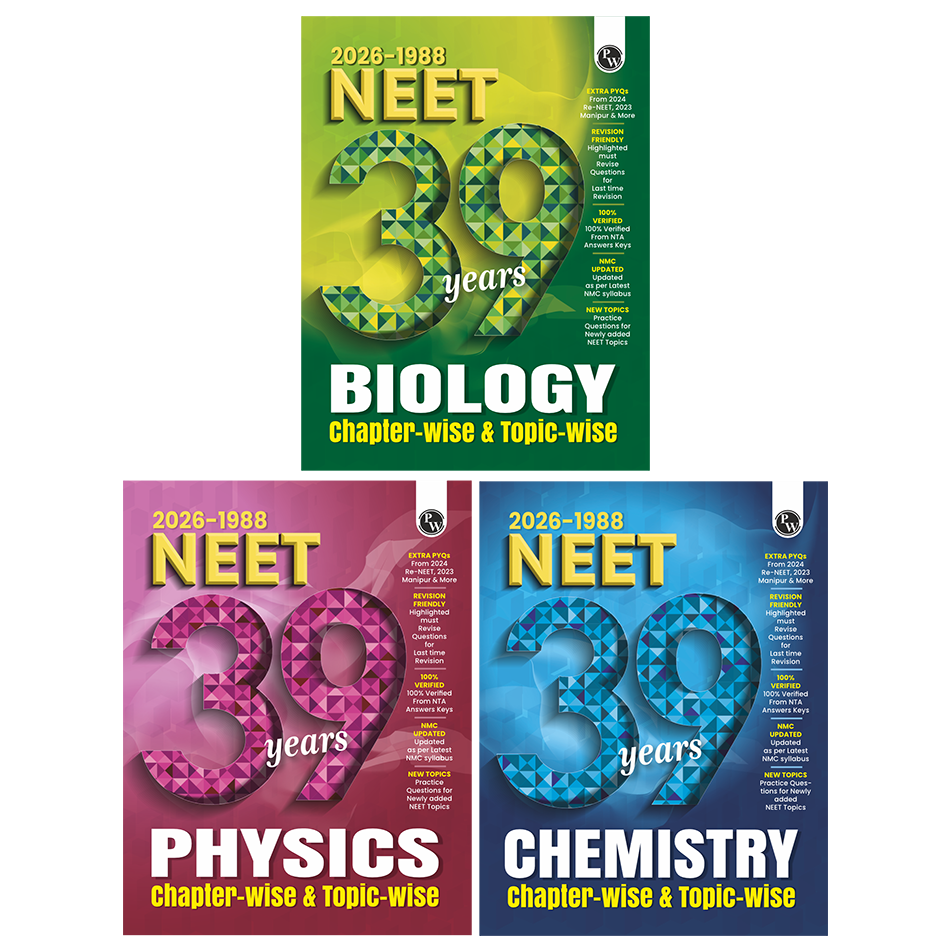
Having the right study material is crucial. A standard textbook might give you the theory, but a dedicated NEET Physics PYQ book provides the necessary edge for competitive exams.
|
Feature |
Benefits of a PYQ Book |
|
Chapter-wise Sorting |
Helps in focused preparation after finishing a topic. |
|
Year-wise Papers |
Essential for simulating the actual exam environment. |
|
Detailed Explanations |
Clarifies doubts without needing a tutor constantly. |
|
Error-free Content |
Prevents confusion caused by incorrect keys or methods. |
Using a NEET Physics PYQ resource that offers step-by-step breakdowns is highly recommended. This ensures that even if you encounter a completely new question type, your fundamental approach remains solid.
Also Check,
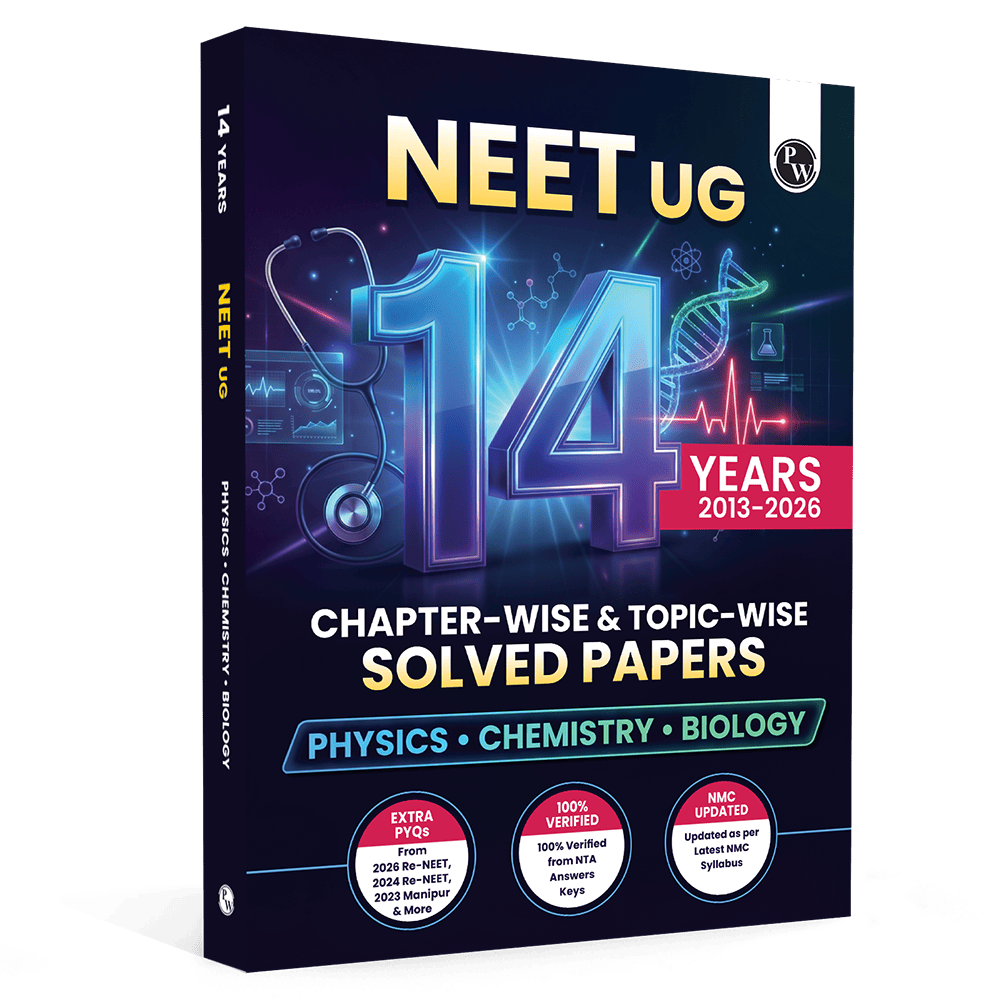
PW 14 Years NEET PYQ Hindi Book
Tips for Using NEET Physics PYQ
As the exam approaches, your strategy should shift from learning new concepts to refining what you already know. The Physics PYQ should be your primary tool during the final months.
-
Timed Practice: Set a timer for 45 minutes and try to solve 45 questions. This mimics the pressure of the actual exam hall.
-
Error Analysis: Maintain a "Mistake Notebook" where you record the PYQ you got wrong. Review this notebook every week to ensure you don't repeat the same errors.
-
Focus on High-Yield Topics: If time is short, focus on the NEET Physics PYQ chapter wise for high-weightage areas like Heat and Thermodynamics or Electronic Devices.
Read More: NEET Sample Papers PDFs with Solutions
Toughest NEET Physics PYQ FAQs
Q1. Are the NEET Physics questions repeated from previous years?
While specific questions are rarely repeated, the concepts and logic used in Physics PYQs are frequently reused by examiners.
Q2. How many years of PYQs should I solve for NEET Physics?
It is highly recommended to solve at least the last 10 to 15 years of Physics PYQ to get a comprehensive understanding of the trends.
Q3. Is solving PYQs enough to score 140+ in NEET Physics?
Solving PYQ NEET is essential, but you should also have a strong grasp of NCERT concepts and participate in regular mock tests for a high score.
Q4. Where can I find chapter-wise NEET Physics questions?
You can find these in a dedicated Physics PYQ chapter-wise book or on online platforms that provide structured previous-year papers.
Q5. Why is it important to use NEET Physics PYQ with solutions?
Using NEET Physics PYQ with solutions allows you to understand the most efficient calculation methods and shortcut tricks, which are vital for saving time.