NEET Syllabus 2027 with Exam Pattern
NEET Syllabus 2027 with Exam Pattern:- NEET 2027 exam will be organised by the National Testing Agency (NTA), most likely in the first week of May 2027. It is one of the most important entrance exams in India for students who wish to study MBBS, BDS, and other medical courses in top government or private colleges. Lakhs of students appear for this test every year, making it highly competitive. To succeed, students must follow the right strategy and keep track of the latest updates on the NEET syllabus 2027, eligibility, paper pattern, and result process.
The exam will be held offline in pen-and-paper mode. As per the NEET paper pattern, there will be 200 questions, out of which 180 must be attempted. The NEET marking scheme includes 4 marks for each correct answer and a deduction of 1 mark for every wrong answer. The NEET UG syllabus is mainly based on topics from Classes 11 and 12 in Physics, Chemistry, and Biology. After the exam, the selection process includes result declaration, cutoff, and online counselling. Check out the article below for the latest NEET Syllabus 2027 with Exam Pattern.
Check Out: PW NEET Books
NEET Exam 2027
With over 21 lakh students appearing every year, NEET is known for its high competition and strict selection process. Students are tested in Physics, Chemistry, and Biology based on the Class 11 and 12 curriculum. Here’s a quick look at the main highlights of the exam:
|
Particulars |
Details |
|
Exam Name |
National Eligibility cum Entrance Test (NEET) |
|
Conducting Body |
National Testing Agency (NTA) |
|
Level of Exam |
National-level Undergraduate (UG) Exam |
|
Frequency |
Once a year |
|
Expected Registrations |
Around 21 lakh (based on NEET 2025 data) |
|
Mode of Exam |
Offline (Pen and Paper Based Test) |
|
Courses Covered |
MBBS, BDS, BAMS, BUMS, BSc Nursing, BVSc & AH |
|
Application Fee |
₹1,700 (General), ₹1,600 (OBC), ₹1,000 (SC/ST), ₹9,500 (Foreign Nationals) |
|
Exam Timing |
3 hours – From 2:00 PM to 5:00 PM (IST) |
|
Subjects & Marks |
Physics (180), Chemistry (180), Biology (360) – Total 720 Marks |
|
Total Questions |
180 (Out of 200) |
|
NEET Marking Scheme |
+4 for correct answer, -1 for wrong, 0 for not attempted |
|
Number of Exam Cities |
552 in India, 14 abroad |
|
Medium of Exam |
13 Languages including English, Hindi, Tamil, Telugu, Bengali, Marathi etc. |
|
Colleges Accepting NEET |
1,613 colleges |
|
Available Seats |
TBA |
|
Official Helpline |
011-69227700, 011-40759000 |
|
Email Support |
neet@nta.ac.in, neet1@nta.ac.in |
|
Official Website |
www.neet.nta.nic.in |
Check Out: NEET Question Banks
NEET Exam Pattern 2027
The NEET 2027 exam will be conducted in a paper-based pencil format (PBT) over a total duration of 3 hours (180 minutes). The paper includes 180 multiple-choice questions (MCQs), divided across three main subjects: Physics, Chemistry, and Biology. The Biology section is further split into two parts, Botany and Zoology, each carrying equal weight.
Each question in NEET 2027 will carry 4 marks. For every wrong answer, 1 mark will be deducted as per the official NEET marking scheme. No marks are deducted for questions that are left unanswered. Below is a simple breakdown of the NEET paper pattern:
|
Subject |
Number of Questions |
Marks |
|
Physics |
45 |
180 |
|
Chemistry |
45 |
180 |
|
Botany |
45 |
180 |
|
Zoology |
45 |
180 |
|
Total |
180 Questions |
720 Marks |
Check Out: NEET Previous Year Papers
NEET 2027 Syllabus
The NEET 2027 syllabus is mainly based on the topics from Class 11 and Class 12 NCERT textbooks for Physics, Chemistry, and Biology. This syllabus is set by the Medical Council of India (MCI) and followed by the National Testing Agency (NTA). Students preparing for NEET should be thorough with the concepts taught in school, especially those from the Science stream.
The NEET UG syllabus covers important chapters from both years, and no extra topics are asked beyond this level. The syllabus is designed to test your understanding, application, and problem-solving ability in each subject.
|
Subject |
Class 11 Topics |
Class 12 Topics |
|
Physics |
Physical world and Measurement, Kinematics, Laws of Motion, Work, Energy and Power, Motion of System of Particles and Rigid Body, Gravitation, Properties of Bulk Matter, Thermodynamics, Behaviour of Perfect Gas and Kinetic Theory, Oscillations and Waves |
Electrostatics, Current Electricity, Magnetic Effects of Current and Magnetism, Electromagnetic Induction, Alternating Current, Electromagnetic Waves, Ray Optics and Optical Instruments, Wave Optics, Dual Nature of Matter and Radiation, Atoms and Nuclei, Semiconductor Electronics |
|
Chemistry |
Some Basic Concepts of Chemistry, Structure of Atom, Classification of Elements and Periodicity, Chemical Bonding and Molecular Structure, States of Matter, Thermodynamics, Equilibrium, Redox Reactions, Hydrogen, The s-Block Element, Some p-Block Elements, Organic Chemistry: Basic Principles and Techniques, Hydrocarbons, Environmental Chemistry |
The Solid State, Solutions, Electrochemistry, Chemical Kinetics, Surface Chemistry, The p-Block Elements, The d- and f-Block Elements, Coordination Compounds, Haloalkanes and Haloarenes, Alcohols, Phenols and Ethers, Aldehydes, Ketones and Carboxylic Acids, Organic Compounds Containing Nitrogen, Biomolecules, Polymers, Chemistry in Everyday Life |
|
Biology |
Diversity of Living Organisms, Structural Organisation in Animals and Plants, Cell Structure and Function, Plant Physiology, Human Physiology |
Reproduction, Genetics and Evolution, Biology and Human Welfare, Biotechnology and Its Applications, Ecology and Environment |
Subject-wise NEE Syllabus 2027
The NEET 2027 syllabus is divided into Physics, Chemistry, and Biology based on NCERT classes 11 and 12. Physics covers mechanics and modern physics, Chemistry includes organic, inorganic, and physical topics, while Biology focuses on botany and zoology. A clear subject-wise understanding helps students plan preparation and improve performance effectively.
|
NEE Syllabus 2027 |
| NEET Physics Syllabus |
| NEET Chemistry Syllabus |
| NEET Biology Syllabus |
NEET Books 2027
Preparing for NEET 2027 requires not only hard work but also the right set of books that match the NEET syllabus 2027 and help you understand concepts clearly. Since the NEET exam syllabus is vast and includes subjects like Physics, Chemistry, and Biology from Classes 11 and 12, it’s important to pick books that explain topics in a simple, student-friendly way. Whether you are a beginner or someone aiming to improve your score, choose books that suit your learning style and match your understanding level. Always make sure the books you choose follow the NEET UG syllabus and are updated as per the latest NEET exam pattern.
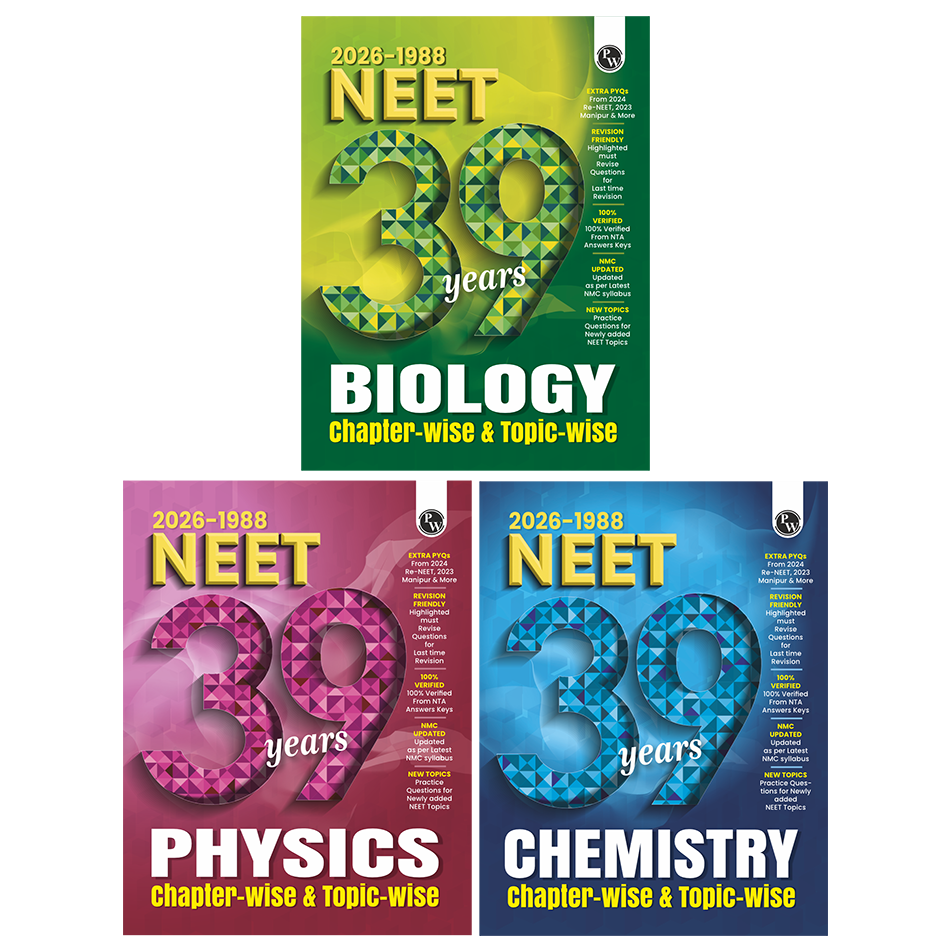
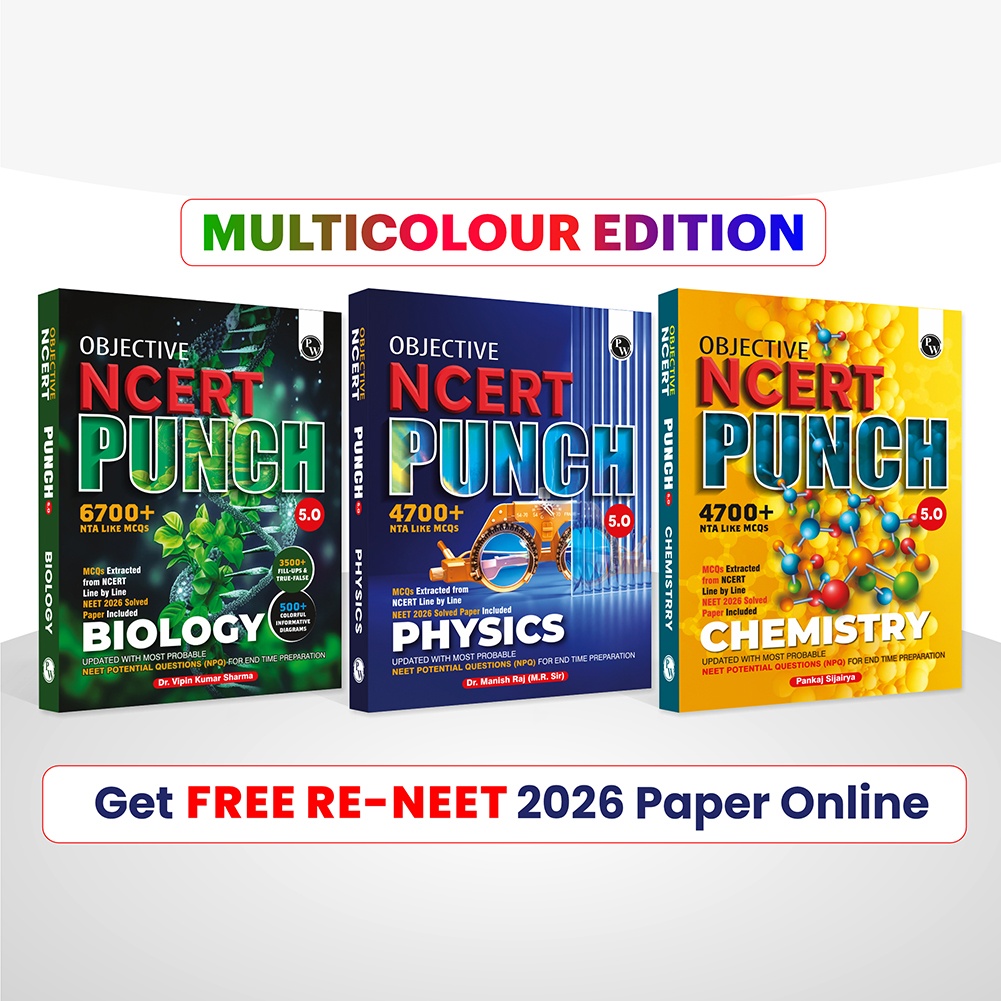
For students looking for comprehensive and affordable study material, PW (Physics Wallah) offers a range of NEET preparation resources. The 39 Years NEET PYQ Combo helps students practice previous year questions across all subjects. The NEET PCB Med Easy Handwritten Notes Combo provides concise notes for quick revision. Students can strengthen their preparation with the NEET Objective NCERT Punch Combo, which focuses on NCERT-based practice questions. Additionally, the NEET Rankers Test Series offers exam-like mock tests to improve accuracy, time management, and confidence before the final exam. Check out these NEET study materials to enhance your preparation and maximize your score.
How to Score 650+ in NEET 2027?
Scoring 650 or more in NEET 2027 is not just about studying hard but also about studying smart. The NEET exam mainly checks your clarity of concepts, speed, and accuracy. The majority of questions are directly from NCERT Class 11 and 12 books, so building a strong foundation is important. Here is how to score good marks in NEET exam:-
1. Start with a Strong Base
Your first step should be to focus on building your basics. The NEET 2027 syllabus is vast, but most questions are directly picked or based on NCERT content. So before jumping into reference books, make sure you understand each NCERT chapter completely.
For example, if you are studying the chapter "Cell, The Unit of Life" from Class 11 Biology, take time to understand every line. Then try solving simple NCERT questions before moving on.
2. Complete Chapters Smartly and Find Links
When studying for NEET 2027, it’s important not just to finish chapters one after the other but to connect concepts across Class 11 and Class 12. The NEET UG syllabus often has topics that are interrelated, even though they are in different classes.
For example, if you are studying Cell, The Unit of Life in Class 11 Biology, follow it up with Molecular Basis of Inheritance from Class 12. Both deal with cell structure, DNA, RNA, and functions, so studying them together gives clarity. Here’s a helpful table of linked chapters across classes:
|
Class 11 Chapter |
Related Class 12 Chapter |
|
Cell – The Unit of Life |
Molecular Basis of Inheritance |
|
Plant Physiology |
Photosynthesis, Respiration in Plants |
|
Biomolecules |
Biotechnology, Principles and Processes |
|
Human Physiology |
Human Reproduction, Evolution, Biotechnology |
|
Anatomy of Flowering Plants |
Reproduction in Organisms, Sexual Reproduction in Plants |
|
Thermodynamics (Physics & Chemistry) |
Thermodynamics in Chemistry (Class 12) |
|
Laws of Motion (Physics) |
Current Electricity, Magnetic Effects |
|
States of Matter (Chemistry) |
Solutions, Surface Chemistry |
|
Morphology of Flowering Plants |
Strategies for Enhancement in Food Production |
3. Stick to the NEET Exam Syllabus
Always keep a copy of the official NEET exam syllabus with you. Do not study anything beyond the syllabus of NEET, because time is limited and the questions are strictly from within the NEET UG syllabus. Check out the detailed NEET Syllabus and NEET Exam Pattern from the above article.
4. Make Short and Clear Notes
After completing every chapter, make your own handwritten notes. Use easy words and write in short points. Notes help in quick revision and are very helpful before the exam.
-
Key concepts
-
Important diagrams
-
NCERT line-based points
-
Formulae (especially in Physics and Physical Chemistry)
-
Exceptions and common mistakes
5. Revise Regularly and Plan Weekly Targets
Revision is more important than just finishing the syllabus. Divide your topics weekly and revise what you studied in the previous week.
6. Focus More on Biology
Since Biology carries 360 marks, giving it more time can improve your overall score quickly. The questions are mostly direct and based on NCERT. Below are some high-weightage Biology topics from the NEET 2027 syllabus:
-
Human Physiology
-
Genetics and Evolution
-
Reproduction
-
Ecology and Environment
-
Cell Structure and Functions
7. Solve NCERT-based MCQs and PYQs
After completing each topic, solve multiple-choice questions from that chapter. Start with NCERT exemplar problems, then move on to previous year NEET questions. This builds your speed and accuracy and gives you a feel of the NEET pattern.
You can find many practice sets and NEET PYQs from PW (Physics Wallah), which are well-structured as per the NEET 2027 syllabus.
8. Mock Tests, Time Management and Paper Analysis
Start giving full-length mock tests at least two months before the exam. Sit for the test at the same time as the actual exam, that is, 2 PM to 5 PM. After the test, analyse your mistakes. Find where you are losing marks, wrong guesses, slow speed, weak topics, etc.
Read More: How to Start NEET Preparation After Class 10?
NEET Syllabus FAQs
1. What is the NEET 2027 exam date?
The NEET 2027 exam will be conducted on May 2027, following the usual schedule of being held on the first Sunday of May. The official confirmation and detailed notification are released by the National Testing Agency on its official website.
2. What is the syllabus of NEET 2027?
The NEET 2027 syllabus is based on Class 11 and 12 NCERT topics from Physics, Chemistry, and Biology. It follows the NEET UG syllabus set by NTA, and no questions are asked outside of this.
3. Is NCERT enough for NEET 2027?
Yes, NCERT is enough to cover most of the NEET questions, especially in Biology. However, for extra practice and understanding, it’s helpful to solve more MCQs and previous year questions from reliable sources like PW.
4. How many questions are there in the NEET exam?
As per the NEET paper pattern, there are 200 questions, out of which 180 must be attempted. These are objective-type (MCQs) based on Physics, Chemistry, and Biology.
5. What is the NEET marking scheme?
According to the official NEET marking scheme:
-
+4 marks for each correct answer
-
-1 mark for each wrong answer
-
0 marks for unattempted questions