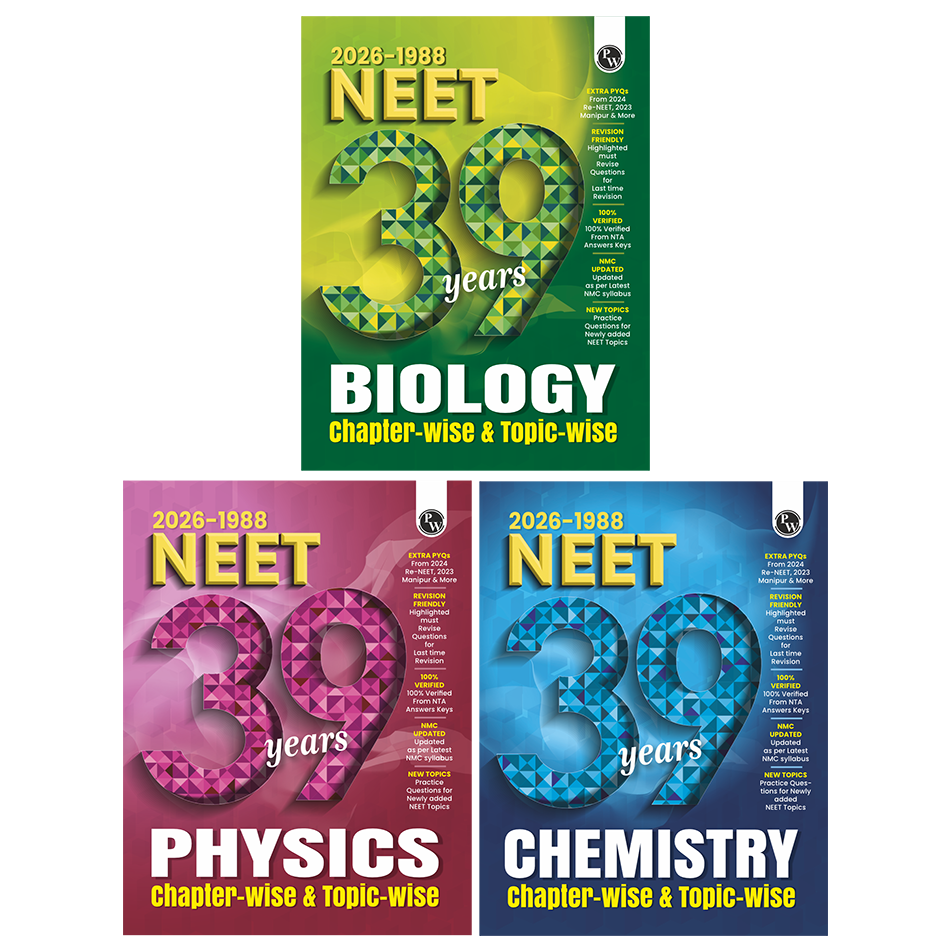
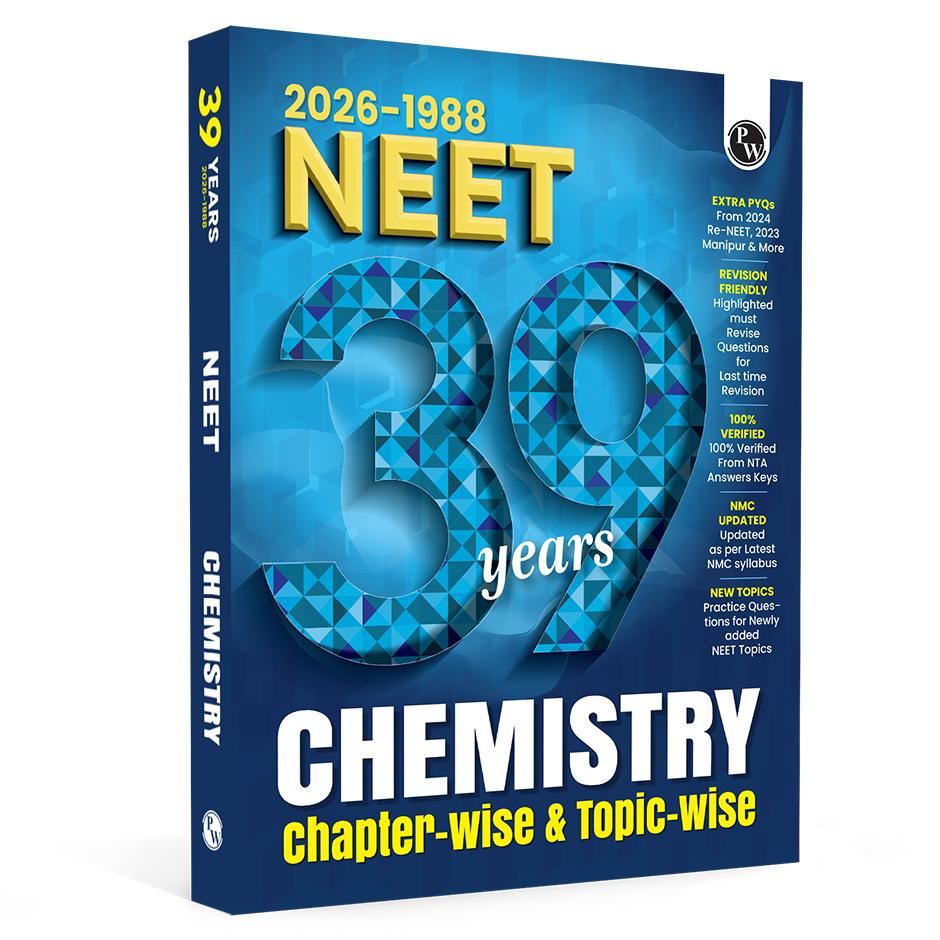
What Makes PW 39 Years NEET Chemistry PYQ Book Different from Or PYQ Books

Many students spend hours memorising chemical formulas and reactions, yet they struggle during the actual exam because they cannot apply these concepts to tricky multiple-choice questions.
This problem creates immense stress and anxiety as exam day approaches. To score well, you need a targeted resource that bridges the gap between theory and actual exam application. This guide highlights how a high-quality resource focusing on NEET PYQ chemistry changes your study routine and ensures you are fully prepared.
What is NEET PYQ Chemistry?
The term NEET PYQ chemistry refers to the collection of past exam questions specifically from the chemistry section of the National Eligibility cum Entrance Test. Chemistry is a scoring subject that consists of three main branches: Physical Chemistry, Organic Chemistry, and Inorganic Chemistry.
Studying these past questions helps you understand the weight given to different topics. Instead of guessing which chapters are important, you get a clear view of what the examiners regularly focus on.
-
Physical Chemistry: This section demands numerical clarity, application of formulas, and calculation speed.
-
Organic Chemistry: This area focuses heavily on named reactions, mechanisms, and identifying final products.
-
Inorganic Chemistry: This branch requires systematic learning of periodic trends, chemical bonding, and coordination compounds.
Features of the NEET PYQ Chemistry Book
The latest edition of this compilation is packed with distinct features designed to streamline your revision. NEET PYQ resource provides an authentic practice base built on decades of actual papers, similar to previous editions like the 38 Years papers.
Here are the prominent features included in this comprehensive resource:
1. Strict Syllabus Alignment
-
Fully updated to match the latest NTA syllabus guidelines so you do not waste time on deleted topics.
-
Includes a balanced mix of historical questions and modern question formats.
2. Comprehensive Answer Keys
-
Features fully solved, reliable answers for every question to verify your method instantly.
-
Offers step-by-step explanations that explain the underlying chemical principle behind each solution.
3. Structured Content Delivery
-
Organized carefully to ensure you can save time during intensive revision sessions.
-
Highlights high-yield questions that appear frequently across different exam cycles.
Why is NEET PYQ Chemistry Important for NEET Preparation?
Practising previous papers is a non-negotiable part of your schedule. Relying solely on theoretical books won't give you a feel for the exam environment. Using a dedicated NEET chemistry PYQ book teaches you how to manage your time under pressure.
1. Understanding Exam Patterns and Trends
The main advantage of solving past papers is getting a real feel for the exam pattern. Repeated practice helps you spot recurring question trends, giving you a competitive edge.
2. Improving Accuracy and Speed
-
Regular practice reduces the time you take to decipher complex numerical problems in physical chemistry.
-
It minimises silly calculation mistakes and errors in marking the optical mark recognition sheet.
3. Strengthening Conceptual Clarity
When you solve questions from the 39 Years NEET PYQs, you encounter different ways the same concept can be tested. This repeated exposure builds deep concept clarity and helps you retain information longer.
What Makes This NEET PYQ Chemistry Book Different from Other Books?
Not all question banks are created equal. Many books on the market contain unverified answers, outdated patterns, or disorganized layouts that confuse students. This specific resource stands out by providing an error-free, streamlined learning experience.
|
Feature Comparison |
This 39-Year PYQ Book |
Standard Market Books |
|
Syllabus Relevance |
Strictly follows the latest NTA updates |
Often includes obsolete or deleted topics |
|
Explanation Quality |
Highly reliable, step-by-step solutions |
Vague, single-line answers that lack depth |
|
Question Tracking |
Highlights trends and repeated concepts |
Randomly listed questions with no structure |
|
Syllabus Coverage |
Combines both historical and the latest updates |
Fails to show how older questions fit new trends |
How is NEET PYQ Chemistry Organized Chapter-wise?
A major problem with older question banks is that they present questions chronologically by year. This makes it difficult for a student to practice right after finishing a specific chapter in class. This book solves that issue by using a structured layout.
-
Chapter-Wise and Topic-Wise Sorting
The book takes all chemistry previous year questions and divides them into specific chapters matching your textbook syllabus. Inside each chapter, the questions are further subdivided into specific topics.
-
Why a Structured Layout Helps
-
Allows you to finish a topic in school or coaching and immediately solve its past exam questions.
-
Helps you identify your specific weak points within a single chapter.
-
Prevents you from feeling overwhelmed by a massive mix of unrelated questions.
How to Use NEET PYQ Chemistry for Daily Study?
Simply buying NEET books and reading through the solutions will not improve your score. You must engage with the material actively to get the best results during your NEET chemistry practice.
-
Study the Theory First: Complete your textbook reading and lecture notes thoroughly before opening the question bank.
-
Solve Independently: Attempt each question without looking at the answer key. Give yourself a strict time limit per question.
-
Analyse the Solutions: Compare your method with the fully solved answer key provided in the book to find shorter methods.
-
Mark Tough Questions: Highlight difficult or tricky problems so you can revisit them easily during final exam revisions.
When to Start Solving NEET PYQ Chemistry Questions?
Timing your preparation correctly is crucial for building confidence. If you start solving past papers too early, you might get discouraged by low scores. If you start too late, you won't have enough time to fix your mistakes.
The most effective approach is to use this book throughout your academic year. According to the target audience details, this book serves various students at different stages of their preparation:
-
Class 11 and 12 Students: Start using the book chapter by chapter alongside your regular school sessions to build a strong foundation.
-
Droppers and Repeaters: Use the book from day one of your preparation to identify your past mistakes and boost your overall score accuracy.
-
Final Revision Phase: Dedicate the last three to four months before the exam to solving full chapters under timed conditions.
Common Mistakes to Avoid While Using NEET PYQ Chemistry Manuals
Many aspirants fail to get the desired results because they follow inefficient study habits. Being aware of these pitfalls will save you time and keep your chemistry preparation on track.
1. Memorising the Answers
Some students read the question and immediately look at the solution, trying to memorise the steps. This is a big mistake because the actual exam will alter the numerical values or twist the conceptual phrasing.
2. Ignoring the Wrong Attempts
-
Never skip analysing a question you answered incorrectly.
-
Find out whether your error was due to a lack of conceptual knowledge, a calculation mistake, or a misunderstanding of the question.
-
Maintain a dedicated mistake notebook to record these errors.
3. Working with Outdated Editions
Using old books means you miss out on recent changes made by the NTA. A modern book covers both historical questions and the latest structural changes in the syllabus, ensuring you are aligned with current trends.
Read More: NEET Handwritten Revision Notes PDF with Solutions
NEET PYQ Chemistry FAQs
How does a chapterwise chemistry book help more than yearly papers?
A chapterwise chemistry book lets you practice questions immediately after finishing a specific topic, which reinforces your learning right away. Yearly papers can only be solved effectively after completing the entire syllabus.
Are questions from older exam cycles still relevant for the upcoming test?
Yes, older questions are highly useful because they test foundational concepts that remain unchanged. A good book updates these questions to ensure they fit the current NTA syllabus guidelines.
What is the best way to approach numerical questions in physical chemistry?
You should first write down the formula, check the units carefully, and solve the calculation independently without looking at the answer key. Afterward, verify your steps using the fully solved solutions in the book.
Can solving past papers make up for skipping textbook reading?
No, past papers are meant to supplement your primary textbook learning, not replace it. You must understand the theories first before attempting to solve past exam problems.