How to Attempt Multiple-Choice Questions in Olympiad Exam
Olympiad Multiple Choice Questions
Preparing for an Olympiad exam can be both exciting and a little overwhelming for students. Exams like the Maths Olympiad, Science Olympiad, English Olympiad, and others are designed to test how well you understand and apply what you’ve learned in school. But sometimes, students feel nervous about how to balance school studies and Olympiad exam preparation, especially when both need focus and time. Olympiad exams mostly include multiple-choice questions (MCQs) that check your thinking speed, accuracy, and problem-solving ability.
To do well, it’s important to stay calm and practise regularly. Solving Olympiad multiple choice questions with answers and going through Olympiad MCQ questions from good Olympiad books can help you get familiar with the exam pattern and boost confidence. Go through the article and learn How to Attempt Multiple-Choice Questions in Olympiad Exam and get the direct link to good olympiad books.
Olympiad Exam Details
Before learning How to Attempt Multiple-Choice Questions in Olympiad Exam, go through the important exam details here:-
-
Classes Eligible – Students from Class 1 to Class 12 can participate depending on the Olympiad. Some exams are open to all classes, while others are divided into levels like Junior, Middle, and Senior.
-
Exam Conducting Bodies – Olympiad exams in India are mainly organised by foundations such as SOF (Science Olympiad Foundation), SilverZone Foundation, and Unified Council
-
Mode of Exam – Most Olympiads are conducted in offline mode (pen and paper-based), while some also offer online exams through school or home-based platforms.
-
Question Format – The Olympiad exam is based on Multiple-Choice Questions (MCQs). Each question has four options, and students must choose the correct one.
-
Answer Sheet – Students are required to mark their answers on a specially designed OMR (Optical Mark Recognition) sheet. Answers should be filled neatly using a black or blue ballpoint pen.
-
Number of Questions – The total number of questions usually ranges between 35 and 60, depending on the subject and class level.
-
Total Marks – The exam is generally of 50 to 100 marks, varying with each Olympiad and class.
-
Time Duration – Students are given 60 minutes (1 hour) to complete the paper. Higher-level Olympiads for classes 9 to 12 may sometimes have a 90-minute duration.
-
Marking Scheme – Each correct answer carries 1 or 2 marks, depending on the Olympiad. Some exams have higher weightage for difficult questions or negative marking at advanced levels.
-
Levels of Examination – Many Olympiads are conducted in two or three levels.
-
Level 1: School-level screening.
-
Level 2: State or national level for top performers.
-
Level 3 (if applicable): International level competition.
Read More: Benefits of Olympiad Exams to Students
Olympiad Books
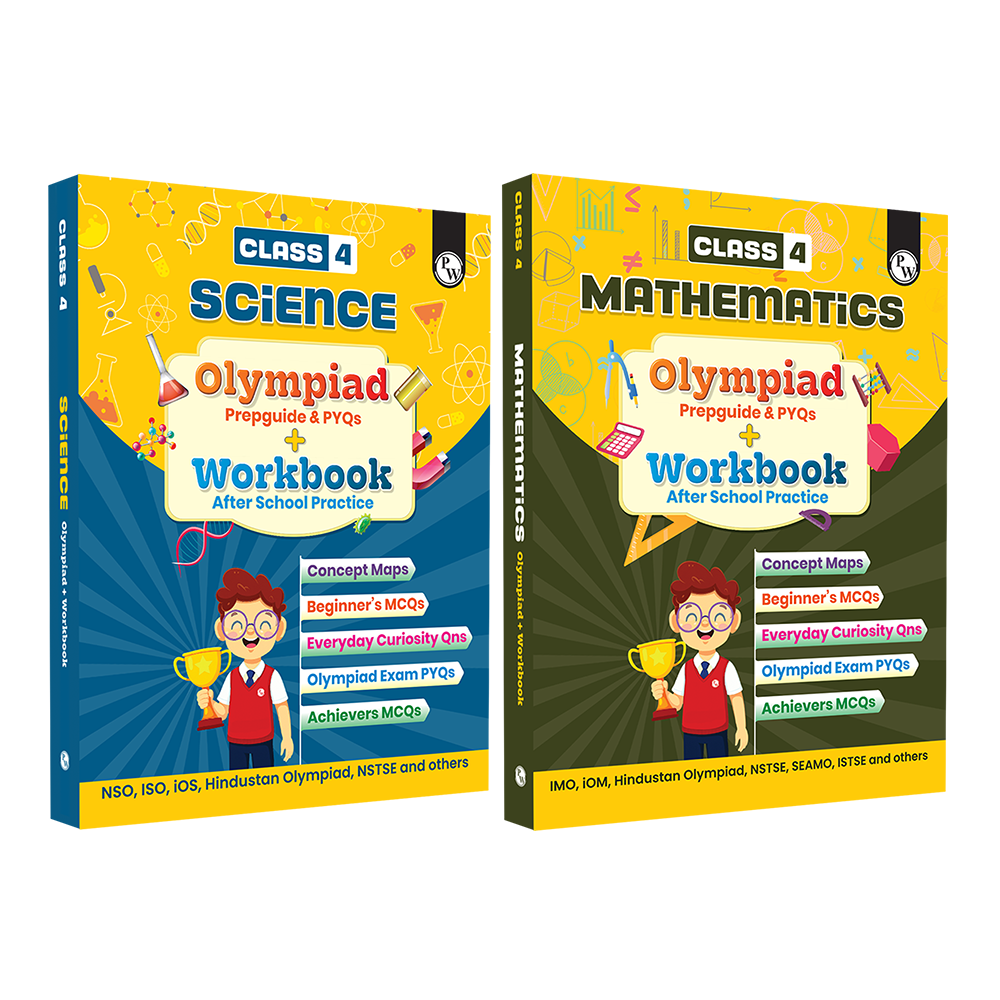
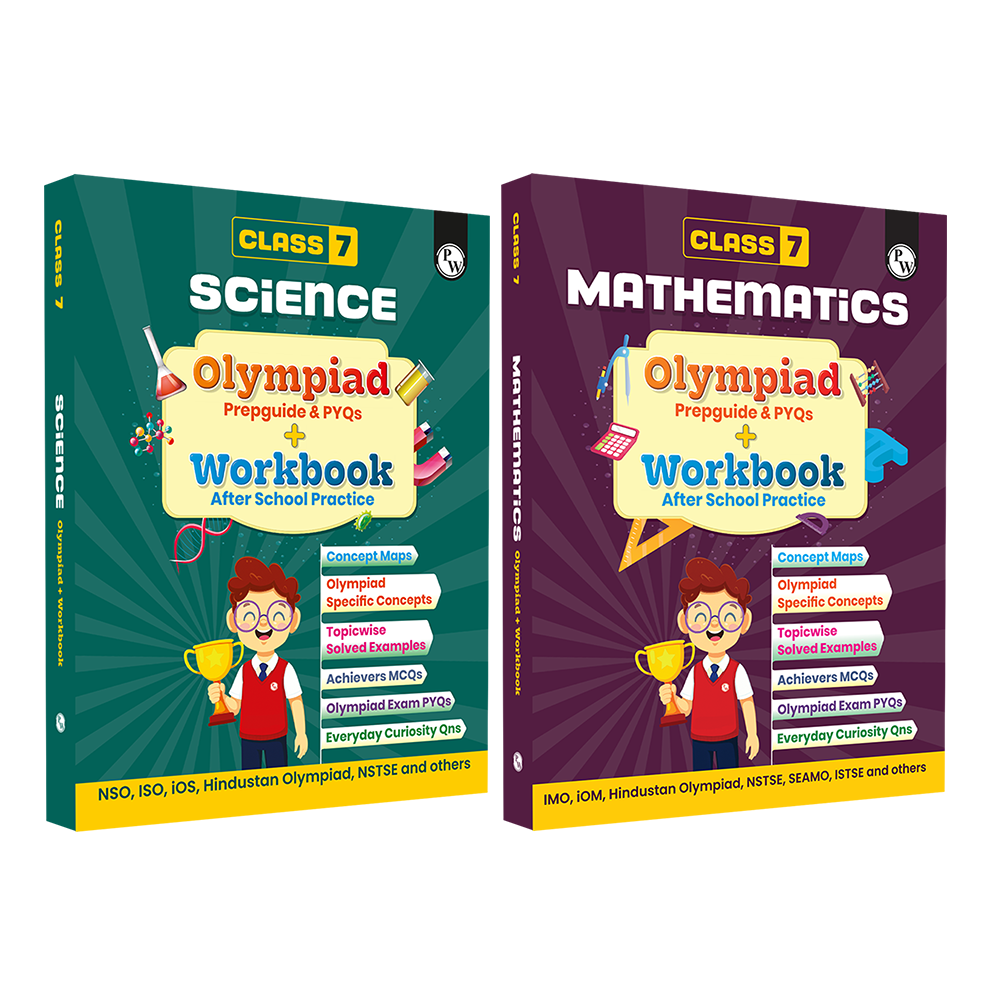
PW Olympiad Books are specially designed to make Olympiad exam preparation simpler, smarter, and more effective for students of all classes. These books cover every important concept from subjects like Science, Maths, and English in a clear and easy way. They include Concept Maps to help students understand complex topics visually and quickly. Each chapter has topic-wise solved examples that show step-by-step solutions for better learning. Students can also practise Achievers MCQs and Olympiad multiple-choice questions with answers to strengthen their problem-solving skills. Additionally, Olympiad PYQs are included so learners can get familiar with the real exam pattern and question style.
|
Olympiad Books |
|
|
Olympiad Books for Class 3 |
|
|
Olympiad Books for Class 4 |
|
|
Olympiad Books for Class 5 |
|
|
Olympiad Books for Class 6 |
|
|
Olympiad Books for Class 7 |
|
|
Olympiad Books for Class 11 |
|
|
Olympiad Books for Class 12 |
|
How to Attempt Multiple-Choice Questions in Olympiad Exam?
1. Read the Question Carefully Before Answering
When attempting any Olympiad MCQ question, the first step is to read the question slowly and attentively. Many students rush through and miss small words like “not” or “except,” which completely change the meaning of the question.
-
Always underline important keywords or phrases in your rough work to stay focused on what is being asked.
-
If a question seems confusing, break it down into smaller parts to understand it better.
-
Avoid guessing before understanding the question properly, Olympiad questions are designed to test concept clarity and observation skills.
2. Eliminate the Wrong Options First
One of the smartest ways to solve Olympiad multiple-choice questions with answers correctly is by using the elimination method.
-
Go through all four options carefully and rule out the obviously incorrect ones.
-
Once you break it down to two options, compare them with your concept or formula to make the best choice.
-
This technique works well in Science and Maths Olympiad exams, where similar-looking answers are common.
3. Manage Your Time Wisely During the Exam
Time management is one of the biggest challenges during Olympiad exam preparation and while solving the paper.
-
Start with questions you find easy and familiar, then move to the tricky ones later.
-
Don’t spend too much time on one question, if you can’t solve it in the first go, mark it and return to it later.
-
Divide your time smartly, for example: if the exam is 60 minutes with 50 questions, aim for 1 minute per question and keep 10 minutes for revision.
-
Practising time-bound Olympiad exam questions at home helps you get used to the pressure and will help to improve your speed.
4. Practise from Olympiad Books and Previous Papers
Regular practice from the right study material is the best way to improve your Olympiad exam preparation.
-
Use trusted Olympiad books that include both concept explanations and a variety of Olympiad MCQ questions with detailed answers.
-
Try solving sample papers and previous year Olympiad questions to understand the exam pattern and question style.
-
After each practice session, analyse your mistakes, this helps in improving accuracy over time.
-
Solving Olympiad multiple choice questions with answers regularly boosts confidence and prepares you for real exam conditions.
5. Avoid Guesswork
Olympiad exams test your conceptual understanding, not your memory. Guessing answers without logic can lead to mistakes, especially in higher-level exams.
-
Always try to connect the question with the concept you’ve learned in class or from your Olympiad books.
-
In case of doubt, eliminate unlikely answers and choose the one that fits best logically.
-
For Science and Maths Olympiads, recheck the unit, formula, or calculation to avoid silly errors.
-
Remember, even if you don’t know the answer, thinking logically increases your chance of being right.
6. Recheck Your Answers Before Submitting
Once you have answered all questions, it’s important to review your OMR sheet or online submission carefully.
-
Check for unmarked or mismarked answers; sometimes, a small error can reduce your score.
-
Revisit the questions you marked earlier and attempt them again with a fresh mind.
-
Make sure every question has an answer filled in neatly on the OMR sheet using the correct pen.
Also read: Hindustan Olympiad Exam
Olympiad Multiple Choice Questions FAQs
1. What type of questions are asked in the Olympiad exam?
Olympiad exams mostly include multiple-choice questions (MCQs). Each question has four options, and you need to choose the correct one based on your understanding of the topic.
2. How many questions are there in an Olympiad exam?
Usually, Olympiad exams have around 35 to 60 questions, depending on the subject and class level. Each question tests your concept clarity and problem-solving skills.
3. How much time is given to complete the Olympiad exam?
Most Olympiad exams are of 60 minutes, but for higher classes (like 9 to 12), the duration may be 90 minutes. Managing time is very important during the exam.
4. Is there negative marking in the Olympiad exam?
In general, there is no negative marking in school-level Olympiads. However, some higher-level exams may include it, so it’s best to read the exam instructions carefully.
5. How can I practise multiple-choice questions for the Olympiad exam?
You can practise from Olympiad books, sample papers, and previous year Olympiad multiple choice questions with answers. Solving different types of questions helps you understand the pattern better.