Logical Reasoning Syllabus For Olympiad Exams
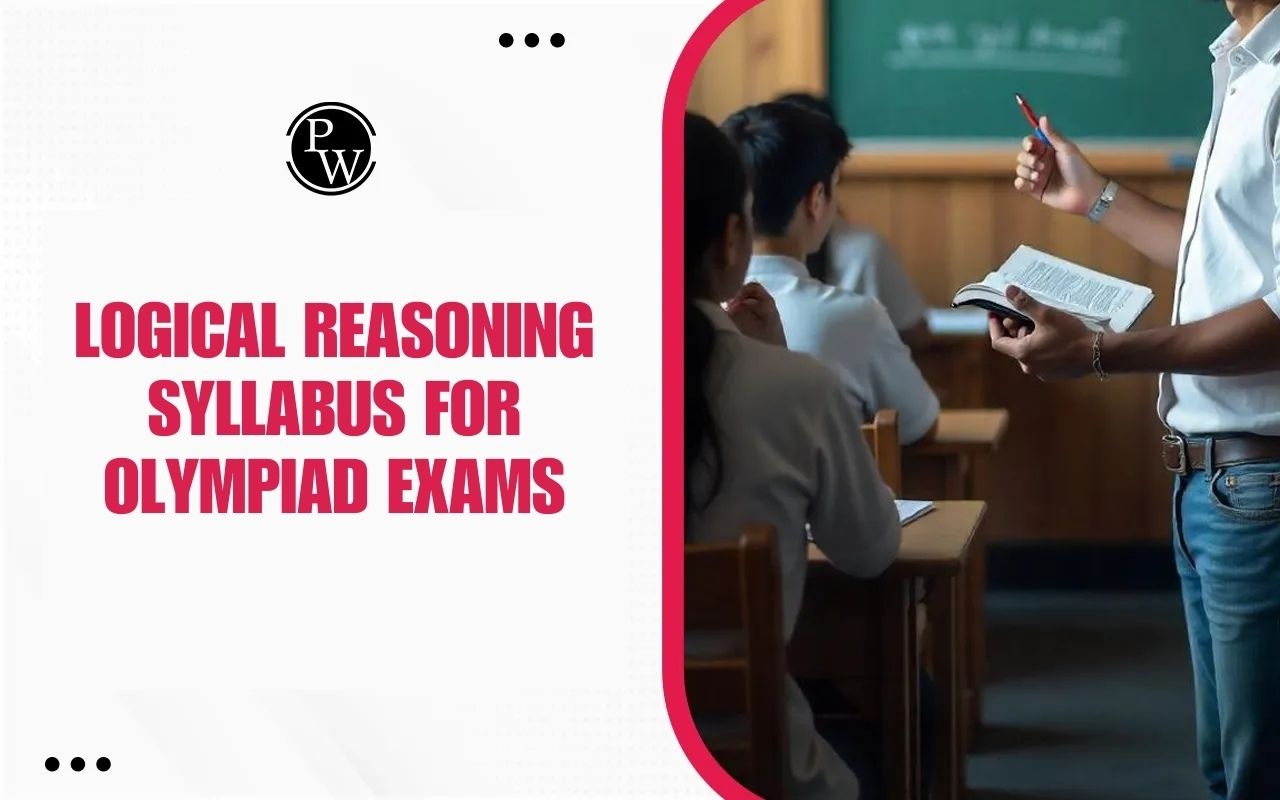
The Logical Reasoning Syllabus is a crucial tool for all competitive students, primarily for students of class 4 and class 7. The Logical Reasoning Syllabus is all about testing you on how you think, and not on how well you remember things. By learning how to solve patterns, puzzles, and codes, students become well-equipped with the skills to solve any kind of critical problem.
Check Out: Olympiad Books
Why You Should Care About the Logical Reasoning Syllabus
Understanding the logical reasoning syllabus is the first step toward winning a gold medal. Unlike school math or science, this section asks your brain to find hidden connections and rules. Whether you're a young learner or a teenager, these questions appear in almost all major tests, including the logical reasoning syllabus for olympiad. However, at the school level, we focus on fun things like shapes and number games. Learning this early makes the logical reasoning syllabus for olympiad 2026 look like a walk in the park when you get older.
Verbal Reasoning: The Magic of Words and Numbers
Verbal reasoning is all about using language and math logic to find answers. In the logical reasoning syllabus, this includes topics where the question is written in words or digits. For class 4 and class 7 students, this is often the most exciting part because it feels like being a detective! You'll learn how to decode "secret languages" and solve family tree mysteries.
Coding-Decoding: This is like sending a secret message. If "CAT" is "DBU," what is "DOG"? You learn the pattern of shifting letters.
Analogy and Classification: You find things that are similar. For example, "Hand is to Glove as Foot is to Shoe."
Blood Relations: You figure out how people in a family are related. Is that man your uncle or your cousin?
Alphabet Test: This involves arranging words in dictionary order or finding missing letters in a row.
Non-Verbal Reasoning: Thinking with Pictures
Non-verbal reasoning is a vital part of the logical reasoning syllabus because it uses pictures instead of words. This is great for students who love art or geometry! It tests your "spatial awareness," which is just a fancy way of saying how well you can see things in your mind.
Mirror and Water Images: You have to imagine what a shape looks like when reflected in a mirror or a puddle.
Embedded Figures: This is like a game of "Hide and Seek." You have to find a small shape hidden inside a bigger, messier drawing.
Paper Folding and Cutting: Can you guess what a piece of paper will look like after it’s folded, cut, and opened back up?
Figure Matrix: You look at a grid of shapes and find the one that fits the pattern to complete the square.
Check Out: NSEP Class 11 Advanced Physics For JEE & Olympiad 2025
Syllabus Breakdown for Class 4 Beginners
For a class 4 student, the logical reasoning syllabus stays simple and engaging. The questions focus on things you see in everyday life.
Patterns: Identifying what comes next in a row of shapes or numbers.
Odd One Out: Picking the item that doesn't belong (like a circle in a group of squares).
Ranking Test: Figuring out who is 1st or 5th if a group of kids are standing in a line.
Direction Sense: Simple questions about turning left or right while walking to school.
Advanced Topics for Class 7 Students
As you grow, the logical reasoning syllabus gets more complex. In class 7, we introduce "analytical" topics that require more steps to solve.
Syllogisms: Drawing conclusions from statements like "All dogs are animals" and "All animals have tails."
Venn Diagrams: Using circles to show how groups of things overlap.
Cubes and Dice: Imagining the sides of a dice that you can't see.
Alpha-Numeric Sequence: Solving puzzles that mix letters, numbers, and symbols all in one line.
The Final Revision Strategy
At the end of the day, success in the logical reasoning syllabus comes from regular habits. Don't try to learn it all in one night! Solve five puzzles every day before dinner. This keeps your brain "oiled" and ready. Remember, being fast is just as important as being right! If you find a topic like the logical reasoning syllabus for olympiads intimidating, just remember that they all use the same basic rules you're learning today. Stay curious, keep practicing, and you'll find that logic is actually the most fun part of your studies!
Read More: Benefits of Olympiad Exams
Advantages of PW Olympiad Study Material
Strong Basics
PW Olympiad Study Material presents topics in easy and clear language, helping students develop a solid understanding of core concepts.
Olympiad-Focused Approach
The content follows the latest Olympiad exam pattern and syllabus, encouraging logical reasoning and analytical thinking.
Ample Practice
Students get access to chapter-wise questions, sample problems, and mock tests that enhance speed and accuracy.
Trusted Expertise
Prepared by skilled faculty, the study material ensures high-quality explanations and correct methods.
Improved Confidence
Consistent practice with well-structured material helps students feel confident and perform better in Olympiad exams.
|
PW Olympiad Books |
Logical Reasoning Syllabus For Olympiad Exams FAQs
1. Is the logical reasoning syllabus the same as school math?
No, the logical reasoning syllabus is different! While math uses numbers to calculate, reasoning uses logic to find patterns and solve puzzles. It’s more about "how" you think than "what" you calculate.
2. Can I find practice books for my class online?
Yes! PW Store has a great collection of Reasoning and Aptitude books specifically for primary and middle school students. These books break down the logical reasoning syllabus into easy chapters.
3. Why should I learn topics like the logical reasoning syllabus for the olympiad so early?
Even though the logical reasoning syllabus for olympiad 2026 is for older students, the basics are the same. Starting early helps you become a master problem-solver, which makes all future exams much easier.
4. How much time should I spend on the logical reasoning syllabus?
We recommend about 20–30 minutes a day. It’s like a workout for your brain! Consistent daily practice is the best way to master the logical reasoning syllabus without feeling tired or bored.