NSO Syllabus, Eligibility, and Books

NSO Syllabus
NSO syllabus is an essential guide for students who are preparing for the National Science Olympiad. This Olympiad is one of the most popular competitive exams in India and abroad, conducted by the Science Olympiad Foundation (SOF). It not only sharpens scientific knowledge but also develops analytical and reasoning skills. The exam is held for students from Class 1 to Class 12, making it a wide platform for young learners. Understanding the NSO eligibility, its pattern, and its syllabus is the first step toward smart preparation.
Every student who dreams of excelling in science should know the NSO eligibility, exam structure, and recommended NSO books. With the right NSO study material, children can strengthen their concepts, practice problem-solving, and gain exposure to higher-order thinking questions. In this article, we will cover the complete NSO syllabus, eligibility criteria, and the best NSO exam preparation books to help students prepare with confidence.
Check Out: Olympiad Books
What is NSO?
The NSO exam full form is National Science Olympiad. It is one of the most recognized science Olympiads in India, organized every year by the Science Olympiad Foundation (SOF). The exam is designed to test students’ understanding of scientific concepts, logical reasoning, and problem-solving skills in a structured way.
The National Science Olympiad is open for students from Class 1 to Class 12 and is conducted in two levels. Level 1 is the qualifying round, held on different dates to allow maximum participation. Students who perform well at this stage move on to Level 2, where they compete for merit ranks, medals, and awards. Participating in the NSO helps students strengthen their science foundation, build confidence, and prepare for higher studies with an analytical mindset.
NSO Eligibility
NSO eligibility criteria are simple and allow wide participation. The National Science Olympiad is open to students from Class 1 to Class 12 studying in recognized schools. Every student within this range can register through their school to appear for the exam.
The Olympiad is conducted in two levels. Level 1 is open for all registered students. To qualify for Level 2, students need to meet certain conditions, such as being a class topper with at least 10 students appearing in that class and securing 50% or more marks in the exam. These criteria ensure that only the best-performing students move to the next stage.
Check Out: Class 3rd Olympiads & Class 4th Olympiads
National Science Olympiad Syllabus
NSO syllabus is carefully designed by the Science Olympiad Foundation (SOF) to match the academic level of students from Class 1 to 12. It is broadly based on CBSE, ICSE, and other major state boards, ensuring that the topics are familiar but applied in more challenging ways. The exam has three sections for most classes – Logical Reasoning, Science, and the Achievers Section (which includes higher-order thinking questions).
NSO Syllabus helps students not only revise their classroom topics but also practice application-based and reasoning questions that improve problem-solving skills. Below is the detailed class-wise NSO syllabus:
|
Class-Wise NSO Syllabus |
||
|
Class |
Section |
Details |
|
Class 1 |
Logical Reasoning |
Patterns, Odd One Out, Measuring Units, Geometrical Shapes, Spatial Understanding, Grouping, Analogy, Ranking Test, Problems based on Figures. |
|
Science |
Living and Non-living Things, Plants, Animals, Human Beings and Their Needs, Good Habits and Safety Rules, Air and Water, Weather and The Sky. |
|
|
Achievers Section |
Higher Order Thinking Questions from Section – 2. |
|
|
Class 2 |
Logical Reasoning |
Patterns, Odd One Out, Measuring Units, Geometrical Shapes, Analogy, Ranking Test, Grouping of Figures, Embedded Figures, Coding-Decoding. |
|
Science |
Plants, Animals, Human Body, Food, Housing and Clothing, Family and Festivals, Good Habits and Safety Rules, Transport and Communication, Air, Water, Rocks, Earth and the Universe. |
|
|
Achievers Section |
Higher Order Thinking Questions from Section – 2. |
|
|
Class 3 |
Logical Reasoning |
Patterns, Analogy & Classification, Alphabet Test, Coding-Decoding, Ranking Test, Grouping of Figures & Figure Matrix, Mirror Images, Geometrical Shapes, Embedded Figures, Possible Combinations, Clock and Calendar. |
|
Science |
Plants and Animals, Birds, Food, Housing, Clothing and Occupation, Transport, Communication and Safety Rules, Human Body, Earth and Universe, Matter and Materials, Light, Sound and Force, Our Environment. |
|
|
Achievers Section |
Higher Order Thinking Questions from Section – 2. |
|
|
Class 4 |
Logical Reasoning |
Patterns, Alphabet Test, Coding-Decoding, Ranking Test, Mirror Images, Geometrical Shapes and Solids, Embedded Figures, Direction Sense Test, Possible Combinations, Analogy & Classification, Clock and Calendar. |
|
Science |
Plants, Animals, Food and Digestion, Human Needs, Matter and Materials, Force, Work and Energy, Our Environment, Earth and Universe. |
|
|
Achievers Section |
Higher Order Thinking Questions from Section – 2. |
|
|
Class 5 |
Logical Reasoning |
Patterns, Analogy & Classification, Geometrical Shapes, Mirror and Water Images, Direction Sense Test, Ranking Test, Alphabet Test, Logical Sequence of Words, Puzzle Test, Coding-Decoding, Clock and Calendar. |
|
Science |
Animals, Human Body and Health, Plants, Natural Resources and Indian Heritage, Pollution and Calamities, Earth and Universe, Matter and Materials, Force and Energy. |
|
|
Achievers Section |
Higher Order Thinking Questions from Section – 2. |
|
|
Class 6 |
Logical Reasoning |
Verbal and Non-Verbal Reasoning. |
|
Science |
Motion and Measurement of Distances, Light, Shadows and Reflections, Electricity and Circuits, Fun with Magnets, Air Around Us, Sorting Materials into Groups, Separation of Substances, The World of Living (Characteristics of Living Beings, Parts of Plants, Body Movements in Animals, Adaptation), Components of Food. |
|
|
Achievers Section |
Higher Order Thinking Questions from Section – 2. |
|
|
Class 7 |
Logical Reasoning |
Verbal and Non-Verbal Reasoning. |
|
Science |
Heat, Motion and Time, Electric Current and Its Effects, Light, Acids, Bases and Salts, Physical and Chemical Changes, Nutrition in Plants and Animals, Respiration in Organisms, Transportation in Plants and Animals, Reproduction in Plants, Natural Resources and Their Conservation. |
|
|
Achievers Section |
Higher Order Thinking Questions from Section – 2. |
|
|
Class 8 |
Logical Reasoning |
Verbal and Non-Verbal Reasoning. |
|
Science |
Crop Production and Management, Microorganisms, Coal and Petroleum, Combustion and Flame, Conservation of Plants and Animals, Reproduction and Endocrine System, Friction, Force and Pressure, Sound, Chemical Effects of Electric Current, Light, Some Natural Phenomena. |
|
|
Achievers Section |
Higher Order Thinking Questions from Section – 2. |
|
|
Class 9 |
Logical Reasoning |
Verbal and Non-Verbal Reasoning. |
|
Science |
Motion, Force and Laws of Motion, Gravitation, Work and Energy, Sound, Matter in Our Surroundings, Is Matter Around Us Pure, Atoms and Molecules, Structure of Atom, Cell – The Fundamental Unit of Life, Tissues, Natural Resources, Improvement in Food Resources. |
|
|
Achievers Section |
Higher Order Thinking Questions from Section – 2. |
|
|
Class 10 |
Logical Reasoning |
Verbal and Non-Verbal Reasoning. |
|
Science |
Chemical Reactions and Equations, Acids, Bases and Salts, Metals and Non-metals, Carbon and Its Compounds, Life Processes, Control and Coordination, Reproduction in Organisms, Heredity, Light – Reflection and Refraction, Electricity, Human Eye and the Colourful World, Magnetic Effects of Electric Current, Our Environment and Its Management. |
|
|
Achievers Section |
Higher Order Thinking Questions from Section – 2. |
|
|
Class 11 |
Physics & Chemistry |
Physics: Units and Measurements, Mechanics, Properties of Matter, Heat & Thermodynamics, Oscillations, Waves. Chemistry: Basic Concepts of Chemistry, Structure of Atom, Classification of Elements, Chemical Bonding, Equilibrium, Thermodynamics, Organic and Redox Reactions, Hydrocarbons. |
|
Achievers Section |
Higher Order Thinking Questions from Section – 1. |
|
|
Mathematics/Biology |
Diversity in the Living World, Plant & Animal Structure, Cell Functions, Plant & Human Physiology. |
|
|
Class 12 |
Physics & Chemistry |
Physics: Electricity & Magnetism, Electromagnetic Induction, AC, Electromagnetic Waves, Optics, Modern Physics, Semiconductors. Chemistry: Solutions, Electrochemistry, Chemical Kinetics, d- and f-Block Elements, Haloalkanes & Haloarenes, Coordination Compounds, Alcohols, Phenols & Ethers, Aldehydes, Ketones, Carboxylic Acids, Amines, Biomolecules. |
|
Achievers Section |
Higher Order Thinking Questions from Section – 1. |
|
|
Mathematics/Biology |
Mathematics: Relations, Trigonometry, Matrices, Calculus, Vectors, 3D Geometry, Probability, Linear Programming. Biology: Reproduction, Genetics, Evolution, Human Welfare, Biotechnology, Ecology. |
|
Check Out: Class 5th Olympiads & Class 6th Olympiads
NSO Exam Preparation Tips
Preparing for the National Science Olympiad requires smart planning, consistent practice, and the right resources. Here are some tips that can help students excel:
1. Go Through the NSO Syllabus Thoroughly
Students should carefully study the NSO syllabus for their class and note down all important topics. This ensures clarity about what to study and helps avoid missing out on key areas.
2. Use the Right NSO Books
Good NSO books provide concept explanations, solved examples, practice exercises, and sample papers. These are specially designed to match the Olympiad exam style and make preparation more effective.
3. Collect Reliable NSO Study Material
Along with school textbooks, students should also use additional NSO study material such as chapterwise notes, worksheets, and practice papers. These resources help in building deeper understanding and improving accuracy.
4. Practice NSO Previous Year Papers
Solving past question papers from NSO exam preparation books gives students an idea of the question format and level of difficulty. It also improves speed and time management skills.
5. Revise Regularly
A weekly revision plan helps students remember what they have studied. Revising from NSO books and short notes makes learning more effective and reduces exam stress.
6. Strengthen Logical Reasoning
Logical reasoning is an important part of the exam. Students should practice puzzles, series, and coding-decoding questions daily to perform well in this section.
7. Stay Consistent and Curious
Preparing for NSO is not just about memorizing—it’s about exploring science with curiosity. Regular practice using the right NSO exam preparation books makes learning enjoyable and boosts confidence.
NSO Exam Preparation Books by PW
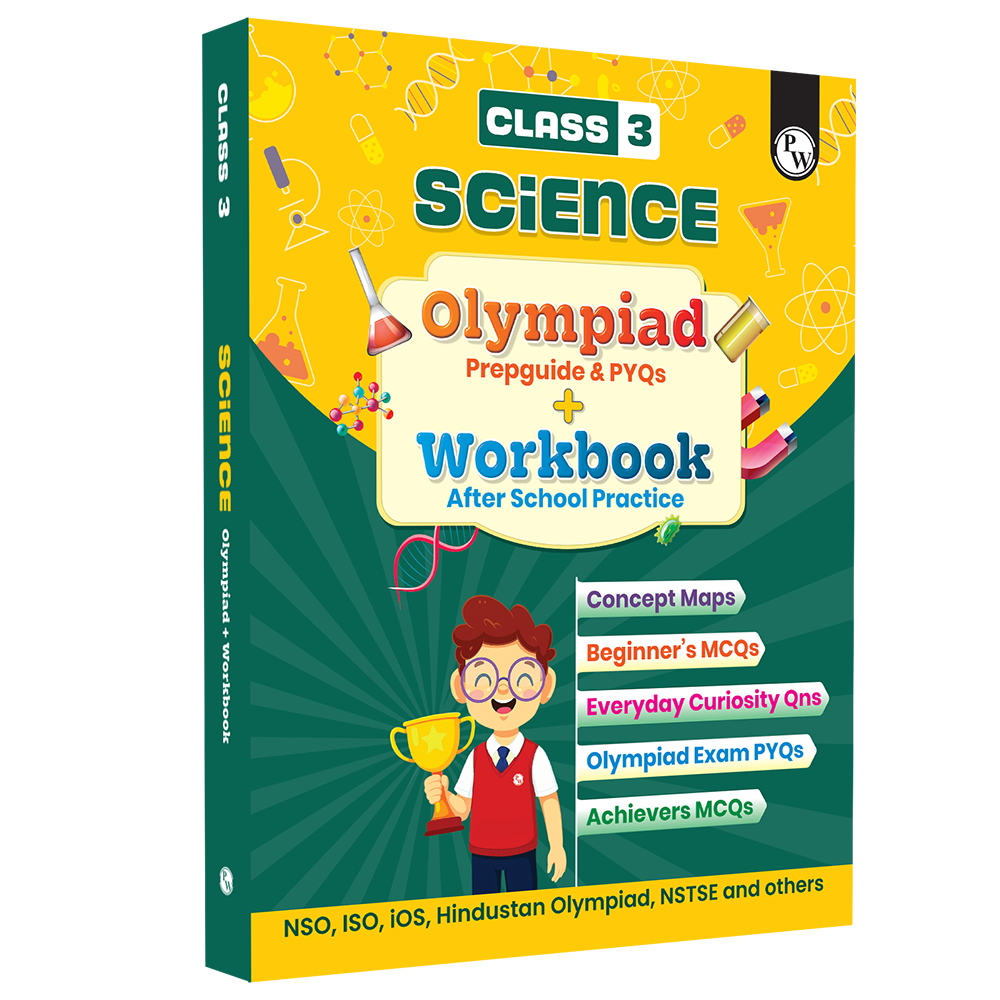
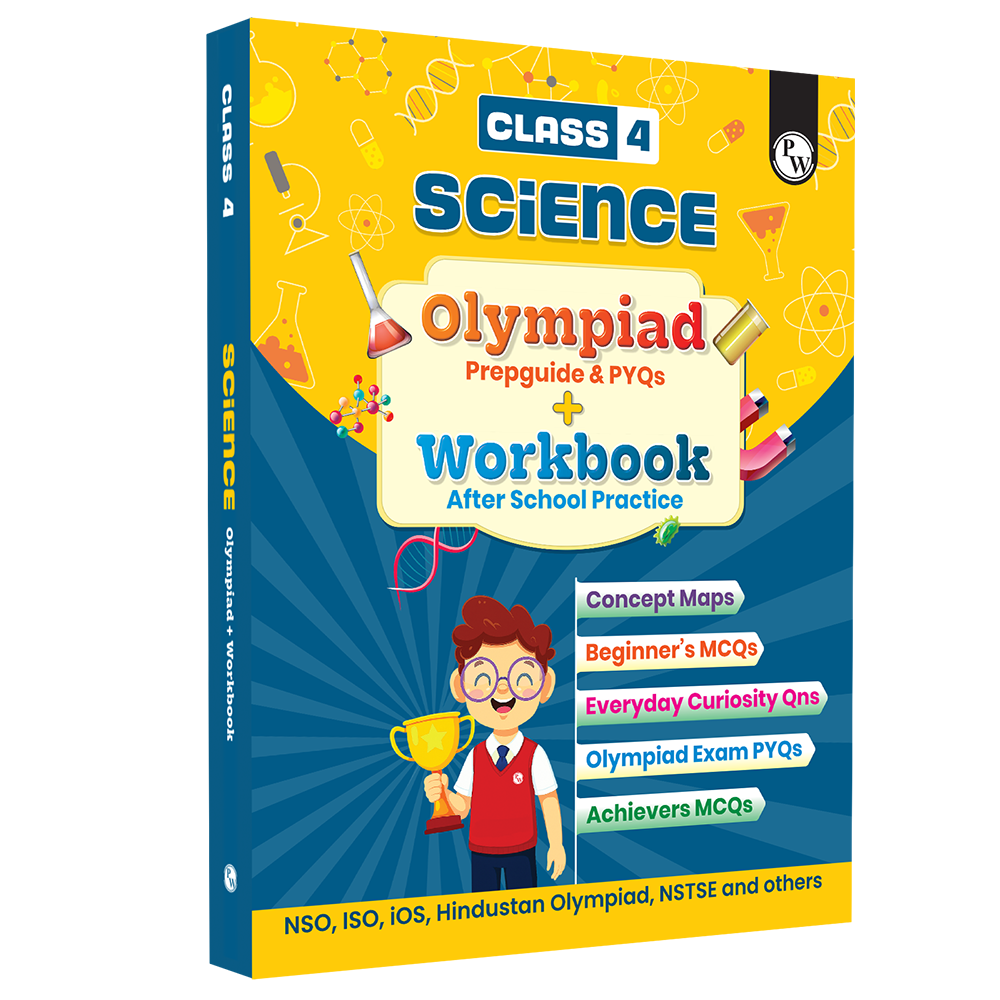
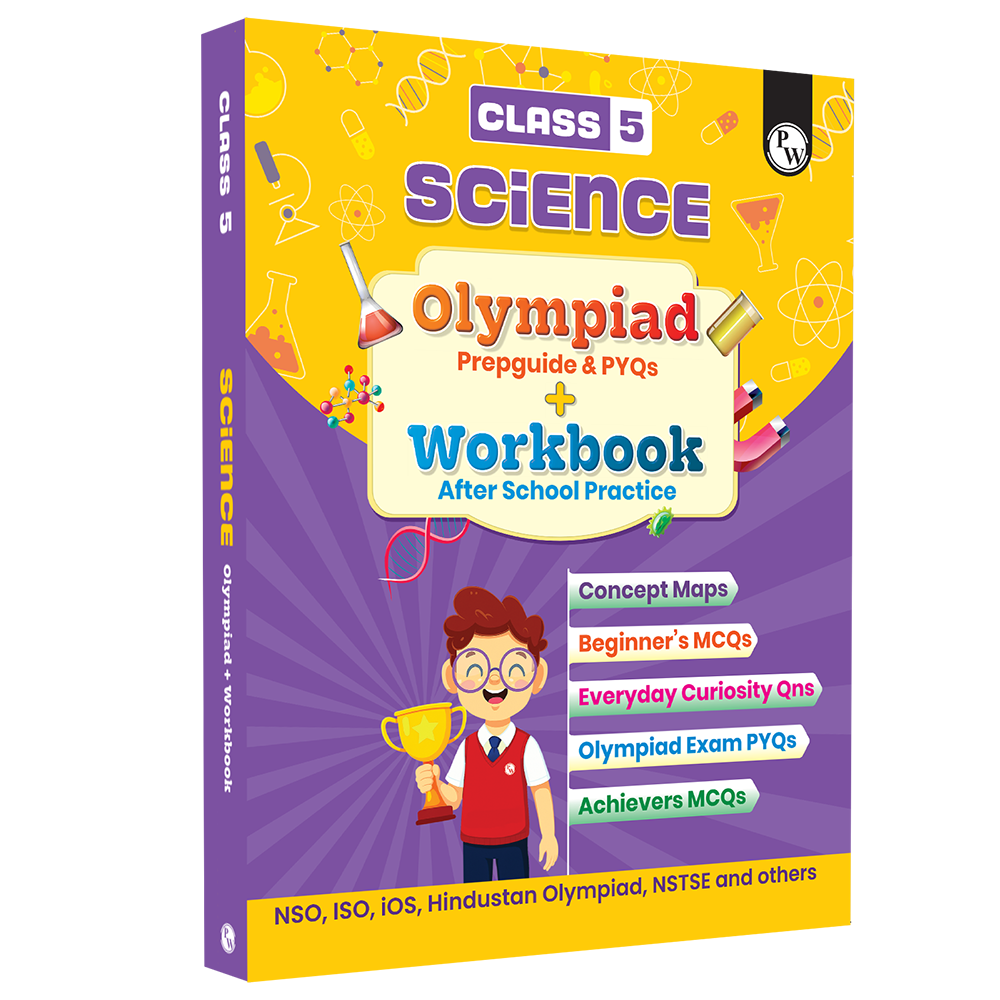
PW offers NSO exam preparation books that make science learning engaging and structured for students from different classes. These books combine concept maps, warm-up MCQs, curiosity-driven questions, and Olympiad-level practice sets to help children understand topics step by step.
Along with detailed explanations, these NSO study materials also include previous year papers and achievers’ level questions, giving students the right balance of practice and confidence for the exam. Check out the NSO Exam Preparation Books by PW given below:
|
NSO Exam Preparation Books by PW |
These NSO books are created to match the NSO syllabus and exam pattern, so students can prepare in a focused way without feeling overwhelmed. Whether it’s building strong basics or tackling higher-order thinking questions, NSO books by PW act as a supportive guide for exam preparation.
Read More: SOF National Science Olympiad Syllabus for Class 1 to 12
NSO Syllabus FAQs
Q1. What is the NSO exam full form?
Ans. The NSO exam full form is National Science Olympiad. It is conducted every year by the Science Olympiad Foundation (SOF) for students from Class 1 to 12.
Q2. Where can students find the detailed NSO syllabus?
Ans. The complete NSO syllabus is given in the article above and is aligned with CBSE, ICSE, and state board curricula. It covers science, logical reasoning, and achievers’ sections.
Q3. Who can apply under the NSO eligibility criteria?
Ans. According to NSO eligibility, students from Class 1 to 12 studying in recognized schools can register. To qualify for Level 2, students must meet specific scoring conditions.
Q4. Which NSO books are useful for preparation?
Ans. Students can use reliable NSO exam preparation books by PW that include concept maps, practice papers, previous year questions, and achievers’ MCQs for complete preparation.