Olympiad Question Pattern for First-Time Students
Starting your competitive journey feels daunting. We understand that transition. The olympiad exam pattern is built to move beyond rote memorization, focusing instead on how you think rather than what you simply remember. Most Olympiads, including those for Science, Math, and English, follow a tiered structure that gradually increases in difficulty as the student progresses through different levels. By focusing on higher-order thinking, these exams prepare you for future national competitions by sharpening your mental faculties from a very young age.
For young learners, the olympiad exam pattern for class 3 serves as a gentle introduction to this competitive world. These papers are usually divided into specific sections: Logical Reasoning, Subject-Specific content, and an Achievers Section. The Achievers Section is the most vital part. It contains higher-order thinking skills (HOTS) questions that carry more marks than the standard questions. We find that students who master this section usually secure the top ranks because it tests the application of concepts in tricky ways. It’s not just about knowing the facts; it’s about knowing how those facts interact in a puzzle-like environment.
Check Out: PW Olympiad Books
Breaking Down the Olympiad Paper Pattern for Success
The olympiad paper pattern remains consistent across various subjects to help students build a rhythm. Typically, for primary classes, the exam consists of 35 questions, while for higher classes (Class 5 to 12), the number of questions increases to 50. You’ll have roughly 60 minutes to complete the paper. This timing is tight. It requires you to balance speed with accuracy, a skill that we emphasize through our PW Store practice materials. If you spend too much time on a single problem, you might miss out on easier questions later in the booklet.
When we look at the marking scheme, there is usually no negative marking in most foundation-level Olympiads. This is a huge relief for first-timers. It encourages you to attempt every question even if you're slightly unsure. However, the weightage is uneven. While a standard question might give you 1 mark, an Achievers Section question could grant you 2 or 3 marks. Focus your energy there. These sections are specifically designed to separate the top performers from the rest of the pack, making them a vital part of your study plan.
Insights into the Olympiad Exam Pattern for Class 3 Students
Moving up a grade changes things slightly. The olympiad exam pattern for class 3 introduces more word problems and visual puzzles. At this age, the brain is like a sponge. We see students beginning to grasp patterns, sequences, and spatial relationships. The questions are designed to be colorful and engaging to keep your attention, yet they require a sharp eye to spot the subtle "distractors" in the MCQ options. These distractors are answers that look correct at first glance but are actually there to catch students who are rushing through the process.
Understanding the Sectional Weightage
-
Section 1: Logical Reasoning: This part tests your mental ability. It includes patterns, analogies, and classification. It helps in developing a child’s IQ and lateral thinking skills.
-
Section 2: Subject Knowledge: This is the core of the exam. It follows the school syllabus but adds a layer of depth. You won't find direct definitions here; instead, you'll find application-based queries.
-
Section 3: Achievers Section: These are the "rank makers." They involve multi-step problems that need careful analysis. Often, these questions combine two or more concepts from the syllabus into one single problem.
We recommend starting with the subject knowledge section to gain confidence. It’s a smart move. Once you've secured those marks, you can spend the remaining time tackling the tricky logic puzzles that often leave students scratching their heads. Managing your psychological state during the exam is just as vital as the actual knowledge you carry into the room.
Check Out: Class 11th Olympiads
Preparation Tips for First-Time Takers
You can't just wing these exams. Preparation is key. Use previous year papers to get a feel for the actual olympiad question pattern. At the PW Store, we provide curated workbooks that mirror this exact layout. Don't just read the chapters; solve the problems. By simulating the exam environment at home, you reduce the "exam hall anxiety" that often leads to silly mistakes. We suggest setting a timer for exactly 60 minutes and sitting in a quiet room to mimic the real experience.
We’ve noticed that students who practice with OMR sheets perform better. It's a technical skill. Filling those little circles correctly without smudging is just as important as knowing the answer. If you mess up the bubbling, the computer won't read your correct answer. We suggest practicing this at least five times before the actual test day to ensure perfection. It’s a physical task that requires coordination, especially for Class 1 and Class 2 students who might be used to writing long-form answers.
Why the Achievers Section Matters
This section is the "tie-breaker." If two students get the same total score, the one with higher marks in the Achievers Section gets the better rank. It's a fair way to judge who has a deeper grip on the subject. We often tell our students to treat these questions like tiny mysteries. Look for the hidden clue. Often, the answer isn't the most obvious one, but the one that requires a second look at the definitions. These questions are usually worth double the marks, so they deserve double the attention during your practice sessions.
Common Mistakes to Avoid
-
Ignoring the Instructions: Many kids jump straight to the questions. Read the rules first. Sometimes rules change regarding how to mark the sheet or how sections are weighted.
-
Poor Time Management: Spending ten minutes on one logic puzzle is a trap. Move on. You can always come back to it later if you have time left at the end of the hour.
-
Overlooking Negative Marking: While rare in lower classes, always check if it applies to your specific exam. In higher-level levels, an incorrect guess can actually lower your total score.
-
Skipping Sections: Try to touch every section. Even a lucky guess in the Achievers Section can boost your percentile significantly when no negative marking is involved.
Check Out: Class 12th Olympiad
Deep Dive into Subject-Specific Patterns
When you look at different subjects, the olympiad question pattern adapts to the nature of the topic. For Mathematics, the focus is heavily on calculation speed and geometric visualization. For Science, the questions often revolve around natural phenomena and the "how and why" of biological processes. English Olympiads, on the other hand, test your grasp of grammar nuances and reading comprehension speed. We advise students to identify which subject aligns best with their natural interests while still maintaining a balanced study schedule.
For instance, the olympiad exam pattern for class 1 in Science might ask you to identify parts of a plant, but it will do so by showing you a picture of an unusual plant you haven't seen in your textbook. This tests if you truly understand the concept of a "leaf" or a "root" rather than just memorizing a specific diagram. Similarly, in Class 2 Math, instead of a simple addition like 10 + 5, the question might ask how many 5-rupee coins you need to buy a toy that costs 15 rupees. It’s the same math, just a different delivery.
Read More: Benefits of Olympiad Exams to Students
The Importance of High-Quality Study Material
At the end of the day, your success depends on the tools you use. The PW Store offers a range of books specifically designed to decode the olympiad paper pattern. These books include chapter-wise practice questions, full-length mock tests, and detailed explanations for every answer. We don't just tell you that "Option B" is correct; we explain why "Option A, C, and D" are incorrect. This level of detail helps build the critical thinking skills necessary for high-ranking results.
Consistency is a vital part of the process. We suggest a daily study routine of at least 30 to 45 minutes dedicated solely to Olympiad-style questions. This is separate from your regular school homework. By making this a habit, the olympiad exam pattern becomes second nature to you. You'll start seeing patterns in questions and predicting the tricks that examiners use. This level of familiarity is what builds true champions.
When you practice, don't focus only on getting the right answer. Focus on understanding why the answer is right. This mindset shift is what distinguishes a top ranker from a regular student. We want you to feel confident the moment you flip open that question paper. With the right guidance and the right materials, the journey to the top of the leaderboard becomes an exciting adventure rather than a stressful chore. Let's start this journey together today.
|
Olympiad Class 3 Maths & Science Book |
|
|
Olympiad Class 4 Maths & Science Book |
|
|
Olympiad Class 5 Maths & Science Book |
|
|
Olympiad Class 6 Maths & Science Book |
|
|
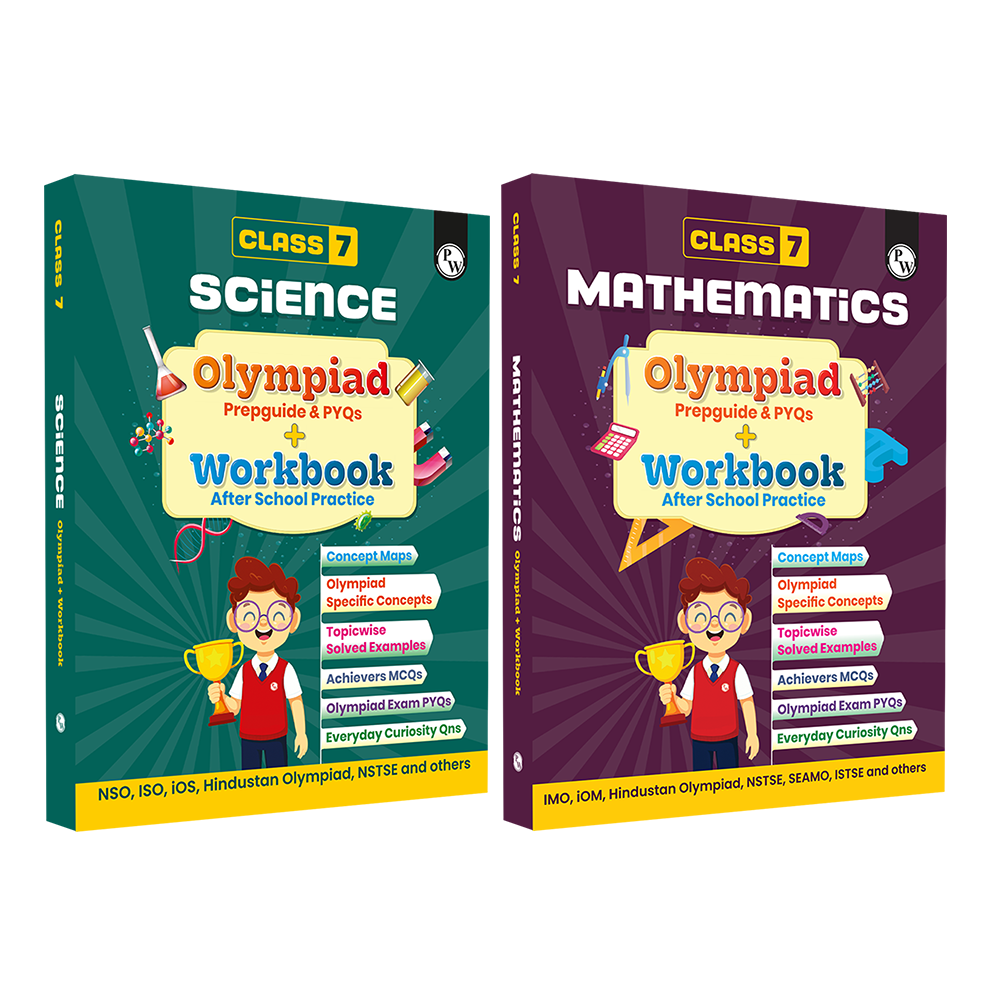
Olympiad Class 7 Maths & Science Book |
Olympiad Question Pattern FAQs
-
How long does the Olympiad exam last in total?
Most Olympiad tests take an hour to finish. You need to be attentive with your time so that you can answer all 35 or 50 questions in this time frame.
-
Are there penalties for wrong answers on the olympiad test?
There isn't usually any negative marking for primary lessons. But always read the precise instructions on your admit card or the official website.
-
What does the Olympiad paper pattern say about the Achievers Section?
The Achievers Section has hard questions that evaluate how well you can apply advanced concepts. These questions are harder, but they are worth more points than standard ones.
-
How many parts does the class 1 olympiad exam have?
Most of the time, the paper is split into three or four parts: Logical Reasoning, Mathematical/Science Reasoning, Everyday Science/Math, and the Achievers Section.
-
Is the Olympiad test different from the school test?
Yes, they are. The course is comparable, but Olympiad questions are multiple choice and focus on reasoning and application instead than direct theory.