CBSE Class 12 Chemistry PYQ 2026: Important Questions & Tips

By the middle of the academic session, subjects often start feeling heavier than they did in the beginning. A few chapters are already completed, new topics keep getting added, and revision of older chapters slowly gets delayed. The same happens in Chemistry, where formulas may start mixing up and organic reactions can feel difficult to remember.
Many students still feel unsure whether their preparation is moving in the right direction or not. This is where CBSE class 12 chemistry PYQ becomes helpful. Previous year questions can bring structure to mid-session preparation by showing what kind of questions are asked, which topics appear regularly, and how concepts are tested in the real exam.
Instead of only reading chapters repeatedly, previous year questions help turn preparation into active practice. They make it easier to identify weak areas, improve answer writing, and revise with more clarity as the session moves ahead.
Check out: CBSE Class 12 Books
Why CBSE Class 12 Chemistry PYQ Is Important for Preparation?
Using CBSE class 12 chemistry PYQ gives a better idea of the actual board paper. Instead of guessing which chapter may carry more focus, you can observe patterns through real exam questions. This saves time and provides a smarter revision.
Another reason PYQs matter is confidence. Many learners feel nervous when they solve board-level questions for the first time. But when previous year papers become part of the routine, the exam format starts feeling familiar.
Benefits of Solving PYQs
-
Understand question style and marking pattern
-
Identify important and repeated topics
-
Improve speed in solving numericals
-
Learn answer writing for theory questions
-
Build confidence through regular practice
-
Track weak chapters and difficult concepts
-
Prepare better for school tests and pre-boards
CBSE Class 12 Chemistry PYQ Chapter-Wise Focus Areas
A chapter-wise plan is one of the best ways to use CBSE class 12 chemistry PYQ. It helps in completing the syllabus in smaller steps and gives clear revision targets.
CBSE Class 12 Chemistry PYQ for Physical Chemistry
Physical Chemistry often needs formula clarity and stepwise solving. PYQs from this section usually focus on numericals and concept application.
Important areas include:
-
Solutions and concentration terms
-
Colligative properties
-
Electrochemistry numericals
-
Nernst equation
-
Chemical kinetics graphs
-
Surface chemistry basics
Practice these regularly because repeated solving improves speed and accuracy.
CBSE Class 12 Chemistry PYQ for Organic Chemistry
Organic Chemistry becomes easier when reactions are revised consistently. PYQs help learners understand which conversions and mechanisms are commonly asked.
Important areas include:
-
Haloalkanes and Haloarenes
-
Alcohols, Phenols and Ethers
-
Aldehydes, Ketones and Carboxylic Acids
-
Amines reactions
-
Biomolecules definitions
-
Named reactions and conversions
While solving Organic PYQs, focus on reagents, product formation, and balanced reactions.
CBSE Class 12 Chemistry PYQ for Inorganic Chemistry
Inorganic Chemistry often depends on NCERT-based facts, trends, and explanation questions. PYQs are useful for noticing which theory topics appear frequently.
Important areas include:
-
d and f block trends
-
Coordination compounds
-
p block reactions
-
Metallurgy concepts
-
IUPAC naming
-
Isomerism in complexes
Check Out: Class 12th PYQs
How to Use CBSE Class 12 Chemistry PYQ?
Many learners collect PYQs but do not use them properly. A simple routine can make CBSE class 12 chemistry PYQ more effective.
Suggested Daily Routine
-
Study one topic from NCERT or notes
-
Solve 5 to 10 PYQs from the same chapter
-
Mark wrong answers
-
Revise formulas and reactions separately
-
Re-attempt mistakes after two days
-
Keep one day weekly for mixed revision
This method helps in connecting theory learning with exam-style practice.
Check Out: Class 12 Question Banks
CBSE Class 12 Chemistry PYQ Question Types You May Notice
Regular practice of CBSE class 12 chemistry PYQ helps in understanding the types of questions commonly asked.
1. Very Short Questions
-
Definitions
-
One-line concepts
-
Formula names
-
Reason-based answers
2. Short Answer Questions
-
Difference between concepts
-
Numerical with steps
-
Reaction completion
3. Long Answer Questions
-
Detailed mechanisms
-
Derivations
-
Concept explanation with examples
4. Case-Based Questions
-
Data interpretation
-
Concept application
-
Mixed chapter understanding
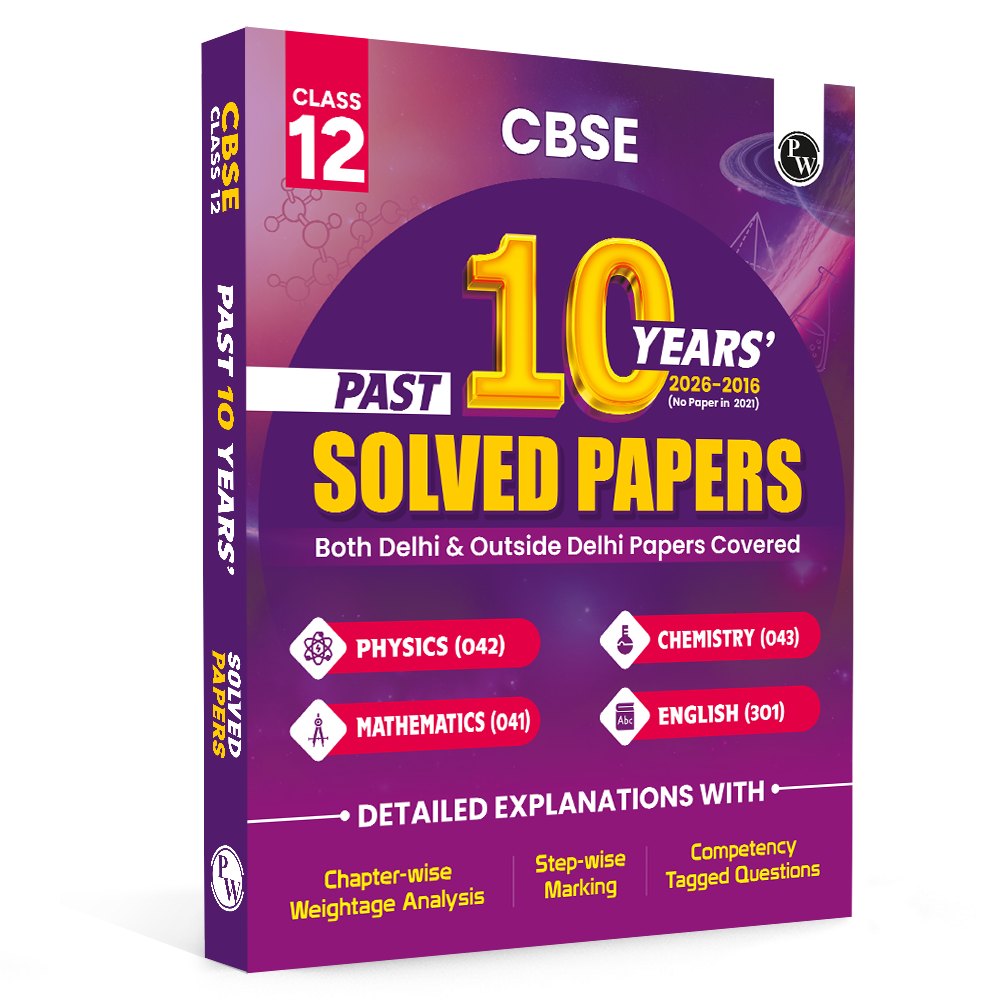
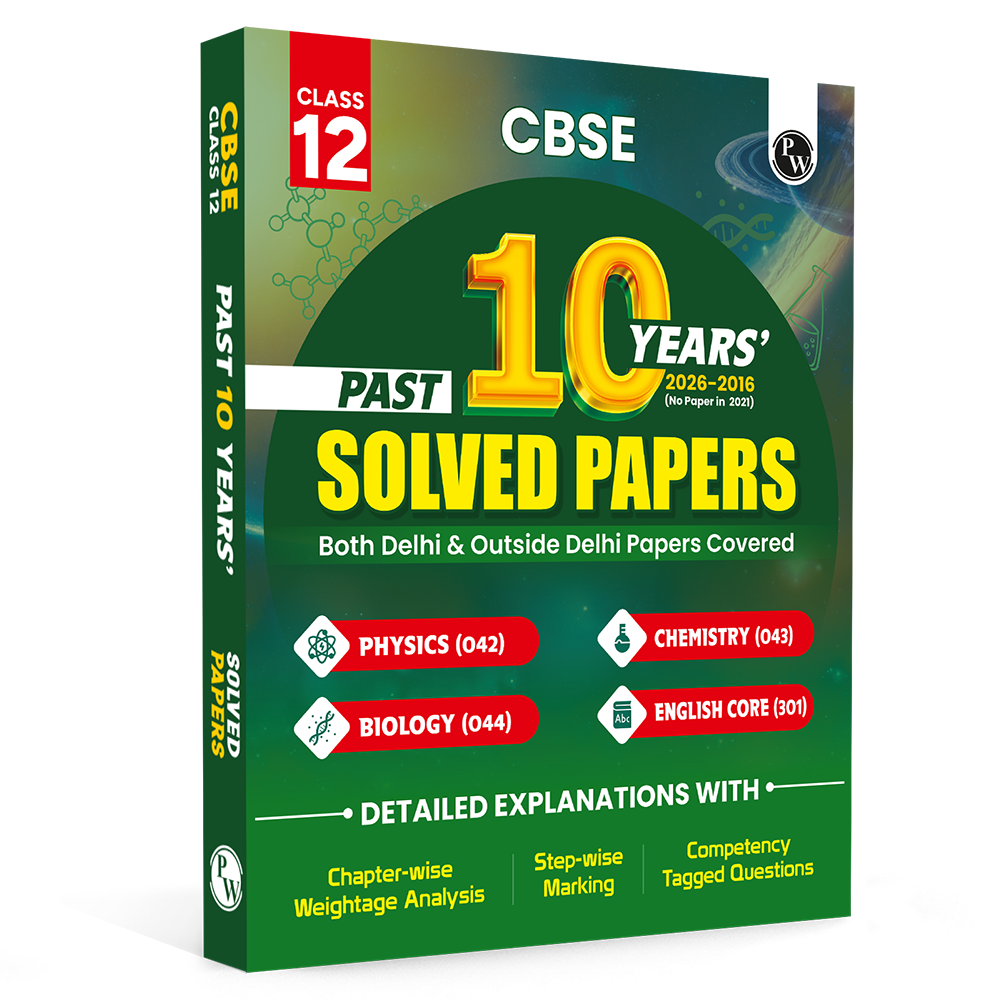
PW CBSE Class 12 PYQs
PW CBSE Class 12 PYQs help students prepare easily for exams. They include previous year questions with answers, so you can understand important topics and exam pattern. Solving them improves speed and accuracy. Regular practice also helps in revision and makes you more confident to score good marks in board exams.
| Products | Links |
| CBSE Class 12 PYQs - Physics, Chemistry, Maths, English | Link |
| CBSE Class 12 PYQs - Physics, Chemistry, Biology, English | Link |
Common Mistakes While Solving CBSE Class 12 Chemistry PYQ
Many students solve chemistry PYQ, but still do not improve because repeated mistakes continue during practice. Avoid these common habits:
-
Solving without a timer – This affects speed and time management in the real exam and creates a false sense of readiness.
-
Looking at answers too quickly – It weakens thinking ability and reduces confidence in solving independently.
-
Ignoring NCERT and weak chapters – Important marks can be lost from basic and scoring topics.
-
Memorising without understanding – Concepts become confusing when questions are twisted.
-
Not revising mistakes – The same errors keep repeating in every test.
-
Leaving numericals unfinished or writing untidy reactions – Presentation mistakes can reduce marks.
Correcting these habits can steadily improve confidence, accuracy, and overall performance in exams.
CBSE Class 12 Chemistry PYQ Tips for Better Preparation
Using CBSE class 12 chemistry PYQ with a smart strategy can make revision smoother and more productive. Follow these useful tips:
-
Keep separate notes for formulas so revision becomes faster before exams.
-
Make a reaction chart for Organic Chemistry to remember conversions easily.
-
Highlight repeated PYQs chapter-wise to understand important patterns.
-
Revise Inorganic Chemistry from NCERT lines because direct questions are common.
-
Solve one timed paper regularly to improve speed, accuracy, and confidence.
-
Maintain an error notebook to track weak areas and improve steadily.
Read More: CBSE Class 12 Chemistry Syllabus 2026-27
CBSE Class 12 Chemistry PYQ 2026 FAQs
Is CBSE class 12 chemistry PYQ useful during the school session?
Yes, CBSE class 12 chemistry PYQ can be useful during the school session because it helps connect chapter learning with actual board-style questions. It also gives a clearer understanding of important topics while the syllabus is still being completed.
How many years of CBSE chemistry PYQ class 12 should be solved?
Usually, solving the last 5 to 10 years of CBSE chemistry PYQ class 12 papers can give a practical understanding of question trends, repeated concepts, chapter weightage, and changing paper patterns over time.
Can CBSE class 12 PYQ chemistry help in numericals?
Yes, CBSE class 12 PYQ chemistry can be helpful for numericals, especially in Physical Chemistry chapters such as electrochemistry, solutions, and chemical kinetics, where regular practice improves both speed and accuracy.
Is CBSE PYQ chemistry class 12 enough without NCERT?
CBSE PYQ chemistry class 12 is helpful for practice, but NCERT remains important for theory, textbook examples, reactions, definitions, and concept clarity. PYQs and NCERT together usually create a more balanced preparation strategy.
How often should chemistry PYQ class 12 CBSE be practiced?
Chemistry PYQ class 12 CBSE can be practiced weekly chapter-wise during the session. Along with that, timed full-paper practice once in a while can help improve consistency and confidence.
Which section benefits most from PYQ practice?
All sections of Chemistry benefit from PYQ practice. However, Physical Chemistry often improves through numerical repetition, while Organic Chemistry becomes stronger through regular reaction and conversion practice.