CBSE Class 12 Chemistry Weightage 2026 Exam
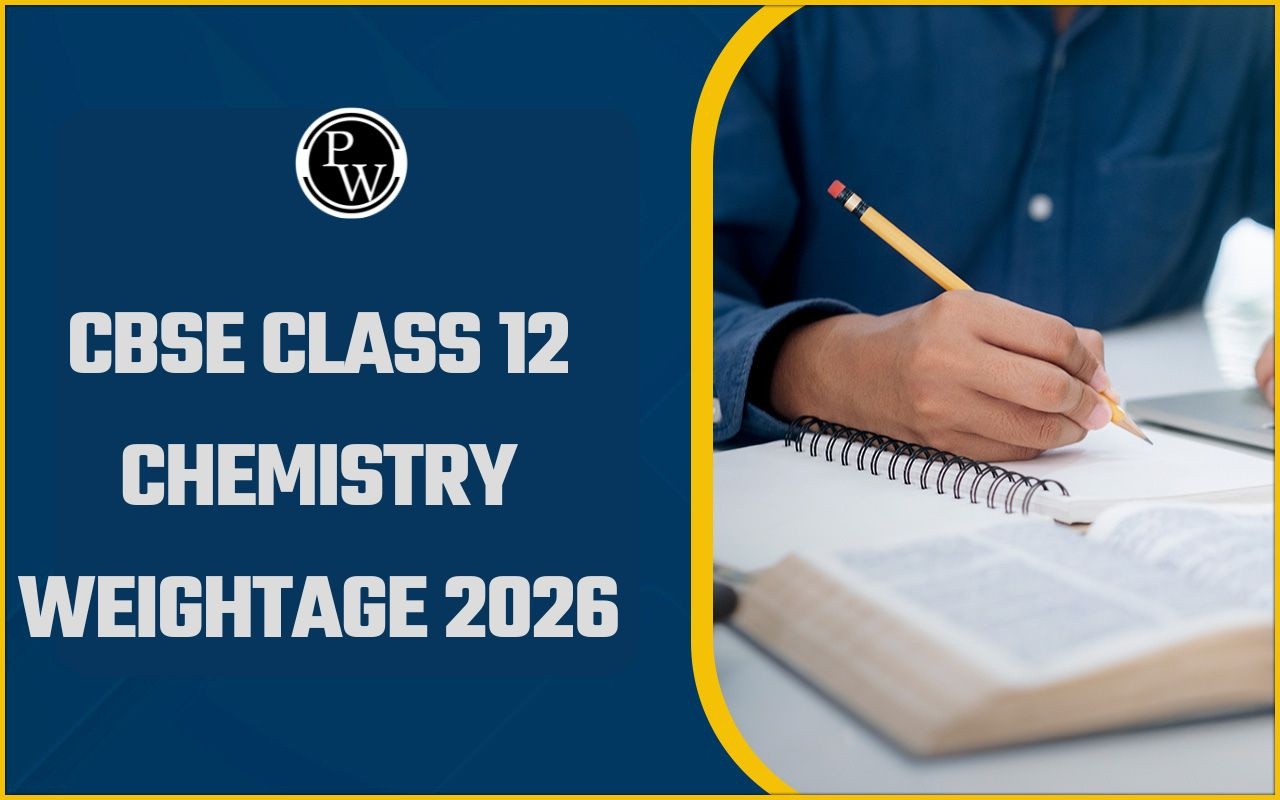
CBSE Class 12 Chemistry Weightage 2026 helps students clearly understand how marks are distributed across all the chapters in the board exam. When students know which chapters carry more marks, they can plan their preparation in a smarter way. Chapters such as Electrochemistry, Chemical Kinetics, Aldehydes, Ketones and Carboxylic Acids, Biomolecules, and Coordination Compounds usually have higher weightage and require more revision.
By referring to the CBSE Class 12 Chemistry Chapter-Wise Weightage 2025–26, students can identify the most important topics, make a strong revision strategy, and improve their chances of scoring well in both the theory and practical exams. Chemistry is a combination of conceptual understanding, reactions, mechanisms, and experiments. Therefore, knowing the weightage helps in managing time wisely for each chapter.
Check Out: CBSE Class 12 Books
CBSE Class 12 Chemistry Weightage
The Class 12 Chemistry exam checks a student's understanding of concepts, ability to apply principles, knowledge of reactions, and practical skills. Students must prepare well for both the 70-mark theory exam and the 30-mark practical exam.
Below is a quick overview that summarises how the marks are divided:
|
CBSE Class 12 Chemistry Weightage 2026 |
||
|
Component |
Marks |
Overview |
|
Theory Exam |
70 |
Covers all Chemistry chapters including numericals, reactions and concepts |
|
Practical Exam |
30 |
Includes experiments, activities and viva |
|
Total |
100 |
Balanced focus on theory and practical knowledge |
The theory exam includes MCQs, short answer questions, reasoning-based questions, and long answer questions. The practical exam checks how well students perform experiments, write observations, analyze results, and answer viva questions.
Check Out: Class 12 Sample Papers
Chapter-Wise Weightage CBSE Class 12 Chemistry 2025–26
The chapter-wise weightage gives a clear picture of how marks are distributed across units in Chemistry. Students can use this table to determine which chapters need more focus and which require regular revision.
|
CBSE Class 12 Chemistry Chapter-wise Weightage 2026 |
|
|
Unit/Chapter |
Marks |
|
Solutions |
7 |
|
Electrochemistry |
9 |
|
Chemical Kinetics |
7 |
|
d- and f-Block Elements |
7 |
|
Coordination Compounds |
7 |
|
Haloalkanes and Haloarenes |
6 |
|
Alcohols, Phenols and Ethers |
6 |
|
Aldehydes, Ketones and Carboxylic Acids |
8 |
|
Amines |
6 |
|
Biomolecules |
7 |
|
Total |
70 |
From the above table, it’s clear that Electrochemistry, Aldehydes, Ketones and Carboxylic Acids, and Chemical Kinetics are high-weightage chapters and must be revised multiple times. Organic Chemistry chapters also have significant marks and require conceptual clarity along with reaction practice.
CBSE Class 12 Chemistry Board Weightage for Practical Exam
The Chemistry practical exam is a crucial part of the board examination. It checks a student's ability to perform experiments, record observations, and explain concepts during viva. Understanding the practical exam weightage helps students prepare each component with the right focus.
|
CBSE Class 12 Chemistry Practical Weightage 2026 |
|
|
Evaluation Scheme |
Marks |
|
Volumetric Analysis |
8 |
|
Salt Analysis |
8 |
|
Content Based Experiment |
6 |
|
Project Work |
4 |
|
Class Record and Viva |
4 |
|
Total |
30 |
Each part requires thorough preparation. Students should practice titration (volumetric analysis), salt analysis steps, and content-based experiments regularly to score well. Keeping an organised practical file also helps in securing full marks.
Check Out: Class 12 Question Banks
Class 12th Chemistry Board Exam 2026 Preparation Tips
Scoring well in CBSE Class 12 Chemistry becomes much easier when students follow a structured preparation plan. Below are some simple and effective tips that will help you prepare confidently.
1. Know the Syllabus & Weightage
Begin by checking the updated CBSE Class 12 Chemistry syllabus and chapter-wise weightage. This helps in setting priorities and planning your study time wisely.
2. Focus on NCERT
NCERT is the most important book for Chemistry. Most board questions come directly from it. Read each chapter line by line and revise in-text and exercise questions.
3. Use CBSE Class 12 Sample Papers
Practice PW CBSE Class 12 Chemistry sample papers to understand the latest exam pattern, marking scheme, and level of questions.
4. Practice Previous Year Papers
CBSE Class 12 Previous year papers help students recognise commonly asked concepts and question patterns. They also build exam confidence.
5. Revise with Class 12 Chemistry Notes
Short and clear revision notes make it easy to revise reactions, formulas, and mechanisms quickly without reading entire chapters.
6. Make Reaction Sheets
Create a dedicated sheet for important reactions, reagents, and conversions. Revising this sheet regularly helps in mastering Organic Chemistry.
7. Strengthen Numericals
Practice numericals from chapters like Solutions, Electrochemistry, and Chemical Kinetics. Numericals often carry straightforward marks if practiced properly.
8. Understand Mechanisms
Instead of memorising reactions, understand the mechanisms behind them. This makes Organic Chemistry easier and more logical.
9. Revise Practical Experiments
Go through the procedure, theory, precautions, and observations of each experiment. Practical exam preparation boosts your chances of scoring full marks.
10. Take Mock Tests
Timed mock tests help improve writing speed, time management, and accuracy. They also help identify weak areas that need more revision.
Read More: CBSE Class 12 Chemistry Chapter-Wise PYQs
CBSE Class 12 Sample Paper for 2025-26 Exam
|
CBSE Class 12 Sample Papers for 2025-26 Exams |
|
|
CBSE 12 Sample Papers Class 12 Combo Set of 4 Books For 2026 Board Exam |
|
|
CBSE Class 12 Sample Papers for Science |
|
|
CBSE Class 12 Sample Papers for Commerce |
|
|
CBSE Class 12 Sample Papers for Humanities |
|
CBSE Class 12 Chemistry Weightage FAQs
1. What is the chapter-wise weightage for CBSE Class 12 Chemistry 2026?
CBSE divides marks across Physical, Organic, and Inorganic Chemistry. High-weightage chapters include Electrochemistry, Chemical Kinetics, p-Block, and important Organic Chemistry units.
2. Why should students check Chemistry chapter-wise weightage?
Knowing the weightage helps students focus on key chapters, plan revision efficiently, and use study time more effectively.
3. Does the Chemistry weightage change every year?
The structure remains mostly the same each year, though minor updates may happen based on syllabus changes.
4. Which units have the highest weightage in Class 12 Chemistry?
Chapters like Electrochemistry, Chemical Kinetics, d- and f-Block Elements, and Organic Chemistry units often have higher weightage.
5. How does understanding weightage help in scoring better?
It helps students set priorities, revise important chapters more frequently, and score better in both theory and practical exams.