CBSE Class 9 Science Notes Chapter 15 Improvement in Food Resources
CBSE Class 9 Science Chapter 15 Notes explain the topic Improvement in Food Resources, which focuses on how food is produced and how it can be improved to meet the needs of a growing population. These class 9 science chapter 15 notes help students understand why food is essential for all living organisms and how it provides important nutrients such as carbohydrates, proteins, fats, vitamins, and minerals needed for growth and energy.
In class 9 science ch 15 notes, students learn about the sources of food, including plants and animals, and the methods used to increase food production. Agriculture and animal husbandry play a key role in providing food. The class 9 improvement in food resources notes also explain how better farming practices can improve both the quality and quantity of food produced.
The NCERT Class 9th Science Chapter 15 notes cover important topics like crop variety improvement, crop production management, crop protection, and animal husbandry. These areas help farmers grow healthy crops and rear animals efficiently. The chapter highlights the importance of using scientific methods to increase crop yield without harming the environment.
In class 9 science chapter improvement in food resources notes, students also learn about sustainable agricultural practices such as mixed farming, intercropping, and integrated farming systems. These methods help maintain soil fertility and reduce the overuse of natural resources.
Overall, chapter 15 science class 9 notes are important for understanding how food resources can be improved in a balanced and eco-friendly way. These notes are useful for exam preparation as they simplify concepts and help students revise key points effectively. The NCERT Class 9 Science Chapter 15 notes provide a strong foundation for understanding agriculture and food security.
Check Out: Class 9th Books
CBSE Class 9 Science Notes Chapter 15
Food
All of the fundamental needs for healthy growth, development, and well-being are met by food. All nutrients, including proteins, lipids, carbs, vitamins, and minerals, are found in food.
Agriculture
Agriculture is the science or art of farming, which includes tilling the land, cultivating crops, and raising livestock to produce meat, wool, and other goods.
Sources of Carbohydrates
Carbohydrates can be found in different forms, such as sugars, fresh fruits, starch, vegetables, cereals, corn, potatoes, fibers, bread, pastries, milk, and milk products.
Sources of Fats
Many foods, including butter, cheese, cream, and oilseeds like soybeans and groundnuts, naturally contain fats.
Sources of Vitamins and Minerals
The primary food sources of vitamins and minerals are fruits and vegetables. Fish and pork can also provide some of the vitamins.
Sources of Protein
The most popular foods that are higher in protein include cottage cheese, Greek yogurt, milk, broccoli, quinoa, soybeans, shellfish, almonds, poultry, eggs, and oats.
Fodder Crops
Fodder crops like berseem, oats, or sudangrass are raised as food for the livestock.
Kharif Crops
Kharif crops are those that are cultivated from June to October, during the monsoon season. Kharif crops include black gram, cotton, green gram, soybean, maize, paddy, and pigeon pea.
Rabi Crops
Rabi crops are those that are grown in the winter, from October to March. Rabi crops include wheat, gram, peas, mustard, and linseed.
Crop Variety Improvement
Crop strains or varieties can be chosen through breeding based on several beneficial traits, including high yields, resistance to disease, and sensitivity to fertilizers. We refer to this as crop variety enhancement.
Hybridization
Hybridization refers to crossing between genetically dissimilar plants.
Intervarietal Hybridisation
It is a cross between the two same species but with different varieties.
Interspecific Hybridisation
It is a cross between two different species but the same genera.
Intergeneric Hybridisation
It is a cross between the two intergeneric hybridizations belonging to different genera.
Genetically Modified Crops
Genetically modified crops are created when a desired gene is inserted into the genome of a crop. Golden rice, Bt cotton, Bt brinjal, and other crops are examples of genetically modified, or GM, crops.
Factors for Which a Variety of Improvements Is Done
There are several reasons why different improved varieties of crops are generated. The reasons include the following.
- Higher yield.
- Improved quality.
- Maturity duration.
- Wider adaptability.
- Biotic and abiotic resistance.
- Desirable agronomic characteristics.
Check Out: Class 9th Sample Papers
Crop Production Improvement
Managing agricultural production is the process of cultivating and harvesting crops efficiently.
Nutrient Management
Nutrients are found in soil, water, and air for plants. Plants require sixteen different nutrients to survive. Carbon and oxygen are supplied by air, hydrogen is obtained from water, and plants receive the remaining thirteen nutrients from the soil. The process of managing nutrients involves adding manures and fertilizers to the soil to provide it with the necessary nutrients.
Macronutrients
Six of the thirteen basic nutrients are abundantly needed for the growth and development of plants. Together, these vital nutrients are referred to as macronutrients. The macronutrients that plants need include nitrogen (N), phosphorus (P), potassium (K), calcium (Ca), sulfur (S), and magnesium.
Micronutrients
Six of the thirteen necessary nutrients are categorized as macronutrients, and the remaining seven as micronutrients. Iron (Fe), boron (B), chlorine (Cl), manganese (Mn), zinc (Zn), copper (Cu), and molybdenum (Mo) are some of these nutrients. They are also known as trace minerals since they are needed in extremely small amounts.
Manure
Manure is an organic material made from the solid wastes of people and animals, as well as from sludge, sewage, domestic trash, dead plants and animals that have decomposed, and other plant wastes such as weeds, dry leaves, and twigs. It has an enormous amount of nutrients, which enhance the quality of the soil and raise the yield of nutritious crops.
Compost and Vermicompost
Composting is the process by which biological waste material breaks down in pits. Vermicompost is the term for compost that is made with earthworms to speed up the process.
Green Manure
Some plants, like sun hemp or guar, are cultivated and then mulched by plowing them into the soil before the crop seeds are sown. As a result, these green plants produce green manure, which improves the nutrient content of the soil.
Fertilizers
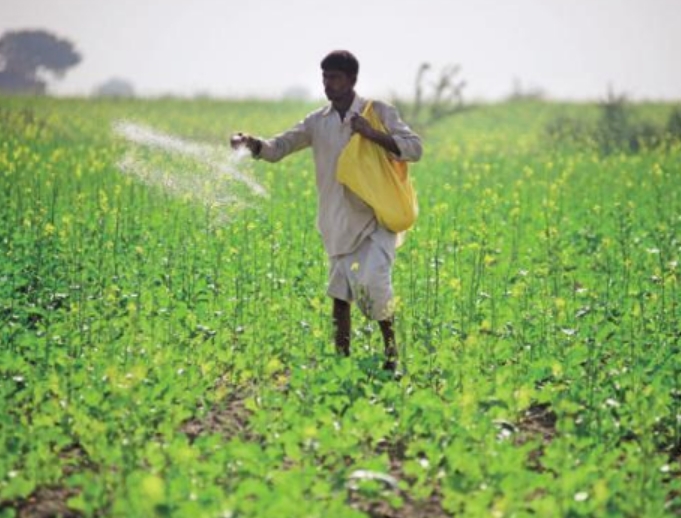 Commercially produced plant nutrients that are needed in small amounts are called fertilizers. This fertilizer comes in several brands on the market. The most used type of fertilizer is NPK fertilizer, which supplies potassium, phosphorus, and nitrogen.
Organic Farming
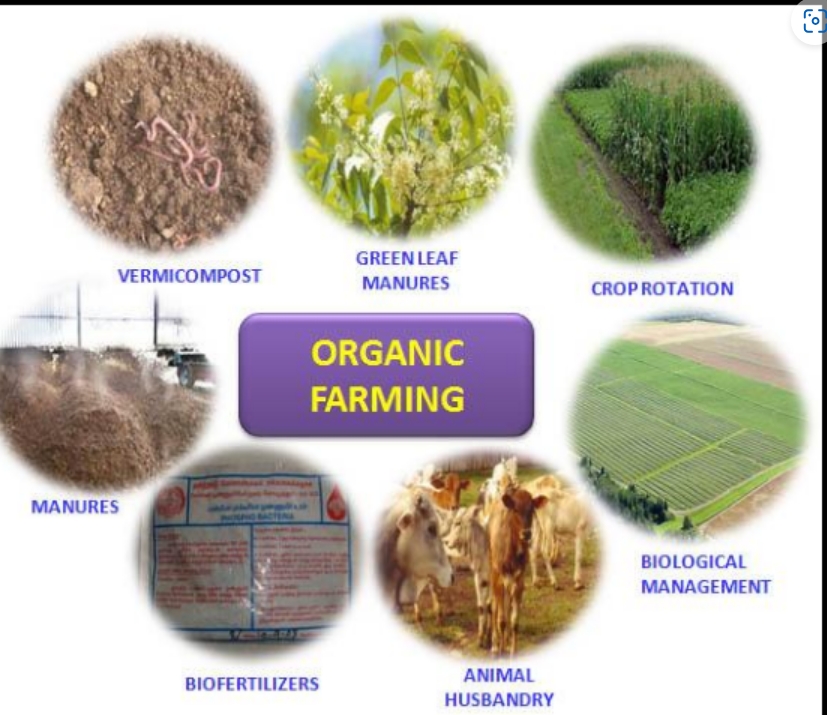 Organic farming involves using as much organic manure as possible in place of as little or no chemical fertilizer. For the highest, chemical-free yield, every resource is utilized to its fullest potential.
Irrigation
Applying artificial water to crops to meet their water needs is known as irrigation. A variety of irrigation techniques are used to increase crop productivity. This procedure aids in making sure the crops receive water at the appropriate times. i.e., during their growing season, which contributes to raising crop yield expectations. Watersheds, canals, wells, river lift systems, tanks, and rainwater collection all aid in irrigation.
Cropping Pattern
The percentage of area used for different crops is referred to as the cropping pattern. There are three categories of cropping patterns: Intercropping is a cropping practice where two or more crops are grown in parallel on the same plot of land while following a predetermined row pattern. The productivity of the crops is increased by using this kind of cropping arrangement. Small farmers who are dependent on rainfall for increased production, therefore, follow it. Crop rotation is a cropping practice used to grow different crops in a prearranged succession on the same plot of land. The duration of the crops—one, two, and three years—is taken into consideration when choosing them. A cropping strategy known as "mixed cropping" involves growing two or more crops concurrently on the same plot of land. Farmers most frequently utilize this strategy because it lowers the possibility of a crop failing due to insufficient rainfall or unfavorable weather.
Check Out: Class 9th Question Banks
Crop Protection Management
Field crops need to be safeguarded against the numerous weeds, insects, pests, and illnesses that infest them.
Weeds
Weeds are unwanted plants in the cultivated field consuming all the soil nutrients, finally reducing the crop yield.
Protection Methods Against Weeds
To protect the crop against weeds, the following methods are employed.
- Preparing a good seedbed.
- Mechanical removal of weeds.
- Plant the seeds in a timely fashion.
Effects of Insects and Pests on Crops
Insect pests attack the plants in the following ways:
- They cut the root, stem, and leaves of the plants
- They suck the cell sap from various parts of the plant.
- They bore into stems and fruits, resulting in a reduction in yields.
Pesticides and Insecticides
Chemicals called pesticides and insecticides are used to eradicate pests and other insects that seriously harm both recently harvested and stored crops. These substances are poisonous by nature.
Fungi and Viruses
Disease-causing microorganisms that impact plants and recently harvested crops are fungi and viruses. These infections are devastating because they wipe out enormous agricultural enterprises. Tobacco mosaic virus, cauliflower mosaic virus, cucumber mosaic virus, and other viruses are examples of plant viruses. Fungi that cause disease include powdery mildew, stem rust, and leaf rust.
Herbicides and Fungicides
They are highly toxic chemicals that are used to kill fungi and unwanted vegetation.
Storage Losses
The freshly harvested food grains are kept in silos or other large storage spaces after harvest. However, the food grains are damaged because of pest attacks or flooding. We refer to this as storage loss.
Factors Affecting Storage Loss
It is the harm done to the system after harvest. Abiotic and biotic variables are among those influencing the storage loss. A handful of them are mentioned below: Biologic factors are storage losses brought on by living things including bacteria, fungi, mites, insects, and rodents. Abiotic factors of storage loss include losses brought on by non-living things, such as moisture content and storage location temperature.
Prevention and Control Measures for Storage Loss
Storage loss can be prevented by following certain protocols like
- Strict cleaning of the produce before storage.
- Fumigation using chemicals that can kill pests.
- Proper drying of the product first in sunlight and then in the shade.
Animal Husbandry
Animal husbandry is the farming and maintenance of animals for commercial purposes. Animals are raised for milk, meat, and eggs.
Cattle
Almost all farmers are cattle owners. Cattle are raised in India for milk and used as draught labor for agricultural tasks. The two primary species of animals that are raised are Bos indicus (cow) and Bos bubalis (buffalo). Exotic cow breeds like Brown Swiss and Jersey are raised for long lactation periods. Indian breeds raised for disease resistance and drought work include Red Sindhi and Sahiwal. India also raises a large number of hybrids.
Poultry Farming
A type of animal husbandry known as poultry farming is the raising of domestic poultry to produce eggs and chicken meat. Aseel, Busra Chittagong, and Ghagus are a few Indian poultry varieties. American breeds include the Rhode Island Red, Plymouth Rock Wyandotte, and New Hampshire. Other examples include:
- English breeds are Sussex, Cornish, red caps, etc.
- Mediterranean Classes such as leghorns’ white leghorns, Minorca, are more commonly reared.
- Layers are the egg-laying birds, and broilers are reared for meat.
Fishery
Fishing is the process of obtaining fish for human use. Fish is a staple food for those who live near the seaside and is an excellent source of protein. Fish can be found in freshwater, saltwater, and even estuaries. Aquaculture is the method of capturing fish. The various categories of fishing include:
- Marine Fisheries — Marine fishery deals with fishing in the oceans and seas. Apart from fish, it also deals with other seafood, such as prawns, lobsters, and crabs.
- Inland Fisheries — Inland fishery deals with fishing in rivers, lakes, and tanks. Rohu, Catla, Mrigal, Grass carp, etc., are very popular varieties of fish reared in freshwater.
Beekeeping
Apiculture, or beekeeping, is the raising of bees to produce honey and wax. This is now a significant agro-based business that pays well financially. Apis mellifera, Apis Adamson, and Apis cerena indica, popularly known as the Indian bee, are among the exotic kinds raised in India. Native to the area is also the Apis dorsata, or rock bee.
Check Out: Class 9th Revision Books
How to Use CBSE Class 9 Science Chapter 15 Notes
Read the NCERT Textbook First
Before referring to the notes, read the complete chapter once from the NCERT textbook. This helps you understand the basic ideas related to food resources, agriculture, and animal husbandry. While reading, focus on examples, tables, and diagrams to build clear concepts.
Learn Concepts Through the Notes
After the textbook, go through the Class 9 Science Chapter 15 notes carefully. The notes explain topics such as crop variety improvement, crop production management, crop protection, and animal husbandry in an easy way. Study one topic at a time and connect it with what you have already read.
Practice Questions Along with Notes
Once you understand a topic, use the notes to practice questions. Solving questions regularly helps you remember key points and write better answers. You can also practice short and long answer questions from CBSE sample papers.
Update Notes During Revision
If your teacher explains an extra point or you find an important fact while practicing, add it to your Improvement in Food Resources Class 9 notes. This makes your notes more complete and useful for final revision.
Revise Regularly
Revise the notes weekly to retain important terms and concepts. Before exams, read only the key points and definitions to save time.
Read More: CBSE Class 9 Sample Papers 2025-26 for All Subjects
CBSE Class 9 Science Chapter 15 Notes FAQs
1. What is Chapter 15 in Class 9 Science about?
Chapter 15, Improvement in Food Resources, explains how food is produced from plants and animals and how modern methods help increase food quantity and quality.
2. Why do we need to improve food resources?
Food resources need to be improved to meet the increasing demand of a growing population and to ensure food security for everyone.
3. What nutrients do we get from food?
Food provides nutrients such as carbohydrates, proteins, fats, vitamins, minerals, and water, which are essential for growth and energy.
4. What is the role of agriculture in food production?
Agriculture provides crops like cereals, pulses, fruits, and vegetables, which are the main sources of food for humans.
5. What is animal husbandry?
Animal husbandry involves the breeding, feeding, and care of animals to obtain products like milk, eggs, meat, and wool.