CBSE Important Questions for Class 10 Science Chapter 6 Life Processes

CBSE Important Questions for Class 10 Science Life Processes are very helpful while preparing for board examinations. Life Processes is one of the most important chapters in the Science syllabus. It covers the basic processes that help humans, plants, and animals survive. Through this chapter, you will be able to understand how your body functions and also how nature supports life.
Class 10th is a very important year because the marks scored in board exams decide which stream you can choose in Class 11. Many students find Science tough because it has lots of lengthy theories and diagrams. That’s why having important questions for Class 10 Science Life Processes can give you clarity on what to study.
Life Processes Class 10 Important Questions with Answers also improve conceptual clarity and teach students how to present answers according to the CBSE marking scheme. When combined with CBSE Class 10th Books, these resources help students strengthen fundamentals, revise efficiently, and maximise their scores in the board examination.
Topics Covered in Important Questions for Class 10 Science Life Processes
Important Questions for Class 10 Science Life Processes are given to cover all key topics included in Chapter 5. Also, these questions are based on the most asked topics that are highly expected to appear in the upcoming board exams. So, let’s quickly check the topics on which Life Processes important questions are based here:
Nutrition
Nutrition is the process by which living organisms get food and use it to get energy for their survival and growth. In this topic, you’ll learn about the following topics:
-
Autotrophic nutrition: Nutrition in organisms like green plants that make their own food using sunlight (photosynthesis).
-
Heterotrophic nutrition: Nutrition in animals and humans who depend on other organisms for food.
-
Holozoic nutrition: A type of heterotrophic nutrition where food is taken in, digested, and absorbed just like in humans.
-
Saprotrophic nutrition: Organisms like fungi absorb food from dead and decaying matter.
-
Parasitic nutrition: Nutrition in organisms that live on or inside another living body and take food from it (like leeches or tapeworms).
-
Photosynthesis: A process used by green plants to prepare food using sunlight, carbon dioxide, and water.
-
Nutrition in human beings: Understanding the digestive system and how food is broken down and absorbed in our bodies.
CBSE Class 10 Science Question Banks for chapter-wise practice, competency-based questions, previous year questions, NCERT-based exercises, and detailed solutions aligned with the latest CBSE syllabus. These question banks help strengthen conceptual understanding, improve problem-solving and answer-writing skills, and boost confidence for the CBSE Class 10 Science board examination.
Important Questions for Class 10 Science Life Processes From Nutrition
Ques. Identify the two components of phloem tissue that help in transportation of food in plants.
(a) Phloem parenchyma & sieve tubes
(b) Sieve tubes & companion cells
(c) Phloem parenchyma & companion cells
(d) Phloem fibres and sieve tubes
Ques. An organism which breaks down the food material outside the body and then absorbs it is:
(a) a plant parasite, Cuscuta
(b) an animal parasite, Tapeworm
(c) a bacteria, Rhizobium
(d) a fungi, Rhizopus
Ques. Which of the following equations is the summary of photosynthesis?
(a) 6CO2 + 12H2O → C6H12O6 + 6O2 + 6H2O
(b) 6CO2 + H2O + Sunlight → C6H12O6 + O2 + 6H2O
(c) 6CO2 + 12H2O + Chlorophyll + Sunlight → C6H12O6 + 6O2 + 6H2O
(d) 6CO2 + 12H2O + Chlorophyll + Sunlight → C6H12O6 + 6CO2 + 6H2O
Ques. Gastric juice is secreted by gastric glands and contains hydrochloric acid, mucus, and pepsin. Which activity will be affected in the absence of hydrochloric acid?
(a) Digestion of proteins
(b) Digestion of carbohydrates
(c) Digestion of lipids
(d) Digestion of starch
Ques. Patient X was suffering from a pancreatic condition due to which the pancreas was not functioning adequately. Which of the following is a doctor likely to suggest to such an individual?
(a) including a large amount of protein in the diet
(b) eating a diet with low-fat content
(c) eating only carbohydrates
(d) including only liquid foods
CBSE Class 10th Revision Books for quick chapter-wise revision, concise notes, important formulas, key concepts, competency-based questions, and exam-oriented practice. These revision books help strengthen conceptual understanding, improve retention, and boost confidence for the CBSE Class 10 board examinations.
Respiration
Respiration is the process by which our body takes oxygen from the air and uses it to break down food to get energy. This energy is needed by the cells to do different activities and keep the body working. Some important topics from this are:
-
Aerobic Respiration happens when food, like glucose, breaks down using oxygen. It gives carbon dioxide, water, and a lot of energy.
-
Anaerobic Respiration happens when there is no oxygen. Glucose breaks down into alcohol and carbon dioxide (in yeast) or into lactic acid (in our muscles), along with a little energy.
-
Diaphragm is a large, dome-shaped muscle at the bottom of the chest. It helps in breathing by moving up and down to allow air in and out of the lungs.
-
ATP (Adenosine Triphosphate) is the energy packet of the cell. All the work done inside the cell uses ATP.
-
Lactic Acid is made in our muscles during heavy exercise when there is not enough oxygen. It can make muscles feel tired or sore.
-
Alveoli are tiny air sacs in the lungs. They help in the exchange of gases, like oxygen going into the blood and carbon dioxide coming out.
-
Haemoglobin is a protein in red blood cells that carries oxygen from the lungs to the rest of the body and brings back carbon dioxide to the lungs.
Life Processes Class 10 Important Questions with Answers From Respiration
Ques. Have you noticed hiccups tend to occur more frequently after consuming large meals quickly? Why do you think it happens?
Ans. When you eat a big meal quickly, your stomach expands rapidly. This sudden expansion can press against your diaphragm, the muscle that helps you breathe, causing it to spasm and create hiccups as you inhale. It's like your body's quirky way of saying, "Slow down!"
Ques. All plants give out oxygen during the day and carbon dioxide during night. Do you agree with this statement? Give a reason.
Ans. During the daytime, as the rate of photosynthesis is more than the rate of respiration, the net result is the evolution of oxygen. At night, there is no photosynthesis, so plants give out carbon dioxide due to respiration.
Ques. What happens to the rate of breathing during vigorous exercise and why?
Ans. The rate of breathing increases during vigorous exercise to:
-
Obtain more oxygen for ATP production, providing instant energy.
-
Remove the body of extra CO₂ produced during cellular respiration.
Ques. (a) State the function of the trachea.
(b) Why do the walls of the trachea not collapse even when there is less air in it?
Ans. (a) Function of trachea: Serves as a passageway for air to enter and exit the lungs, facilitating respiration.
(b) The passage of the trachea is lined by C-shaped rings of cartilage, which provide structural support to the air passage and prevent it from collapsing.
Ques. In the experimental setup ‘CO₂ is released during respiration,’ if one forgets to keep the vial with KOH in the conical flask, how will the result vary? Give details.
Ans. If KOH is not placed in the vial within the conical flask:
-
CO₂ produced by respiration will not be absorbed.
-
No partial vacuum will be created in the conical flask.
-
Air pressure inside the flask will not be reduced.
-
Water level in the delivery tube will not rise.
Ques. Imagine you’re a tiny cell deep inside a large multicellular organism. Explain why depending solely on diffusion for oxygen may not be enough to keep you alive and functioning properly.
Ans. In a large multicellular organism, simple diffusion is inadequate for oxygen delivery due to:
-
Distance limitation: Diffusion is efficient only over short distances, insufficient for large multicellular organisms.
-
High demand: Active cells require a continuous oxygen supply that diffusion alone cannot meet.
-
Unequal distribution: Without a circulatory system, oxygen cannot be uniformly distributed to all cells, compromising cell function.
Transportation
Transportation is the process by which our body moves food, water, oxygen, and waste to different parts. This helps our organs work properly and keeps us healthy. Some important topics from this are:
-
Heart: The heart is a strong, muscular organ that pumps blood all over the body. It has four chambers: two atria (upper) and two ventricles (lower) that help in the proper flow of blood.
-
Pulmonary Artery: This blood vessel carries deoxygenated (oxygen-poor) blood from the right side of the heart to the lungs, where the blood gets oxygen.
-
Pulmonary Vein: This blood vessel brings oxygen-rich blood from the lungs back to the left side of the heart so it can be sent to the rest of the body.
-
Double Circulation: In humans, the blood passes through the heart two times in one complete cycle, once to the lungs and once to the body. This is called double circulation, and it helps in a better supply of oxygen.
-
Blood is a red fluid that carries oxygen, food, waste, and other things in our bodies. It is made up of plasma, red blood cells, white blood cells, and platelets.
-
Lymph: Lymph is a colorless fluid that helps fight infections and removes waste. It is part of the body’s immune system.
-
Blood Pressure is the force with which the heart pumps blood into the arteries. It has two values: systolic (high) and diastolic (low).
CBSE Class 10 Life Processes Important Questions From Transportation
Ques. Which of the following is not a mode of transportation?
(a) Ascent of sap
(b) Translocation
(c) Circulation
(d) Regulation
Ques. In which form is the food transported in plants?
(a) Starch
(b) Sucrose
(c) Fructose
(d) Glucose
Ques. Did you ever wonder how analyzing blood can determine if we are healthy, detect a multitude of infections, and detect or rule out various diseases and injuries?
Ans. Blood analysis can reveal health status, infections, diseases, and injuries by measuring components like cells, proteins, and sugars, indicating normal function or abnormalities linked to specific health issues.
Ques. You've likely noticed the small cuts or scratches stop bleeding after a few minutes? Why do you think that happens?
Ans. When we get a small cut, platelets in our blood quickly gather at the injury site, forming a plug that stops the bleeding. This process is known as clotting.
Ques. Why do arteries have thick and elastic walls, whereas veins have valves?
Ans. The blood emerges from the heart under high pressure and flows through arteries. Hence, to bear this pressure, the arteries have thick and elastic walls.
-
Veins have valves to ensure that the blood flows in one direction only.
Ques. (i) What is double circulation?
(ii) Why is the separation of the right side and the left side of the heart useful? How does it help birds and mammals?
Ans. (i) Double circulation involves the blood passing the heart twice in one complete cycle. It includes separate pulmonary and systemic circulation.
(ii) The separation of the right side and the left side of the heart is useful to:
-
Prevent mixing of oxygenated and deoxygenated blood
-
Allows a highly efficient supply of oxygen to the body.
-
This separation is useful in birds and mammals as they:
-
Have high energy needs
-
Need to maintain their body temperature
Ques. What are the components of the transport system in highly organized plants?
Ans. In highly organized plants, the transport system consists of specialized tissues designed to transport materials efficiently throughout the plant body.
-
Xylem: This tissue transports water and dissolved minerals from the roots to various parts of the plant, driven by transpiration pull and root pressure.
-
Phloem: Responsible for transporting organic nutrients, particularly sucrose, from the photosynthetic parts of the plant to other parts.
CBSE Class 10 Science Previous Year Papers to practise authentic board exam questions, understand the latest CBSE exam pattern, and identify high-weightage topics. With detailed solutions and exam-oriented practice, these PYQs help strengthen conceptual understanding, improve problem-solving and answer-writing skills, and build confidence for the CBSE Class 10 Science board examination.
Excretion
Excretion is the process by which our body removes waste materials that are made during different activities inside our cells. These waste materials are harmful if they stay in the body for too long, so they need to be thrown out. Our excretory system does this job. Some important topics from this are:
-
Kidneys are two bean-shaped organs that remove urea, excess water, and salts from the blood. They make urine, which is sent to the bladder and then out of the body.
-
Nephrons are tiny filtering units inside the kidneys. Each kidney has around one million nephrons that help clean the blood.
-
Ureters are thin tubes that carry urine from the kidneys to the bladder.
-
Urinary Bladder is a bag-like organ that stores urine before it is passed out of the body.
-
Urethra is the tube through which urine leaves the body from the bladder.
-
Lungs also help in excretion by removing carbon dioxide and water vapour when we breathe out.
-
Skin removes waste in the form of sweat. Sweat contains water, salts, and some waste materials.
-
Liver changes harmful substances into harmless ones and also makes urea, which the kidneys remove.
Life Processes Important Questions With Answers From Excretion
Ques. How do individuals with kidney failure continue to live, and what role does dialysis play in their survival? Is dialysis a permanent solution?
Ans. Individuals with kidney failure survive through dialysis, which performs the kidneys' filtering functions to remove waste from the blood. While dialysis is life-saving, it's not a permanent cure; it's a treatment that requires ongoing sessions to maintain health.
Ques. What is the purpose of making urine in the human body? Name the organs that store and release the urine.
Ans. Purpose: To filter out nitrogenous waste products like urea and uric acid from the blood in humans.
-
Organ for storage: Urinary Bladder
-
Organ for release: Urethra
Ques. List two major steps involved in the formation of urine and state in brief their functions.
Ans. In the formation of urine, the two major steps include: Filtration and reabsorption.
Filtration:
-
Occurs in glomeruli and Bowman’s capsule. (1/2 M)
-
Filters excess fluid and waste products out of the blood into the urine. (1/2 M)
Reabsorption:
-
Essential substances such as glucose, amino acids, salts, and significant amounts of water are reabsorbed in the nephron tubules.
Ques. How do leaves of plants help in excretion?
Ans. Leaves help in excretion in the following ways:
-
Removal of extra water by transpiration through stomata.
-
Removal of CO₂ and O₂ from the stomatal aperture of leaves during respiration and photosynthesis.
-
Plants shed leaves to expel accumulated excretory products.
Ques. Describe the process of urine formation in kidneys.
Ans. Urine formation in kidneys involves three main processes: Filtration, Reabsorption, and Secretion.
-
Filtration: Initially, blood is filtered in the nephron, specifically in the Bowman's capsule, where water and solutes are forced out of the blood.
-
Reabsorption: The filtrate then travels through the renal tubules, where essential nutrients, water, and ions are reabsorbed back into the blood, based on the body's requirements.
-
Secretion: Lastly, certain substances such as ions, toxins, and drugs are actively secreted into the tubule from the blood, completing the process of urine formation.
-
The final urine, containing wastes and excess water, is transported by the ureter to the bladder for storage until it is released by the urethra.
Class 10 Science Life Processes Extra Questions
Now that you have learned about the important topics from the chapter and some questions based on them, let's take a look at a few extra questions. These class 10 Science Life Processes extra questions will help you understand the concepts better, so that you can write answers for different types of questions that may come in the exam.
Ques. The length of the small intestine in a deer is more as compared to the length of the small intestine of a tiger. The reason for this is
(Un) (CBSE, 2022 Term I)
(a) Mode of intake of food.
(b) Type of food consumed.
(c) Presence or absence of villi in intestines.
(d) Presence or absence of digestive enzymes.
Ques. Which of the following statement(s) is (are) true about the human heart? (Un) (CBSE, 2024)
(A) Right atrium receives oxygenated blood from lungs through pulmonary artery.
(B) Left atrium transfers oxygenated blood to left ventricle which sends it to various parts of the body.
(C) Right atrium receives deoxygenated blood through vena cava from upper and lower body.
(D) Left atrium transfers oxygenated blood to aorta which sends it to different parts of the body.
(a) (A)
(b) (A) and (D)
(c) (B) and (C)
(d) (B) and (D)
Ques. Consider the following statements about the small intestine and select the one which is NOT correct: (An) (CBSE 2023)
(a) The length of the small intestine in animals differs, as it depends on the type of food they eat.
(b) The small intestine is the site of complete digestion of food.
(c) The small intestine receives secretions from the liver and pancreas.
(d) The villi of the small intestine absorb water from the unabsorbed food before it gets removed from the body via the anus.
Ques. What will happen if mucus is not secreted by the gastric glands? (Un) (NCERT Exemplar)
Ques. Amount of urine produced generally decreases in summers as compared to other seasons if we don't keep ourselves sufficiently hydrated. Justify. (Ap) (CBSE, APQ, 2023)
Ques. In each of the following situations, what happens to the rate of photosynthesis? (Un) (NCERT Exemplar)
(a) Cloudy days
(b) No rainfall in the area
(c) Good manuring in the area
(d) Stomata get blocked due to dust.
Ques. Give reasons for the following:
(a) (i) Alveoli in the lungs are richly supplied with blood capillaries.
(ii) Respiratory pigment in the blood takes up oxygen and not carbon dioxide.
(iii) During anaerobic respiration, a 3-carbon molecule is formed as an end product instead of CO₂ in human beings. (Un) (CBSE, 2024)
OR
(b) (i) Name the movements that occur all along the gut in the human digestive system. How do they help in digestion?
(ii) Where is bile juice stored in the human body? List two roles of bile juice. (Re) (CBSE, 2024)
Life Processes Class 10 Important Questions with Answers PDF Download
All the above questions are important for Class 10 board exam preparation. To explore more such topic-wise and extra questions, you can access the Life Processes Class 10 Important Questions with Answers PDF download link given below.
Life Processes Class 10 Important Questions with Answers PDF Download Link
These Life Processes important questions cover all key topics like Nutrition, Respiration, Transportation, and Excretion in a simple way. Practicing them will help you understand the concepts better. You can use this CBSE Class 10 Life Processes Important Questions PDF as a quick revision guide before your exams.
Benefits of Class 10 Science Life Processes Extra Questions in Board Preparation
If studying for board exams makes you feel nervous and lost, using Class 10 Science Life Processes extra questions can make it manageable. These extra questions help you practice writing the answers for the important questions asked in the previous years' CBSE exams. Here are the reasons why these CBSE Important Questions for Class 10 Science Life Processes are vital:
-
Better Understanding: Solving extra questions helps you understand the topic deeply and resolves any confusion.
-
Revision Becomes Easy: These Life Processes important questions cover all key topics. So, while revising, you don’t need to read the whole chapter again.
-
Boosts Confidence: Practicing different types of questions makes you more confident to face the real exam.
-
Improves Answer Writing Skills: You learn how to write neat, short, and correct answers as per the exam pattern.
How to Use CBSE Class 10 Life Processes Important Questions PDF to Score Well
The Class 10 Life Processes Important Questions PDF by PW is designed to help you study wisely for your board exams. It’s not just a list of questions but complete study material for chapter 5 that covers everything important. Here’s how you can make the most of CBSE Important Questions for Class 10 Science Life Processes PDF to score better:
-
Topic-wise 1 Mark Questions: It includes important short questions from each key concept from the chapter that are generally asked in exams.
-
Real-life Application-Based Questions: After each topic, you’ll find simple real-life questions that help you understand the concept better and apply it.
-
Myth Busters Section: Clears common doubts and confusion students usually have about the chapter.
-
Plenty of MCQs: Multiple-choice questions help you practice for the objective section and improve your speed and accuracy.
-
Assertion & Reasoning Questions: These help sharpen your logic and prepare you for tricky questions asked in recent CBSE exams and further competitive entrance exams.
-
Previous Year CBSE Questions with Answers: Gives you a clear idea of what kind of questions are actually asked and how to answer them.
-
Marking Scheme Explained: Shows how marks are given step-by-step in answers so you can write in the correct format.
-
Covers All Question Types: From short and long answers to NCERT Exemplar questions, it covers all with solutions, making your revision complete.
Important Questions for Class 10 Science Life Processes PDF is a complete resource that boosts your board exam preparation in a smart, structured, and exam-ready way.
Class 10 Board Exam Preparation Books by PW
Along with NCERT, you can include some reliable Class 10 Board Exam Preparation Books by PW that explain concepts clearly, offer plenty of questions to practice, and are based on the latest CBSE syllabus.
Whether you want a resource for quick revision, practice topic-wise questions, or solve Class 10 previous year papers, these class 10 study materials by PW can really improve your overall exam preparations.
-
CBSE Class 10 Mind Maps Book helps you revise quickly with colourful mind maps for all key subjects like Maths, Science, English, and Social Science. It explains tough concepts in a simple way.
-
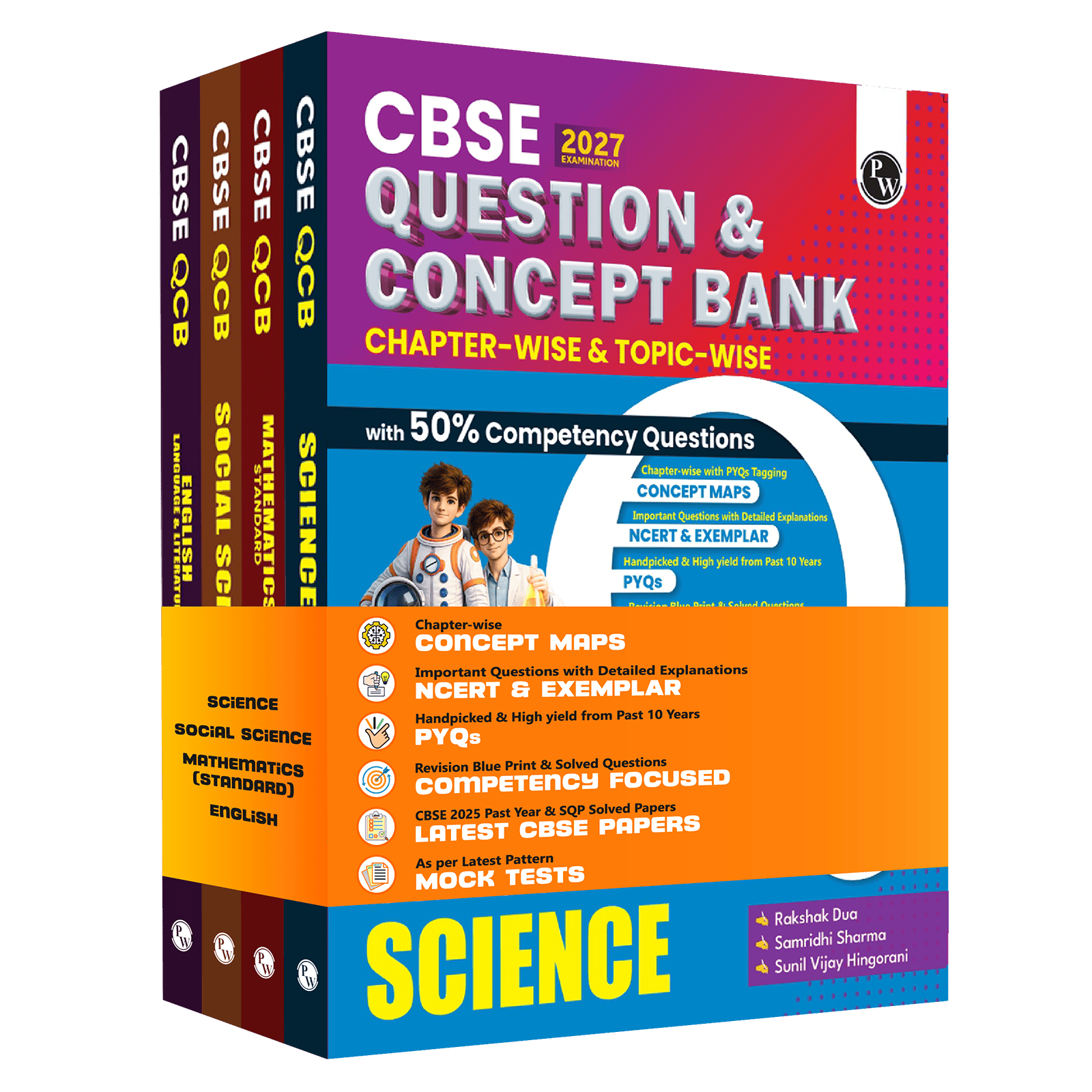
CBSE Class 10 Question Bank (Combo Set of 4 Books) gives you chapter-wise and topic-wise solved questions for Maths, Science, Social Science, and English. It can be your guide to understand how different questions are asked from each topic.
-
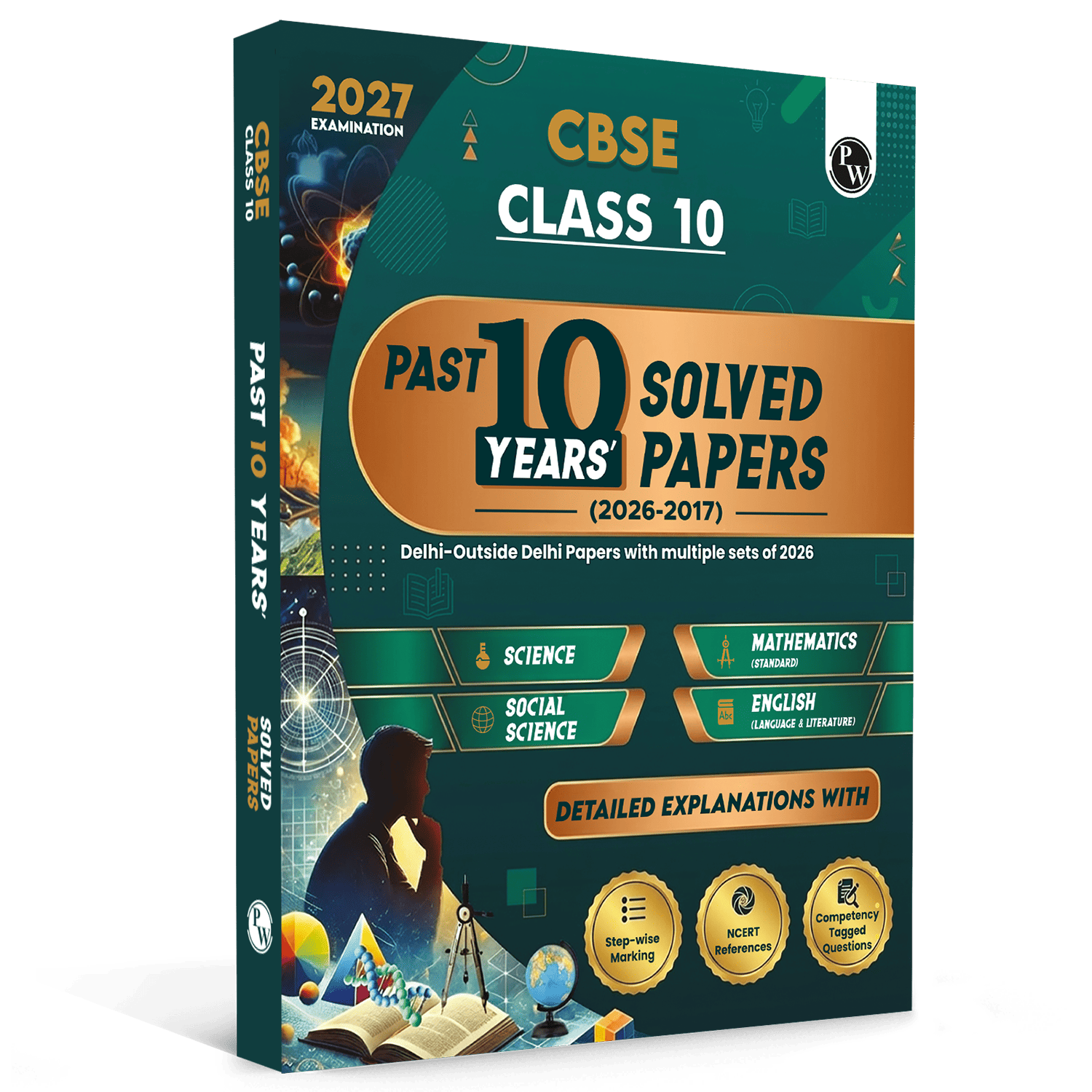
CBSE Class PYQs includes solved question papers from the past 10 years. It helps you know how to write stepwise answers as per the CBSE marking scheme.
-
CBSE Class 10 NCERT Exemplar Problems For Maths & Science: If you want to solve advanced questions from NCERT Exemplar, this book gives detailed solutions, video support, and mind maps for each chapter.
-
CBSE Chapterwise Class 10 Topper Handwritten Notes are neat and easy-to-understand notes for Science, Maths, SST, and English, just like how toppers prepare their own notes.
Read More: NCERT Solutions for Class 10 Science Chapter 6
CBSE Important Questions for Class 10 Science Life Processes FAQs
Q.1. Where can I access Life Processes class 10 important questions with answers PDF download link?
Ans. Life Processes Class 10 Important Questions with Answers PDF download Link is given in the article above so that you can easily access it.
Q.2. When should I study Class 10 Science Life Processes extra questions?
Ans. It is best to study the extra questions after you finish reading the chapter and solving the NCERT exercises. You can also use them while revising the chapter before exams.
Q.3. Can Life Processes important questions help me score well in board exams?
Ans. Life Processes important questions cover previous year questions and multiple types of practice questions that can help you understand how to answer properly in the board exam.
Q.4. What is the CBSE Class 10 Life Processes chapter about?
Ans. CBSE Class 10 Life Processes chapter is about how living things carry out basic life functions such as nutrition, respiration, transportation, and excretion. It explains how these processes keep organisms alive and healthy.