Concept Clarity in Accountancy with Class 11 Question Bank
For many students, the initial excitement of choosing a new stream turns into stress when the balance sheets don’t tally. It is common to feel overwhelmed by the sheer volume of new terms and the technicality of financial rules.
You might spend hours reading the textbook, but still struggle to solve a practical problem. This gap between reading a concept and applying it to an exam question is exactly why you need a structured Class 11 Accountancy question bank. This guide helps you navigate the complexities of the subject and build a foundation that lasts helps build a strong accounting foundation for higher studies.
Check out: Commerce Class 11th Books
Importance of Class 11 Accountancy Question Bank
Many students treat Accountancy like a theoretical subject, trying to memorise rules instead of understanding the "why" behind every entry. This leads to confusion during the exams when a question is slightly twisted. A dedicated Class 11 Accountancy question bank bridges this gap. It doesn’t just give you questions; it provides a roadmap for how to think like an accountant.
When you use an Accountancy Class 11 question bank, you move away from rote learning. You start seeing how a single transaction affects different parts of a financial statement. This systematic practice is one of the most effective ways to speed and accuracy required for high scores.
Features of Class 11 Accountancy Question Bank
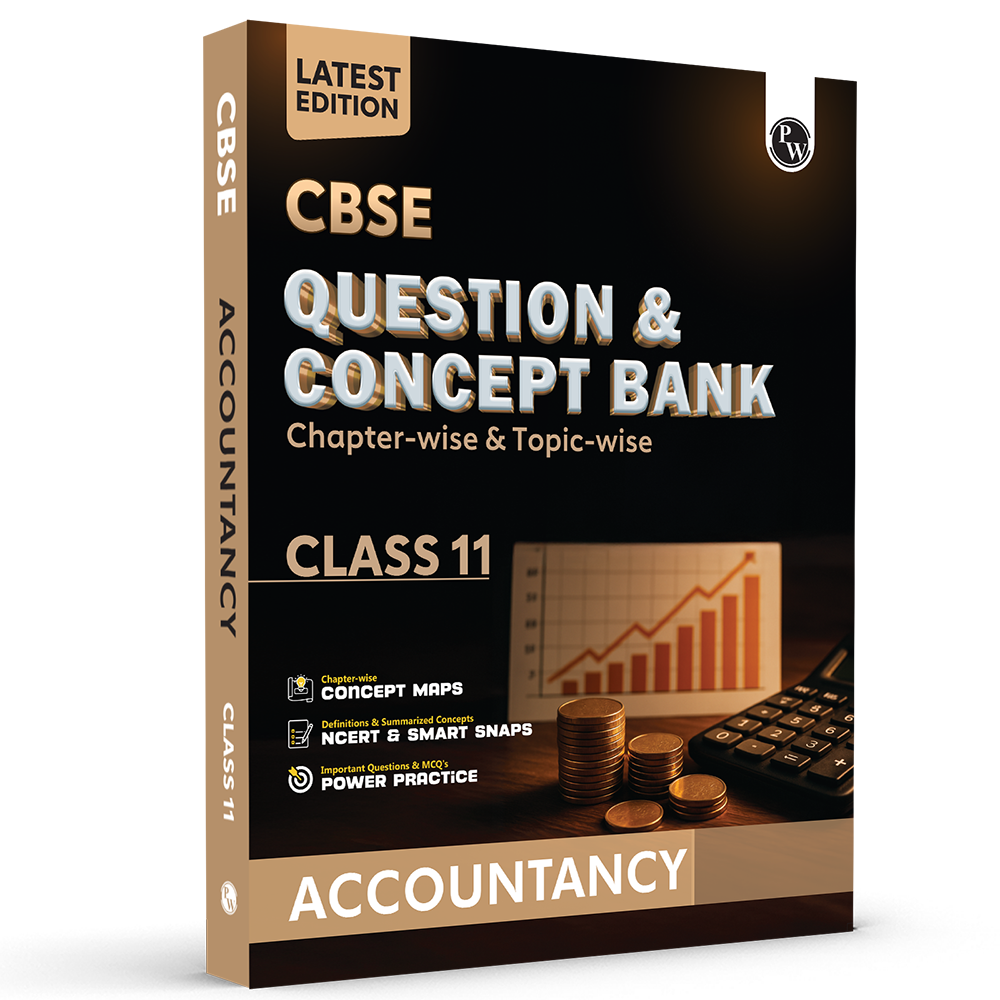
To truly master the subject, your study material must be comprehensive. The latest Class 11 Accountancy question bank is designed with the 2026 exam pattern in mind. It focuses on clarity, practice, and quick revision.
-
Chapter-wise Concept Maps: Every chapter starts with a visual breakdown. These maps help you see the connection between different topics at a single glance.
-
NCERT & Smart Snaps: Since the CBSE board relies heavily on NCERT, an Accounts question bank Class 11 provides clear definitions and summarised concepts aligned perfectly with the official curriculum.
-
Power Practice Sessions: A curated set of important questions and Multiple Choice Questions (MCQs) helps you test your knowledge in real-time.
-
Simplified Language: Complex accounting standards and principles are explained in straightforward English, making it accessible for every learner.
-
Quick Recall Tools: Handy charts and short notes are included for rapid revision, ensuring you don't forget key points right before the exam.
When to Use Class 11 Accountancy Question Bank
Timing is everything. You shouldn't wait for the final month of the year to open your Class 11 Accountancy question bank.
-
During Daily Learning: As soon as your teacher finishes a topic in Class, solve the corresponding questions from the Accountancy Class 11 question bank.
-
During Unit Tests: Use the "Power Practice" section to prepare for your monthly assessments.
-
During Revision: The "Quick Recall Tools" in the question bank of Accountancy Class 11 are perfect for the week leading up to your exams.
How to Improve Scores with Class 11 Accountancy Question Bank
If you are using an Accountancy Class 11 question bank pdf or a physical copy, the strategy remains the same: consistency. Simply reading the questions won't help; you must pick up a pen and solve them.
-
Read the Concept Map First: Before jumping into the questions, look at the visual summary in your Class 11 Accountancy question bank. It refreshes your memory of the rules.
-
Solve MCQs for Logic: MCQs test your fundamental understanding. If you can't get the MCQs right, go back and read the theory.
-
Practice Practical Problems: Attempt the solved examples first, then move to the unsolved ones. This builds confidence.
-
Check the Solutions: Don't just see if the final answer is right. Check the steps. In CBSE, step-marking is crucial, and the question bank Class 11 Accountancy shows you exactly how to present your work.
Benefits of Solving Class 11 Accountancy Question Bank
The transition from school-level maths to professional-level accounting requires a shift in mindset. Using a question bank Class 11 Accountancy offers several practical benefits that a standard textbook might miss.
-
Building Mathematical Accuracy
Accountancy is as much about numbers as it is about rules. The Class 11 Accountancy question bank provides ample numerical problems that range from basic to advanced levels. Regular practice ensures that you stop making "silly mistakes" in calculations, which is the most common reason for losing marks.
-
Understanding Exam Weightage
Not all chapters carry the same marks. By using a question bank, you can identify which topics are frequently asked. This allows you to prioritise chapters like Bank Reconciliation Statements or Depreciation, which usually carry more weight in the final term.
-
Improving Solving Speed
In an Accountancy exam, time is your biggest enemy. Many students know the answers but fail to finish the paper. Practising with a Class 11 Accountancy question bank helps you set a pace, teaching you how much time to spend on a 1-mark MCQ versus an 8-mark comprehensive problem.
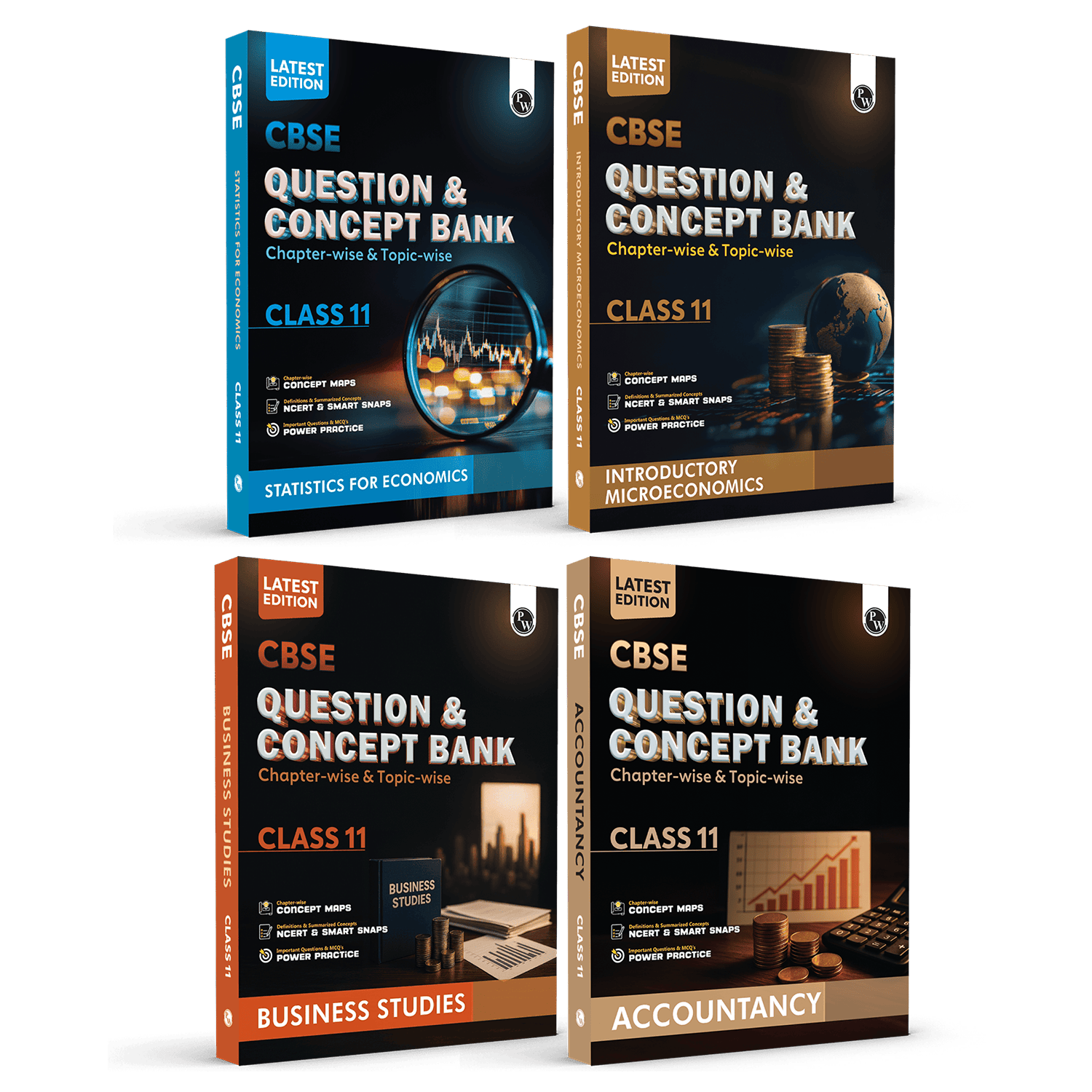
Check Out: CBSE Question Bank Class 11 Combo Set of 4
Study Strategy with the Class 11 Accountancy Question Bank
To get the most out of your Accountancy question bank, you need a plan. Accountancy cannot be "crammed" overnight. It requires a logical flow.
Phase 1: Conceptual Foundation
Focus on the initial chapters like the Accounting Equation and the Rules of Debit and Credit. Use the Accountancy Class 11 question bank to solve at least 20-30 basic transactions. If your foundation here is weak, the rest of the subject will feel impossible.
Phase 2: Mastering Vouchers and Journals
This is where the actual bookkeeping starts. Use the question bank to practice different types of journal entries, including practical journal-entry-based transactions. Pay close attention to the narration, as it is a vital part of the presentation.
Phase 3: Final Accounts and Financial Statements
This is the final hurdle. The Class 11 Accountancy question bank contains comprehensive problems that combine everything you have learned. Practice preparing Trading Accounts, Profit & Loss Accounts, and Balance Sheets repeatedly until you can balance them on the first attempt.
Read More: Class 11 Commerce Subjects Explained, Easy-to-Understand
Class 11 Accountancy Question Bank FAQs
1. Can I rely only on the Class 11 Accountancy question bank for my exams?
While the question bank is extremely comprehensive, it works best when used alongside your NCERT textbook. It helps you apply the theory you learn to actual exam-style questions.
2. How does the Accountancy Class 11 question bank help with MCQs?
The bank includes a dedicated "Power Practice" section with numerous MCQs that focus on conceptual clarity, helping you score well in the objective section of the paper.
3. Is the question bank updated for the 2026 syllabus?
Yes, the latest edition is specifically designed to meet the requirements of the 2026 exams, including the latest CBSE patterns and marking schemes.
4. Does the Accountancy Class 11 question bank pdf cover all chapters?
Yes, the Accountancy Class 11 question bank pdf covers the entire syllabus from basic accounting terms to financial statements and computers in accounting.
5. How are the concept maps in the question bank of Accountancy Class 11 useful?
The concept maps provide a visual summary of the chapter, making it easier to memorise formats and rules without going through pages of text.
Accountancy Class 11 question bank, Accountancy Class 11 question bank pdf, accounts question bank Class 11, question bank Class 11 Accountancy, question bank of Accountancy Class 11