How Daily Question Practice Improves Class 9 Exam Scores

Moving from Class 8 to Class 9 brings a significant increase in academic difficulty, making textbook reading alone insufficient. A CBSE Class 9 Question Bank helps students move beyond rote learning by providing structured, chapter-wise practice that strengthens conceptual understanding.
It also improves problem-solving skills and prepares them to answer exam questions confidently under real assessment conditions.
Importance of CBSE Class 9 Question Bank for Daily Study
Many school students face unexpected mark drops because they confuse recognition with retention. Reading through a textbook chapter multiple times makes the sentences look familiar, but it does not train the brain to generate answers from scratch. A structured CBSE Class 9 question bank forces your brain to recall information actively, building stronger neural pathways for better long-term memory.
Passive reading gives a false impression of mastery. When you read a solved example, your mind follows along easily, but your brain remains unengaged. Testing yourself with unassisted problems breaks this illusion immediately. It highlights the exact spot where your conceptual understanding breaks down, allowing you to fix those errors before the school teacher hands out the actual exam papers.
Students who avoid active testing usually run out of time during actual hall examinations. They spend too many precious minutes trying to figure out how to structure an answer rather than writing it down. Consistent problem-solving removes this friction, turning complex academic tasks into automatic, well-practiced habits.
How a CBSE Class 9 Question Bank Promotes Active Learning?
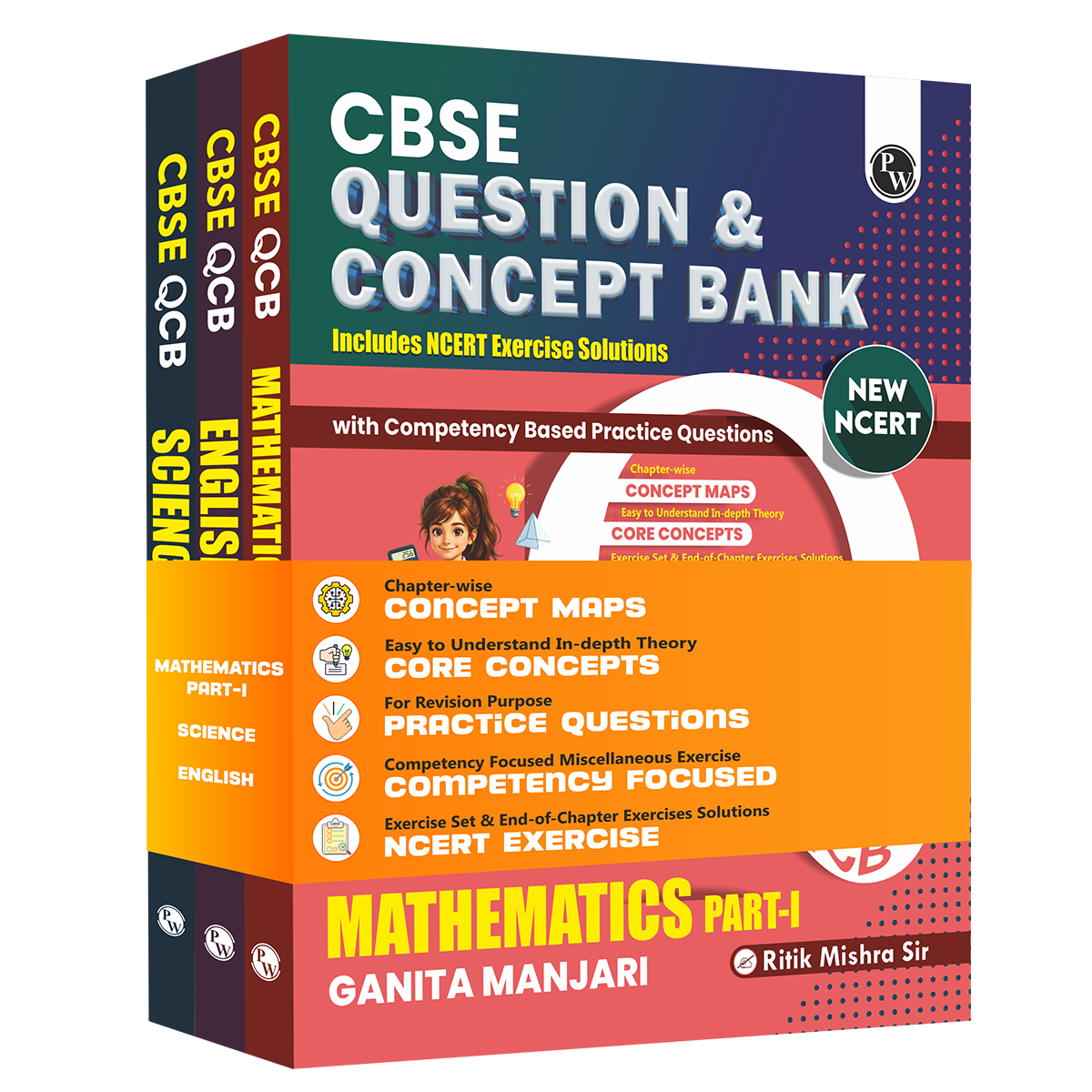
Consistency is more effective than last-minute cramming before an examination. When you solve practice questions every day, you divide the yearly syllabus into small, achievable learning goals. This systematic approach reduces stress and prevents information overload during final revision. Resources such as the CBSE Class 9th Question Bank Combo 2027 support this process by providing chapter-wise questions and structured practice that encourage regular learning throughout the academic year.
Streamlining Class 9 Exam Preparation
Organising your exam preparation around a daily routine helps you balance different subjects without burning out. Instead of spending five hours straight on a single science chapter, solving ten targeted questions across mathematics, science, and English every evening keeps all subjects fresh in your mind. This balanced routine ensures no single subject lags behind as the academic year moves forward.
Improving the Retrieval Strength
Every single time you answer a question without looking at your notes, you train your brain to find that data faster next time. This speed is vital for scoring high marks. When you face tricky application questions in your final assessments, this retrieval strength lets you solve basic questions quickly, leaving more time for complex, high-weightage problems.
Benefits of Using a CBSE Class 9 Question Bank
Textbooks provide basic definitions, but they rarely show how school boards structure their final marking schemes. Looking closely at the actual question bank benefits shows how these study tools complement traditional classroom lectures to build a highly effective, independent preparation strategy.
|
Core Educational Feature |
Operational Impact on Student Performance |
|
Integrated Visual Concept Maps |
Enables rapid contextual scanning and quick visual memory links before starting tough chapters. |
|
Detailed Theoretical Overviews |
Connects fundamental explanations with clear application parameters without wordy filler text. |
|
Comprehensive Verified Solutions |
Clear step-by-step breakdowns teach the exact formatting required to secure full step marks. |
|
Competency-Focused Exercises |
Trains analytical faculties to handle modern case-based and assertion-reason assessments easily. |
Developing Higher-Order Thinking Skills
Modern educational boards now focus heavily on application-based questions rather than simple direct memory testing. A good question bank provides specific practice for this shift. It forces you to look at data tables, read short real-world scenarios, and apply classroom theory to unfamiliar situations, which prepares you thoroughly for unexpected exam variations.
Learning Step-by-Step Mark Allocation
In secondary school examinations, you do not get marks just for the final answer. Every step of a derivation, calculation, or logical argument carries specific weight. Working alongside standard solutions teaches you how to present your thoughts clearly, ensuring you do not lose easy marks due to poor answer structuring or missing intermediate steps.
How Does Chapterwise Practice in a CBSE Class 9 Question Bank Improve Scores?
Attempting a full mock exam before mastering individual chapters often leads to unnecessary confusion and lower confidence. A chapterwise practice approach allows students to strengthen one topic at a time before moving on to full-length tests. This step-by-step learning method builds a strong conceptual foundation and makes revision more effective. Along with regular question bank practice, using CBSE Class 9 Books helps students understand concepts in depth, reinforce classroom learning, and prepare systematically for school examinations. This modular study strategy ensures you build a solid academic foundation, one chapter at a time.
Benefits of Targeted Sectional Learning
-
Isolated Variable Learning: Understand individual algebraic principles or complex chemistry concepts thoroughly before attempting mixed, full-length test papers.
-
Efficient Performance Metrics: Track exactly which chapters lower your average scores so you can allocate your weekly revision time intelligently.
-
Direct Alignment with School Progress: Solve relevant questions that match the exact pace of your weekly classroom lectures.
Preventing Cumulative Learning Deficits
When a student does not fully understand Chapter 2, they will naturally struggle with Chapter 5, as advanced subjects build directly on earlier ideas. Working through chapter-focused exercises ensures you completely understand current topics before your class moves on to harder material, stopping minor learning gaps from turning into permanent weaknesses.
Improving Year-Long Score Improvement
Real, lasting improvement in score comes from continuous, gradual advances. If you want to go from mediocre marks to top marks, you have to correct particular problems individually. Each chapter unit is devoted to pinpointing exactly where your definitions fall short, so you can gradually hone your skills throughout the academic year.
How to Revise with a CBSE Class 9 Question Bank?
The final weeks before an assessment require a total shift from learning new chapters to refining what you already know. High-yield CBSE revision relies on interacting with modern curriculum frameworks that simulate actual test environments.
Step 1: Scan Chapterwise Concept Maps to refresh key terms quickly.
Step 2: Solve Competency-Based Questions to test application skills.
Step 3: Audit your written responses against complete, verified solutions.
Step 4: Note down repeating errors for targeted textbook text review.
A organised workbook gives you the advantage of final preparation in linguistic proficiency, logical thinking, and scientific analysis all at one time. This broad coverage turns disorganised notes into a tidy, exam-ready knowledge store.
Shifting Focus to High-Yield Topics
In an examination not all the pages of a textbook are of equal importance. A real assessment resource reveals trends that repeat, popular question types, and high-yield subjects that appear year after year. This insight allows you to concentrate your energy on what really counts, ensuring you get the most out of every hour you spend revising.
Refining Exam Time Management
Knowing the answers is only half the battle; you also need to write them down within the official time limit. Using question sets to run timed practice sessions helps you gauge your speed. This practice shows you exactly how much time to give to short one-mark questions versus long five-mark descriptive answers, ensuring you never leave an exam paper incomplete.
Read More: CBSE Class 9 Study: Tips and Strategies
CBSE Class 9 Question Bank FAQs
How does a premium CBSE Class 9 question bank help with new assessment patterns?
Modern school tests focus less on direct memorisation and more on real-world applications. A modern CBSE Class 9 question bank includes real-world case studies, assertion-reason setups, and analytical problems that teach you how to apply concepts under actual testing conditions.
Why should I use daily practice questions instead of studying right before exams?
Cramming provides short-term retention that disappears under exam pressure. Practice questions force you to put things into long-term memory, help you spot weak themes early, and make you solve problems faster, well before exam day.
What makes chapter-wise practice better than full mock papers early in the year?
Focusing on this lets you learn individual topics alongside your school schedule. Trying full-length mock exams before finishing the entire syllabus can harm your confidence and cause confusion between different chapters.
How do detailed solutions support my overall score improvement goals?
Simply knowing that an answer is wrong does not help you improve. Detailed solutions show the exact structural layout required by marking guidelines, helping you secure full step marks and fix critical conceptual mistakes.
Can I manage my entire Class 9 exam preparation using only standard textbooks?
Your textbooks teach you the basics, but not the variety of problems to get the best marks. To reach the level of modern school evaluation, you need to combine theoretical reading with structured question sets to fully prepare for the exam.