How to Create Self Notes While Solving CBSE Question Banks
How to Create Self Notes While Solving CBSE Question Banks:- Have you ever caught yourself reading an entire page and then suddenly realised, you’ve no idea what you’ve just read? It’s a common experience for students, especially when studying for CBSE board exams. That’s where note-making comes in. Creating your own study notes is more than just a habit, it’s one of the most effective ways to understand, remember, and revise what you’re learning.
When you're solving papers from a CBSE Class 10 question bank in any subject, be it Science, Maths, SST, or English, writing things down in your own words helps turn passive reading into active learning. These notes become your go-to resource for revision, helping you cut down the time you’d otherwise spend flipping through books and searching for answers.
The same applies when you’re in Class 12. The CBSE Class 12 question bank tends to be more detailed and application-based. It's no longer just about learning facts, it’s about understanding, analysis, and smart presentation. By making notes as you go through the questions, you start building a solid revision guide made just for you. Check out the below article to learn How to Create Self Notes While Solving CBSE Question Banks.
What Are CBSE Question Banks and Why They Matter?
A CBSE question bank is a collection of exam questions that match the current syllabus and exam format set by the Central Board of Secondary Education (CBSE). These question banks are great for helping students know what kinds of questions they might face in their board exams. They are one of the most effective ways for exam preparation.
In a CBSE Class 10 or Class 12 question bank, you will see various question types: objective questions, very short answers, short answers, long answers, case-based problems, assertion-reason types, and questions from past board exams. These question banks also include answers and marking schemes to show how to correctly structure responses. These books are not only about practicing questions. They teach you to think like an examiner and answer like a top student. This makes them extremely valuable for effective studying.
For Class 10 students, a Class 10 question bank helps you practise questions across key subjects like:
-
Maths – to master formulas, concepts, and application-based problems
-
Science – to test your understanding of theories, experiments, and diagrams
-
Social Science (SST) – to summarise historical events, political frameworks, geography and economics
-
English – to improve comprehension, grammar and writing skills
And for Class 12 students, the CBSE Class 12 question bank offers focused practice on more in-depth and subject-specific challenges like:
-
Physics – with numerical problems, derivations, and conceptual applications
-
Chemistry – balancing reactions, understanding mechanisms, and organic chemistry
-
Biology – diagrams, labelling, definitions and explanation of processes
-
Maths – step-by-step problem solving across complex topics like calculus and integration
How to Create Self Notes for CBSE 10 Maths
Maths requires regular practice, and the CBSE Class 10 Maths question bank offers a great variety of questions. But it’s not enough to just solve problems, you need to note down the methods, formulas, and common errors.
-
List key formulas with examples: Write down formulas after each chapter and include a solved example beside them. This helps with quick revision and better understanding.
-
Note the type of question: Identify whether it's a ‘prove’, ‘solve’, ‘find the value’, or ‘application’ question. This helps you tackle similar types during exams.
-
Record common mistakes: If you make a calculation error or miss a step, write it down. These notes will remind you what not to do in the exam.
How to Create Self Notes for CBSE 10 Science
The CBSE Class 10 Science question bank covers Physics, Chemistry, and Biology in one book. It includes theory-based and numerical questions, so note-making should combine concept understanding and application.
-
Summarise each concept in your own words: After solving a set of questions, write down the main idea behind them in simple language. This helps clarify tough topics.
-
Include diagrams and labelling: For Biology or Physics-related questions, draw small diagrams and label them neatly. Visual memory is powerful during revision.
-
Highlight key terms and reactions: For Chemistry, note down balanced chemical equations and colour changes. Highlight terms like “exothermic”, “oxidation”, etc.
How to Create Self Notes for CBSE 10 English
The CBSE Class 10 English question bank focuses on reading comprehension, grammar, literature, and writing skills. Notes here should help with quick ideas and language structures.
-
Summarise poems and stories: Write 3–4 lines summarising each poem or story in your own words. Include the theme, tone, and message.
-
List grammar rules with examples: When solving grammar questions, note down the rule (like tense usage, conjunctions, etc.) and give one correct example.
-
Keep format samples for writing tasks: Write formats for letters, notices, and articles in your notes, with one solved sample each.
How to Create Self Notes for CBSE 10 Social Science
Class 10 SST question banks include History, Civics, Geography, and Economics. Since there's a lot of factual information, your notes should focus on smart summaries and dates.
-
Create timeline charts: For History topics, write events in sequence with years. This helps during map-based or chronological questions.
-
Bullet important points: For Civics or Economics, summarise 4–5 key points per question. Avoid long paragraphs.
-
Map important locations: For Geography, note the names of rivers, dams, minerals, etc., and mark them on a small practice map at the end of your notes.
CBSE Class 10 Question Bank
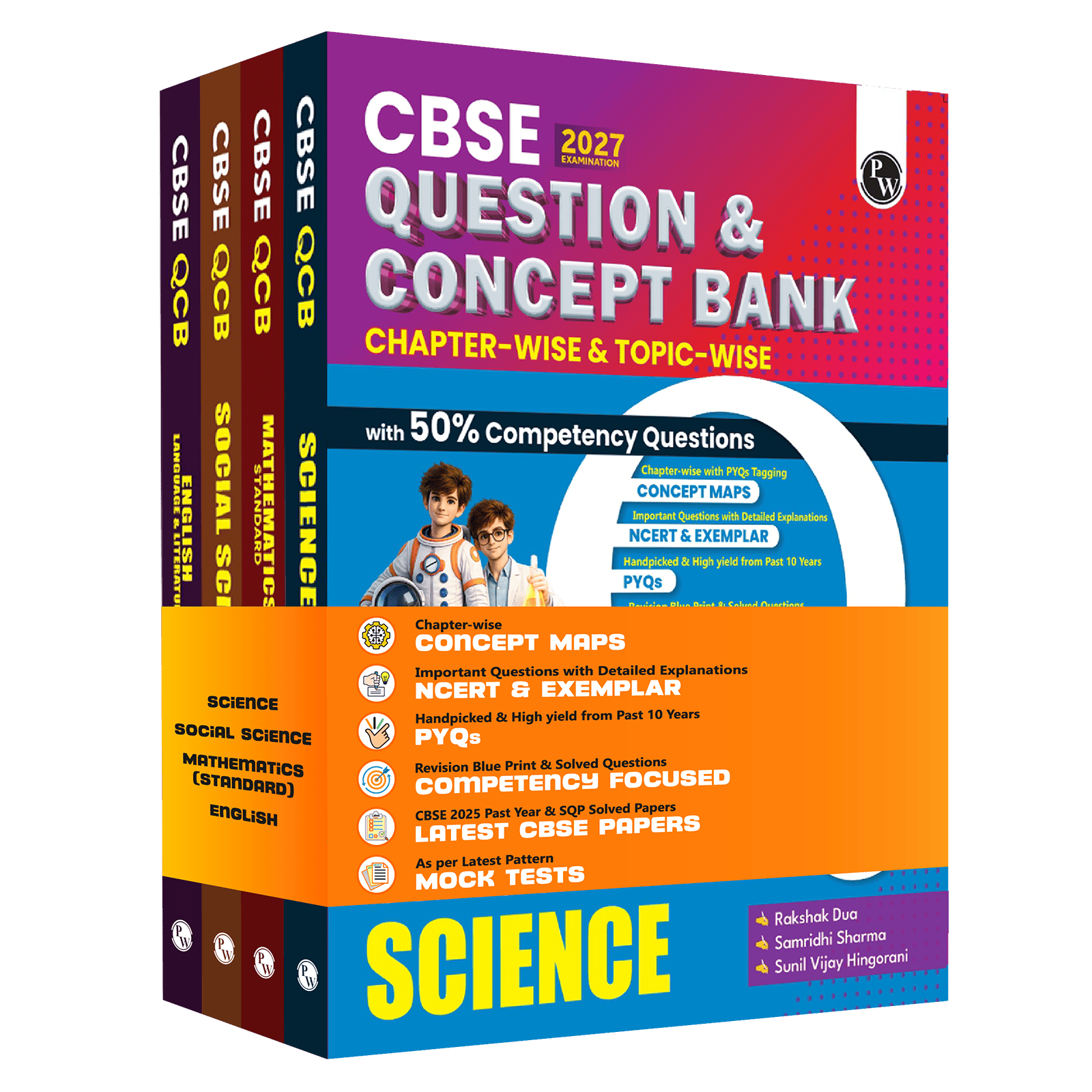
Let’s be honest, Class 10 can feel a bit overwhelming at times. There’s a lot to cover, and it’s easy to get lost flipping through pages of different books. That’s why the PW Class 10 Question Bank feels like a lifesaver. It’s not just full of questions, it’s designed to help you really understand what you’re learning. Whether it’s Maths, Science, SST, or English, everything’s sorted chapter by chapter, with clear explanations and questions that actually make you think. Check out these CBSE Class 10 Question Bank below:-
|
CBSE Class 10 Question Bank |
|
For CBSE Class 10 PYQs and other study material, check the PW store
How to Create Self Notes for CBSE 12 Physics
Physics in Class 12 can feel quite difficult with so many laws, equations, and derivations. But your notes can make it far more manageable if you organise them properly while solving questions from the CBSE Class 12 Physics question bank.
-
Make a chapter-wise formula sheet: After each chapter, note down all key formulas with symbols clearly defined. Write one example problem for each formula to show its application. These sheets become your go-to before every test.
-
Write the reasoning behind MCQs: Don’t just tick the correct option. Instead, write a one-line reason for why it’s right (or wrong). This helps with conceptual clarity and is especially helpful for tricky conceptual CBSE Class 12 Physics questions.
-
Sketch diagrams and circuits neatly: Physics often demands well-labelled diagrams. Practice drawing them quickly and cleanly. In your notes, include commonly asked diagrams like ray optics, circuit diagrams, and magnetic field lines.
How to Create Self Notes for CBSE 12 Chemistry
The CBSE Class 12 Chemistry question bank covers Physical, Organic, and Inorganic Chemistry. It’s full of equations, definitions, and concept-based questions. Good notes can help you separate and revise these vast areas with ease.
-
Separate notes for reactions, mechanisms, and exceptions: Make a dedicated section for name reactions, reaction mechanisms, and exception cases. This way, you won’t have to scan the whole book to find them before your exam.
-
Highlight important NCERT lines: Many CBSE Class 12 Chemistry questions are directly based on NCERT phrasing. Whenever a question refers to a particular line, highlight and note it as “direct NCERT-based” in your notebook.
-
Create short revision charts: Make small flash charts for periodic trends, solubility rules, and chemical tests. These help immensely in last-minute revision and practical exam preparation.
How to Create Self Notes for CBSE 12 Maths
Class 12 Maths is all about speed, clarity, and concept. The CBSE Class 12 Maths question bank is full of proofs, case-based questions, and applications. Without proper notes, it's easy to lose track of important methods and common mistakes.
-
Write step-by-step breakdowns of complex problems: When you solve a long question, especially from chapters like Integrals or 3D Geometry, break it into short steps in your notes. This helps you repeat the process without confusion later.
-
List standard results and tricks: Note all identities, theorems, and results that are frequently used. Add tricks or patterns (like tricks to integrate certain types of functions) next to them in the margin.
-
Flag frequently asked CBSE Class 12 Maths questions: Mark questions that have appeared in board papers or sample papers. Keep a log of these so you can revise them at the end of the term.
How to Create Self Notes for CBSE 12 Biology
The CBSE Class 12 Biology question bank is theory-heavy but packed with important diagrams and NCERT-based concepts. Note-making for Biology should be clear, concise, and focused on keywords that help in both MCQs and long answers.
-
Use labelled flowcharts for processes: Convert long theory answers into flowcharts or cycles. For example, processes like protein synthesis or menstrual cycle are easier to revise this way.
-
Summarise each chapter with key terms: After solving a chapter, list all key terms like hormones, genes, or diseases. Write one-line definitions or functions beside each. This becomes a quick glossary.
-
Draw diagrams frequently and annotate them: Re-draw diagrams from the book (don’t just trace). Include labels and 1–2 lines explaining the function or structure. These are often asked directly in board exams.
CBSE Class 12 Question Bank
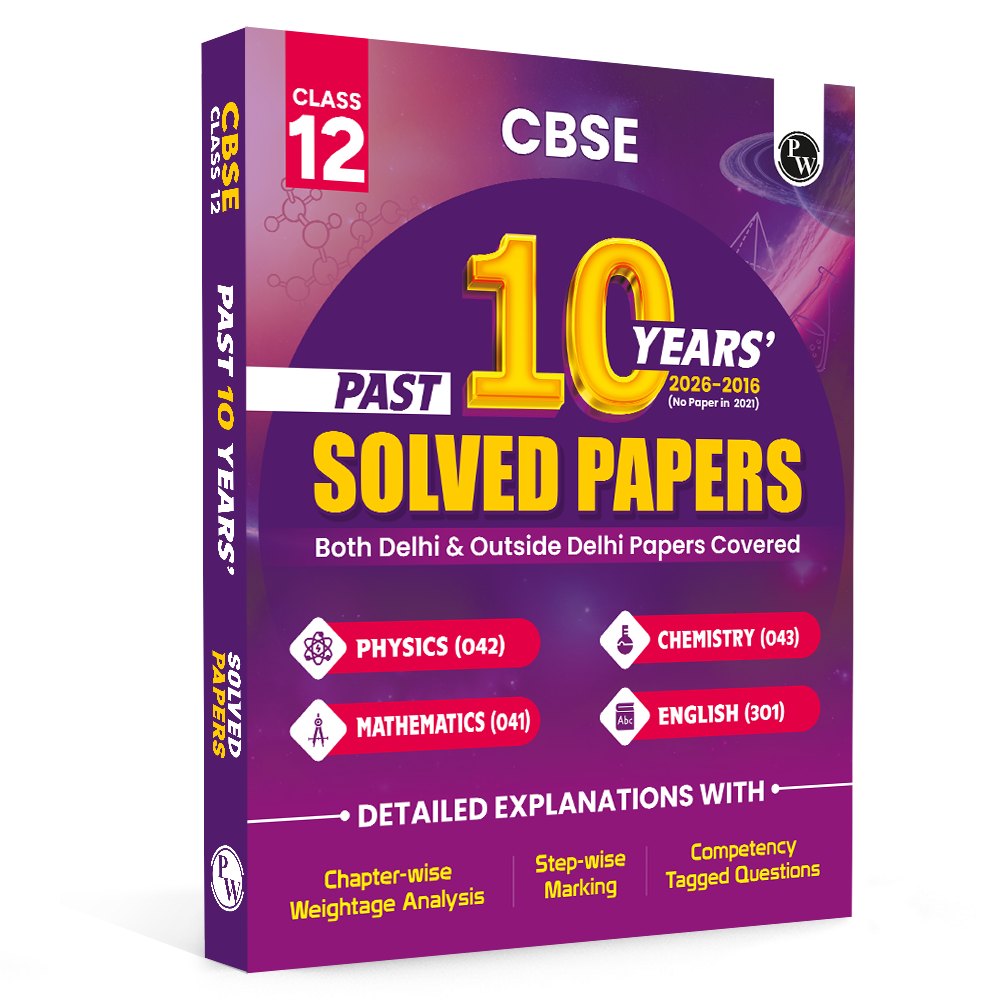
Class 12 can feel a bit tough, right? There’s so much to learn and so many exams to prepare for. That’s why the PW Class 12 Question Bank is so helpful. It gives you all the important questions in one place, whether it’s Physics, Chemistry, Biology, or Maths. Check out the CBSE Class 12 Question Bank below:-
|
CBSE Class 12 Question Bank |
|
|
CBSE Class 12 Maths Question Bank |
|
|
CBSE Class 12 Physics Question Bank |
|
|
CBSE Class 12 Chemistry Science Question Bank |
|
|
CBSE Class 12 Biology Question Bank |
|
Read More: Features of PW Previous Year Question Papers Class 10
CBSE Question Bank FAQs
1. Why should I make self notes while solving a CBSE question bank?
Self notes help you understand concepts in your own words. While solving the CBSE class 10 question bank or class 12 question bank, writing down key points improves memory, makes revision easier, and saves time before exams.
2. What should I write in my self notes?
Focus on important formulas, tricky questions, repeated patterns, and short summaries of explanations. Your notes should highlight what you found hard or worth remembering, so they're useful later.
3. How do I organise my notes by subject?
Keep a separate notebook or digital file for each subject. For example, one for CBSE class 12 physics questions, another for Chemistry, and so on. Use tabs or headings for each chapter to stay sorted.