How to Structure Long Answers Using CBSE Class 10 PYQ
If you find yourself staring at a 5-mark question, wondering where to start, you are not alone. The secret to bridging this gap lies in the strategic use of CBSE Class 10 PYQ. By analysing how toppers answer and what the marking scheme demands, you can transform your messy paragraphs into high-scoring responses. This article explores how to leverage CBSE PYQ Class 10 to build a foolproof answering strategy that impresses examiners and secures your grades.
Check Out: CBSE Class 10th Books
Why Answer Structure Matters in CBSE Class 10?
In the CBSE evaluation process, examiners have hundreds of copies to check. A wall of text is difficult to read and often leads to missed points. When you use CBSE previous year question papers class 10 as a reference, you notice a pattern: marks are distributed based on specific "value points".
Structuring your answer ensures that these value points stand out. It shows the examiner that you have a logical mindset and a deep understanding of the subject. Instead of writing everything you know in a random order, you should curate your thoughts to match the question's intent.
CBSE Class 10 PYQ Format for 5 Mark Answers
Based on insights from CBSE Class 10 PYQ, a high-scoring long answer should follow a predictable flow. Here is how you should break it down:
1. The Power Introduction
Start with a brief definition or a direct opening statement. If the question is about "Nationalism in Europe", define the core concept in two sentences. This sets the stage and tells the examiner you understand the context.
2. The Core Body (Bulleted Points)
This is where most students fail. Never write long answers in single, massive paragraphs. Break your content into 4 to 6 logical points. Use PYQ solutions to see how complex theories are simplified into bullet points. Each point should start with a bold subheading followed by a one-sentence explanation.
3. Visual Aids and Diagrams
Even in subjects like social science or English, small flowcharts can add value. In science or math, a neatly labelled diagram is non-negotiable. Many previous year question papers include specific marks just for the diagram, even if the question doesn't explicitly ask for one.
4. The Concluding Thought
Wrap up your answer with a single-sentence summary. It ties all your points together and gives the answer a finished, professional look.
CBSE Class 10 PYQ Answer Format
To help you understand the difference, let’s look at how a typical student answers versus how someone using CBSE Class 10 previous year paper PDF resources would approach it.
|
Feature |
Ordinary Answer Style |
Topper Style (Using CBSE PYQs) |
|
Format |
Long, dense paragraphs. |
Short bullets with bold headers. |
|
Keywords |
Uses generic language. |
Uses specific terminology from the CBSE PYQ class 10. |
|
Length |
It often exceeds the word limit unnecessarily. |
Concise, hitting all five value points. |
|
Presentation |
Messy, no margins or spacing. |
Clean, with underlined keywords. |
|
Accuracy |
Misses the "hidden" parts of a question. |
Addresses every subpart of the question. |
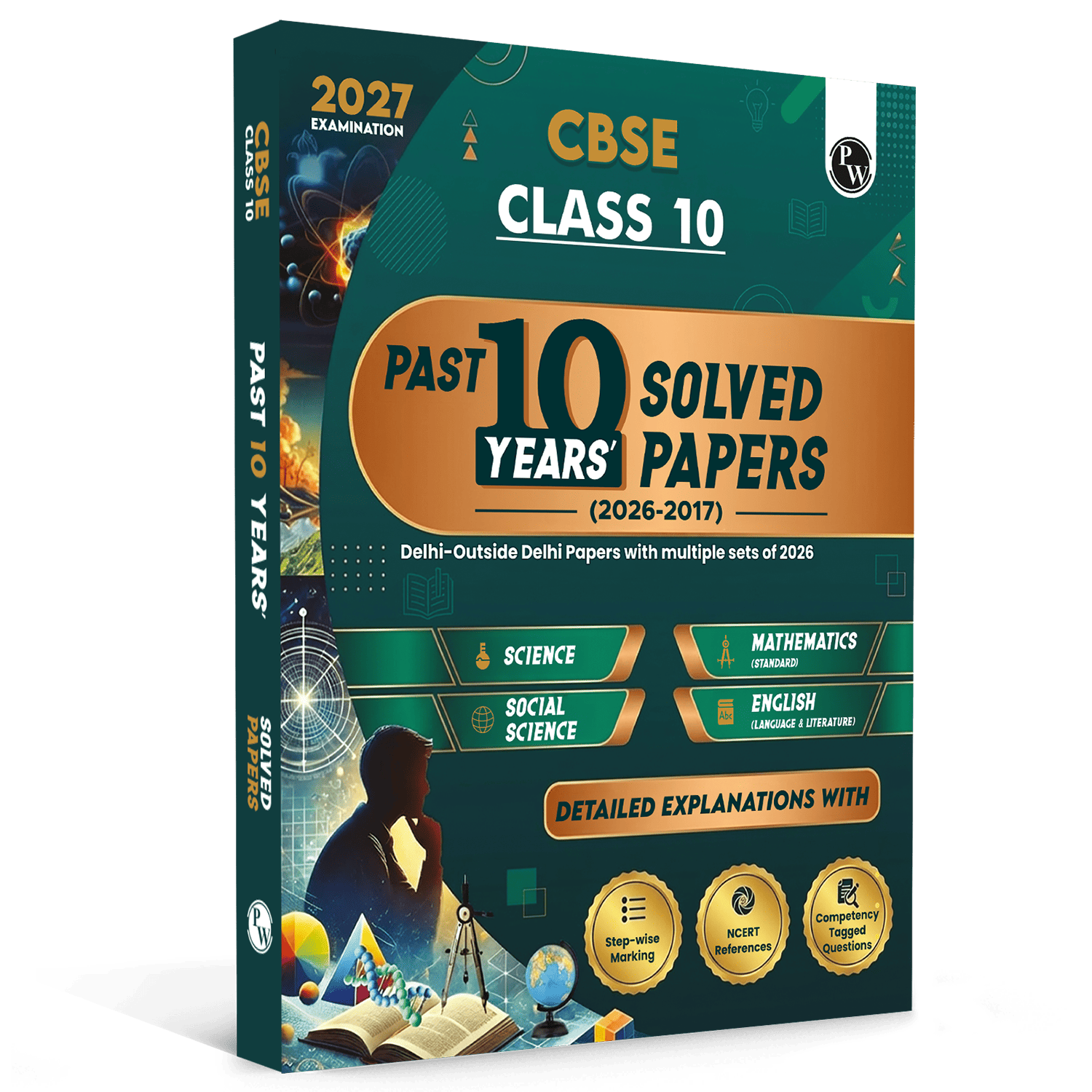
Check Out: CBSE Class 10 PYQs - Past 10 Years Solved Papers
How to Practice CBSE Class 10 PYQ for Long Answers?
Simply reading CBSE Class 10th PYQs won't help unless you practise actively. Here is a a a step-by-step method to integrate them into your daily study routine:
Identify Recurring Themes
Open your PDF and look at the last five years of questions for a specific chapter. Certain topics appear almost every year, albeit with different phrasing. Focus your "long answer" prep on these high-weightage areas.
Time Your Responses
Long answers are the biggest time consumers in the exam hall. When practising with CBSE PYQs class 10, set a timer. Aim to finish a 5-mark answer in under 8 to 10 minutes. This includes the time taken to draw a quick diagram or flowchart.
Reverse Engineer the Marking Scheme
Check the solved solutions in your CBSE previous year question papers for class 10. Notice where the marks are awarded. Is it for the formula? The unit? The diagram? Understanding this "mark-per-step" logic allows you to prioritise what to write when you are short on time.
Features of CBSE Class 10 PYQ
When you use a structured resource based on the CBSE Class 10 PYQ, it goes beyond just providing questions—it helps you understand how answers are evaluated in the board exam.
-
Step-wise Marking Solutions: Every answer is broken down according to CBSE marking schemes, helping you understand where marks are actually awarded
-
Coverage of Multiple Board Sets: Includes papers from different regions (Delhi and Outside Delhi), exposing you to varied question formats
-
Chapter-wise Trend Analysis: Helps you identify which long-answer topics are frequently asked over the years
-
Highlighting Important and Out-of-Syllabus Questions: Allows you to focus only on relevant and high-priority areas during revision
-
Real Exam-Level Practice: Solving authentic previous papers gives you a clear idea of how to structure answers under exam pressure
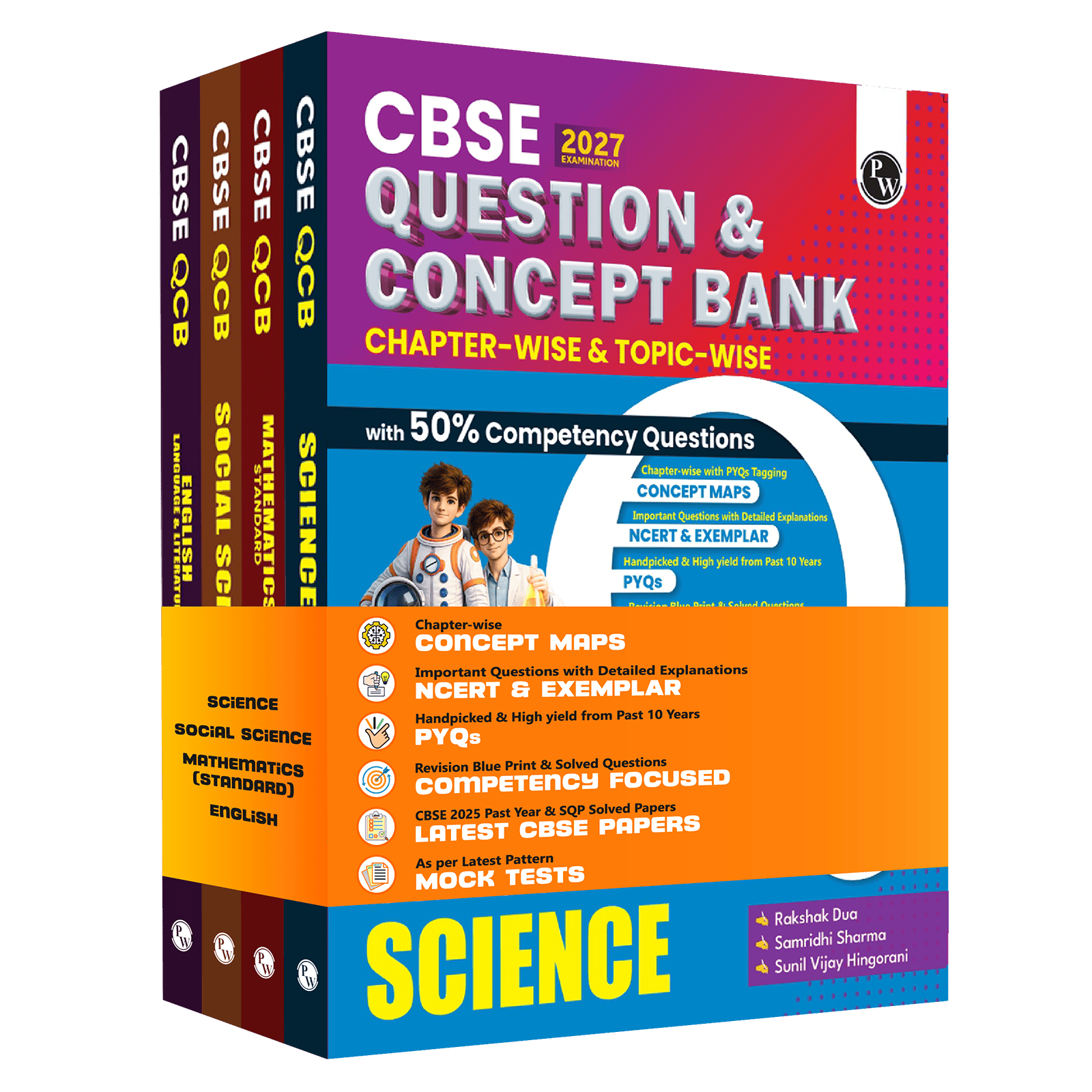
Also Check, CBSE Class 10th Question Banks
Benefits of CBSE Class 10 PYQ
Practising from compiled CBSE previous-year question papers, the class 10 resource helps you move from “knowing the answer” to “writing the answer correctly".
-
Builds Answer Presentation Skills: You learn how toppers structure introductions, body points, and conclusions
-
Improves Understanding of Value Points: Repeated exposure helps you recognise exactly what examiners expect in a 5-mark answer
-
Enhances Time Management: Practising full-length answers from previous papers helps you complete responses within the ideal time
-
Strengthens Concept Application: Instead of memorising, you learn how to apply concepts in different question formats
-
Boosts Confidence Through Familiarity: After solving multiple papers, no question feels completely new in the exam hall
Common Mistakes in CBSE Class 10 PYQ Long Answers
Even with the best PYQ at your disposal, certain habits can pull your marks down.
-
Beating around the bush: Don't write irrelevant stories to make the answer look longer. Examiners value quality over quantity.
-
Ignoring the sub-parts: Many 5-mark questions are actually 2+3 or 1+1+3. If you miss the small introductory part, you lose an easy mark.
-
Poor Handwriting: If the examiner can’t read your brilliant structure, they can’t give you marks. Keep the writing clear and give space between points.
When you use a curated book, you don't just see questions; you also see high-quality, validated answers that reflect the most recent CBSE rules. This consistency is important for developing the muscle memory you need to organise your responses correctly when you're under exam pressure.
Read More: CBSE Class 10 Study Timetable
CBSE Class 10 PYQ FAQs
How many points do I need to write for a 5-mark CBSE Class 10 test?
You should try to write down 5 to 6 different points. To make sure you touch all the value points in the marking scheme, each point should be short and cover a separate part of the question.
Is it necessary to draw diagrams in the PYQ Class 10 Social Science?
Even though it's not always required, making flowcharts or maps in Social Science can really improve your presentation. It makes your answer stand out from other students' answers that are just text.
Where can I find the best CBSE Class 10th PYQs with solutions?
You can find these on reliable sources online.
Can I lose marks for writing too much in previous year question papers class 10?
Yes, writing excessively can lead to time management issues, causing you to leave other questions unattempted. Stick to the suggested word count while ensuring all key points are covered.
How far back should I go with cbse class 10 previous year paper pdf?
Practicing the last 10 years of papers is the gold standard. However, focus most intensely on the last 5 years, as they reflect the most current exam patterns and difficulty levels.