How to Cover 50% of Syllabus Using CBSE Class 10 PYQ

CBSE Class 10 PYQ:- The Class 10 CBSE board exam is one of the most important stages in a student’s school life. Unlike school exams, where the teachers and the environment feel more relaxed, the board exam has a more serious setting with strict rules, fixed timings, and proper seating plans. For many students, it will be the first time they face an exam outside the comfort of their own school style. This is why preparation should not only be about studying the chapters but also about understanding the exam pattern and learning how to answer in the given time.
One of the most useful ways to prepare for this is by going through the previous year's question papers class 10. These papers help students get familiar with the type of questions asked and also give them a feel of the actual exam environment. By practising with CBSE previous year question papers class 10, students can complete almost half of the syllabus in a focused way while also building confidence for the real exam. Get the CBSE Class 10 PYQ here.
CBSE Class 10 Important Topics
The CBSE class 10 syllabus 2026-27 covers many subjects and topics, but some are more important for scoring marks in the exam. Looking at class 10 PYQ helps students identify these key areas. By practising previous year question papers and knowing the important topics, students can cover a significant part of the syllabus in a focused way. Check out the CBSE Class 10 Important Topics here:-
|
Subject |
Important Topics |
|
Mathematics |
Real Numbers, Polynomials, Pair of Linear Equations, Quadratic Equations, Arithmetic Progressions, Triangles, Circles, Surface Areas & Volumes, Statistics, Probability |
|
Science |
Chemical Reactions and Equations, Acids Bases and Salts, Metals and Non-Metals, Life Processes, Control and Coordination, How do Organisms Reproduce, Heredity and Evolution, Light (Reflection & Refraction), Human Eye and Colourful World, Electricity, Magnetic Effects of Electric Current, Sources of Energy |
|
Social Science |
The Rise of Nationalism in Europe, Nationalism in India, The Making of a Global World, Resources and Development, Agriculture, Manufacturing Industries, Lifelines of National Economy, Power Sharing, Federalism, Political Parties, Outcomes of Democracy |
|
English |
First Flight (The Hundred Dresses, Nelson Mandela, From the Diary of Anne Frank, A Letter to God, Madam Rides the Bus, The Sermon at Benares, The Proposal), Footprints without Feet (A Triumph of Surgery, The Necklace, The Midnight Visitor), Grammar (Tenses, Modals, Subject–Verb Agreement, Reported Speech), Writing Skills (Letter, Analytical Paragraph) |
Check Out: CBSE Class 10 Books
CBSE Class 10 PYQ
CBSE Class 10 PYQs will give students a clear idea of how marks are distributed in the board exam. By practising these papers, students will be able to see which chapters carry more marks and which types of questions are asked frequently. For example, in Science and Mathematics, some chapters will regularly have 6–8 mark questions, while smaller chapters may have 1–2 mark questions.
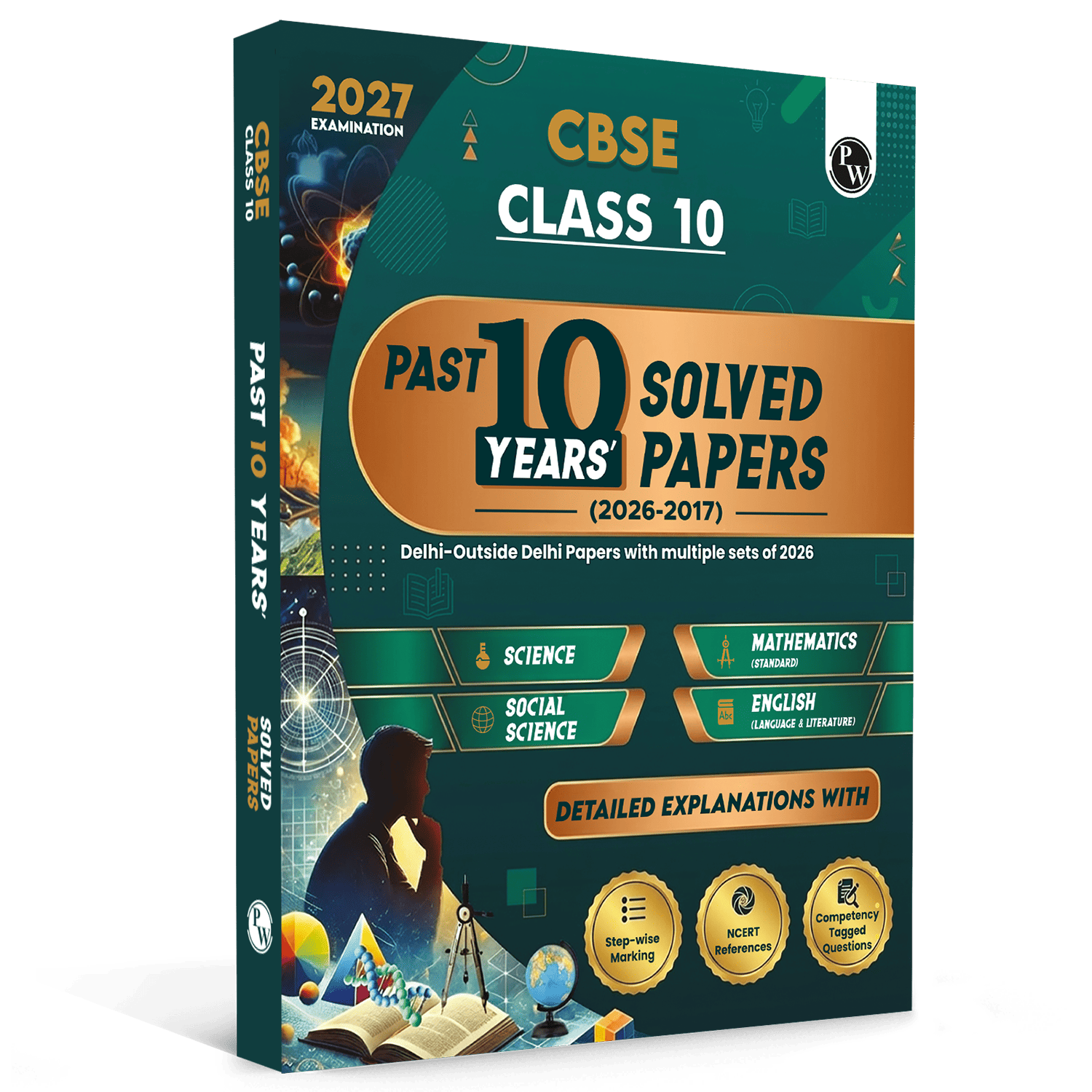
To make this easier, PW has brought CBSE Class 10 PYQs for every subject, including Science, Mathematics, Social Science, English, Hindi, and Sanskrit. These PYQs are designed in a simple and easy way so that students will be able to practise them at home, complete important topics, and get familiar with the board exam pattern long before the real exam day.
How to Cover 50% of Syllabus Using CBSE Class 10 PYQ?
Preparing for the Class 10 board exam can feel overwhelming for many students. But by practising PYQs, students can cover almost 50% of the syllabus in a focused way while also feeling confident before the real exam.
1. Understand the Exam Environment Using Class 10 PYQs
Before you start studying chapters, it is very important to understand how the board exam will actually be. That’s where Class 10 PYQs come in. They give you a real idea of how questions are framed and what kind of answers the exam expects.
-
Practising with a timer will teach you how to divide your time between long and short questions.
-
You will also get familiar with diagrams in Science, such as the Human Heart, Plant Cell, or Human Eye, and map-based questions in Geography.
2. Analyse the Exam Trend
One of the smartest ways to prepare is by looking at the previous 10-year question paper class 10. These papers help you identify which chapters are asked repeatedly and carry more marks.
-
For instance, in Science, chapters like Life Processes, Control and Coordination, and Chemical Reactions appear almost every year. If you practise questions from these chapters, you are covering a significant portion of the exam.
-
In Mathematics, you will notice that chapters such as Quadratic Equations, Triangles, Statistics, and Probability are frequently repeated.
3. Focus on High-Weightage Topics
After analysing trends, it is clear that some chapters carry more marks than others. Focusing on these chapters will help you cover nearly 50% of the syllabus efficiently.
By concentrating on these high-weightage topics, you will gain confidence, cover a large portion of the syllabus, and still have time for smaller chapters.
4. Practise Variety Through Sample Papers and Modules
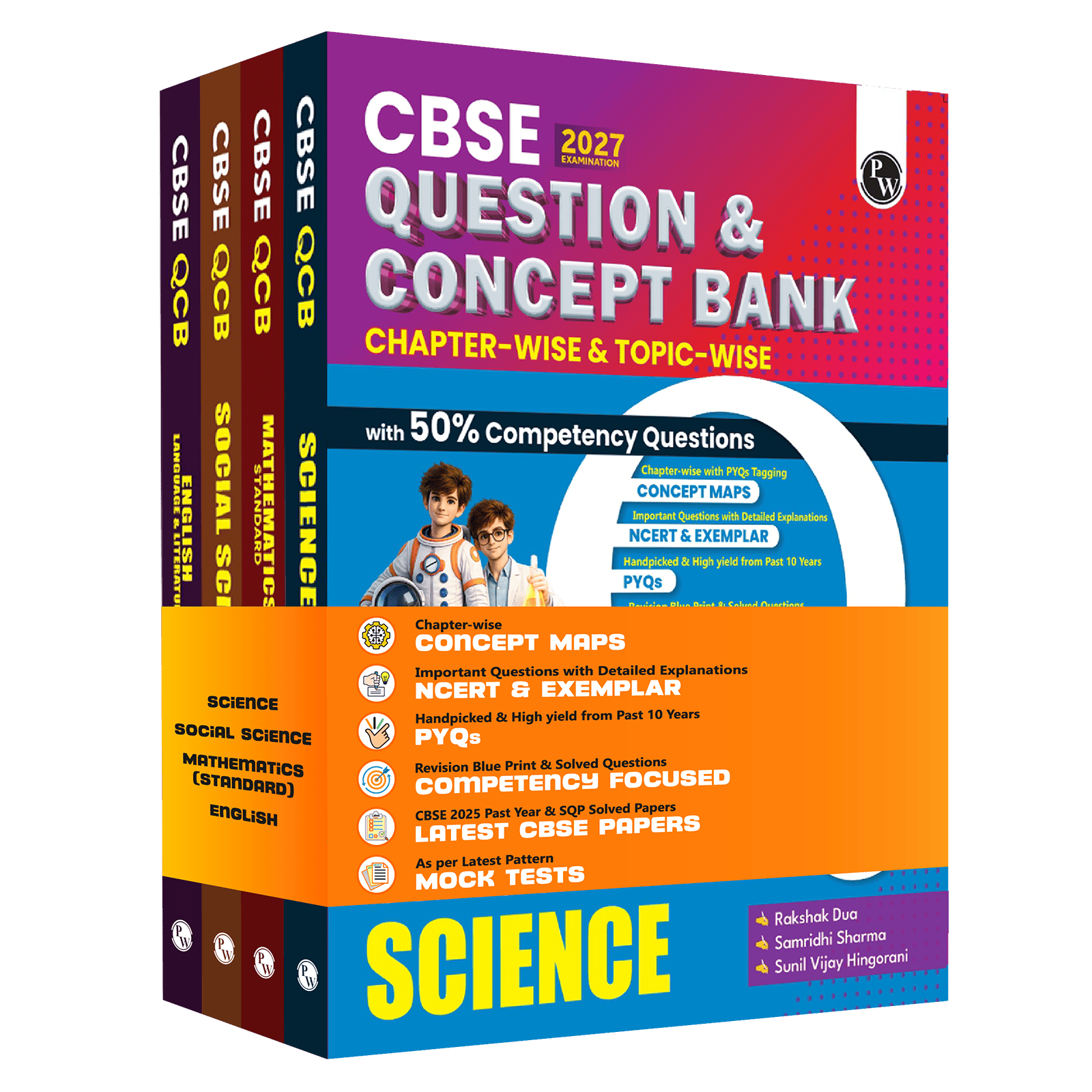
Apart from PYQs, practising Class 10 Sample Paper, Class 10 Question Bank, and Class 10 modules is helpful.
-
Sample papers give additional practice and help students attempt different types of questions.
-
Class 10 Question banks often include questions from PYQs and extra practice for weak areas.
-
Class 10 Modules provide structured exercises chapter-wise, helping students revise and remember information better.
5. Attempt Questions in Exam-Like Conditions
It is not enough to just read chapters and solve questions casually. You should attempt the CBSE previous year question papers class 10 as if you are sitting for the real exam.
-
Set a timer for the full duration of the paper. This will help you practise completing the paper on time. For example, if Science has 60 marks and includes diagrams and long-answer questions, you will know how much time to spend on each section.
-
Avoid textbooks or notes while attempting the paper. This way, you will get the feel of the exam and know how confident you are in solving questions independently.
-
After attempting, check your answers carefully. Identify mistakes, understand why you made them, and practise those questions again.
6. Make Notes While Solving PYQs
Note-making is a very important step that many students skip. When you solve PYQs, take small notes at the same time.
-
Summarise answers for repeated questions in simple points. For example, if a question on Chemical Reactions appears every year, write down the steps and reactions in a short form.
-
Highlight formulas, definitions, and diagrams. In Science, keep a page for all diagrams like the Human Heart, Neuron, or Plant Cell. In Mathematics, write down important formulas from Algebra or Geometry.
-
Keep separate notebooks for each subject. Geography maps, History timelines, and Science diagrams should be organised so that you can revise them quickly before the exam.
7. Combine PYQs with the Syllabus for Better Coverage
Practising PYQs alone is not enough. You must follow the CBSE syllabus class 10 while using PYQs to ensure no chapter is left out.
-
Link each question in PYQs to its chapter in the syllabus. For example, questions on Life Processes should match the syllabus topics like Nutrition, Respiration, or Transport in Plants and Animals.
-
Focus first on chapters with frequent questions.
-
Chapters that appear less frequently can be revised later. This way, you will cover the first 50% of your syllabus effectively and still have time for the remaining chapters.
-
Using PYQs and syllabus together gives you a clear plan and reduces confusion during preparation.
8. Use Diagrams, Maps, and Key Points Effectively
Many questions in Class 10 require diagrams or maps. Practising these will save time and help secure marks easily.
-
In Science, diagrams like Human Eye, Human Heart, Plant Cell, and Neuron are frequently asked. Practise drawing them multiple times from previous papers.
-
In Geography, map-based questions such as rivers, mountains, or important states appear every year.
-
In History and Civics, make timelines of important events and write key points for each topic.
CBSE Class 10 Syllabus 2026-27
CBSE has changed the class 10 syllabus by 30%. Students of CBSE Class 10 must understand the latest CBSE Class 10 Exam Pattern.As per the CBSE Class 10 Syllabus 2026-27 there were both long and short questions as well as competency questions and multiple choice questions (MCQs). Exam weights for these question types vary between 30% for long/short questions, 20% for multiple choice questions and 50% for competency questions.
The purpose of the change is to slightly improve the examination process for students. Apart from the course structure, CBSE Class 10 Syllabus 2026-27 also contains information about the practical and assignments that the students have to complete.
CBSE Class 10 PYQ FAQs
1. How do PYQs help in preparing for the board exam?
They give students a clear idea of the exam pattern, question types, and which chapters are important. Practising PYQs also builds confidence.
2. Can PYQs help in completing 50% of the syllabus?
Yes. By practising frequently asked questions from previous years, students can focus on high-weightage topics and cover almost half of the syllabus efficiently.
3. Should I attempt PYQs with a timer?
Yes. Solving PYQs under exam-like conditions helps students manage time and prepare for the real exam environment.
4. How many previous years’ papers should I practise?
Practising the last 10 years’ papers is ideal. This helps in spotting trends and repeated questions, making preparation more focused.
5. Should I make notes while solving PYQs?
Absolutely. Notes help in quick revision. Summarise formulas, key points, and repeated questions for last-minute preparation.