How Toppers Use Science PYQs to Score Full Marks

Success in board exams often depends on smart work rather than just hard work. This guide explores how top-performing students strategically utilise CBSE class 10 PYQ science to understand exam patterns, master time management, and identify high-weightage topics to secure a perfect score in their finals.
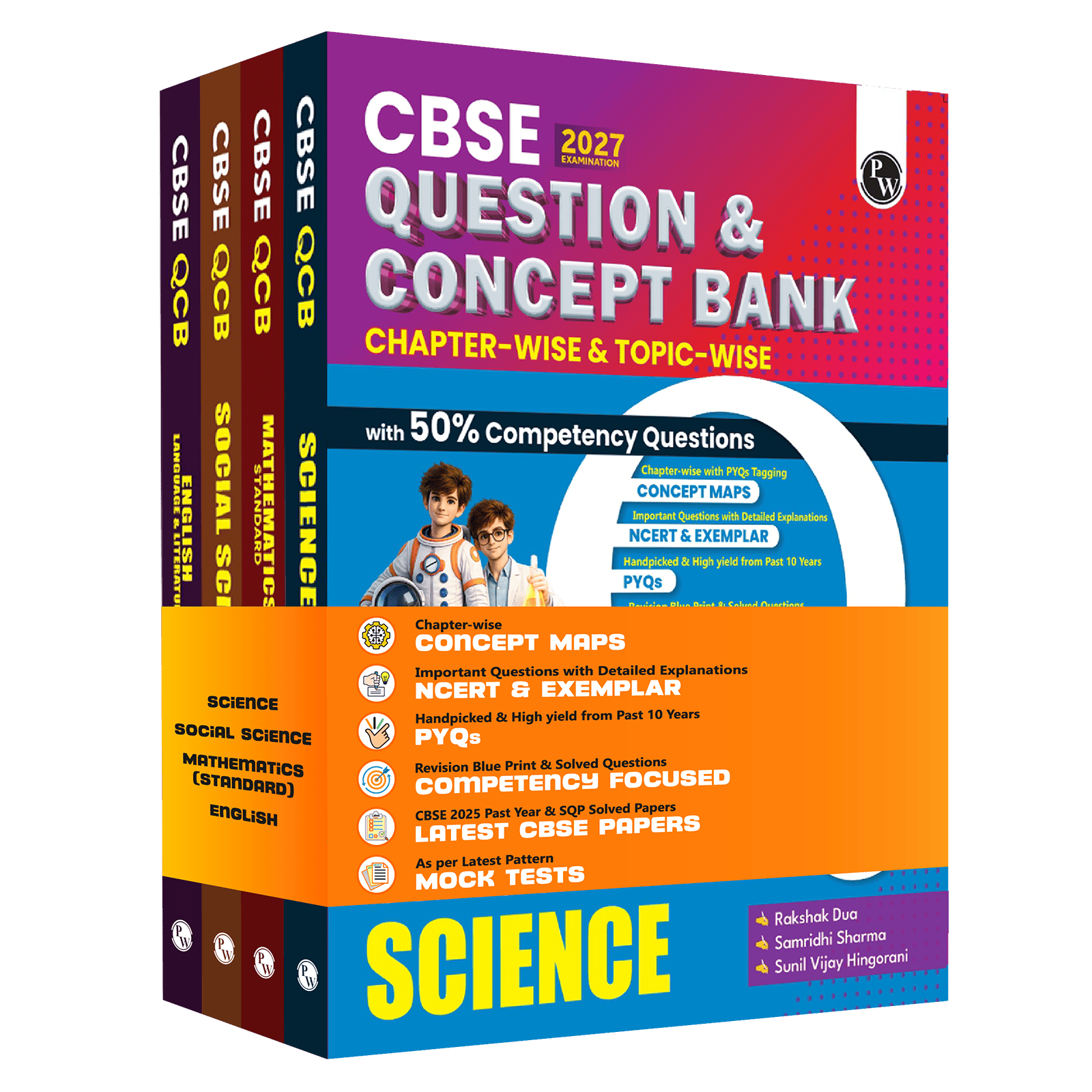
Check Out: CBSE Class 10 Books
Importance of CBSE Class 10 PYQ Science for Board Exams
Top-performing students do not treat previous papers as just another set of practice questions. Instead, they use a CBSE class 10 science PYQ as a blueprint for the actual board exam. These papers offer a clear window into the mind of the paper setter.
-
Understanding the Exam Pattern: The structure of the Science paper involves various sections, ranging from objective type questions to long-answer descriptive cases. Regular practice helps students get comfortable with this layout.
-
Weightage Analysis: Not every chapter carries the same marks. By reviewing CBSE PYQs class 10, students notice that certain topics, like Carbon and its Compounds or Life Processes, consistently carry more weightage.
-
Question Trends: Certain diagrams or chemical reactions appear almost every two years. Identifying these trends allows students to prioritise their revision effectively.
CBSE Class 10 PYQ Science Chapterwise Strategy
One of the most effective methods used by toppers is solving the class 10 science PYQ chapterwise. Instead of attempting a full paper at the very beginning of the session, they integrate past questions into their daily study routine.
When a student finishes the chapter on "Light Reflection and Refraction," they immediately look for every class 10 CBSE PYQ related to that specific topic. This reinforces the concept and shows exactly how the numerical problems are structured. This "learn-and-apply" method ensures that the student is prepared for any variation of a question from that chapter.
Using a CBSE PYQ class 10 science collection sorted by chapters helps in identifying the difficulty level of questions. Some chapters might yield more direct questions, while others, like Heredity, might result in more application-based or "HOTS" (Higher Order Thinking Skills) questions.
Benefits of Practising CBSE Class 10 PYQ Science
Practising with a full-length CBSE class 10 previous year paper under timed conditions is a non-negotiable step for anyone aiming for a 100% score. It simulates the actual exam environment and builds the necessary stamina.
-
Time Management: Science papers can be lengthy, especially with the requirement of drawing neat diagrams. Solving papers helps students allocate specific time slots for Section A, B, C, and D.
-
Self-Assessment: It acts as a mirror, showing exactly where a student stands. It highlights whether the student is struggling with the theory in Chemistry or the numericals in Physics.
-
Confidence Building: The fear of the unknown is a major cause of exam anxiety. When a student has already solved five years of CBSE PYQ class 10, the actual board paper feels like just another practice session.
Marking Schemes with CBSE Class 10 PYQ Science
Simply solving the CBSE class 10 PYQ science is not enough. Toppers spend an equal amount of time, if not more, reviewing the official marking schemes. The CBSE provides specific marks for steps, even if the final answer is incorrect.
-
Keyword Identification: In Science, examiners look for specific scientific terms. For example, in Biology, using terms like "transpiration pull" or "selective reabsorption" can earn higher marks than long, vague explanations.
-
Diagram Accuracy: Past papers show that even a simple ray diagram must have arrows indicating the direction of light. Reviewing class 10 science PYQ solutions teaches students these small but vital details.
-
Step-wise Marking: For Physics numericals, writing the formula and the units is essential. Toppers learn through CBSE PYQ class 10 that they can secure partial marks even if they get stuck midway through a calculation.
Check Out: CBSE Class 10 Question Banks
Mistakes to Avoid While Using CBSE Class 10 PYQ Science
While CBSE class 10 science PYQ sets are valuable, many students use them incorrectly. Avoiding these common pitfalls can significantly improve the efficiency of your preparation.
-
Relying on Outdated Syllabus: CBSE occasionally removes certain topics. Students should ensure they are not wasting time on deleted portions found in very old CBSE PYQs class 10.
-
Memorising Answers: Science requires logic. If a student simply memorises the answer to a class 10 CBSE PYQ, they will fail if the examiner slightly changes the values or the context of the question.
-
Ignoring the NCERT: PYQs are a supplement, not a replacement. The foundation must always be the NCERT textbook, as every CBSE PYQ class 10 science is ultimately derived from it.
Read More: CBSE Class 10 Science Chapter Wise Weightage
Toppers Use Science PYQs FAQs
Q1: How many years of CBSE class 10 PYQ science should I solve?
It is highly recommended to solve at least the last 5 to 7 years of papers. This gives a comprehensive view of the changing exam patterns and the variety of questions asked.
Q2: Is solving CBSE PYQ class 10 enough to pass the exams?
While solving CBSE PYQ class 10 is excellent for practice, you must first read the NCERT chapters thoroughly to understand the basic concepts and definitions.
Q3: Where can I find a reliable CBSE class 10 previous year paper?
You can find official papers on the CBSE website or through reputable educational platforms that provide solved versions of the CBSE class 10 science PYQ.
Q4: Should I solve class 10 science PYQ chapterwise or as a whole paper?
Start by solving them chapterwise while you are learning. Once the entire syllabus is finished, switch to solving full-length papers to improve your speed and timing.
Q5: Why do toppers suggest CBSE PYQ class 10 science for revision?
Toppers use these papers because they highlight the most important topics and teach the "art of answering" according to the CBSE marking scheme.