ICSE Class 10 Syllabus 2026-27

ICSE Class 10 Syllabus
The official ICSE Class 10 board exam dates for 2027 have not been released yet. But as per the expected schedule, the exams will likely be held between mid-February and late March 2027, around February 16 to March 21, 2027. Students are advised to keep checking the official CISCE website for the final timetable and updates.
As the exams are expected to be held around February to March, students now have only about three months in hand. So, it is very important to start preparing seriously. If anyone has not yet started, this is the right time to follow a proper study routine because the syllabus is quite vast. And those who have already completed it should now focus on revision and regular practice to strengthen their preparation.
The latest ICSE Class 10 syllabus 2026-27 has been shared in this article for all subjects, including English, Mathematics, Science, History-Civics, and Geography. Students can check the Class 10 ICSE syllabus 2027 here and plan their studies accordingly to score well in the upcoming exams.
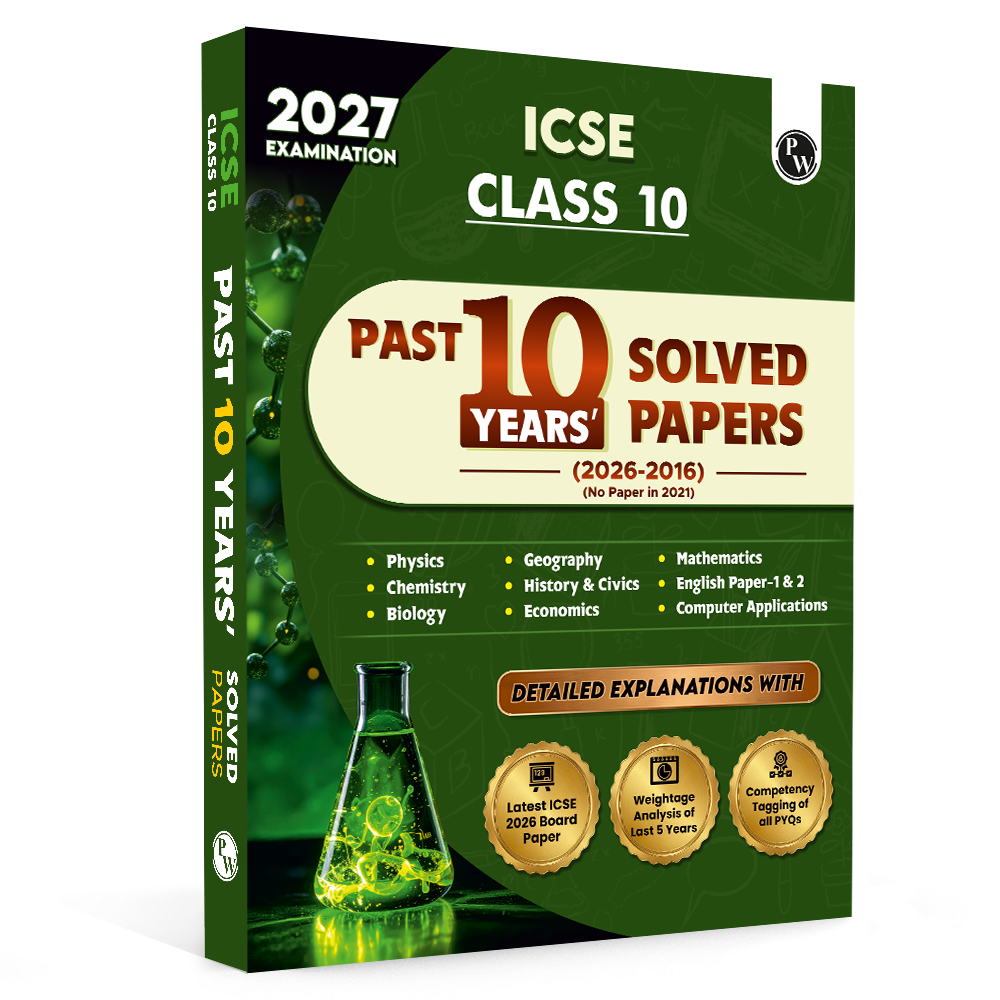
Check Out: ICSE Class 10th Books
ICSE Class 10 Exam Pattern and Marking Scheme
Go through the ICSE Class 10 Exam Pattern and Marking Scheme:-
|
Subject |
External Exam (Marks) |
Internal Assessment (Marks) |
Total Marks |
|
English Language & Literature |
80 |
20 |
100 |
|
Mathematics |
80 |
20 |
100 |
|
Physics |
80 |
20 |
100 |
|
Chemistry |
80 |
20 |
100 |
|
Biology |
80 |
20 |
100 |
|
History-Civics |
80 |
20 |
100 |
|
Geography |
80 |
20 |
100 |
|
Computer Applications / Commercial Studies |
80 |
20 |
100 |
ICSE Class 10 Marking Scheme
The ICSE Class 10 marking scheme will help students understand how marks will be given in the board exams. Each subject will carry a total of 100 marks, out of which 80 marks will be for the written exam and 20 marks will be for internal assessment or project work.
-
In the written papers, questions will usually be divided into different sections: objective-type questions, short answer questions, and long answer or descriptive questions.
-
Objective questions will generally carry 1 mark each, short answers will carry around 2 to 3 marks, and long answers will carry 4 to 6 marks, depending on the subject.
-
Subjects like Geography and Biology will also include diagram or map-based questions. Internal marks will be based on practical work, assignments, and the teacher’s evaluation.
Check Out: ICSE Class 10th Combo Set of 8 Books
ICSE Class 10 Important Topics
The ICSE Class 10 syllabus 2026-27 is quite vast, and it can sometimes feel difficult for students to cover each and every topic properly. But to make preparation easier, it’s important to focus on the most important areas first. Here are some key topics that students should not miss at any cost, as many questions in the exam are asked from these chapters every year. Go through these important parts of the ICSE Class 10 Syllabus and make sure they are well prepared:-
|
Subject |
Important Topics |
|
English |
Composition, Letter Writing, Notice & Email, Comprehension, Grammar (Tenses, Prepositions, Transformation of Sentences), Prose and Poetry summaries, Drama questions |
|
Mathematics |
Rational and Irrational Numbers, Linear and Quadratic Equations, Ratio and Proportion, Matrices, Trigonometric Identities, Heights and Distances, Circles, Mensuration (Cylinder, Cone, Sphere), Statistics, Probability |
|
Physics |
Force, Work, Power and Energy, Light (Reflection and Refraction), Sound, Current Electricity, Household Circuits, Electromagnetism, Heat, Modern Physics (Radioactivity, Nuclear Energy) |
|
Chemistry |
Chemical Bonding, Acids, Bases and Salts, Mole Concept, Electrolysis, Periodic Table, Study of Compounds (Hydrogen Chloride, Ammonia, Nitric Acid, Sulphuric Acid), Organic Chemistry (Hydrocarbons, Alcohols, Acids) |
|
Biology |
Cell Division, Plant and Animal Tissues, Photosynthesis, Respiration, Excretion, Human Circulatory System, Nervous System, Endocrine Glands, Reproductive System, Genetics, Pollution, Ecosystem |
|
History-Civics |
The Indian Constitution, Fundamental Rights and Duties, The Legislature, The Executive, The Judiciary, The First War of Independence (1857), Rise of Nationalism, Gandhian Movement, Partition of Bengal, Quit India Movement, United Nations |
|
Geography |
India – Location, Climate, Soils, Natural Vegetation, Minerals, Industries, Transport, Agriculture (Major Crops), Water Resources, Waste Management, Map Work (Rivers, Mountains, Cities) |
ICSE Class 10 Syllabus PDF
Check out the ICSE syllabus class 10 here:-
ICSE Class 10 Preparation Tips
The ICSE Class 10 syllabus 2026-27 includes core subjects such as English, Mathematics, Science (Physics, Chemistry, Biology), History-Civics, Geography, and optional subjects. Check ICSE Class 10 Preparation Tips:-
1. Complete the ICSE Textbook
The first step in preparation is to finish the ICSE Class 10 Syllabus from the official textbooks. The exercises and examples in these books are closely aligned with the board pattern, so missing them can make your miss easy questions.
-
Students should cover each chapter systematically. For example, in Mathematics, chapters like Quadratic Equations, Trigonometry, and Mensuration carry high weightage, so they must be done from the textbook and exercise problems should be solved.
-
In Science, chapters like Light (Physics), Acids-Bases-Salts (Chemistry), and Human Reproduction (Biology) include both theoretical and numerical parts.
2. Make Your Own Notes
Creating personal notes is one of the most effective strategies for revision. It helps in remembering definitions, formulas, and important points, which saves time during the last month before exams.
-
While studying Mathematics, students can maintain a formula notebook including formulas for Trigonometry, Mensuration, Algebra, and Probability. For instance, writing down sin²A + cos²A = 1 and other trigonometric identities helps in quick recall.
-
In Science, maintain notes for diagrams and processes like Photosynthesis, Blood Circulation, or Chemical Reactions. Highlight important points, for example, “Electrolysis of CuSO₄ uses a copper anode and cathode” or “Heart has 4 chambers”.
-
For subjects like History-Civics and Geography, students can make timelines, flowcharts, and maps to remember events, dates, and processes easily.
Check Out: CBSE Class 10 Sample Papers
3. Focus on Important Topics
As the ICSE Class 10 syllabus 2026-27 is detailed, it may be difficult to give equal time to every chapter. Some chapters are high-scoring, so students must prioritise them.
-
In Mathematics, focus on chapters like Quadratic Equations (10 marks), Mensuration (10–12 marks), Trigonometry (8–10 marks), and Statistics (5 marks).
-
In Science, chapters such as Light (Physics), Electricity (Physics), Acids-Bases-Salts (Chemistry), and Genetics (Biology) are frequently tested. For example, diagrams of the Human Heart or the Reproductive System in Biology carry 3–5 marks each.
-
For History-Civics, important topics include the Indian National Movement, Fundamental Rights, and the Union Legislature. Map-based questions in Geography can carry 4–5 marks each, so practice marking rivers, mountains, and cities.
Check Out: ICSE Class 10 PYQs for All Subjects
4. Practise Sample Papers and Previous Year Questions
Solving sample papers and previous year papers is crucial to understand the ICSE Class 10 marking scheme and time management. It also reduces exam stress.
-
Students should solve at least one sample paper per week. For example, a Mathematics paper may have 20 marks for Algebra, 15 marks for Mensuration, and 10 marks for Statistics, so practice should match this pattern.
-
After completing each paper, check answers carefully and analyse mistakes. In Science, writing correct units in Physics calculations or balancing chemical equations in Chemistry is important.
5. Practise Diagrams and Maps
Diagrams and maps are essential for subjects like Biology and Geography, and can help students score easy marks.
-
In Biology, practice diagrams such as the Heart, Human Brain, the Photosynthesis Process, Cell Division, and Digestive System. Ensure all labels are correct and drawn neatly. Diagrams can carry 3–5 marks each.
-
In Geography, practice marking rivers, mountains, states, and resources on blank maps of India. Map questions can carry 4–6 marks depending on the chapter.
6. Revise Regularly
Revision is the key to remembering concepts and formulas. Students should plan short and frequent revision sessions instead of leaving everything for the last week.
-
Use your handwritten notes and textbook summaries for revision. For example, revising all the formulas in Mathematics or key chemical reactions in Chemistry will save time.
-
In History-Civics and Geography, revise timelines, definitions, and maps regularly. For example, review the major events of the Quit India Movement or the location of major rivers in India.
Read More: Study Time Table for ICSE Class 10 Exam
PW ICSE Class 10 Question Bank for 2027 Exams
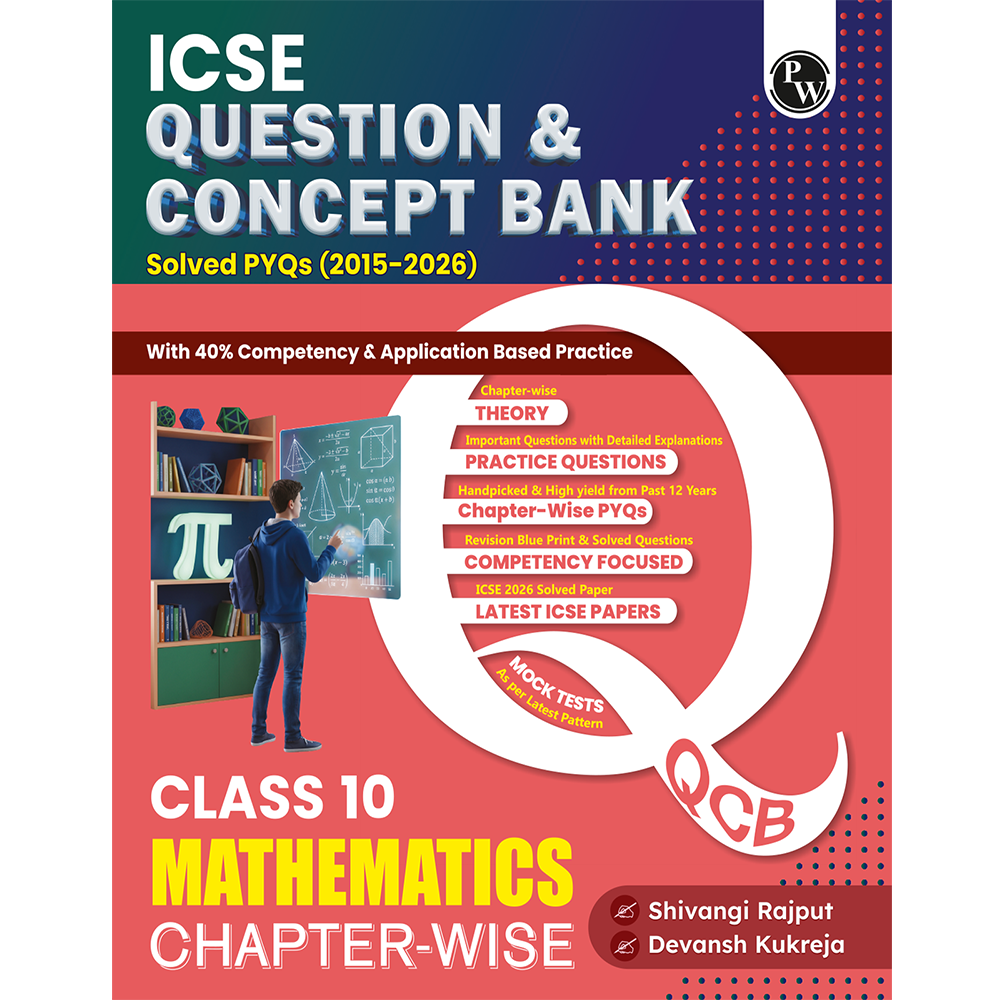
PW ICSE Class 10 Mathematics Question Bank for 2027 Exams is designed to help students build strong conceptual understanding and improve problem-solving skills.
PW ICSE Class 10 English Question Bank for 2027 Exams is a complete preparation guide for Language and Literature. It offers chapterwise coverage with detailed explanations, grammar practice, composition writing, comprehension exercises, and literature-based questions.
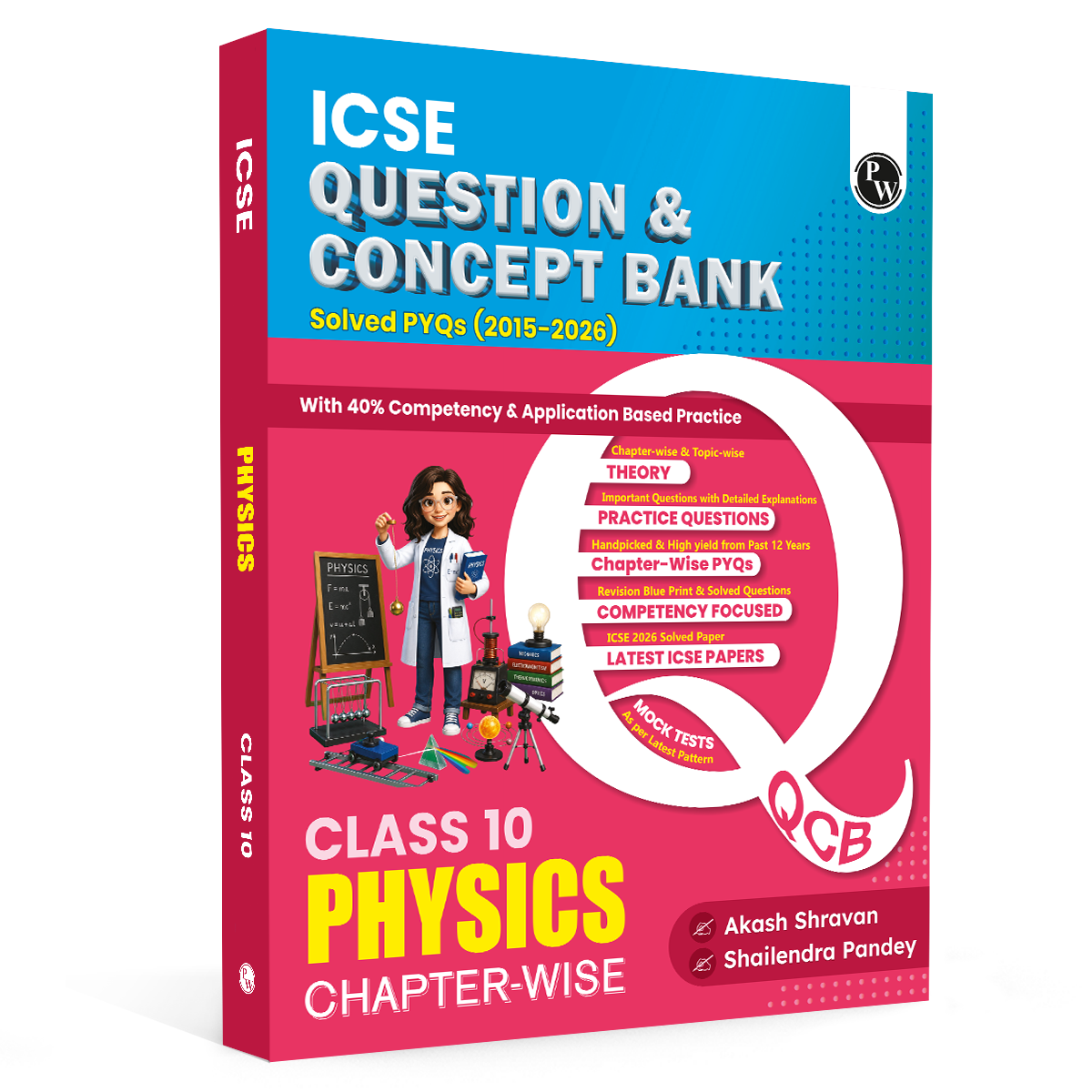
PW ICSE Class 10 Physics Question Bank for 2027 Exams is crafted to help students master key concepts and numerical problem-solving techniques. It provides chapterwise and topicwise coverage with clear theory, solved examples, diagrams, and extensive practice questions.
PW ICSE Class 10 Chemistry Question Bank for 2027 Exams is a comprehensive study companion designed to strengthen conceptual understanding and exam readiness.
ICSE Class 10 Syllabus FAQs
1. What is the ICSE syllabus for Class 10?
The ICSE Class 10 syllabus includes core subjects like English, Mathematics, Science (Physics, Chemistry, Biology), History-Civics, Geography, and optional subjects such as Computer Applications or Commercial Studies.
2. Is Class 10 syllabus 2026-27 released in ICSE?
Yes, the ICSE Class 10 syllabus 2026-27 has been released by CISCE. Students can download it from the official CISCE website to check all chapters, exercises, and practical components for each subject.
3. Is 70% good in ICSE?
Yes, scoring 70% in ICSE is considered good. It reflects a consistent understanding of the concepts and is above average.
4. How to get 90% in ICSE?
To score 90% or more in ICSE, students should:
-
Complete the class 10 ICSE syllabus 2027 thoroughly from textbooks and notes.
-
Focus on high-weightage and frequently asked topics.
-
Practise previous year papers, sample papers, and diagrams/maps regularly.
-
Revise daily and manage time
5. Is 10th ICSE difficult?
The 10th ICSE exam can be challenging for some students because of the detailed syllabus and variety of subjects.