How to Improve Physics, Chemistry & Maths Scores with Topicwise PYQ Practice
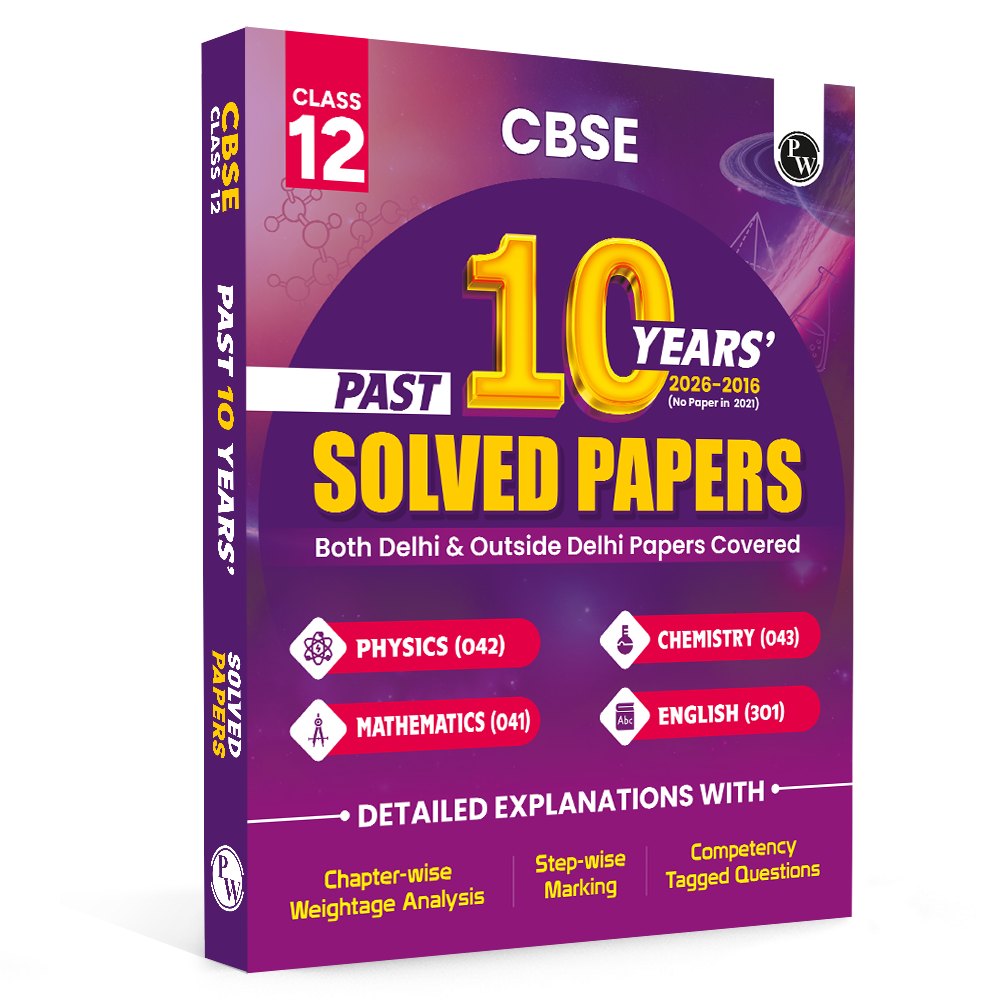
Improving your marks in Physics, Chemistry, and Mathematics requires structured preparation rather than chaotic cramming. Practising with a CBSE Class 12 PCM PYQ set helps you decode the board exam pattern, recognise high-yield questions, and understand targeted answer writing. By shifting from broad reading to deep topicwise problem-solving, you can efficiently bridge the gap between understanding concepts and scoring full marks.
Importance of CBSE Class 12 PCM PYQ
Stepping into your final board exams without analyzing past papers is like driving through a new city without a map. A structured PCM PYQ framework removes the guesswork from your daily study routine. Instead of reading whole textbooks repeatedly, you learn to spot the exact concepts that examiners favor year after year.
-
Clear Blueprint Verification: You see the exact distribution of marks across different chapters.
-
Familiarity with Exam Patterns: Repeated exposure to real board questions reduces exam-day anxiety.
-
Real Evaluation: Solving genuine board questions shows you exactly where your board exam preparation stands.
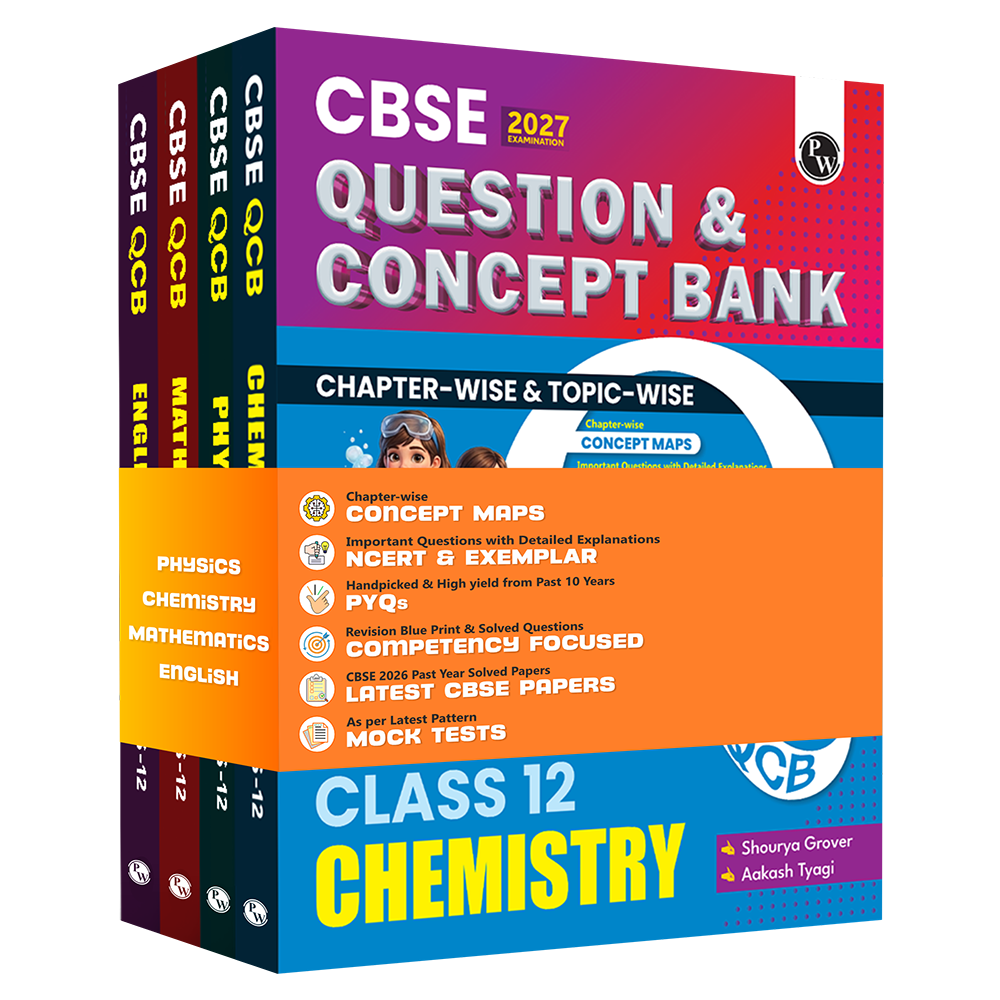
Using resources like the CBSE Question and Concept Bank (QCB) Class 12 PCM Combo ensures you align your hard work with actual exam patterns. This book set includes the latest competency-based blueprints to prepare you for any unexpected changes in the final exam paper.
CBSE Class 12 PCM PYQ Chapterwise Revision
Trying to revise three massive science subjects all at once can quickly lead to burnout. Breaking down your syllabus into smaller chunks through structured revision helps you build deep confidence, one small step at a time.
[Isolate a Single Chapter] ---> [Study Core Concepts & Maps] ---> [Solve Past 10-Year PYQs]
|
v
[Achieve Perfect Exam Readiness] <--- [Fix Weaknesses via Solutions] <--- [Analyze Marking Scheme]
When you focus on one chapter at a time, you build a much stronger foundation. You can easily spot the specific sub-topics where you consistently lose marks, whether it is a tricky derivation in Physics or a complex calculus application in Mathematics. This targeted approach prevents you from repeating the same mistakes on exam day.
Features of CBSE Class 12 PCM PYQ
CBSE 2026 Solved PYQs & SQPs
Get familiar with the latest CBSE exam pattern, marking scheme, question trends, and commonly asked question types through fully solved Previous Year Questions (PYQs) and Sample Question Papers (SQPs).
Chapter-wise Concept Maps
Revise every chapter efficiently with easy-to-understand visual concept maps covering important topics, formulas, derivations, reactions, grammar rules, writing formats, and key concepts.
NCERT, Important Questions & PYQs
Strengthen your preparation with a complete collection of NCERT questions, important questions, competency-based questions, and previous year questions aligned with the latest CBSE syllabus.
10 Years of High-Yield Questions
Practice the most frequently asked and high-weightage questions from the past 10 years to focus on topics with the highest scoring potential.
Competency-Based Blueprints & Detailed Solutions
Develop conceptual clarity, analytical thinking, application skills, and effective answer-writing techniques through competency-based blueprints and step-by-step solutions.
Latest CBSE Pattern Mock Tests
Experience the real board exam environment with full-length mock tests designed according to the latest CBSE pattern to improve speed, accuracy, confidence, and time management.
PW CBSE Question Bank Class 12
Complement your PYQ practice with the PW CBSE Question Bank Class 12 Combo Set of 4 Books, which offers chapter-wise theory, competency-based questions, NCERT-based practice, sample papers, revision exercises, and detailed solutions across all major subjects for complete board exam preparation.
Topicwise CBSE Class 12 PCM PYQ
Working through a book chronologically is a good start, but using topicwise PYQs significantly improves your study efficiency. A single chapter often contains multiple distinct concepts. For example, in Chemistry, the Electrochemistry chapter covers both Nernst equation calculations and the principles of electrolytic cells.
|
Core Subject |
High-Yield Topic Area |
Typical Question Format |
|
Physics |
Electrostatics & Optics |
Derivations, Ray Diagrams, Case-Based Problems |
|
Chemistry |
Organic Mechanisms & Coordination Compounds |
Name Reactions, IUPAC Naming, Reasoning Text |
|
Mathematics |
Calculus & 3D Geometry |
Integration Steps, Vector Formulas, Matrix Proofs |
By breaking your practice down by specific topics, you can learn one small concept before moving forward. This method stops you from feeling overwhelmed and helps you build a highly organized, step-by-step revision notebook.
CBSE Class 12 PCM PYQ Physics, Chemistry, Maths Practice
Balancing three demanding subjects requires a practical, well-planned daily schedule. A chaotic approach to your physics, chemistry and maths practice will only leave you feeling stressed and frustrated as the exams approach.
- Review with Concept Maps:Time: 15 Minutes
Start your study session by reviewing visual summaries. Look at the chapter-wise concept maps in the QCB manual to refresh your memory on key formulas, derivations, and chemical reactions before you start solving problems.
2. Solve High-Yield Topic Questions:Time: 45 Minutes
Work through the high-yield questions from the past ten years for your chosen topic. Write down your answers fully without looking at the solutions first.
3. Check Against the Official Marking Scheme:Time: 20 Minutes
Compare your written answers directly with the provided detailed solutions. Pay close attention to how step-wise marks are given for formulas, units, and final conclusions.
4. Log Errors and Re-evaluate:Time: 10 Minutes
Write down any calculation errors, forgotten formulas, or incorrect terms in a dedicated mistake notebook. Review these specific points before you start your next study session.
CBSE Class 12 PCM PYQ Strategy to Imporve Scores
Real CBSE PCM score improvement does not happen just by reading theory; it comes from practicing the specific types of questions used in the actual exam. The modern board pattern places a heavy emphasis on analytical thinking and real-world applications.
-
Competency-Based Questions: These test how well you can apply theoretical knowledge to practical, real-world situations.
-
Case-Study Problems: These require you to read a passage carefully, pull out the relevant scientific details, and solve connected sub-questions.
-
Assertion-Reasoning Tasks: These check your true understanding of core principles rather than your ability to memorize facts.
The Class 12 question bank includes a wide variety of these modern question styles. Practicing these formats regularly helps you learn to structure your answers perfectly, ensuring you earn maximum marks from the examiners.
Balancing Mock Papers with CBSE Class 12 PCM PYQ
Understanding individual topics is highly effective, but you also need to practice managing your time across a full three-hour exam paper. Combining your PCM PYQ practice with regular mock tests is the best way to ensure you finish the actual exam comfortably.
Crucial Exam Instruction: Always solve your full-length mock papers under strict exam conditions. Sit in a quiet room, set a timer for exactly three hours, and do not look at your notes or textbook.
This realistic Physics Chemistry Maths practice helps you build the mental stamina needed for the actual exam. It teaches you how to allocate your time wisely between short objective questions and long, high-mark derivations or mathematical proofs, ensuring you never leave the exam hall with unfinished answers.
Read More: CBSE Class 12 Question Bank PDF Download
CBSE Class 12 PCM PYQ FAQs
How many years of past papers should I solve using a CBSE class 12 PCM PYQ resource?
You should focus on the last 10 years of high-yield questions. This timeframe gives you an excellent understanding of changing question styles, covering everything from traditional long derivations to modern competency-based problems.
Why is using topicwise PYQs better than solving full past papers early in the year?
Focusing on specific topics allows you to check your understanding right after finishing a lesson. This approach highlights your weak areas immediately, saving you from waiting until the end of the year to discover gaps in your knowledge.
Can I achieve significant PCM score improvement by just reading through the solved questions?
No, simply reading solutions creates a false sense of security. You must write out the formulas, perform the calculations, and draw the diagrams yourself to build true accuracy and speed for the real exam.
How does chapterwise revision protect students from last-minute exam stress?
Breaking your syllabus down into organized chapters turns a massive amount of information into clear, achievable goals. Reviewing these sections alongside structured concept maps makes your final revision quick, calm, and highly effective.