NCERT Solutions for Class 6 English Poorvi Unit 3 Chapter 7 Neem Baba
NCERT Solutions for Class 6 English Chapter 7 Class 6 are prepared to help students understand the lesson Neem Baba in a simple and effective way. These NCERT Class 6 English Chapter 7 questions answers follow the latest syllabus and explain each question clearly, making learning stress-free for young learners. The story Neem Baba teaches important values like caring for nature, respecting trees, and understanding their role in our lives.
The Neem Baba Class 6 English questions answers are written in easy language so students can understand the theme, characters, and message of the chapter without confusion. With Neem Baba Class 6 English NCERT solutions, students can improve their reading comprehension, vocabulary, and answer-writing skills. Each answer is structured properly, which helps students learn how to write clear and meaningful responses in exams.
Class 6 English Chapter 7 Questions Answers also supports quick revision before tests and helps students complete homework on time. These solutions encourage students to think beyond the text and understand the moral of the story. Regular practice of these questions and answers builds confidence and helps students score better in Class 6 English exams.
Check Out: Class 6th Books
Class 6 English Chapter 7 Neem Baba Questions Answers
Below we have provided class 6 English NCERT solutions for students so that they can prepare better -
Before Reading
Activity I:
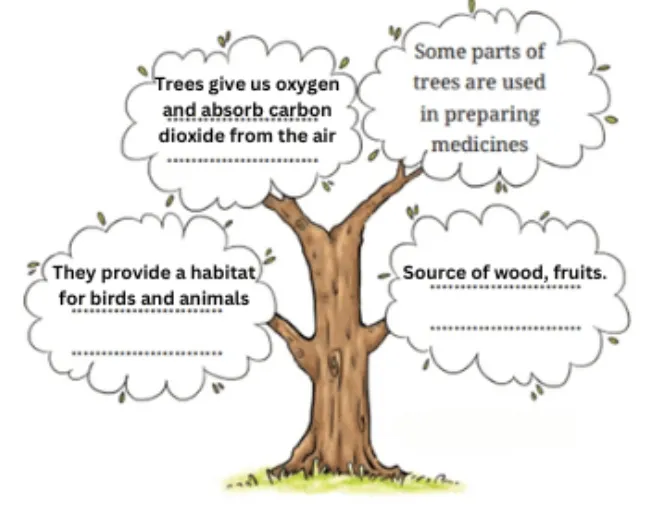
A tree is useful to us in many ways. Mention some of these uses. Write them in the picture given below.
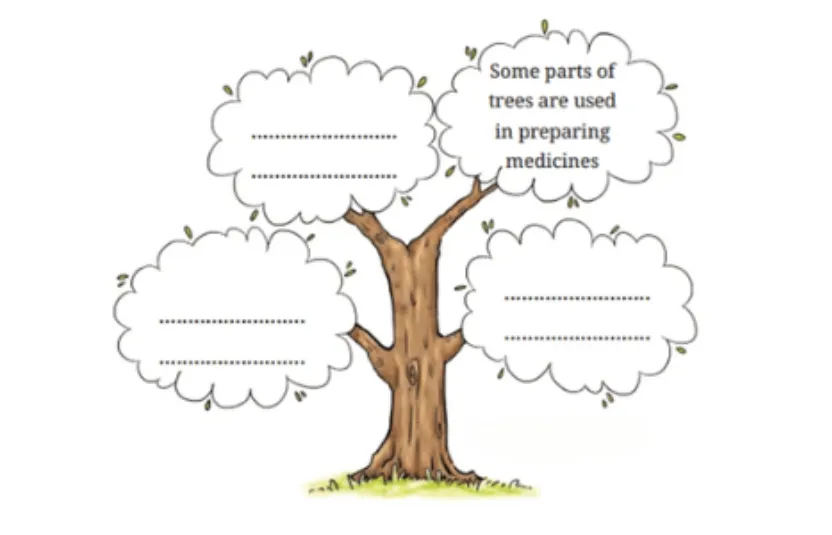
Answer:
Activity II:
Neem is a common tree in our country. Discuss in groups of four and fill Columns 1 and 2 with what you know about the neem tree and what you want to know.
| Column 1: What do you know? | Column 2: What do you want to know? |
|---|---|
| Neem grows in many parts of India. | How old is the neem tree species? |
| Neem leaves and twigs are useful. | What medicines can be made from neem? |
| Neem seed powder protects crops. | How does neem stop insects? |
| Neem is called ‘nature’s gift to man’. | Are there other trees like neem with similar uses? |
After Reading
Let us discuss:
Amber found many facts about the neem tree from Neem Baba. Fill up the fact sheet based on what Neem Baba told her.
| Fact | Answer |
|---|---|
| Common name | Neem |
| Given by | Iranians |
| Period of birth | Millions of years ago |
| Born at | North India or Myanmar |
| Found in | Many Asian, African countries and parts of America |
| Common names | Nimb, Nim, Leemba, Nimori, Nimbamond, Nimbe, Nimo |
| Names given by scientists | Bitter grace of God, Nature’s gift to man |
| Names given by others | Magic tree, Tree of the twentieth century |
Questions:
-
How is neem useful to farmers?
Answer: Neem seed powder sprayed on plants protects crops from locusts and termites, prevents mosquito breeding in rice fields, and increases crop yield. -
Mention some of the uses of the neem tree.
Answer: Neem twigs are used to clean teeth, leaves protect clothes, various parts of neem make medicines, neem seed powder protects stored grains from insects, neem oil is used in soaps and toothpaste, neem wood resists termites, and neem purifies the air.
Let us think and reflect
I. You just read about the neem tree. Write any two facts that surprised you the most.
Answer:
-
Neem is millions of years old and spread to many countries.
-
Neem seed powder stops mosquitoes from breeding in stagnant water.
II. Complete the following sentences:
-
Amber played in the shade of the neem tree.
-
Neem seed powder protects crops from locusts and termites.
-
Spraying neem seed powder in stagnant water is a cost-effective method to stop mosquitoes from breeding.
-
One reason why doctors advise us to use neem leaves for someone suffering from measles is because neem leaves destroy germs and prevent them from breeding.
III. Which parts of the neem tree are used to make medicines?
Answer: Leaves, bark, flowers, fruits, and roots.
IV. Why is the story of the neem tree thought-provoking?
Answer: Because neem has many names given by different cultures, a very long history, and many useful properties, making it an important and special tree.
Let us learn
I. Put the following compound words in their trees according to type:
Words: something, neem oil, cleanliness-parting, well known, grandmother, seed powder, childhood, well trained, thought-provoking
| Type of Compound Word | Words |
|---|---|
| Open compound words | neem oil, well known, seed powder, well trained |
| Closed compound words | something, grandmother, childhood |
| Hyphenated compound words | cleanliness-parting, thought-provoking |
II. Match the verbs in present and past tense and make a sentence.
| Present | Past | Sentence |
|---|---|---|
| become | became | I want to become a teacher. |
| find | found | She found a lost puppy. |
| make | made | He made a beautiful painting. |
| discover | discovered | Scientists discovered a new plant. |
| tell | told | The teacher told a story. |
| give | gave | She gave me a gift. |
Let us discuss
III. What is personification? Give examples from the text.
Answer:
Personification is giving human qualities to non-human things.
Examples:
-
"The leaves whispered in the wind."
-
"The flowers danced merrily in the breeze."
Let us listen
(Answer based on listening activity about Peepal Baba)
Select the correct statements:
-
The mother was surprised to know that Peepal Baba had planted trees all over the country. (Correct)
-
The mother disliked the work being done by Peepal Baba. (Incorrect)
-
The mother wanted to know more about Peepal Baba. (Correct)
-
The boy decided to take care of trees by listening to Peepal Baba’s journey. (Correct)
-
The boy was worried about what his teacher had told him. (Incorrect)
Let us speak
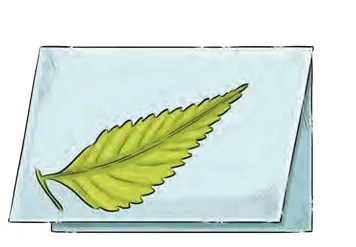
(Collect dry leaves, make cards, speak about them)
Example answer:
Leaf shape: Oval, pointed
Tree name: Neem
Use: Neem leaves are used to make medicine that protects from germs.
Let us write
(Write a paragraph about a tree you like)
Example paragraph:
"I like the banyan tree near my school. It is tall with big branches and thick leaves that provide shade. I like it because it gives shelter to birds and animals, and I often sit under it to read. The banyan tree is very beautiful and important for the environment."
Let us explore
(Find which Indian languages use the names of neem)
-
Neem is called Nimb in Hindi.
-
In Marathi, it is known as Nim.
-
In Gujarati, it has two names: Leemba and Nimori.
-
In Bengali, it is referred to as Nimbamond.
-
In Kannada, it is called Nimbe.
-
In Oriya (Odia), it is known as Nimo.
Check Out: PW School Books
The Millions of Years of Neem Baba’s History
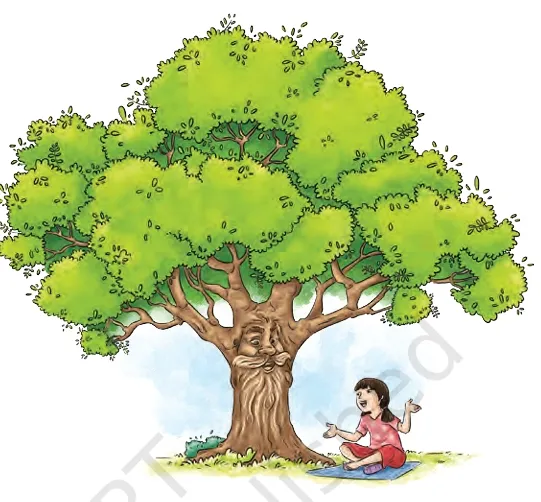
The story begins with a young girl named Amber sitting in the cool shade of a neem tree in her courtyard. In a creative twist, the tree begins to converse with her, introducing himself as "Neem Baba." A significant point often addressed in the class 6 english chapter 7 question answer is the tree's incredible age. Neem Baba explains that he does not know his exact birth year because his family has existed for millions of years, making him an ancient witness to the earth's changes.
According to the source material, the neem tree was originally born in North India or Myanmar. Over thousands of years, the neem family migrated and spread across various continents. Today, the tree has established a presence in:
-
Asia: Numerous countries across the continent.
-
Africa: Wide growth in various African regions.
-
America: Specific areas where the tree was introduced.
Neem Baba mentions that he has seen Amber grow from a small child, reinforcing the idea of trees as long-term guardians of our homes and environments. This personification helps students view the tree not as a mere object, but as a wise elder with a global history.
A Linguistic Journey: The Many Names of the Neem
The textbook provides a detailed look at how the neem tree is identified across different cultures and languages. For the class 6 english chapter 7 question answer poorvi exercises, students must be familiar with these specific terms. Neem Baba explains that his common name, "Neem," was given by the Iranians. However, his Sanskrit names are even more descriptive:
-
Arishta: Translated as "the one who cures diseases."
-
Nimba and Nimbaca: Traditional Sanskrit designations.
The scientific name of the tree, Azadirachta indica, also has a fascinating story. When Persians arrived in India and saw the tree growing freely everywhere, they called it "Azad Darakhte Hindi," meaning the "Free Tree of India." This name was later adapted into the Latin scientific version. Additionally, the tree is known by various regional names in India:
-
Marathi: Nim
-
Bengali: Nimbamond
-
Gujarati: Leemba or Nimori
-
Kannada: Nimbe
-
Hindi: Nimb
This linguistic diversity emphasizes that no matter the language, the tree's value is recognized by everyone who lives near it.
Nature’s Pharmacy: Healing with the "Magic Tree"
Scientists and doctors refer to the neem tree as "nature’s gift to man," "the bitter grace of God," and "the cleanliness-parting tree." The text explains that every single part of the tree—the roots, bark, leaves, flowers, and fruits—contains chemical properties that destroy germs and prevent them from breeding. In the class 6 english chapter 7 question answer section, students learn about several traditional remedies used by Amber’s family:
-
Measles Relief: Doctors advise patients with measles to lie on neem leaves. The chemical properties of the leaves kill the germs and help soothe the intense itching of the skin.
-
Cough Remedies: Amber recalls that her grandmother prepared a medicine from the bark of the neem tree that cured her cough and breathing difficulties.
-
Eye Treatment: When Amber’s father had eye irritation, her grandmother used neem flowers to prepare a kajal (eyeliner) that provided relief.
-
Daily Hygiene: Twigs from the neem tree are used as natural toothbrushes to keep the mouth and teeth clean.
Neem Baba stresses that while the tree is a "magic tree," these medicinal preparations should only be handled by people who are well-trained and experienced.
Check Out: PW Stationery Items
The Farmer’s Ally and Environmental Protector
Beyond personal health, the neem tree is a "friend to the farmers." The agricultural utility of the tree is a key theme in the class 6 english chapter 7 question answer. By grinding neem seeds into a powder and mixing it with water, farmers can create a natural spray that protects their crops from locusts and termites.
The tree also serves several household and ecological purposes:
-
Insect Repellent: Dried neem leaves are placed in grain storage bins and cupboards to keep insects away from food and clothes.
-
Mosquito Control: Sprinkling neem seed powder on stagnant water in rice fields prevents mosquitoes from breeding, which is an affordable way to control disease.
-
Modern Industry: Neem oil is a key ingredient in making soaps and toothpaste.
-
Timber: Neem wood is highly prized for furniture because it is naturally resistant to termite attacks.
-
Air Purification: The tree helps in cleaning and purifying the air around us, contributing to a healthier ecosystem.
Original Framing: The "Eco-Grandfather" Perspective
A unique way to frame the story of "Neem Baba" is by viewing the tree as an Eco-Grandfather. While many articles focus purely on the "uses" of the tree as a resource, the personification in the textbook suggests a relationship of kinship. By calling the tree "Baba" (Grandfather), the curriculum shifts the student’s role from a "consumer" of nature to a "descendant" of nature. This framing suggests that environmental protection is a form of ancestral respect. Just as Amber listens to the tree’s stories to learn about history and health, students are encouraged to view the natural world as a mentor that has survived for millions of years. This perspective teaches that preserving a neem tree is not just a scientific choice, but a way to honor the "living elders" of our planet.
Benefits of PW Class 6 Study Material
To help students achieve the best results in their school exams,PW CBSE Class 6 study material is the right resource for revision.
-
Easy-to-understand content written in simple language for Class 6 students
-
Strictly based on the latest NCERT syllabus and exam pattern
-
Clear explanations with examples to build strong concepts
-
Chapter-wise notes for quick learning and revision
-
Solved NCERT questions and extra practice questions
-
Helps improve understanding, confidence, and exam performance
-
Useful for homework, revision, and test preparation
Read More: How to Prepare for CBSE Class 6 Exams 2026?
NCERT Solutions for Class 6 English Chapter 7 FAQs
1. Why does the neem tree have a scientific name like Azadirachta indica?
It is based on the Persian phrase "Azad Darakhte Hindi," which means the "Free Tree of India." Persians gave it this name because they saw the tree growing freely everywhere in India.
2. How does the neem tree protect stored items at home?
Dried neem leaves act as a natural repellent. When placed in grain bins or cupboards, they keep insects away from the food and clothing stored inside.
3. What is the significance of the name "Arishta"?
In Sanskrit, "Arishta" means "the one who cures diseases," highlighting the tree's role as a primary source of medicine in ancient times.
4. How is the neem tree helpful to farmers in their fields?
Farmers use a mixture of neem seed powder and water as a natural pesticide to protect their crops from locusts and termites. It also stops mosquitoes from breeding in stagnant water.
5. Why are neem leaves used for patients suffering from measles?
The leaves contain chemical properties that kill germs and prevent them from breeding, which helps reduce the itching and discomfort caused by the disease.