NCERT Solutions for Class 11 Accountancy, Download PDFs
NCERT Solutions for Class 11 Accountancy serve as a comprehensive guide for students aiming to master the fundamentals of financial record-keeping and reporting. These solutions provide detailed, step-by-step explanations for complex problems, ensuring clarity in core concepts like journal entries and ledger posting while aligning perfectly with the latest CBSE curriculum for academic excellence.
Understand Financial Accounting with NCERT Solutions for Class 11 Accountancy
Stepping into the commerce stream often feels like entering a different world because of the fresh terminology and specific logic required for bookkeeping. We recognize that you need a dependable roadmap to navigate through the complexities of balance sheets and trial balances without getting lost. NCERT solutions act as illuminating beacons, breaking down even the most intricate accounting principles into small, manageable bits. By utilizing these guides, we ensure that every student constructs a sturdy foundation for future studies in finance or business management.
Our solutions follow a highly structured format where each new concept rests upon the one before it. This creates a smooth learning journey. You don't have to worry about missing out on vital details because these materials cover the entire syllabus, ranging from the basic "Introduction to Accounting" to advanced "Financial Statements." They offer an arithmetical check under the double-entry system, verifying that both sides of every single transaction are recorded with total accuracy.
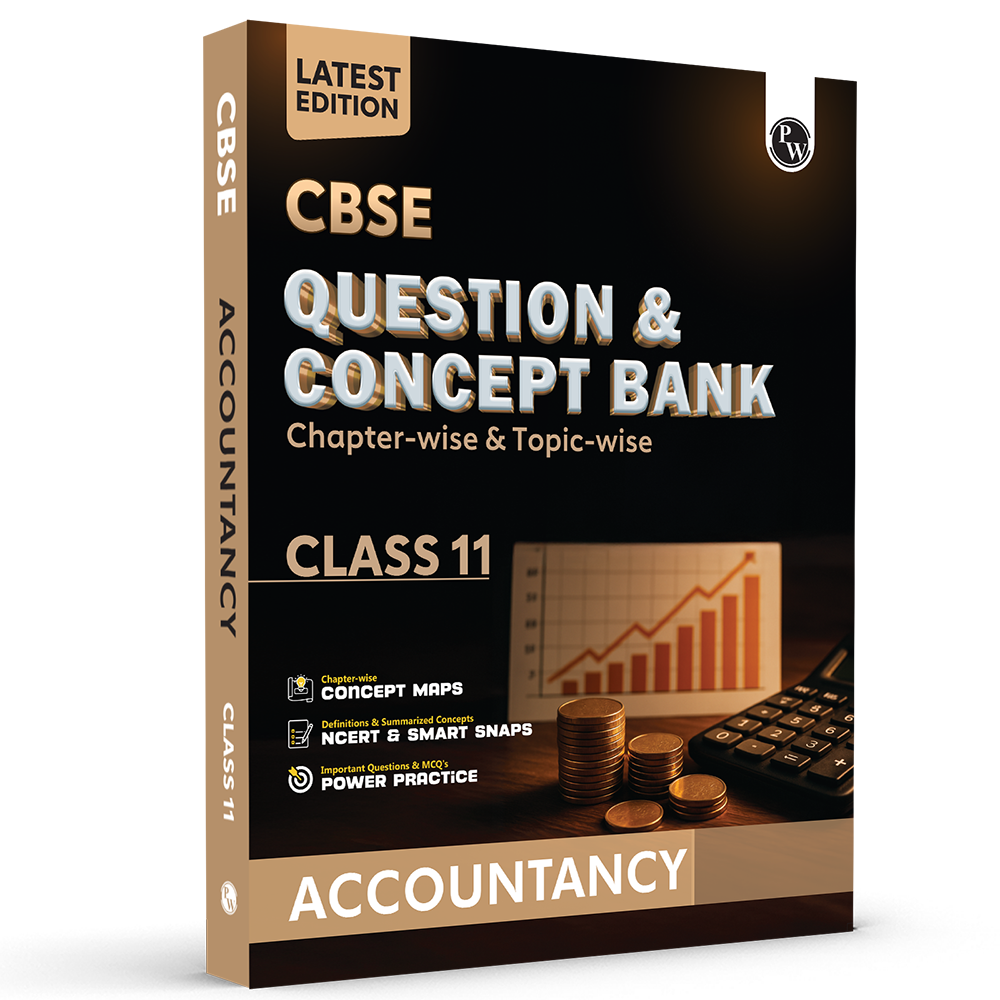
Check Out: Commerce Class 11th Books
Important Steps in NCERT Solutions for Class 11 Accountancy Recording of Transactions 1
Recording transactions represents the very first step in the accounting cycle where business activities are captured in monetary terms. You'll find that every transaction possesses a dual aspect, meaning for every debit, there's an equal credit. This double-entry system is a vital part of maintaining the fundamental accounting equation: Assets = Liabilities + Capital.
-
Identification: Pinpointing and analyzing business transactions using source documents like invoices.
-
Journalising: Recording transactions in the journal, which acts as the book of original entry.
-
Posting: Classifying and transferring these entries into their respective ledger accounts for better organization.
In this specific section, we focus heavily on the rules of debit and credit. For assets and expenses, an increase is always debited. Conversely, for liabilities, capital, and revenues, an increase is credited. We provide specimens of "T-Accounts" to help you visualize how these entries impact different ledger categories. Using these solutions helps you practice journalising transactions for varied scenarios, such as cash purchases or credit sales to debtors.
Detailed Insights into NCERT Solutions for Class 11 Accountancy Recording of Transactions 2
Once you've mastered the basic journal, we move to specialized subsidiary books. These are essential for businesses dealing with a high volume of similar transactions. NCERT solutions for class 11 accountancy recording of transactions 2 explain the use of Cash Books, Purchase Books, and Sales Books.
We explain how the Cash Book serves a dual purpose as both a journal and a ledger account. You don't need to open a separate cash account in the ledger if you maintain a comprehensive Cash Book. This chapter also introduces the Petty Cash Book, which handles small, recurring expenses like stationery or postage. Students can download PDFs to see exact formats for multi-column cash books, which include specific columns for bank transactions and discounts.
Solving Errors with NCERT Solutions for Class 11 Accountancy Rectification of Errors
A balanced trial balance doesn't always mean your books are perfect. Sometimes, errors exist that don't affect the agreement of the trial balance, such as errors of principle or complete omission. Identifying these requires a deep understanding of accounting conventions.
-
Error of Omission: This happens when a transaction is completely or partially left out of the records.
-
Error of Commission: These are mistakes in recording amounts, wrong posting, or incorrect carrying forward of totals.
-
Error of Principle: This occurs when you record a transaction in violation of accounting principles, like treating a capital expenditure as a revenue expense.
If you find that the trial balance doesn't tally, we use a "Suspense Account" as a temporary measure. This account helps avoid delays in preparing financial statements while you hunt for the underlying mistakes. Rectifying these errors involves passing adjustment entries to restore the correct balances. Our solutions guide you through the process of detecting these glitches and fixing them before final accounts are closed.
Check out: CBSE Class 11 Question Bank
NCERT Solutions for Class 11 Accountancy PDFs
Download PDFs of NCERT Solutions for Class 11 Accountancy Syllabus from the table below:
| NCERT Solutions for Class 11 Accountancy PDFs | |
| Chapters | PDFs |
| Chapter 1 - Introduction to Accounting | Download Link |
| Chapter 2 - Theory Base of Accounting | Download Link |
| Chapter 3 - Recording of Transcations 1 | Download Link |
| Chapter 4 - Recording of Transcations 2 | Download Link |
| Chapter 5 - Bank Reconciliation Statement | Download Link |
| Chapter 6 - Trial Balance and Rectification of Errors | Download Link |
| Chapter 7 - Depreciation, Provisions & Reserves | Download Link |
| Chapter 8 - Bill of Exchange | Download Link |
| Chapter 9 - Financial Statements - 1 | Download Link |
| Chapter 10 - Financial Statements - 2 | Download Link |
| Chapter 11 - Accounts from Incomplete Records | Download Link |
| Chapter 12 - Applications of Computers in Accounting | Download Link |
| Chapter 13 - Computerised Accounting System | Download Link |
| Chapter 14 - Structuring Database for Accounting | Download Link |
| Chapter 15 - Accounting System Using Database Management System | Download Link |
Understanding Value with NCERT Solutions for Class 11 Accountancy Chapter Depreciation
Depreciation is the permanent and gradual decrease in the value of a fixed asset over time. This happens due to wear and tear, obsolescence, or the simple passage of time. You must charge depreciation to determine the actual profit or loss of the business and to show a fair view of the financial position on the balance sheet.
|
Feature |
Straight Line Method (SLM) |
Written Down Value (WDV) |
|
Calculation Base |
Calculated on Original Cost |
Calculated on Book Value at the start of the year |
|
Annual Amount |
The amount remains constant every year |
The amount decreases year after year |
|
Tax Status |
Often less preferred for tax |
Widely accepted by tax authorities |
The NCERT solutions for class 11 accountancy chapter depreciation provide clear formulas for both methods. For SLM, you subtract the scrap value from the cost and divide it by the useful life. In the WDV method, you apply a fixed percentage to the reducing balance. This ensures that as the asset gets older and repair costs rise, the depreciation charge falls, keeping the total burden on the profit and loss account relatively stable.
Practical Study Advice for Exam Success
You should treat the NCERT textbook as your primary source of truth. Start by solving the short-answer questions to test your conceptual grip. Don't skip the numerical problems at the end of each chapter. We recommend practicing the preparation of a Trial Balance using the "Balance Method" as it's the most common practice in exams.
Vary your study routine by alternating between theory and heavy calculations. It's easy to get exhausted by long ledger problems. Take short breaks. When you return, review your journal entries for any "Error of Commission" you might have made during a moment of fatigue. This habit builds the accuracy required for professional accounting. Accuracy is everything in commerce.
Benefits of PW Class 11 Study Material
NCERT & CBSE Aligned Content
PW Class 11 study material strictly follows the latest NCERT and CBSE syllabus, ensuring complete exam relevance.
Conceptual Clarity
Topics are explained in simple language with step-by-step solutions to help students understand difficult concepts easily.
Chapter-wise Notes & Practice
Well-organized notes, examples, and practice questions support effective learning and quick revision.
Exam-Focused Preparation
Important questions and problem-solving tips help improve performance in school and competitive exams.
Strong Foundation for Class 12
The material builds clear fundamentals needed for higher studies and entrance exams.
Read: CBSE Class 11 Question Bank PDF Download
NCERT Solutions for Class 11 Accountancy FAQs
Q1. Can I download these NCERT solutions for class 11 accountancy for free? Yes, these answers are usually free on educational websites like PW, so students may study for their tests without having to pay anything.
Q2. How many chapters are in the NCERT Class 11 Accountancy syllabus? There are about 15 chapters that cover everything from basic accounting ideas to computerised accounting systems and making financial statements.
Q3. Why do people utilise the double-entry approach to keep track of transactions? It works because every transaction has two sides: debit and credit. This keeps the accounting equation balanced and gives a full record.
Q4: Can I use only NCERT solutions to get ready for my board exam? NCERT solutions are a good start and cover the official curriculum, however we recommend doing more problems from PW books to improve your speed and accuracy.
Q5. What is a suspense account for fixing mistakes? When a trial balance doesn't match, an accountant opens a suspense account. This lets them keep working on the financial statements while they look for mistakes.