NCERT Solutions for Class 6 Maths Ganita Prakash Chapter 7 Fractions
Fraction Class 6 is an important topic that helps students understand parts of a whole and their use in daily life. Covered in Class 6th Math Chapter 7, this chapter introduces different types of fractions such as proper fractions, improper fractions, mixed fractions, and equivalent fractions. Learning these basics is essential for building a strong foundation in mathematics.
The Class 6 Maths Chapter 7 solutions are prepared according to the latest NCERT syllabus and explain each concept step by step. With Chapter 7 Fraction Class 6 solutions, students can easily learn how to compare fractions, find equivalent fractions, and simplify them. The Fraction Class 6 questions answers are written in simple language, making it easier for students to understand and practice without confusion.
Using Fractions Class 6 NCERT solutions helps students improve problem-solving skills and accuracy. These solutions are useful for homework, revision, and exam preparation. Regular practice of fraction questions builds confidence and helps students score better marks in Class 6 Maths. Overall, this chapter plays a key role in strengthening numerical skills and logical thinking.
Check Out: Class 6th Books
Class 6 Maths Ganita Prakash Chapter 7 Fractions Questions and Answers
Below are the NCERT Solutions for Class 6 Maths Ganita Prakash Chapter 7 Fractions Question Answers. These solutions provide clear and accurate answers to all the textbook questions, helping students grasp the concepts easily. Designed as per the latest NCERT guidelines, they serve as a helpful resource for revision, homework, and strengthening the understanding of fractions.
Page 155


Page 158
Page 160
Page 162 (i)
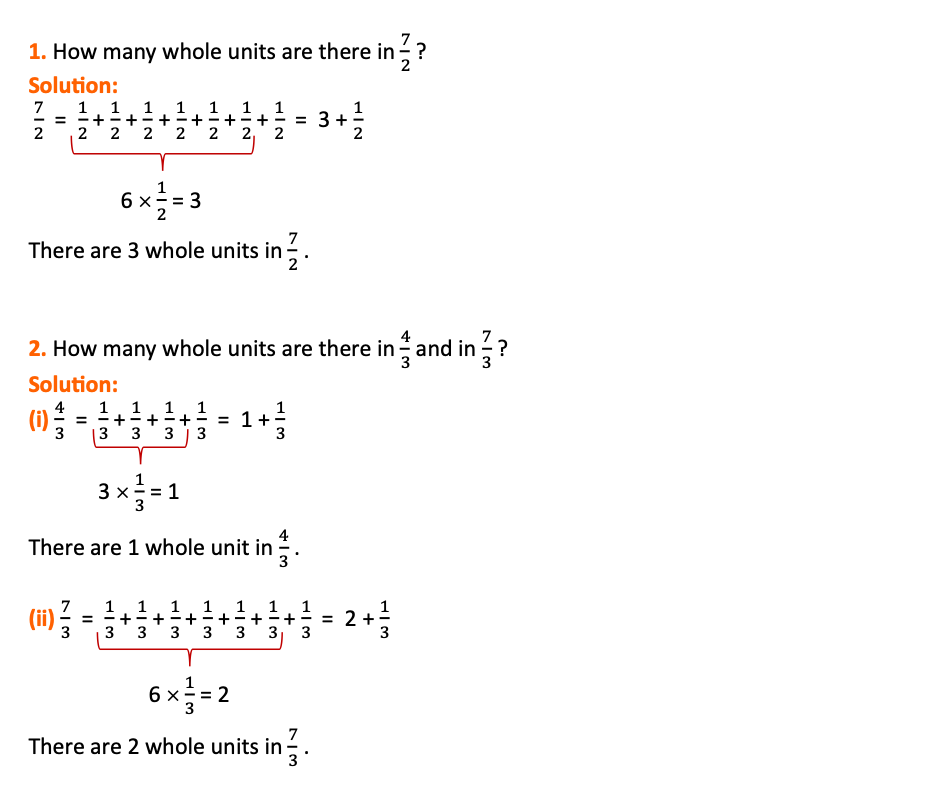
Page 162 (ii)
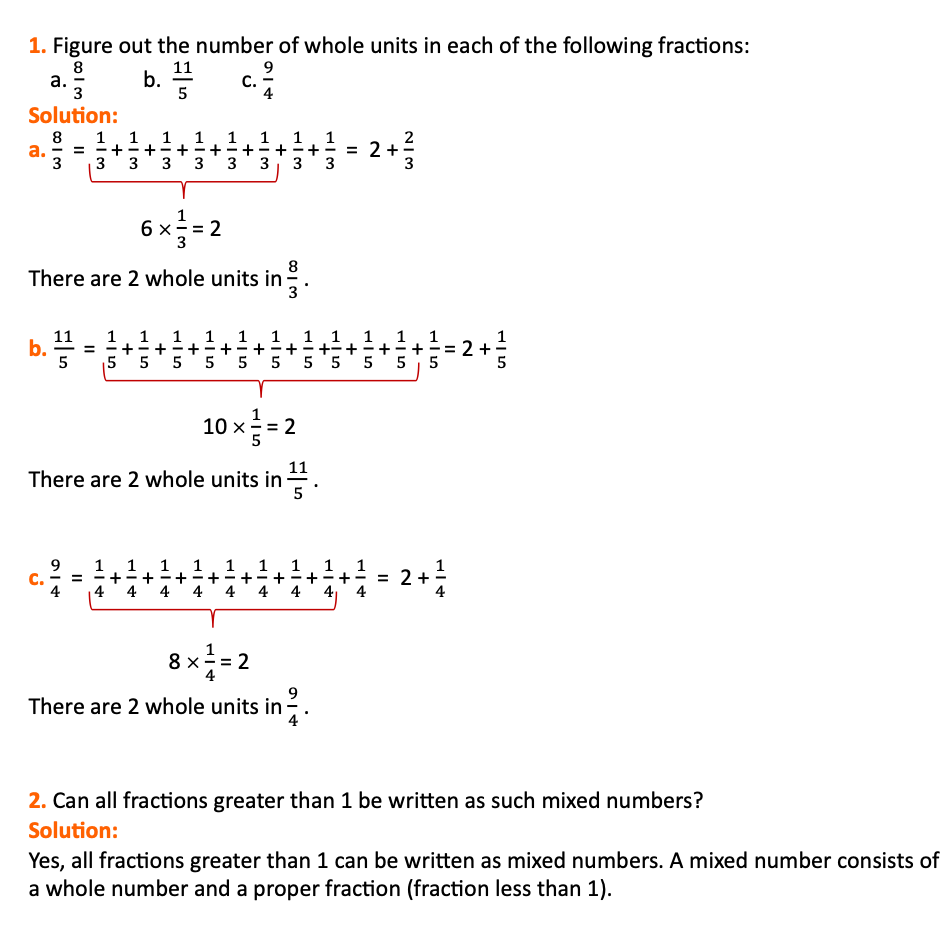

Page 163
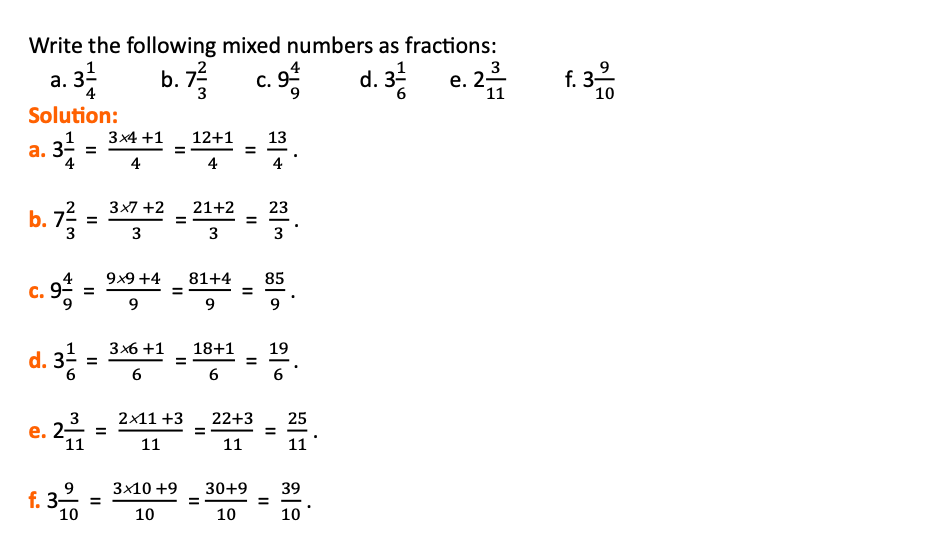
Page 165
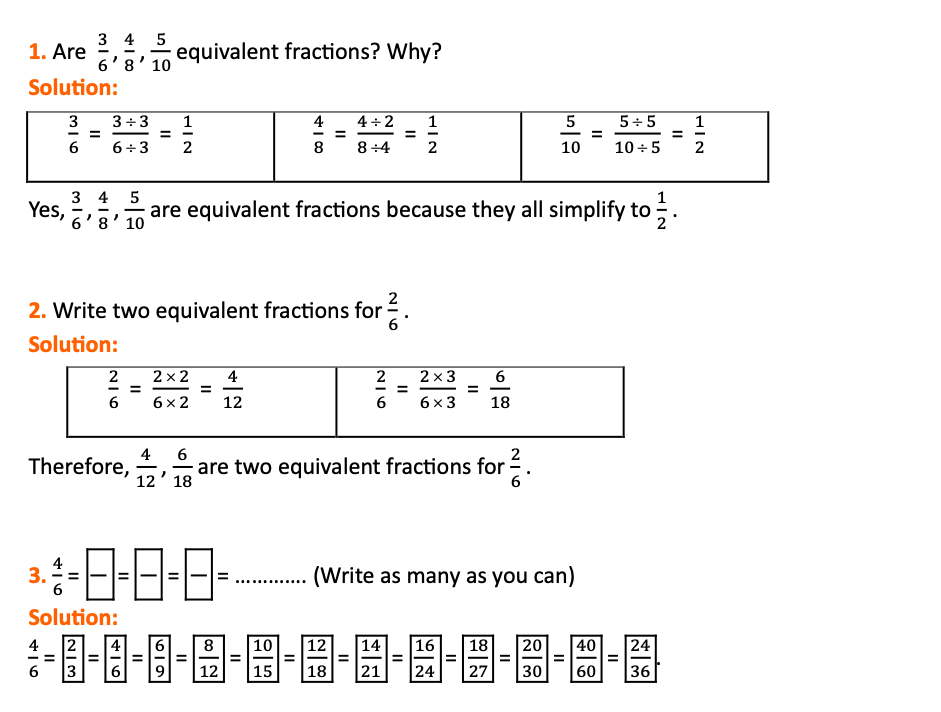
Page 166

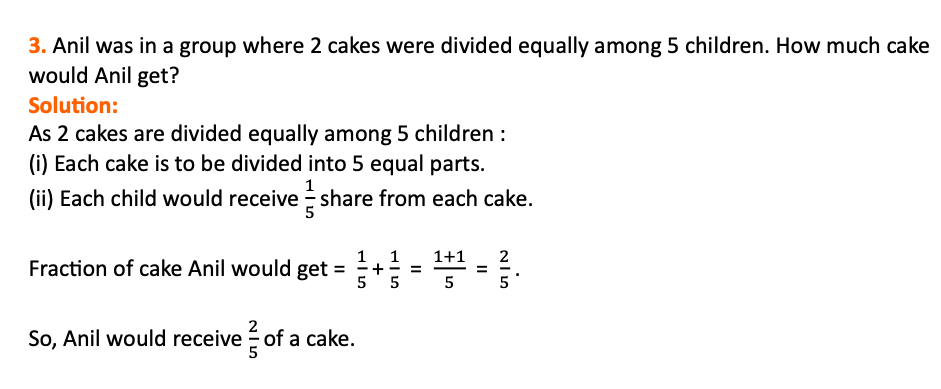
Page 168

Page 173

Page 174
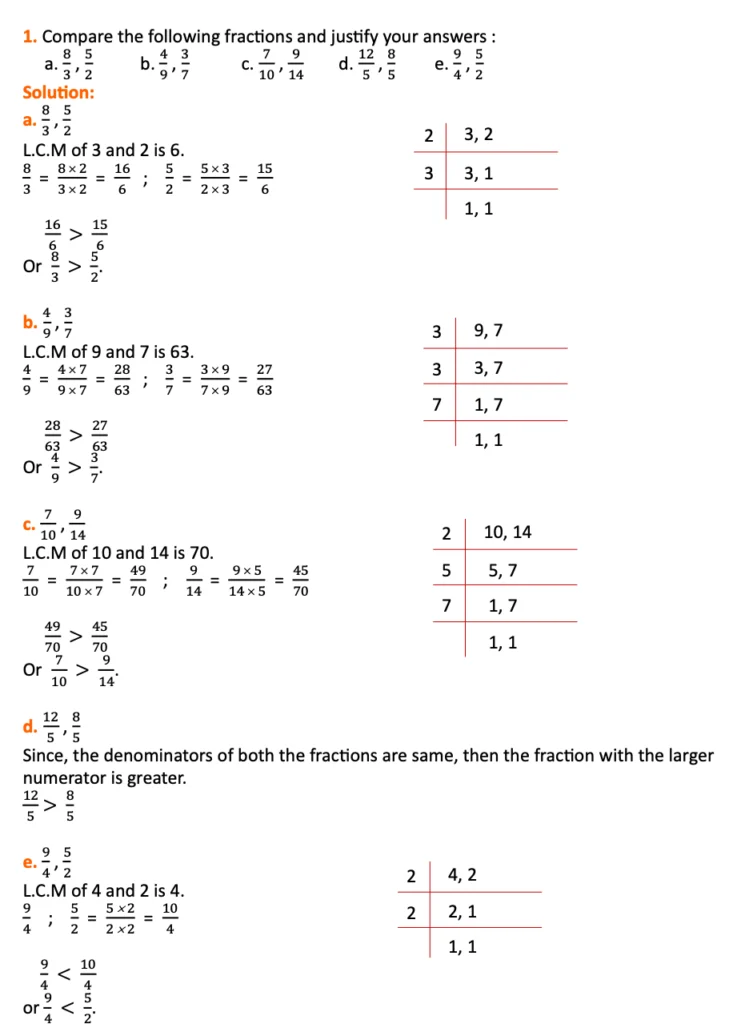
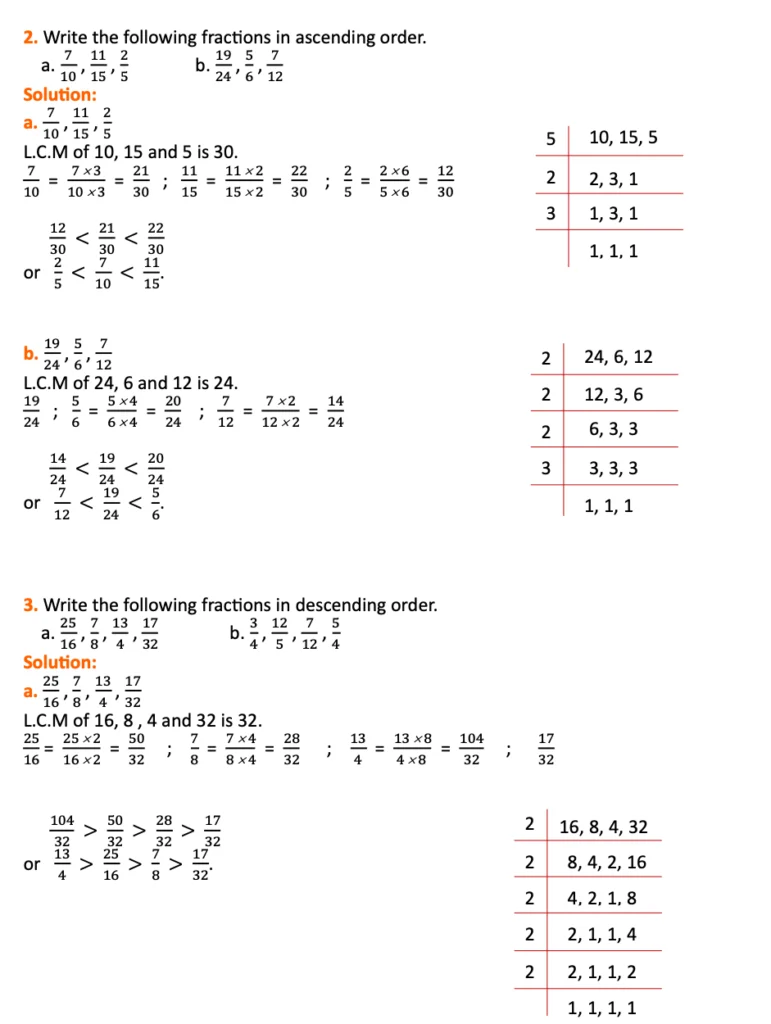
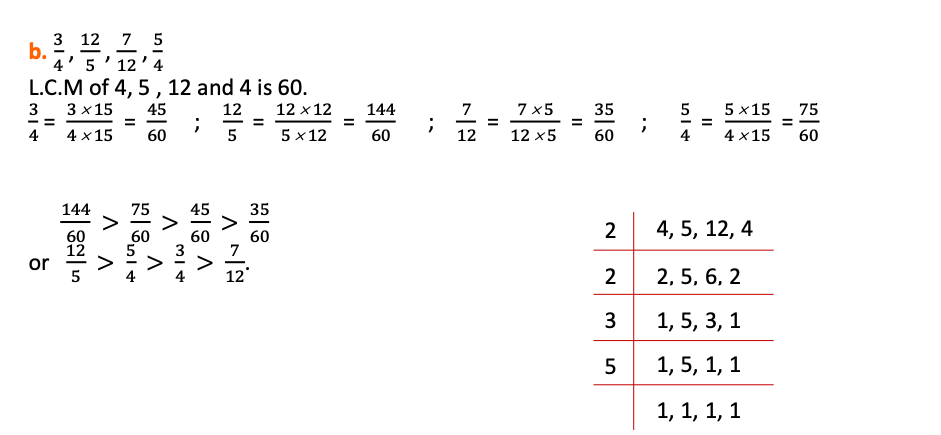
Page 179


Page 181
Page 182
Check Out: PW School Books
NCERT Solutions for Class 6 Maths Ganita Prakash Chapter 7 Fractions - Key Concepts
1. Knowing what fractional units and equal shares are
A fraction is a number that shows how much of a whole is represented by a/b. The 7th chapter of the 6th grade math curriculum says that a fraction is only legitimate if the entire is split into equal parts. You can't call a number a fraction if the parts aren't equal.
Examples of Equal Sharing in the Real World
The Ganita Prakash book offers examples from everyday life to help students understand these abstract ideas:
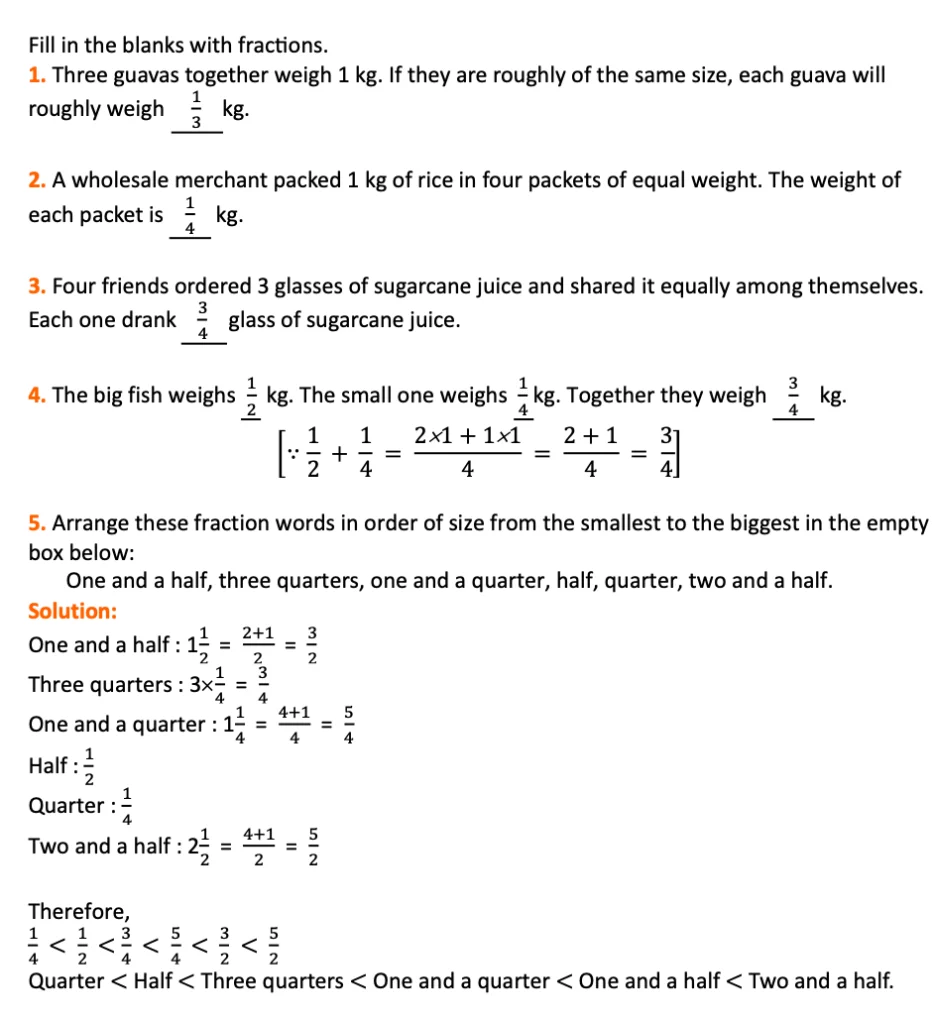
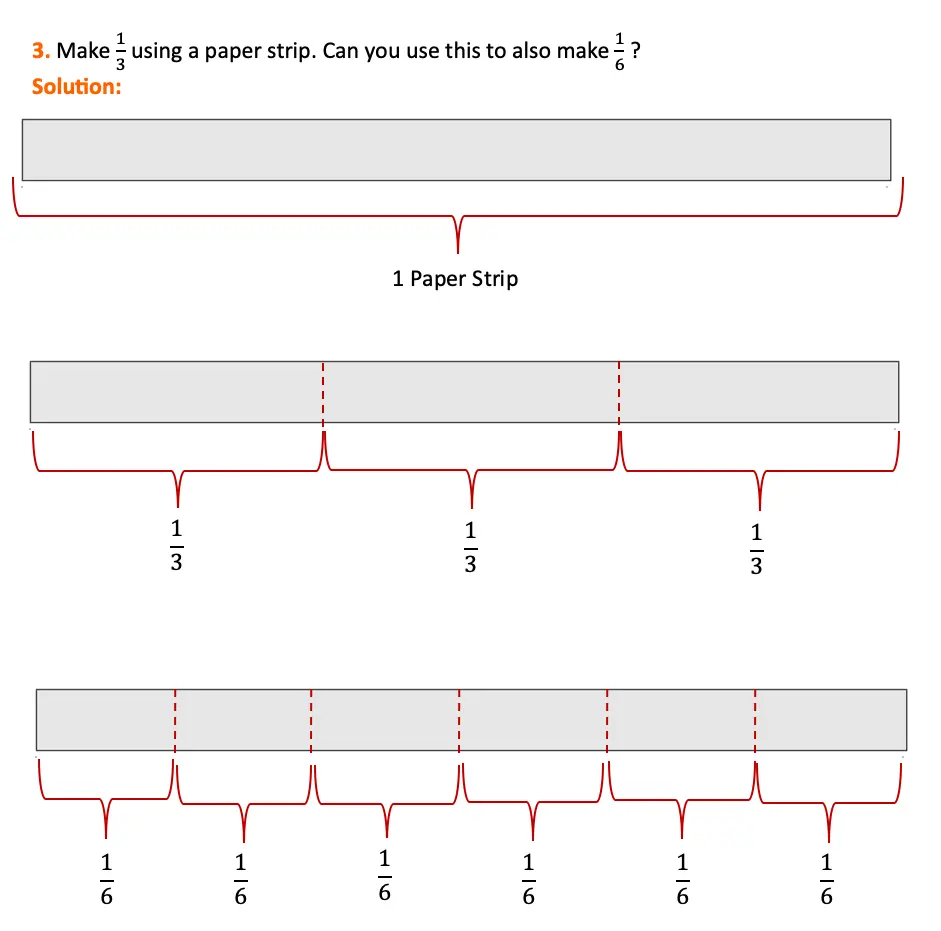
Weights of Guava: If three guavas of similar size weigh 1 kg, then each guava weighs around 1/3 kg. The "unit" here is 1 kilogram, and it is split into three equal pieces.
Packaging for Rice: When a merchant packs 1 kilogram of rice into four equal packets, each packet has 1/4 kg of rice.
Sugarcane Juice: Each of the four pals consumes 3/4 of a glass of juice if they share 3 glasses. This indicates that the numerator can be more than 1, which means that there are more than one part of the total.
The Parts of a Fraction
The Denominator (b): This is the lowest number. It shows how many equal parts make up the complete unit.
The Numerator (a): This is the highest number. It shows how many of those equal sections are being thought about or shaded right now.
2. Putting Fraction Lengths on the Number Line
In 6th grade math chapter 7, one of the main ways to teach is to have students picture numbers. Fractions are not just symbols; they are real lengths that are located at certain points on a number line.
How to Make a Graph of Fractions
To put a fraction on a number line, do these things:
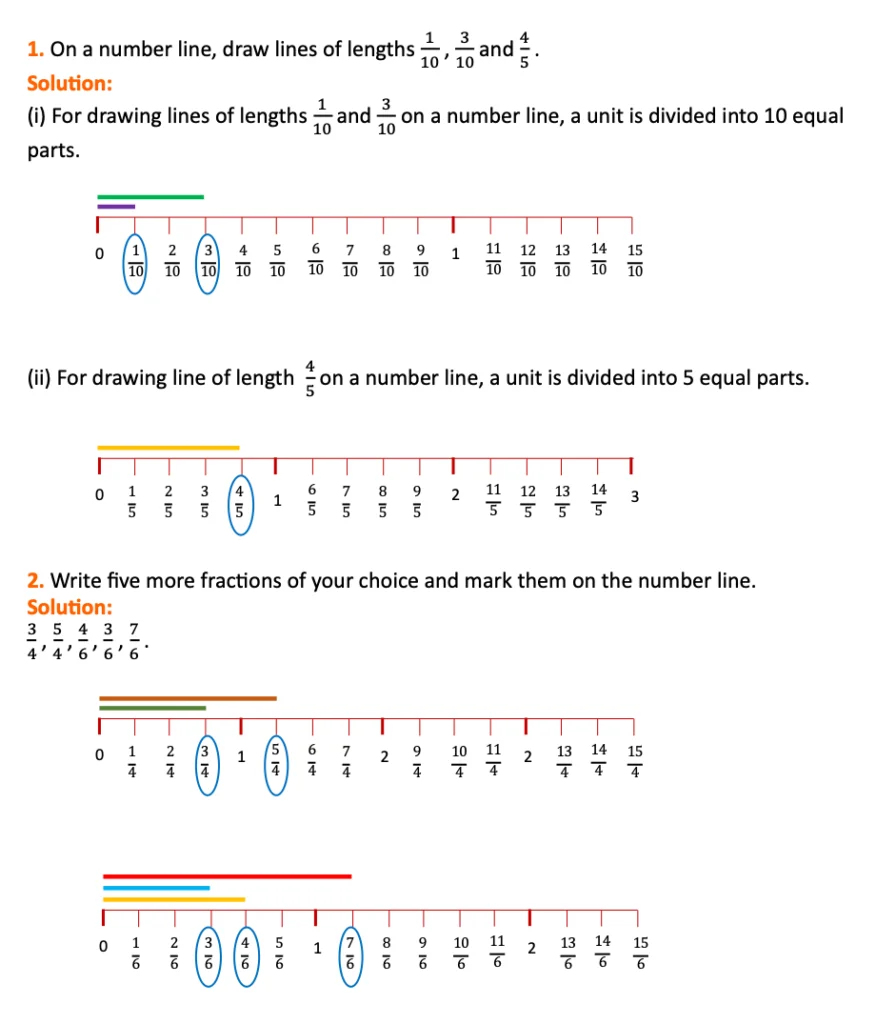
Find the Denominator: The number 10 is the denominator if you need to plot 1/10 and 3/10.
Split the unit: Split the space between "0" and "1" into ten equal parts.
Count the parts: * The first mark from the left is 1/10.
The third mark stands for 3/10.
The eighth mark stands for 8/10, which can be shortened to 4/5.
More than one unit (fractions more than one)
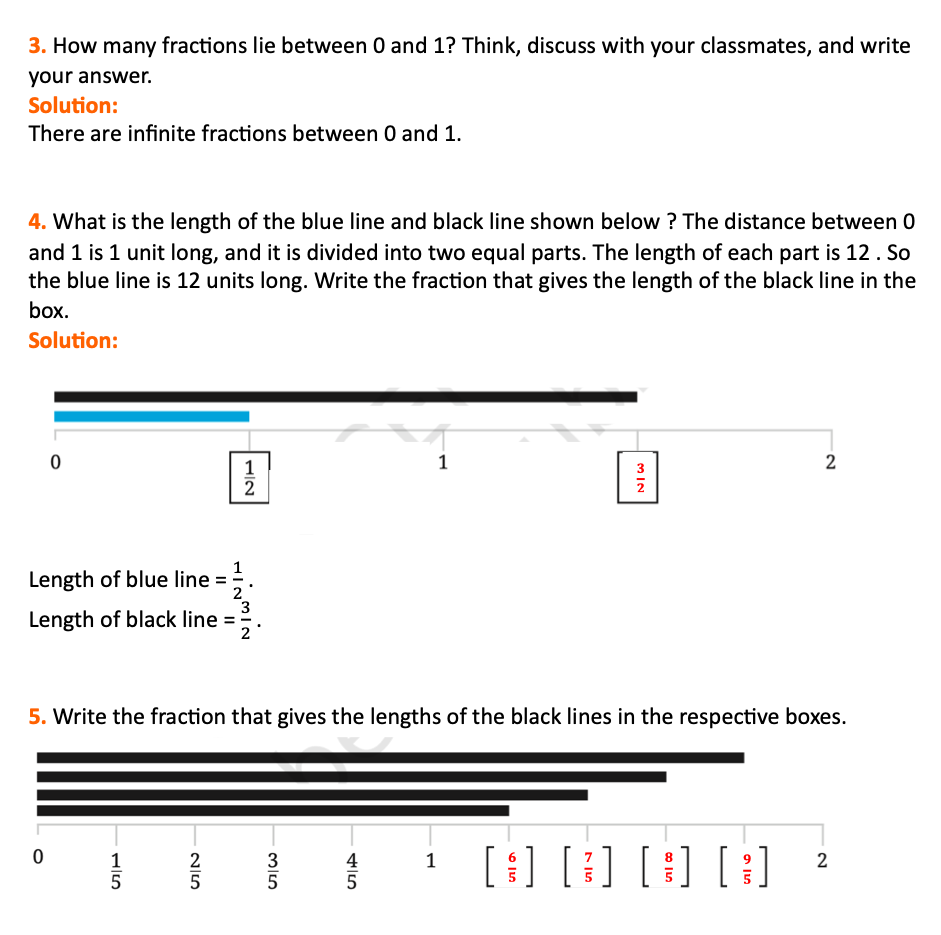
As we learned in 6th grade math chapter 7 exercise 7.4, some fractions stand for lengths that are longer than one unit. For instance, 3/2 is made up of three pieces, each of which is 1/2. This would seem like one whole unit and one half unit on a number line.
3. Different kinds of fractions: proper, improper, and mixed
The 6th grade math chapter 7 fraction syllabus sorts fractions into groups based on how they relate to the number 1.
Fractions that are right
A suitable fraction is a part of something that is smaller than the full thing. The numerator is always less than the denominator in these fractions (for example, 1/2, 3/4, 9/10). Proper fractions are always between 0 and 1 on a number line.
Fractions that aren't right
An improper fraction is one that shows a value that is equal to or larger than a whole. In this case, the numerator is bigger than or the same as the denominator (for example, 5/4, 7/2, or 11/11).
Mixed Fractions
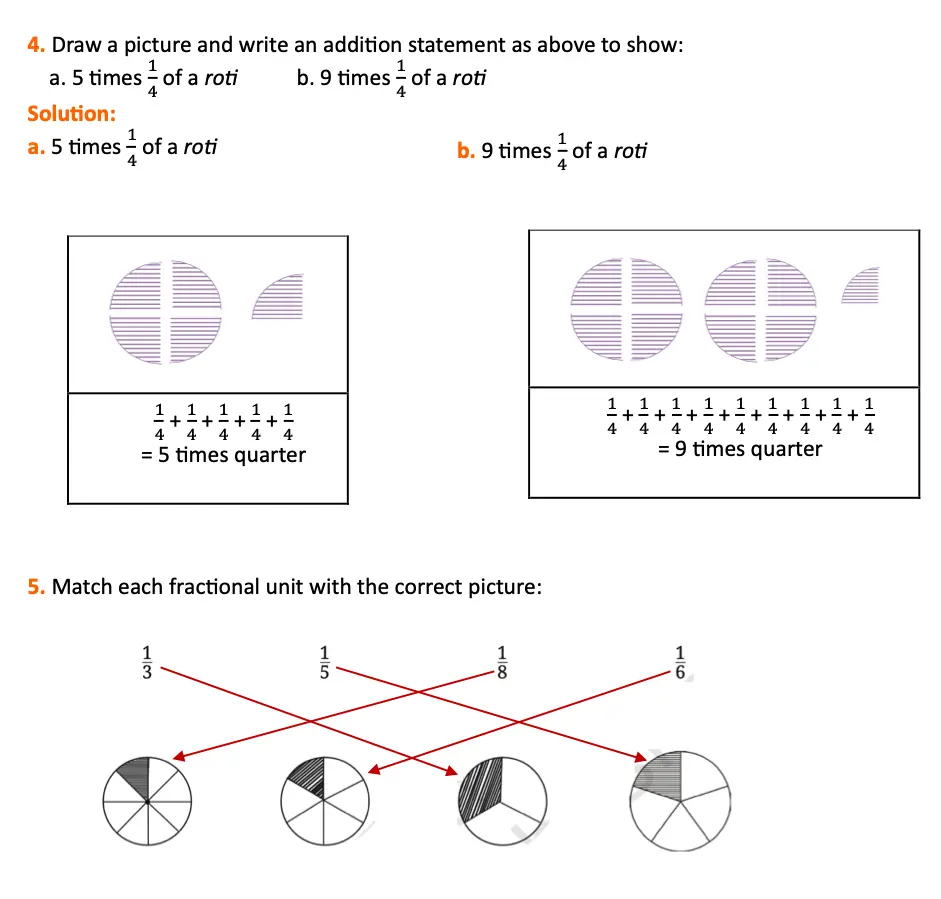
A mixed fraction is a whole number and a correct fraction put together. If you have two whole rotis and a quarter of another, you have 2 \frac{1}{4} rotis. This is the same as the wrong fraction 9/4.
4. Being able to change fractions
To do well on the 6th grade math chapter 7 question and answer section of the test, you need to be able to change improper and mixed fractions.
Changing an improper to a mixed
To figure out how many whole units are in an improper fraction like 17/4:
To find the answer, divide the top number by the bottom number (17 ÷ 4).
The whole number is 4, which is the quotient.
The new numerator is the Remainder (1).
The Denominator (4) stays the same.
The answer is 4 \frac{1}{4}.
Changing Mixed to Wrong
To change 3 \frac{2}{3} back to an improper fraction:
To find the answer, multiply the whole number by the bottom number (3 times 3 equals 9).
Add the top number (9 + 2 = 11).
Put the answer on top of the original denominator.
Answer: 11/3
5. Fractions that are the same and the simplest form
If two or more fractions look different but represent the same part of a whole, they are said to be equal.
How to Make Equivalent Fractions
You can find similar fractions by doing exercise 7.6 in chapter 7 of your 6th grade math book.
To multiply, multiply the top and bottom numbers by the same integer that is not zero. (2/3 times 2/2 equals 4/6)
Division: Use the same common factor to divide both the numerator and the denominator. (10/20 ÷ 10/10 = 1/2)
Writing in the Fewest Words
When the numerator and denominator of a fraction have no common factor other than 1, the fraction is in its lowest term (or simplest form).
To make 144/64 easier, keep dividing by common factors (such 2 or 8) until you get 9/4. For any question in Chapter 7 of 6th grade math, you must give the solution in the simplest form.
6. The Common Denominator Method for Comparing Fractions
It can be hard to compare fractions when they have various denominators. This is a big part of exercise 7 in chapter 7 of 6th grade arithmetic.4. The SCM Method
To see how 3/8 and 2/5 are different:
Find the smallest common multiple (SCM) of the two numbers, which are 8 and 5. The SCM is 40.
Change both of these to fractions with 40 as the bottom number:
3/8 \times 15/40 = 5/5
2/5 times 8/8 equals 16/40.
So, 2/5 is greater than 3/8 since 16/40 is greater than 15/40.
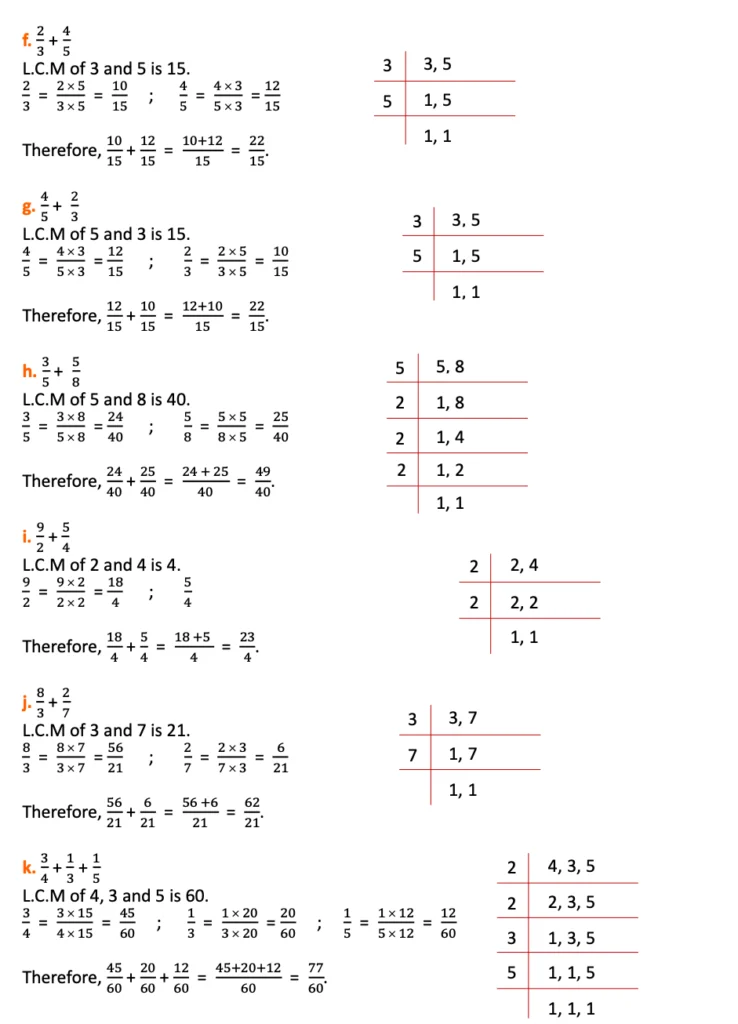
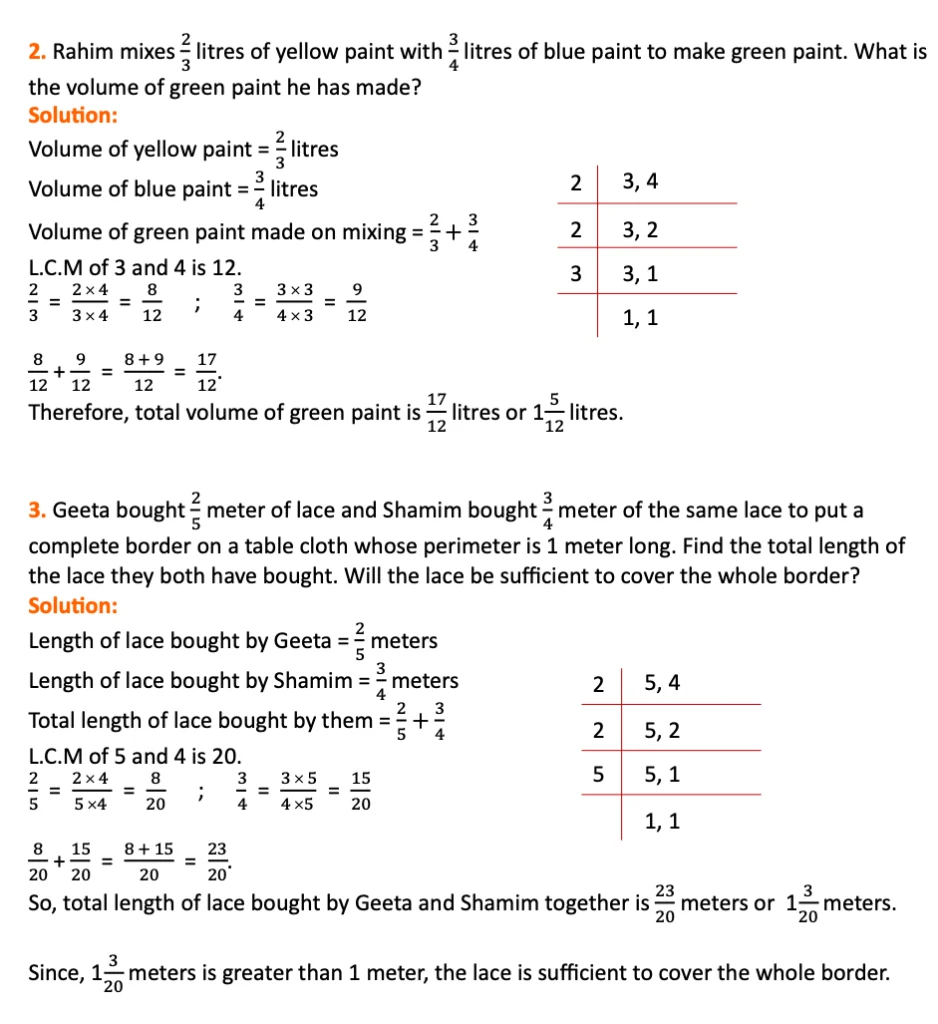
7. Addition and Subtraction of Fractions
The final hurdle in class 6th math chapter 7 involves performing operations. The Allen.in reference link outlines two scenarios:
-
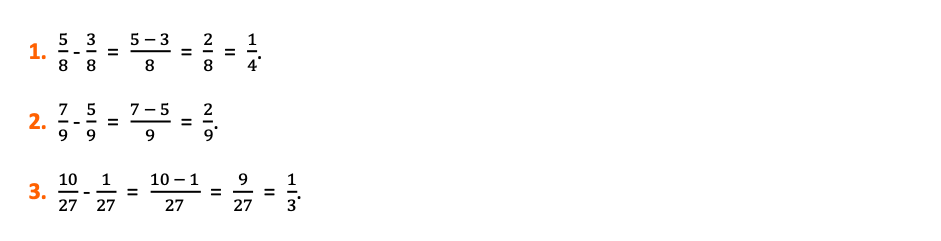
Like Fractions: If the denominators are the same, simply add or subtract the numerators (1/4 + 2/4 = 3/4).
-
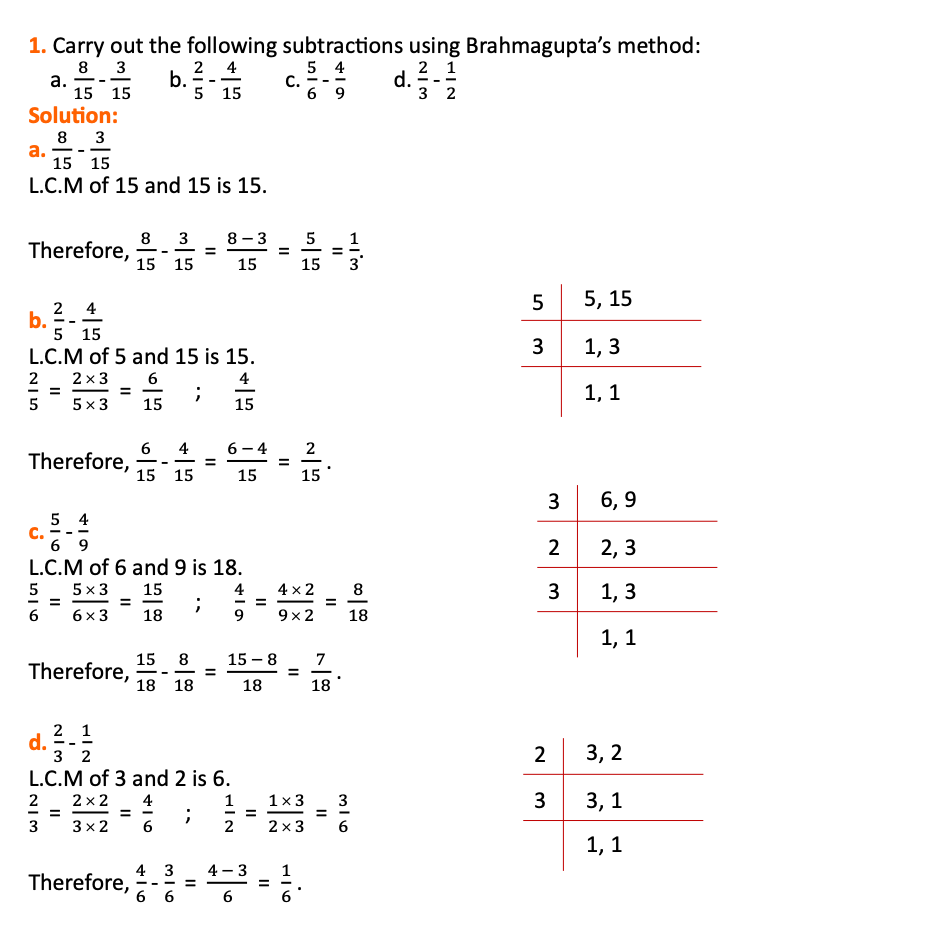
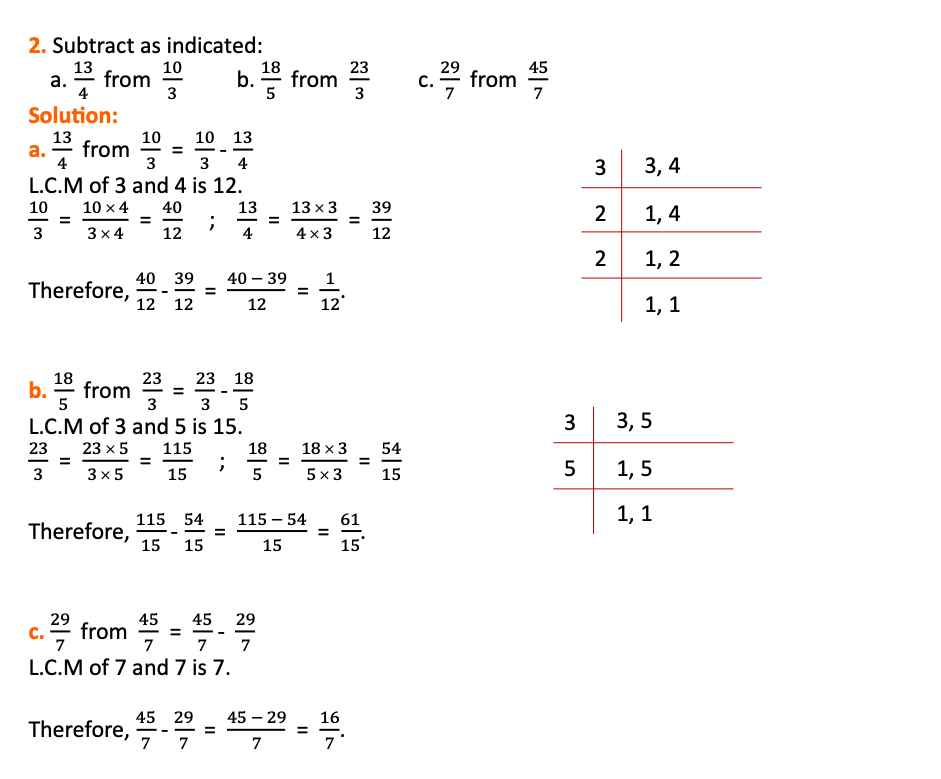
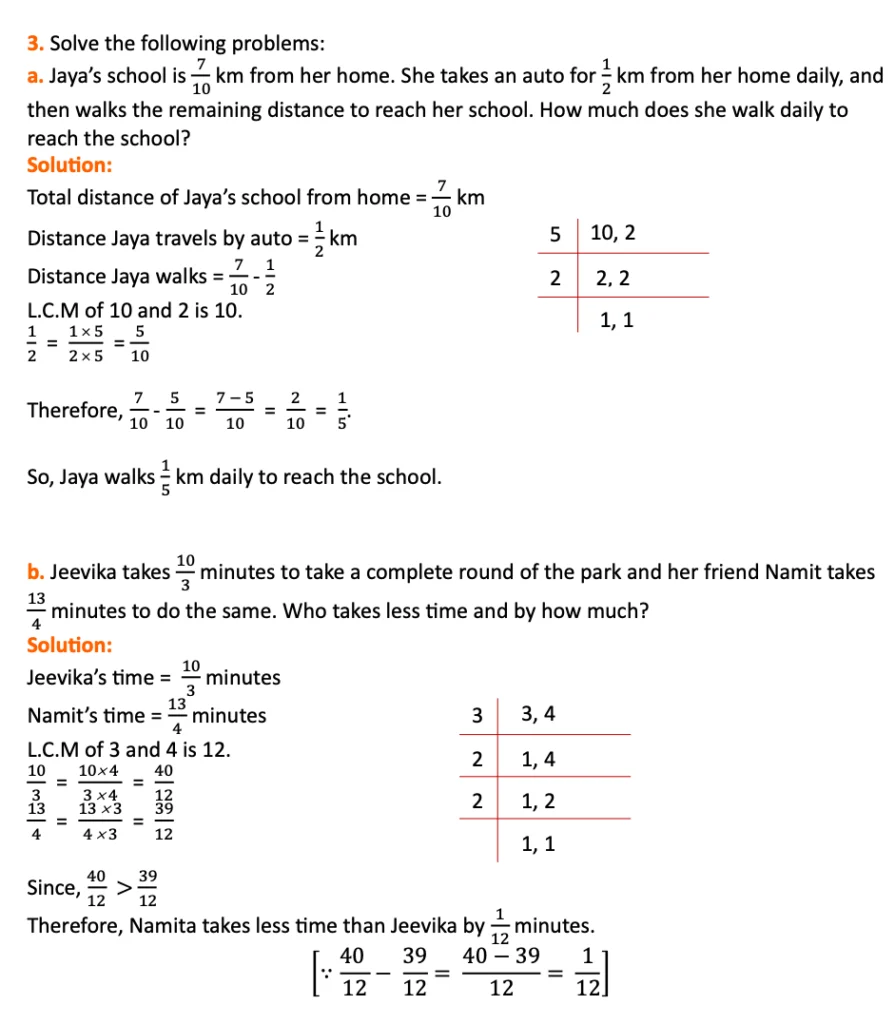
Unlike Fractions: You must first find a common denominator using equivalent fractions before adding or subtracting. For example, to add 1/2 and 1/4, convert 1/2 to 2/4. Then, 2/4 + 1/4 = 3/4.
Check Out: School Stationery Items
Original Framing: The "Unity Bridge"
A unique way to view class 6th math chapter 7 is to see fractions as a "Unity Bridge." Often, students see a fraction like 1/4 as a "broken" number—a fragment of something that was once whole. However, the Allen.in material shows that fractions are actually the tools that hold "Unity" together.
When we say four packets of rice weigh 1/4 kg each to make 1 kg, the fraction isn't a sign of division; it's a blueprint for reconstruction. This framing helps students realize that fractions are the language of perfect balance—ensuring that every share is fair and every measurement is precise. Instead of separating things, fractions help us understand how parts join to create a complete, functioning system.
Benefits of PW Class 6 Study Material
-
Follows the latest NCERT syllabus and exam pattern
-
Uses simple, student-friendly language
-
Chapter-wise notes for easy understanding
-
Clear explanations with real-life examples
-
Includes solved NCERT questions
-
Extra practice questions for better learning
Read More: How to Prepare for CBSE Class 6 Exams 2026?
Class 6 Maths Chapter 7 Fractions FAQs
1. How many fractions lie between 0 and 1?
There are an infinite number of fractions between 0 and 1. As you divide the space into more parts (denominators), you can always find a smaller fractional unit.
2. What is an "Addition Fact" for fractions?
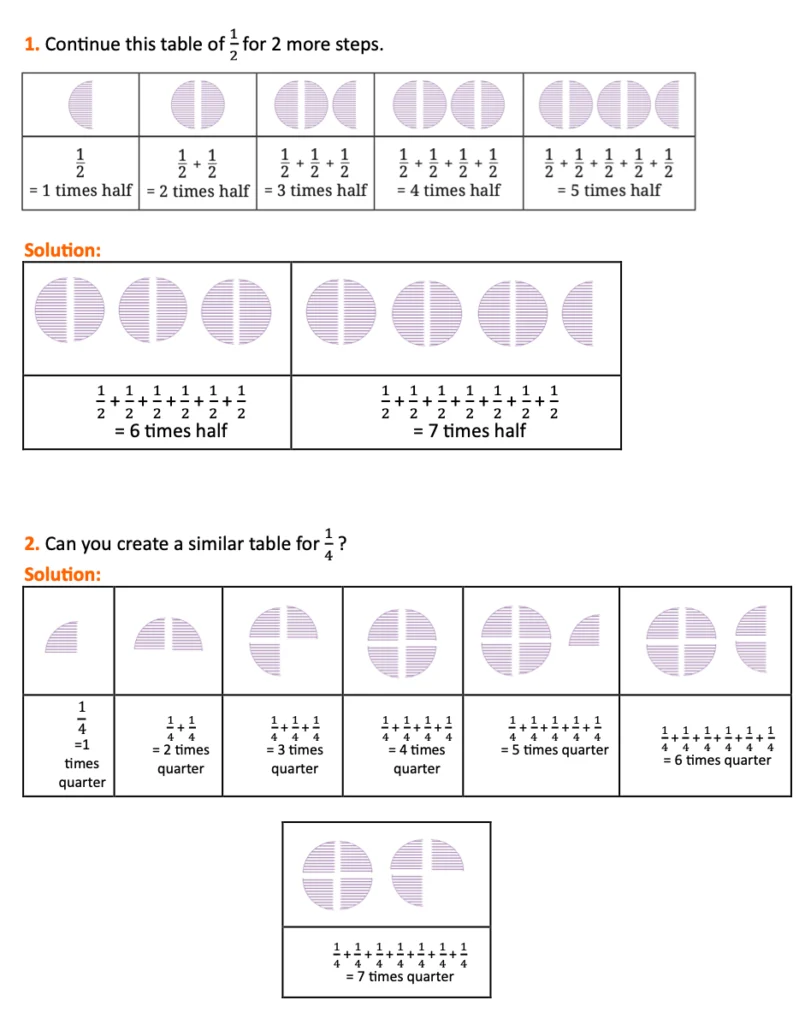
It is a way of showing how fractional parts combine to form wholes. For example, four times 3/4 added together gives 3 wholes (3/4 + 3/4 + 3/4 + 3/4 = 12/4 = 3).
3. Why is the simplest form important in a class 6th math chapter 7 question answer?
The simplest form is the standard mathematical way to represent a fraction. It makes calculations easier and is usually the expected format for final answers in exams.
4. How can I identify a mixed fraction quickly?
A mixed fraction will always have a whole number followed by a proper fraction (where the numerator is smaller than the denominator). If the numerator is larger, it is still an improper fraction.
5. What is the difference between like and unlike fractions?
Like fractions have the same denominator (e.g., 1/5, 4/5), while unlike fractions have different denominators (e.g., 1/2, 1/3). Unlike fractions must be converted to like fractions before they can be compared or added easily.