How to Clear UGC NET in 3 Months: A Complete Preparation Guide

How to Clear UGC NET in 3 Months: The UGC NET December 2025 exam is just a few months away, and students now have around three months in hand to get ready. The UGC NET exam happens twice a year, and the January session is already over. This time, the December 2025 session is expected to be held in January 2026. If you have not started your UGC NET preparation yet, this is the time to take it very seriously. The UGC NET exam is one of the most competitive exams in the country. It is not only students who appear for it, but also working professionals, including teachers and professors.
This makes the competition level very high. Many candidates collect a lot of UGC NET preparation material, books, and notes. But simply having resources will not help if you do not know how to use them well. You need a clear study plan, the right strategy, and focused practice. Using the UGC NET previous year question paper and quality UGC NET exam preparation resources can make a big difference. In this article, we will share simple and effective strategies to help you prepare well and clear the exam in just three months.
Check Out: UGC-NET Books
UGC NET Exam Pattern 2025
Knowing the UGC NET Exam Pattern 2025 is one of the first steps towards effective UGC NET preparation. The exam is held in two papers, Paper I and Paper II, on the same day without any break. Paper I is the same for all candidates and checks teaching aptitude, reasoning ability, and general awareness. Paper II is based on the subject chosen by the candidate and tests detailed subject knowledge. A clear idea of the pattern will help you plan your study time, choose the right UGC NET preparation material, and focus on practice.
|
UGC NET 2025 Exam Pattern |
||||
|
Paper |
Subject |
Number of Questions |
Marks |
Duration |
|
Paper I |
General paper on teaching and research aptitude |
50 |
100 |
3 hours (combined for both papers) |
|
Paper II |
Subject selected by the candidate |
100 |
200 |
|
UGC NET Paper I Important Topics
Paper I of the UGC NET exam is common for all candidates, no matter which subject they choose for Paper II. It is designed to check your overall teaching and research skills along with reasoning ability, comprehension, communication skills, and general awareness. This paper has 50 questions, each carrying two marks, making it worth 100 marks in total. There is no negative marking, so attempting all questions is important.
|
Unit No. |
Topic Name |
Key Areas to Focus |
|
Unit 1 |
Teaching Aptitude |
Nature and objectives of teaching, learner’s characteristics, teaching aids, evaluation systems |
|
Unit 2 |
Research Aptitude |
Research methods, steps of research, research ethics, paper writing, thesis format |
|
Unit 3 |
Comprehension |
Reading passage and answering based on understanding, inference, and vocabulary |
|
Unit 4 |
Communication |
Types of communication, barriers, effective communication skills, classroom communication |
|
Unit 5 |
Mathematical Reasoning & Aptitude |
Number series, coding-decoding, ratios, percentages, averages |
|
Unit 6 |
Logical Reasoning |
Statement and argument, syllogism, analogies, deductive and inductive reasoning |
|
Unit 7 |
Data Interpretation |
Data tables, graphs, charts, calculation of averages, percentages |
|
Unit 8 |
Information and Communication Technology (ICT) |
Basics of computers, internet, e-mail, digital teaching tools |
|
Unit 9 |
People, Development and Environment |
Sustainable development, environmental issues, natural and energy resources |
|
Unit 10 |
Higher Education System |
Structure of higher education in India, policies, governance, institutions |
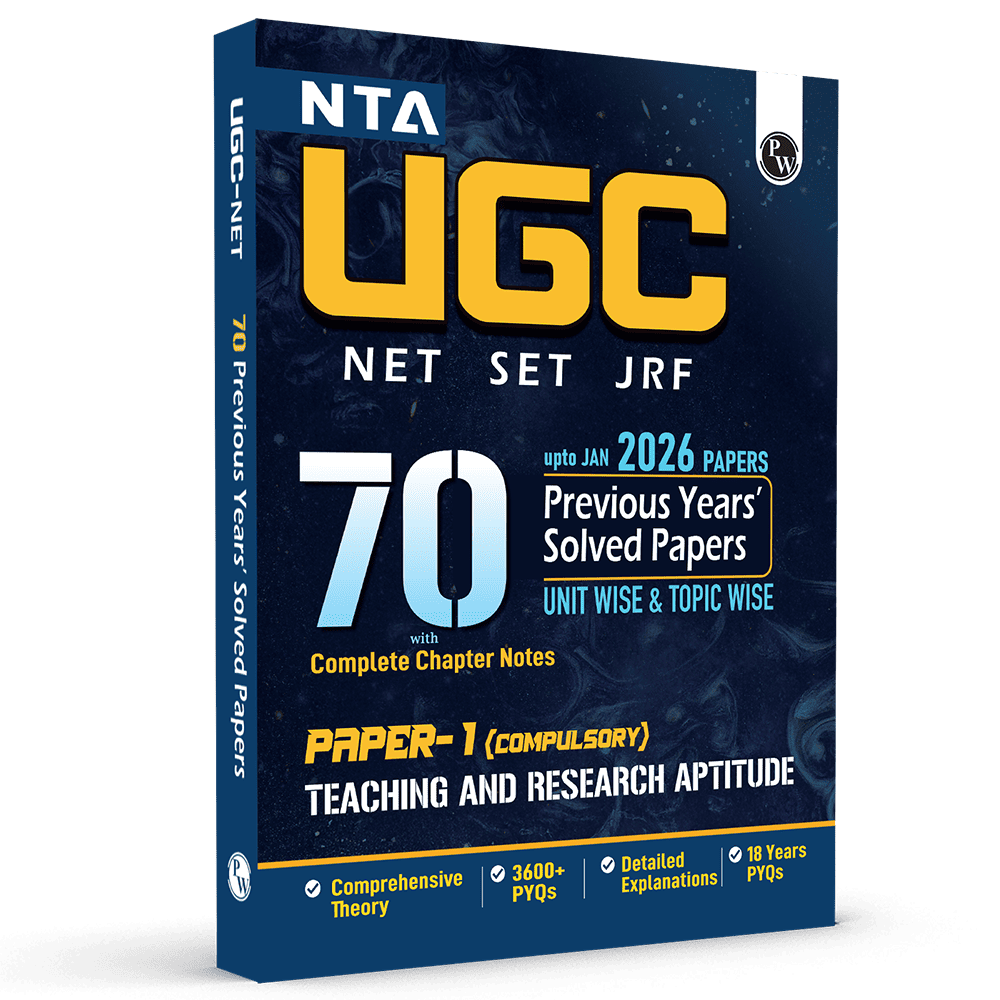
Check Out: NTA 68 UGC NET Paper 1 Previous Year Solved Papers
How to Clear UGC NET in 3 Months?
The UGC NET December 2025 exam is only a few months away, and this is the right time to plan your preparation. It checks both your teaching/research skills and subject knowledge.
The exam is held in two papers, Paper I, which is common for all candidates, and Paper II, which is based on the subject you choose. With the right strategy and focused effort, you can prepare well in just three months and increase your chances of success. Here is a simple plan to help you with your UGC NET preparation.
1. Understand the Exam, Syllabus, and Pattern
Before starting your study, make sure you understand the UGC NET exam pattern and syllabus clearly. Paper I has 50 questions for 100 marks, covering teaching aptitude, reasoning, comprehension, and general awareness. Paper II has 100 questions for 200 marks and is based on your subject. Both papers are held in a single three-hour session. Knowing the UGC NET syllabus will help you use your UGC NET preparation material in a more focused way.
-
Read the complete syllabus for both Paper I and Paper II carefully.
-
Go through the official UGC NET exam pattern and marking scheme.
-
Check which topics carry more weight and plan your study time accordingly.
2. Focus on Paper I First
Paper I may look simple, but it plays an important role in your final score. It is the same for all candidates and can be prepared in less time compared to Paper II. Topics like comprehension, grammar, and basic reasoning can be mastered with regular practice. Use quality UGC NET preparation material and revise the topics often.
-
Start with the topics you find easier, such as comprehension and grammar.
-
Practise logical reasoning and data interpretation daily.
-
Solve at least one UGC NET previous year question paper for Paper I every week.
3. Focus on Paper II: Your Subject Paper
Paper II is the most important part of your UGC NET exam preparation. It has 100 questions and carries 200 marks, so a high score here can easily help you clear the exam. This paper covers detailed knowledge of the subject you want to pursue for research or higher studies.
-
Make your subject concepts strong by revising them regularly.
-
Use only trusted UGC NET preparation material for your subject.
-
Solve UGC NET previous year questions from your subject to know the type of questions asked.
4. Make Your Own Notes
Writing your own notes while studying helps you remember better and revise quickly before the exam. Notes should be short and clear so that you can go through them in the last few days. Avoid copying directly from books, write in your own words.
-
Keep a separate notebook for Paper I and Paper II notes.
-
Write short points, definitions, and important formulas.
-
Highlight tricky concepts so you can revise them often.
5. Practise Previous Year Questions
Solving UGC NET previous year question paper is one of the best ways to improve your preparation. It helps you understand the exam pattern, the difficulty level, and the type of questions that are repeated. It also improves your speed and accuracy.
-
Practise at least 5–7 years of UGC NET previous year question papers.
-
Analyse which topics have repeated questions.
-
After solving each paper, check your mistakes and revise those topics.
6. Use Quality Preparation Material
The right study resources can save you time and give you better results. Avoid using too many books at once, instead, focus on quality UGC NET preparation material from trusted sources. You can also use online resources from reliable platforms like PW for accurate content.
-
Choose one main book for Paper I and one or two for Paper II.
-
Use updated study material that matches the current syllabus.
-
Keep a mix of theory books and practice question banks.
7. Identify Important Topics
Every subject has certain areas from which questions are frequently asked. If you can identify these topics early, you can give them more attention during your UGC NET exam preparation. For example, in UGC NET English, history of literature often has repeated questions. In other subjects, similar patterns exist.
-
Check UGC NET previous year question papers for your subject.
-
Mark topics that have appeared more often in the past.
-
Revise these topics more frequently during the last month.
8. Revise and Take Mock Tests
In the last month before the exam, focus on revision and practice. Taking mock tests will help you get used to the real exam timing and pressure. It will also show you which areas need more work.
-
Revise your notes daily.
-
Take at least two full-length mock tests every week.
-
Review your mock test performance and improve weak areas.
UGC NET Study Materials
PW has brought a complete range of study materials to support your UGC NET preparation and help you clear the exam with confidence. Whether you are just starting your UGC NET exam preparation or revising important topics, PW’s resources cover everything you need. Their materials include detailed notes, practice questions, and solved UGC NET previous year question papers that make it easier to understand the exam pattern and question types.
|
UGC NET Books |
|
|
UGC-NET Commerce PYQ 11 Years |
|
|
PW UGC-NET Economics PYQ 11 Years |
|
|
PW UGC-NET Education PYQ 11 Years |
|
|
PW UGC-NET English Literature PYQ 11 Years |
|
|
PW UGC-NET History PYQ 11 Years |
|
|
63 UGC NET Paper 1 Previous Year Solved Papers with Complete Chapter Notes |
|
|
UGC-NET Hindi Literature PYQ 11 Years |
|
UGC NET Preparation FAQs
1. What is the best way to start UGC NET preparation?
Start by understanding the exam pattern and syllabus fully. Then, gather quality UGC NET preparation material and make a study plan focusing on both Paper I and Paper II.
2. How important is Paper I in the UGC NET exam?
Paper I is very important as it tests teaching aptitude, reasoning, and general awareness. Scoring well here improves your overall result, so do not ignore it.
3. Which paper should I focus more on, Paper I or Paper II?
Focus more on Paper II, which is your subject paper with 100 questions. A strong score here greatly increases your chances of clearing the exam.
4. How can I use the UGC NET previous year question paper effectively?
Solve previous year question papers regularly to understand question types and difficulty. Analyse repeated questions and practise time management.
5. How much time should I devote daily for UGC NET exam preparation?
Try to study at least 4-5 hours daily with focused sessions on important topics and practising previous year questions.