Benefits of UPSC Indian Polity Revision Notes for Exam Preparation
Understanding the Indian Constitution and its different administrative levels is crucial for anyone preparing for civil services. UPSC Indian Polity revision notes help students break down large amounts of information into smaller parts, making it easier to remember important articles and amendments during the final exam phase.
This article explains how to use polity notes, their benefits, and how they can help you prepare for your exams.
Check Out: UPSC CSE Books
Importance of UPSC Indian Polity Revision Notes
The Indian Polity syllabus is dynamic, often blending static constitutional provisions with current legal developments. A structured set of Polity notes ensures that a student does not get lost in legal jargon. Instead, they provide a roadmap through the complex web of the executive, legislature, and judiciary.
When students use specialised UPSC Indian polity notes, they benefit from chronological ordering and thematic grouping. For instance, instead of reading about the President and Governors in isolation, good revision notes compare their powers side-by-side. This comparative approach is exactly what the UPSC demands, as it tests the candidate’s ability to understand the nuances of the federal structure.
Features of UPSC Indian Polity Revision Notes
Effective revision materials are not just summaries; they are strategic tools. To be truly beneficial, revision notes must include specific elements that cater to the competitive nature of the IAS exam.
-
Article-wise Breakdown: Quick reference lists for fundamental rights, directive principles, and duties.
-
Amendment Tracking: A dedicated section for major constitutional amendments (like the 42nd, 44th, and 101st).
-
Judicial Landmarks: Summary of landmark Supreme Court cases, such as Kesavananda Bharati or Minerva Mills.
-
Flowcharts and Tables: Visual aids that explain the passage of a bill or the process of constitutional amendment.
By using the Indian Constitution UPSC notes, aspirants can avoid the repetitive task of flipping through 800-page textbooks. These notes are designed to be scanned quickly, which is vital when you have only a few days left before the exam.
Check Out: UPSC Revision Books
How to Use UPSC Indian Polity Revision Notes
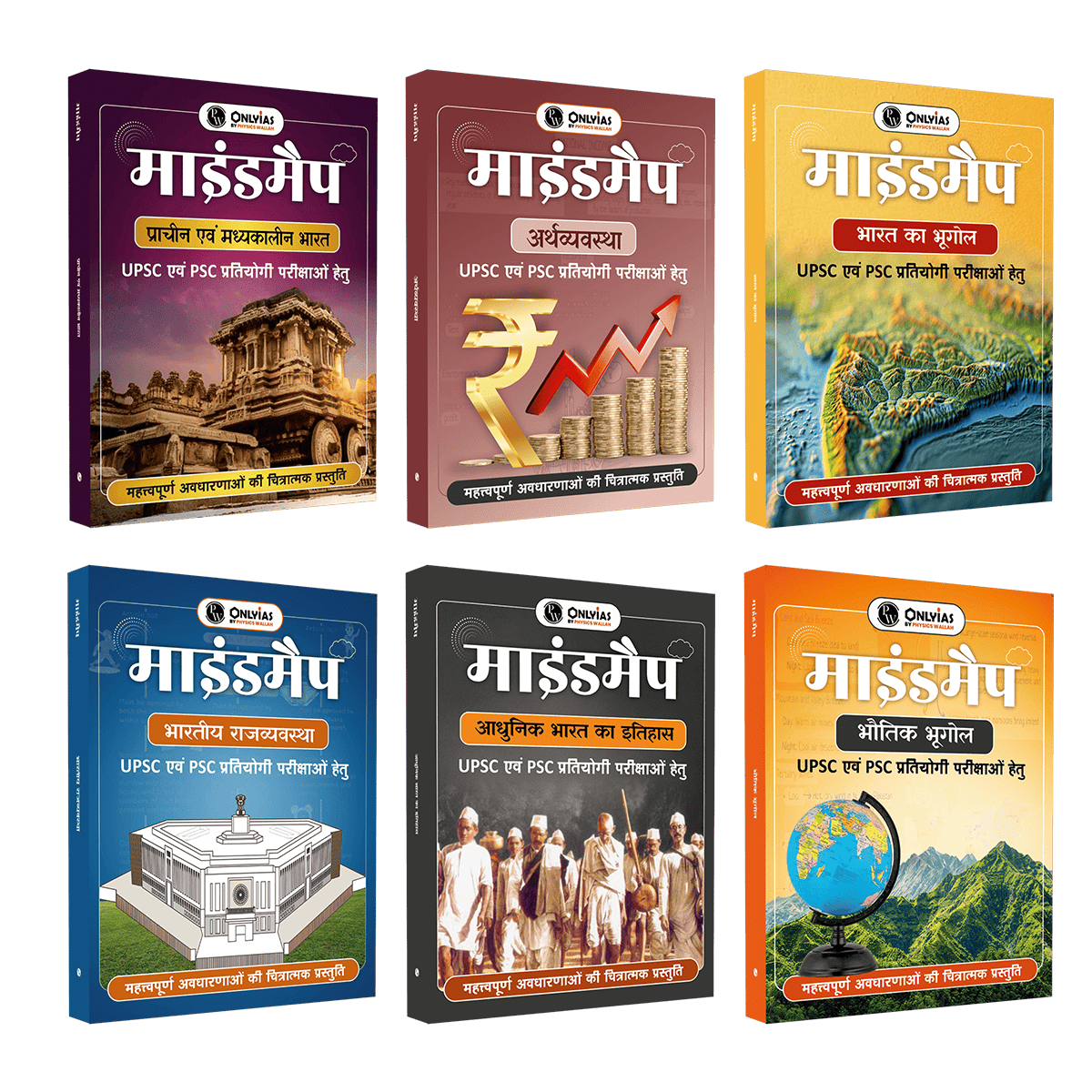
One of the most effective ways to use UPSC notes is through the integration of mind maps. Mind maps break down linear text into spatial diagrams, making it easier for the brain to store and retrieve data. For example, a mind map on the "Emergency Provisions" can link Articles 352, 356, and 360 with their respective grounds, effects, and revocation methods in a single visual frame.
Using Indian polity for UPSC notes that incorporate these visual techniques ensures that you are not just memorising facts but understanding the connectivity between different parts of the Constitution. This depth of understanding is what differentiates a topper's answer script from an average one in the Mains examination.
Study Strategy for UPSC Indian Polity Revision Notes
The Preliminary exam requires a sharp eye for detail. Questions often hinge on a single word—such as "only," "can," or "must." Therefore, your Indian constitution UPSC notes should highlight these distinctions.
Focus on the following areas during your Prelims revision:
-
Constitutional Bodies: Composition, appointment, and removal of members of the UPSC, Election Commission, and CAG.
-
Parliamentary Procedures: Definitions of various motions, types of majorities, and the roles of the Speaker.
-
Local Government: The 73rd and 74th Amendment Acts and the powers of Panchayats and Municipalities.
Having UPSC polity revision notes that specifically list "exceptions" to rules can save you from common traps set by the examiners.
UPSC Indian Polity Revision Notes vs Standard Textbooks
While an Indian polity book for UPSC in Hindi or English is necessary for building a foundation, revision notes serve a different purpose. Textbooks provide the "why," while revision notes provide the "what" and "how" for the exam.
|
Feature |
Standard Textbooks |
UPSC Indian Polity Revision Notes |
|
Purpose |
In-depth understanding |
Rapid recall and revision |
|
Content |
Descriptive and exhaustive |
Bulleted and high-yield |
|
Time Efficiency |
Low (takes weeks to read) |
High (takes hours to revise) |
|
Current Affairs |
Often outdated |
Regularly updated with the latest bills |
Aspirants who rely solely on textbooks often find themselves unable to finish the paper on time because they lack the "keywords" that polity notes provide. These keywords are essential for writing concise answers in the GS Paper II.
Role of UPSC Indian Polity Revision Notes in Mains
In the Mains, you are required to write analytical answers within a strict word limit. Here, the Indian polity for UPSC notes help you by providing ready-made introductions and conclusions. If a question is asked about "Secularism," your notes should already have a 2-line definition and three key differences between Indian and Western secularism ready to be written down.
The use of polity notes also helps in "Paper Linking." You can link Polity topics with Governance and Social Justice if your notes are organised by themes rather than just chapters. This interdisciplinary approach is highly rewarded in the evaluation process.
How to Select the UPSC Indian Polity Revision Notes
For many students, language preference is key to understanding complex legal concepts. If you are comfortable in the regional medium, seeking an Indian polity book for UPSC in Hindi that offers the same level of depth as its English counterparts is vital. Regardless of the language, ensure the material covers:
-
Preamble and its philosophy.
-
Federalism and Centre-State relations.
-
The functioning of the Judiciary and Judicial Activism.
-
Constitutional and Non-constitutional bodies.
Quality polity revision notes will often provide bilingual terminology to help students understand the official legal terms used in government documents.
Check Out - UPSC Previous Year Papers
Tips for UPSC Indian Polity Revision Notes
To make the most of your UPSC polity revision notes, follow this structured timeline:
-
Phase 1 (First 3 Days): Focus on the Preamble, Fundamental Rights, DPSP, and Fundamental Duties. These form the core of the UPSC notes on the Indian Constitution.
-
Phase 2 (Day 4-6): Revise the Union and State Executives. Compare the powers of the PM and CM, and the President and the Governor.
-
Phase 3 (Day 7-9): Study the Parliament and State Legislatures. Focus on the legislative process and committees.
-
Phase 4 (Day 10): Cover the Judiciary and Local Bodies.
-
Phase 5 (Day 11-12): Focus on Constitutional/Non-constitutional bodies and recent Amendments.
This systematic approach ensures that you use your polity notes effectively without burning out.
Read More: UPSC Indian Polity Previous Year Papers with Downloaded PDF
UPSC Indian Polity Revision Notes FAQs
1. How often should I update my UPSC Indian polity revision notes?
You should update your notes whenever a new landmark judgment is passed by the Supreme Court or a significant Bill is passed in Parliament. Keeping your polity notes up to date is essential for the Mains.
2. Can I rely solely on the Indian Constitution UPSC notes for the exam?
While the Indian constitution UPSC notes are excellent for revision, you should first read a standard textbook once to build a conceptual foundation. Use the notes to solidify that knowledge.
3. Are these IAS Indian polity notes helpful for State PSC exams?
Yes, the core of the Indian Constitution remains the same across all competitive exams. These polity notes are highly beneficial for state-level civil services as well.
4. Where can I find an Indian polity book for UPSC in Hindi?
You can find specialised books and revision sets online, which offer comprehensive material, including an Indian polity book for UPSC in Hindi, tailored for the latest exam pattern.
5. What is the right way to revise Indian polity for UPSC notes?
The right way is through multiple iterations. Read your notes at least three times before the exam, focusing on active recall and testing yourself with previous year questions.