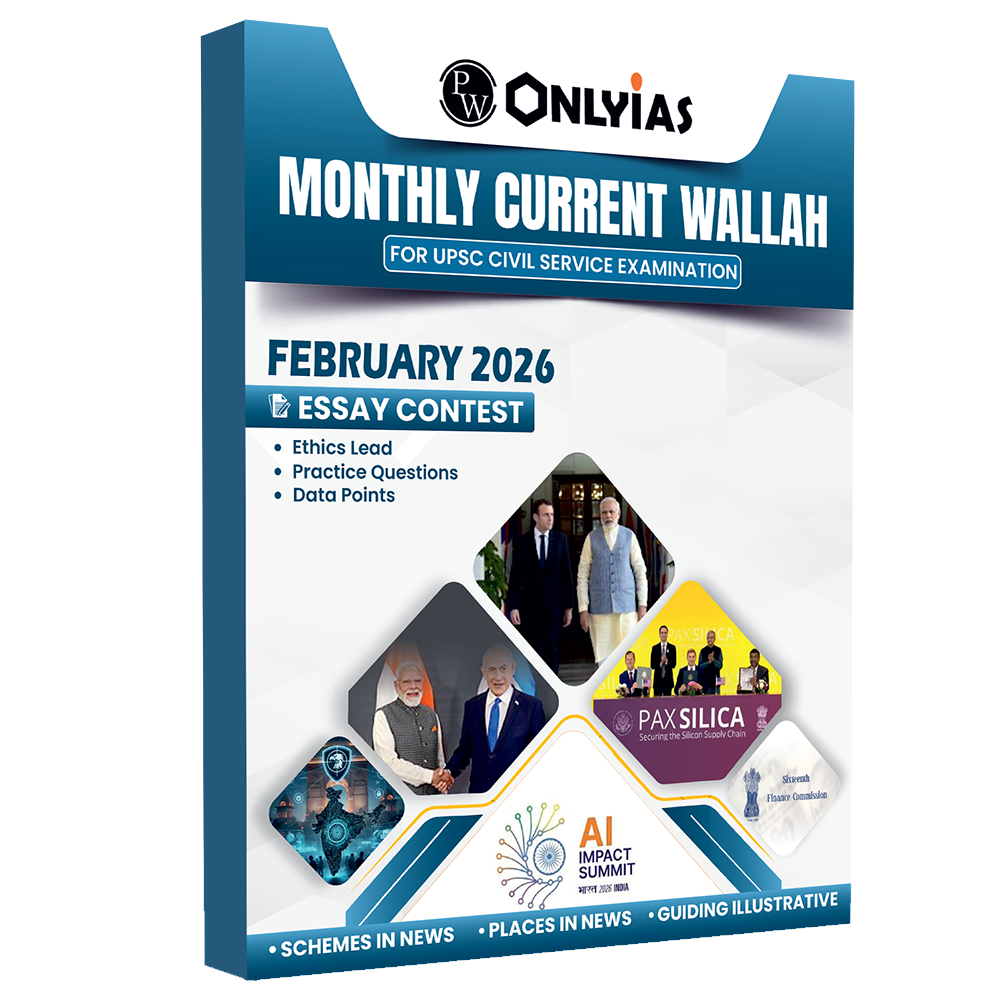
How to cover February 2026 UPSC Current Affairs in 3 Focused Days
If you are struggling to balance daily newspaper reading with extensive static subjects, finding a structured way to cover your backlog is absolutely vital. This guide provides a systematic three-day plan to complete your UPSC current affairs February topics thoroughly. By streamlining your approach, you can retain crucial developments without sacrificing your regular core study hours.
Let us look at how you can organise your resources to cover the entire month systematically, ensuring you remain calm, focused, and highly productive during your competitive exam preparation cycle.
What Is UPSC Current Affairs February?
Understanding the precise scope of your monthly preparation prevents you from wasting time on irrelevant news pieces. The compilation for UPSC current affairs February encompasses critical national and international developments tailored specifically to the rigorous requirements of the Civil Services Examination.
This coverage demands a dedicated command over multiple overlapping academic domains:
-
Editorial Analysis: In-depth perspectives on governance, social justice, and policy challenges.
-
Government Schemes: Newly launched initiatives, amendments to existing programs, and budgetary allocations.
-
International Relations: Bilateral treaties, global summits, and geopolitical shifts affecting regional stability.
-
Economic Developments: Macroeconomic trends, fiscal policy updates, and banking reforms.
-
Environment and Ecology: Conservation efforts, international climate summits, and newly discovered species or protected areas.
-
Ethics and Governance: Real-life examples and situations that directly enrich your administrative insights.
Why UPSC Current Affairs February Matters for Prelims Preparation?
The preliminary stage demands a sharp eye for factual accuracy and conceptual clarity. The UPSC current affairs February window is particularly crucial because it sits right in the middle of peak preparation cycles when major socio-economic reports and administrative policies are announced. Failing to grasp these updates can lower your score in highly competitive sections.
To secure a strong position, your resource choice must be tailored for objective evaluation. A strong prelims-focused coverage integrates exam-oriented content directly with:
-
Previous Year Questions (PYQs): Helping you see exactly how past current trends were transformed into actual exam questions.
-
Model Multiple Choice Questions (MCQs): Allowing you to test your factual recall immediately after reading a section.
-
Probable Questions: Anticipating future question patterns based on current high-priority issues to improve overall exam accuracy.
Dedicated practice exercises and self-evaluation modules ensure that you move away from simple rote memorisation. This targeted approach solidifies your UPSC current affairs readiness by training your mind to eliminate incorrect options under real exam conditions.
Study Plan for Covering UPSC Current Affairs February
Completing an entire month of news in just three days requires a strict, disciplined plan. You cannot afford to read cover-to-cover without clear time blocks. This structured schedule breaks down your current affairs preparation for UPSC into highly manageable segments.
|
Day Block |
Focus Subjects |
Recommended Study Methodology |
|
Day 1: Micro-Block 1 |
Polity, Governance, & Government Schemes |
Read the primary operational mechanisms of new schemes; highlight implementing ministries. |
|
Day 1: Micro-Block 2 |
Economy & Infrastructure |
Focus on structural economic shifts, banking reforms, and regulatory updates. |
|
Day 2: Micro-Block 1 |
International Relations & Security |
Use maps to trace disputed regions, bilateral agreements, and global summit locations. |
|
Day 2: Micro-Block 2 |
Environment, Science & Technology |
Note down conservation categories, environmental treaties, and space missions. |
|
Day 3: Micro-Block 1 |
Editorial Analysis & Ethics Case Studies |
Extract research-backed arguments for Mains answer writing; list real-life administrative examples. |
|
Day 3: Micro-Block 2 |
Short Summaries & Practice MCQs |
Read through crisp summaries for quick revision and solve all attached practice exercises. |
Adhering to this micro-targeted table prevents mental fatigue and guarantees that no major syllabus area is left untouched. This structured process completely transforms how you handle your overall monthly current affairs for UPSC.
How UPSC Current Affairs February Connects with the Static Syllabus
Current developments do not exist in isolation; they are simply extensions of your static textbooks. The questions asked by the commission almost always link a recent event to a foundational concept in the static syllabus. When studying the UPSC current affairs February topics, your main goal should be to find these hidden connections.
Every single article in a high-quality compilation maps directly with the official syllabus for focused and strategic preparation:
-
Polity: A judicial verdict delivered in February should immediately prompt you to revise constitutional articles related to judicial review or fundamental rights in your static textbooks.
-
Geography and Environment: An international environmental treaty or a geographic flashpoint in the news must be cross-referenced with physical maps and ecosystem chapters.
-
Economics: Any regulatory change by the central bank regarding inflation management requires a quick review of static banking tools like Repo Rate and Cash Reserve Ratio.
Making these connections transforms preparation into an integrated learning process. To strengthen this approach further, students can combine current affairs coverage with structured UPSC Books for stronger conceptual foundations and more effective revision.
Benefits of UPSC Current Affairs February
Utilising a dedicated monthly summary offers distinct operational advantages over unorganised reading. When you approach the UPSC current affairs February material through a consolidated and well-structured layout, your revision efficiency improves dramatically.
A strategic monthly compilation offers the following key benefits for dedicated aspirants:
-
Highly Structured Layout: Designed using simplified language and an exam-focused structure to make learning systematic, effective, and easy to revise.
-
Analytical Insights Beyond the News: It helps you understand the foundational background, long-term impact, and relevance of important events instead of just memorising dry headlines.
-
Visual Learning Aids: Incorporates highly contextual infographics, maps, flowcharts, charts, and illustrations to simplify complex topics and improve long-term retention.
-
Comprehensive Mains Features: Offers multidimensional perspectives and research-backed arguments specifically tailored to strengthen your answer writing.
-
Ethics Case Studies: Features real-life examples and practical case studies to reinforce your preparation for General Studies (GS) Paper IV.
-
Rapid Revision Tools: Includes a dedicated section providing crisp summaries and key highlights to help you revise important updates quickly.
By integrating these structural features into your schedule, a reliable current affairs magazine 2026 becomes an indispensable tool for active learning rather than passive reading.
How to Revise UPSC Current Affairs February with PYQs
An excellent way to check if you are reading correctly is to test your knowledge against past papers. Merely scanning pages without evaluating your understanding will leave you underprepared on exam day. When revising UPSC Current Affairs February material, you should always keep previous exam trends in mind.
An effective exam-oriented framework integrates previous year questions directly into the learning process. After completing a major topic, review how similar themes appeared in earlier examinations. Ask whether the emphasis was on governance structure, legal implications, institutional roles, or geographical context.
Once you recognise these patterns, use the practice questions and MCQs at the end of each section to test retention. This creates a continuous feedback loop that highlights weak areas before revision cycles begin. To make revision more visual and interconnected, aspirants can also use the UPSC Mindmaps Combo Set of 6 Books for faster recall and structured concept revision.
Common Mistakes to Avoid While Using UPSC Current Affairs February
Many candidates spend hours studying every day, but still struggle to get a good score because of poor study habits. Being aware of these common traps will help you keep your preparation on track:
-
Memorising Headlines Without Context: Reading only the titles of events without understanding their background or long-term structural impact is a mistake that can be avoided by seeking deeper analytical insights.
-
Neglecting Visual Tools: Skipping highly contextual infographics, charts, and maps that are specifically designed to simplify complex topics and boost long-term memory.
-
Ignoring Practice Exercises: Skipping the embedded MCQs and test modules, which leaves you unable to evaluate your actual retention levels accurately.
-
Isolating Current Issues from the Static Syllabus: Treating recent news as an entirely separate subject instead of linking it directly back to your core foundational GS papers.
Steering clear of these common mistakes saves you time and ensures that your three-day study block yields excellent results.
Read More: UPSC Prelims Subject-wise Weightage Syllabus and Strategy
UPSC Current Affairs February FAQs
Q 1: How can I cover the UPSC current affairs February topics in just 3 days?
You can achieve this by dividing the monthly compilation into distinct subject blocks across three days, focusing on core sectors like Economy and Polity on Day 1, Environment and International Relations on Day 2, and Editorial Analysis along with quick revision summaries on Day 3.
Q 2: Where does the content for current affairs February 2026 come from?
The material is curated from diverse, highly credible sources, including leading newspapers, official government reports, the Press Information Bureau (PIB), Yojana, Kurukshetra, and international think tanks.
Q 3: Why is a structured monthly current affairs for UPSC better than daily news hunting?
A structured compilation saves valuable time by eliminating irrelevant news, mapping articles directly to the official syllabus, providing research-backed arguments, and integrating visual aids for faster retention.
Q 4: How does current affairs preparation for UPSC assist in solving static questions?
Dynamic news events are almost always rooted in foundational concepts; mapping recent updates to your static syllabus allows you to understand the real-world application of textbook theories.