Current Affairs Strategy for UPSC Prelims 2026
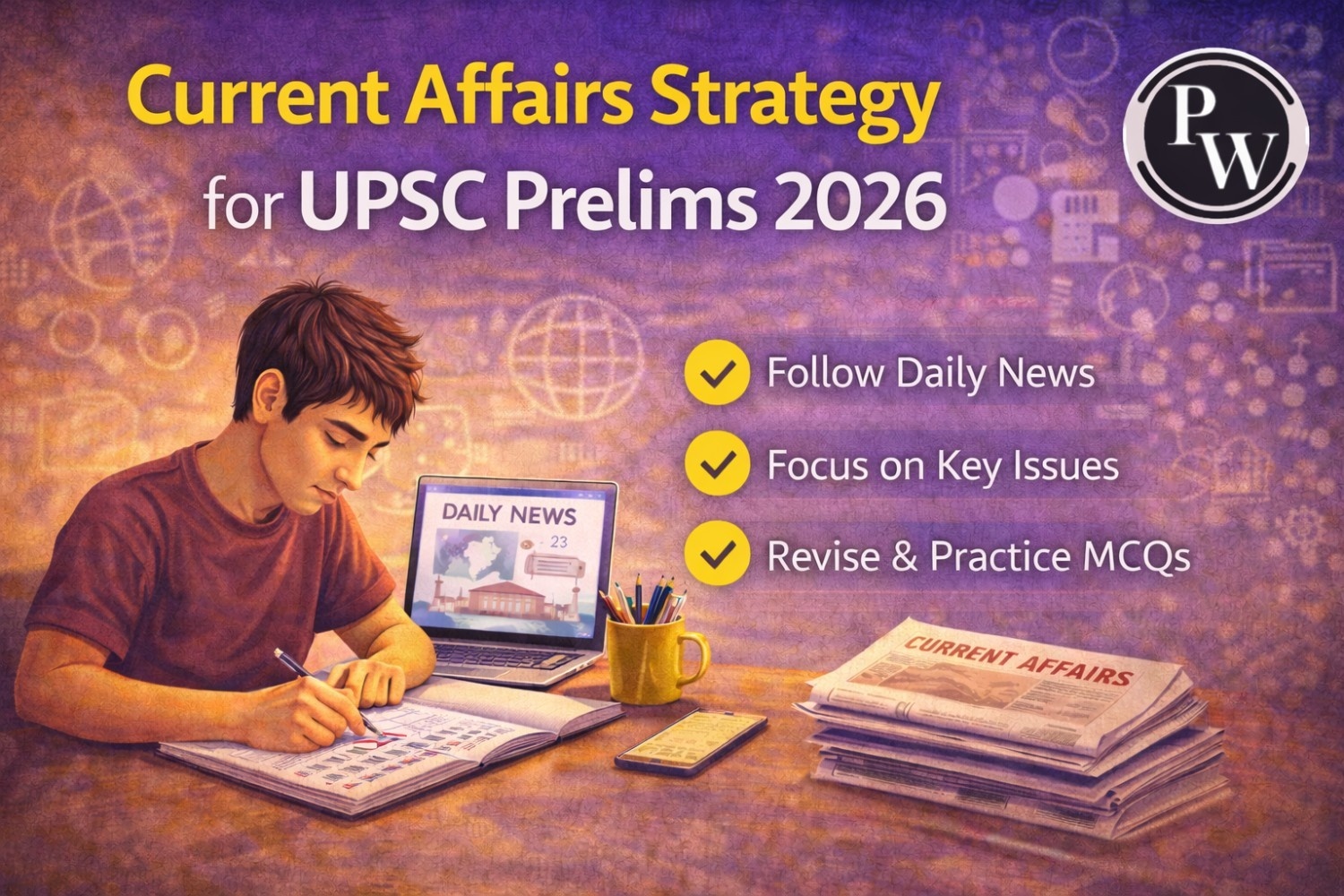
A UPSC current affairs strategy is a systematic plan used by aspirants to navigate the vast amount of daily news required for the Civil Services Examination. It involves selecting reliable sources like newspapers and monthly magazines to cover 15 to 18 months of events. This approach ensures candidates connect current developments with static subjects to maximize their exam scores.
Check Out - UPSC Previous Year Papers
UPSC Current Affairs Preparation Strategy
Many students feel scared because the news never stops. A steady UPSC current affairs strategy makes this easy by breaking the work into small daily habits. One big tip is to focus on "Issues" rather than just "Events"—for example, learn why a war is happening, not just the names of the places in the news.
-
Daily News Reading: Spend 45 to 60 minutes reading a good newspaper. This is the first step in any UPSC current affairs strategy for prelims.
-
Link to Books: If you read about a new law, look at your Polity book. If you read about a volcano, check your Geography book.
-
Focus on Topics: The test often asks about the Environment, Science, and how countries work together. Top students say focusing on these three areas gives you the most points.
-
The "One-Source" Rule: Do not try to read five different newspapers or magazines. Pick one good source and stay with it so you do not get confused.
To stay ahead, you should follow the "One-Source" rule. Don't try to read multiple newspapers as it will only lead to confusion and burnout. By sticking to one reliable paper and a single monthly magazine, you save time for other subjects like History or Geography.
UPSC Current Affairs Strategy by Toppers
The secret to winning is not just reading, but keeping it in your mind. The UPSC current affairs strategy by toppers always includes a strong plan for looking back at old news. A secret trick used by toppers is "Reverse Learning"—look at an old test question first, then read the news to see what facts you need to find.
-
Monthly Summaries: Instead of writing long notes every day, use a monthly news book. It saves time and has all the important facts in one place.
-
Short Note-Making: Only write down very small facts like names of new parks, space missions, or special prizes. Do not write down things that are already in your monthly news book.
-
Regular Revision: Look at your monthly news book every Sunday. This helps the news stay in your head for a long time.
-
Practice Tests: Solving news-based questions every week is a vital part of a UPSC current affairs preparation strategy.
Check Out - UPSC Quarterly Current Affairs Magazine Jan to Mar 2026
PW UPSC Current Affairs Study Material
To follow a perfect UPSC current affairs strategy, you need the right study tools. Using PW UPSC books that are made just for the UPSC test will save you from reading things you do not need.
Monthly Current Affairs Book
Monthly current affairs help you cover news in a manageable way. They include important events, government schemes, reports, and international issues. Regular monthly study keeps your preparation consistent and reduces last-minute burden.
Half-Yearly Current Affairs Book
Half-yearly compilations revise the most important topics from the last six months. They help you connect static subjects with current events and are very useful before Prelims.
Yearly Current Affairs Book
Yearly current affairs provide complete revision in one place. They are ideal for final revision for Prelims, Mains, and Interview.
Simple UPSC Tips for Success
To do well in your exams, you should focus on the main ideas from your news books. Start by looking at old test papers to see which news stories the teacher likes to pick. Write your notes in your own easy words so you can remember them fast. This turns a big news story into a small point. Practice looking at maps for any place that is in the news. It is good to solve one news test every Sunday to see if you are getting faster. Using a good study guide can show you the "special words" that help you score more. Stay calm and remember that the news is just a story about our world.
To get even better marks, look for news about the Government’s new plans. Books like "Yojana" summaries are very helpful for this. For example, if the government starts a new farm plan, learn who it helps and how it works. Make sure to leave a little space in your notebook to add new facts later. This keeps your work tidy.
When you solve a question, think about why the other options might be wrong. This is a secret trick to get very smart at picking the right answer. Always try to read the "Why" behind a news story. Knowing why something happened helps you remember it better than just knowing when it happened.
Read More: List of Important Articles in Indian Constitution for Competitive Exams
Current Affairs Strategy for UPSC Prelims 2026 FAQs
-
How many months of news should I study?
For a solid UPSC current affairs strategy for prelims, you should cover at least 15 to 18 months of news before the test. -
Is the newspaper enough?
It is a great start, but a monthly summary book helps you find the small facts you might miss. -
Should I make notes every day?
Toppers suggest only making very short notes and relying on monthly books for the big details. -
Is current affairs hard for beginners?
It feels hard at first, but if you stay steady for one month, you will start to understand everything. -
Which subject has the most news questions?
Environment, Economy, and Science and Tech usually have the most questions in Prelims.