How to Master Modern History for UPSC Using PYQs?

Modern History remains a cornerstone of the civil services examination, often determining the success of a candidate in the preliminary stage. Many aspirants struggle to filter the vast timeline of the Indian National Movement, feeling overwhelmed by dates and names.
Using the UPSC Prelims PYQ is the most effective way to identify high-yield themes and understand the examiner's mindset. By analysing previous trends, you can transition from rote memorisation to strategic learning, ensuring every hour of study contributes directly to your score.
Check out: UPSC CSE Books
Importance of UPSC Prelims PYQ
Modern History accounts for a significant portion of the General Studies Paper I. Relying solely on textbooks often leads to information overload. This is where the UPSC Prelims previous year paper becomes your primary guide. It helps you distinguish between what is interesting and what is actually examinable.
-
Identifying Recurring Themes: Certain topics like the Socio-Religious Reform Movements and the 1857 Revolt appear frequently.
-
Understanding Question Phrasing: UPSC often uses specific terminology that can be decoded only by practising UPSC PYQs.
-
Weightage Analysis: You can see exactly how many questions come from the Gandhian Era versus the early British expansion.
How to Solve UPSC Prelims PYQ
Below, we will be discussing the effective ways to solve the prelims UPSC PYQ:
1. The Reverse Engineering Method
Instead of reading a chapter and then looking at questions, try looking at the PYQ of UPSC prelims first. This alerts your brain to look for specific details while you read the text. For instance, if you know a question was asked about the Cabinet Mission Plan, you will naturally pay more attention to the specific members and proposals mentioned in your book.
2. Categorising Questions by Theme
Divide the Modern History syllabus into segments. When you use a reliable UPSC PYQ book, you will notice that questions usually fall into these categories:
-
Early British Expansion: Carnatic Wars, Plassey, and Buxar.
-
Administrative Policies: Permanent Settlement, Ryotwari, and Mahalwari systems.
-
Social Reformers: The work of Raja Ram Mohan Roy, Jyotiba Phule, and Ishwar Chandra Vidyasagar.
-
The Struggle for Independence: Phases of Moderates, Extremists, and the Gandhian Movement.
3. Understanding Chronology
A common trap in the UPSC previous year question sets is the "Arrange in Chronological Order" format. Modern History is a sequence of cause and effect. Using PYQ of UPSC helps you build a mental timeline. You learn not just that the Simon Commission happened, but why it led to the Nehru Report and subsequently the Civil Disobedience Movement.
How to Use a UPSC Prelims PYQ
Simply solving questions is not enough. To truly master the subject, your practice with UPSC PYQs must be analytical.
|
Activity |
Benefit |
|
Option Elimination |
Learning why three options are wrong is as important as knowing why one is right. |
|
Source Tracing |
Finding where the question came from (NCERT, Spectrum, etc.) helps streamline resources. |
|
Trend Mapping |
Noticing if the focus is shifting from political events to tribal and peasant uprisings. |
Based on an analysis of the UPSC prelims PYQ, the following areas require maximum depth:
-
Acts and Regulations: From the Regulating Act of 1773 to the Indian Independence Act of 1947.
-
Personalities: Contributions of Ambedkar, Gandhi, Bose, and Bhagat Singh.
-
Press and Education: The Vernacular Press Act, Woods Despatch, and various commissions.
Static Syllabus with UPSC Prelims PYQ
The static part of Modern History is predictable. By cross-referencing your notes with UPSC previous year question trends, you can create "cheat sheets" for the final week before the exam.
The Role of Maps and Tables
Visual aids are rarely found in standard text but are often tested. For example, knowing the locations of major 1857 revolt centres or the territories under different land revenue systems is crucial. Practice these using your UPSC PYQ book to see how geography intersects with history.
Mistakes to Avoid With UPSC Prelims PYQ
Many students treat the UPSC prelims previous year paper as a simple mock test. This is a mistake. These papers are not just for testing your knowledge but for building it.
-
Ignoring Explanations: If you only check the answer key and move on, you miss out on 75% of the value. Read the detailed explanation for every option.
-
Lack of Revision: Patterns in UPSC PYQs repeat. If you don't revise the questions you got wrong, you are likely to repeat the same error in the actual exam.
-
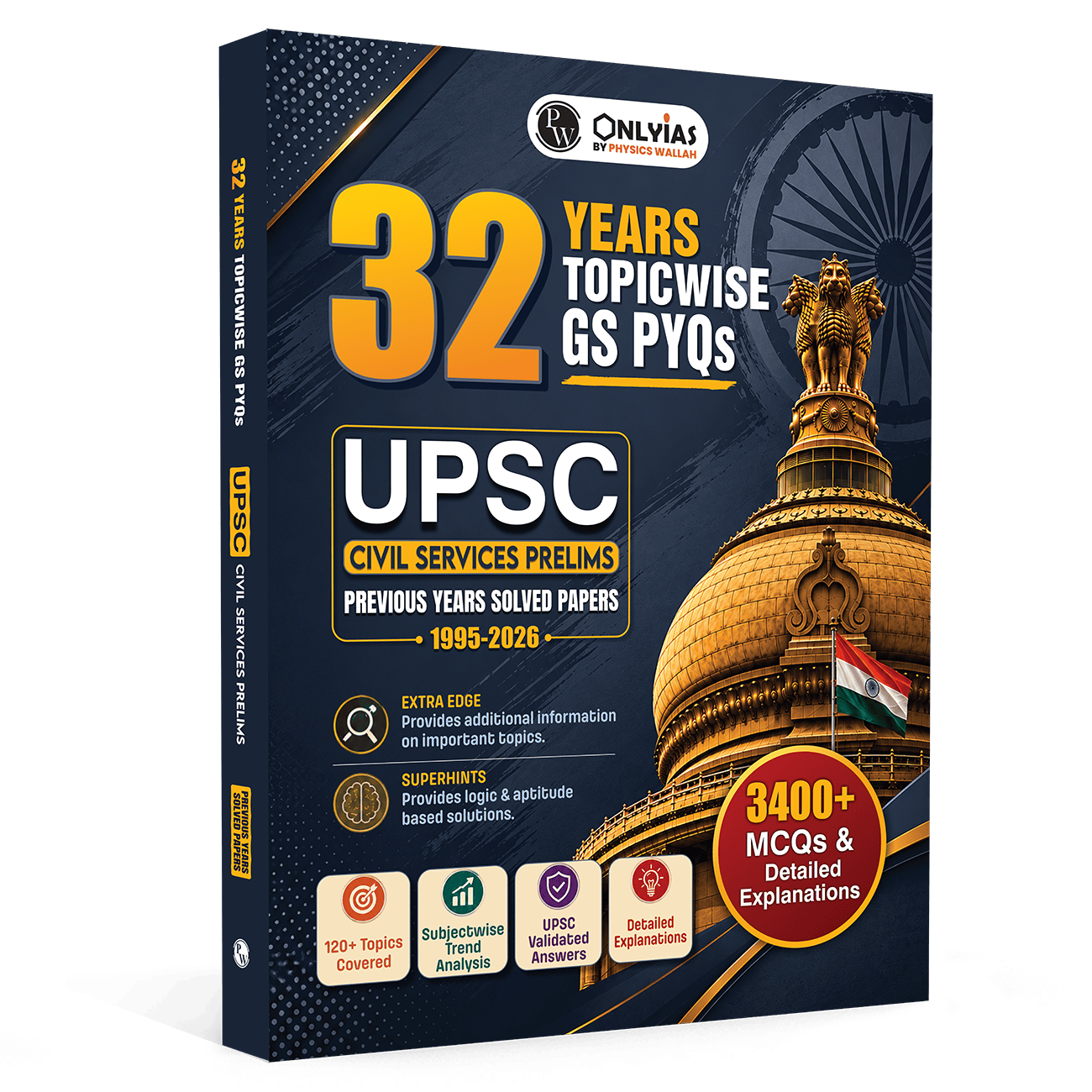
Over-reliance on Recent Years: While the last 10 years are vital, looking at a broader range, like a 31-year collection, provides a more stable perspective on how the exam has evolved.
Also Check, UPSC Revision Books
Tips for UPSC Prelims PYQ
To get started, you need a structured set of papers. Official sources and curated books are the best way to access the PYQ of UPSC prelims. Ensure you are using a format that allows you to see the questions year-wise and topic-wise. This dual approach ensures you understand the historical era while also mastering the specific exam format.
-
Year-wise practice: Helps in simulating the actual exam pressure.
-
Topic-wise practice: Helps in strengthening specific weak areas like "Governor-Generals" or "Tribal Movements".
Read More: UPSC Modern India Previous Year Papers with downloaded PDF
UPSC Prelims PYQ FAQs
1. What is the right way to start solving UPSC prelims PYQ for history?
Start with topic-wise analysis. Read a specific period, such as the Gandhian Era, and immediately solve all related questions from an UPSC PYQ book to consolidate your learning.
2. How many years of UPSC PYQs should I cover?
While the last 10-12 years are essential due to the changing nature of the exam, covering up to 30 years of UPSC previous year question papers helps in identifying long-term patterns and core static topics.
3. Are questions repeated in the UPSC prelims previous year paper?
Direct repetitions are rare, but themes and concepts are frequently repeated. Often, an incorrect option from a PYQ of UPSC prelims in one year becomes the central theme of a question in a subsequent year.
4. How can I avoid negative marking using UPSC PYQs?
Practicing UPSC PYQs teaches you the art of elimination. By identifying "extreme keywords" and logical inconsistencies often found in UPSC options, you can make more educated guesses.
5. Should I solve PYQ of UPSC for Mains along with Prelims?
Yes. Understanding the PYQ of UPSC for both stages gives you a holistic view. Often, a factual point learned for Prelims can be used as an example in a Mains answer.